


Photo by Karl Neumann
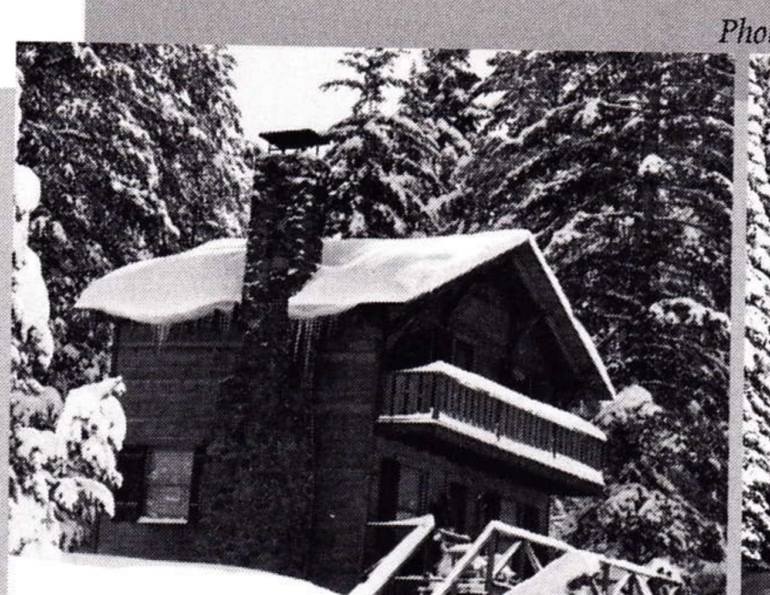
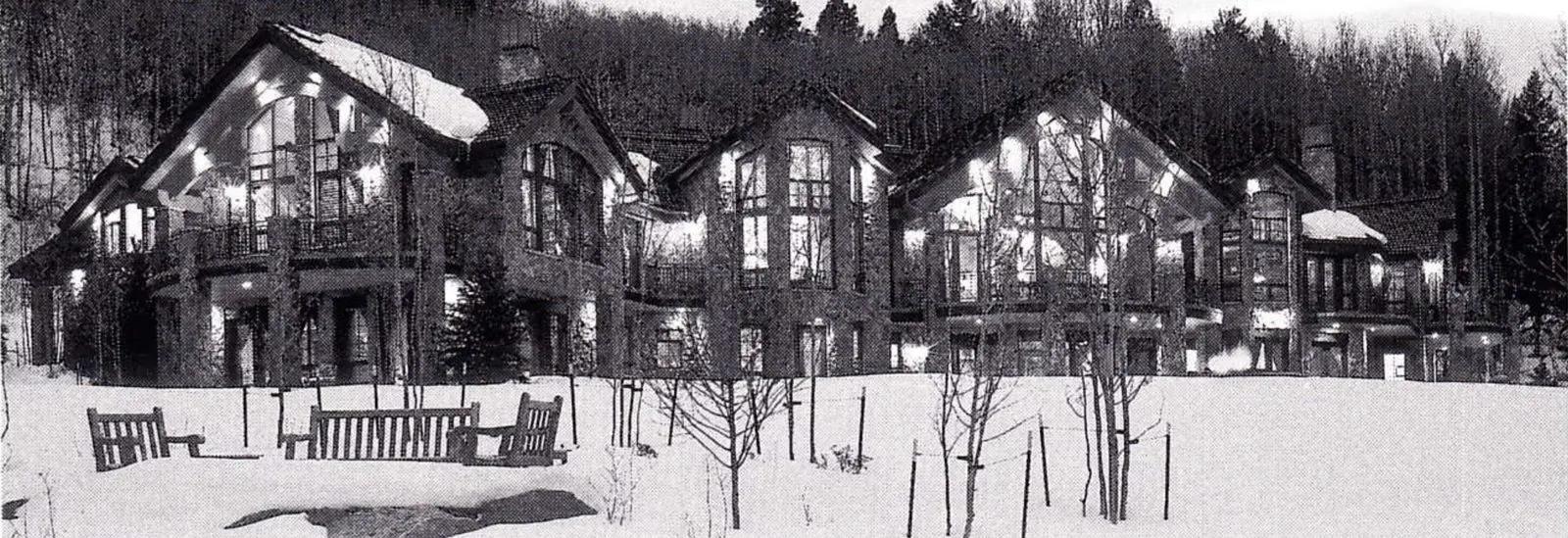
European flavor infiltrates this ENGLISH COUNTRY MANOR of 10.5 baths, nestled in the trees on approximately 15 acres. The Gore Range is gloriously captured from the extensive use of glass. Grand, yet warm, this retreat features 2 master suits each with its own guest wing; boasts four fireplaces, a library 2 laundries and a stone port-cochere. Stone, wood, slate and Mountain Elegance are the keys to its total charm. For the most discriminating buyer who desires privacy.
Given the type of guests I usually invite to come and ski, I sorta liked that bit about a separate guest wing. And man, a ski place with a library and a stone porte-cochere, I mean, how awesome can it get?
Still, the price tag bothered me: $10.6 mill. Like eight or even nine might make the scene, but 10.6— and without even a wine cellar!
R-r-r-r-r-r-r-r-r-r-r-r-r-r-r-r-r-r-ing!!!!!!
The ringing phone awoke me from my reverie just as I was about to make a counter-offer and I was once again just me, Joe Blow Skier, who had been thumbing through the real estate section of the Vail Trail with that little pad featured on the first page.
The next two pages offered me condos that ranged from a measly $950,000 on up to a $4,750,000 penthouse. There were more houses, ranging from $3,195,000 to a $6,250,000 chalet and also acreage at $91,428 per acre. On page five were five houses with an average price of $5,754,000.
And on and on this went for 40 pages. Oh yes, there were a few offerings at under a million, but there were also higher offerings that I didn’t think you’d believe, such as a two-acre building site for $3,595,000 where, thankfully, you are allowed to build a 7,000+ sq. ft. house. Also a house that is on the market for $12 million, mercifully with a wine cellar.
Now, we have to remember we are dealing with the Vail/Beaver Creek/Bachelor Gulch/Arrowhead phenomenon. That is, it is one of only two ski resort markets to which the super-rich are drawn to showcase their extraordinary wealth, the other being Aspen. There are a couple of wannabes, like the Yellowstone Club in Montana and Telluride in Colorado; and then there are two others that rather feel above such vulgarity, Deer Valley, Utah, and grand old Sun Valley, Idaho. There are also some hopefuls, like Mammoth, Calif., and Stowe, Vt., that comfort themselves with some very long-term vision.
What is extraordinary about the Aspen and Vail scenarios is the speed with which the societal explosion of super-rich has become felt. And, of course, the speed with which the compulsion to flaunt your wealth has taken hold in that demographic sector.
There have, after all, always been rich skiers and the sport grew in the 1920s and 1930s in no small measure because of the enthusiasm of rich Americans who were introduced to the sport in Europe. But there was a different societal ethic in charge back then.

At Sugar Bowl in California, where the likes of railroad magnate Jerome Hill and San Francisco attorney Sherman Chickering built ski houses, the idea was to have the perfect, cozy mountain retreat and they built accordingly. To do otherwise would have been to be vulgar like a Great Gatsby or to imitate the bad taste of Florida gigantism. The recently published book, “Skiing with Style,” that celebrates the 60th anniversary of Sugar Bowl, brilliantly captures the ethos of this pleasure park for the super-rich of the late 1930s.
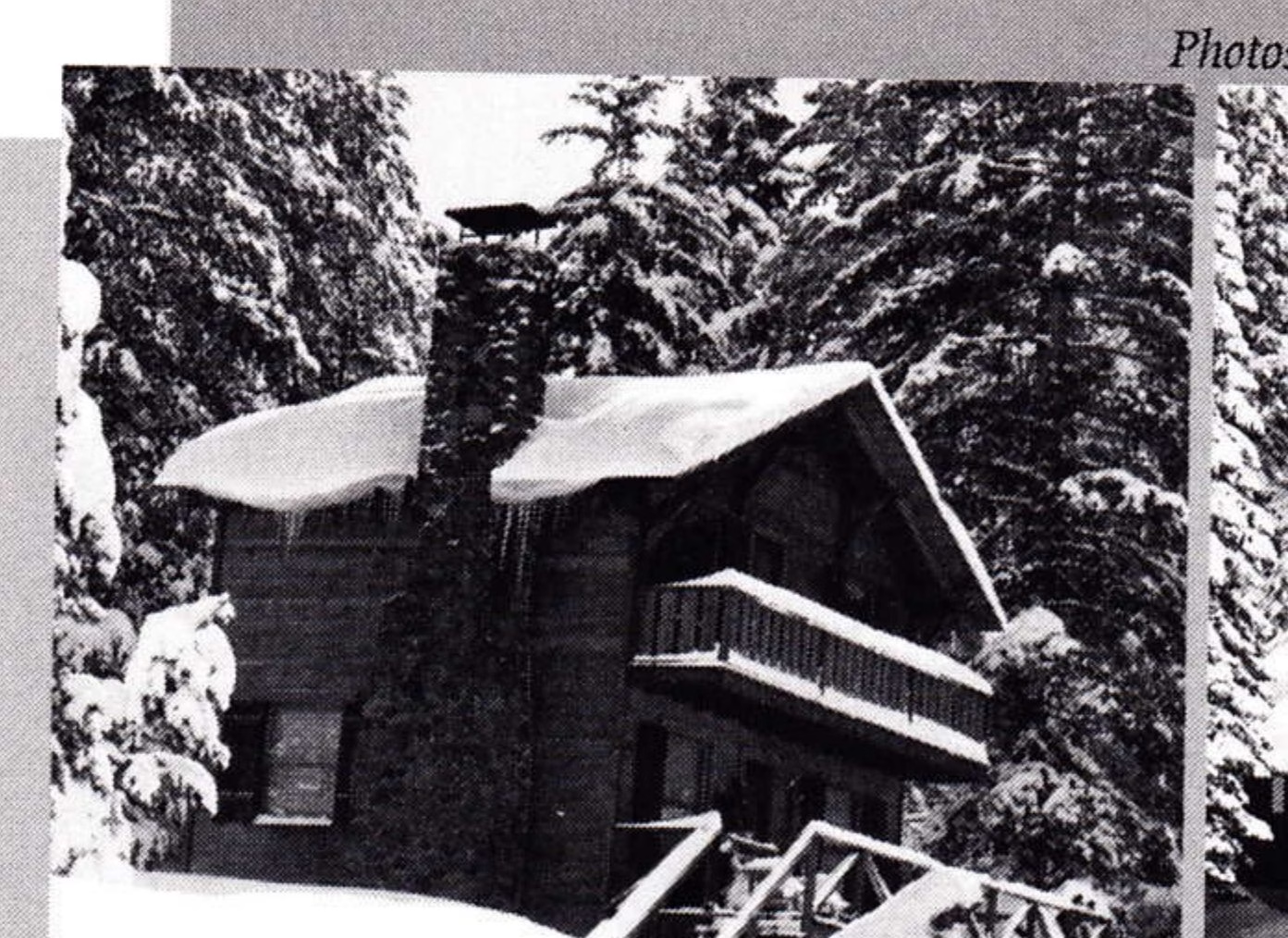
Photos courtesy of George Dondero, from Skiing with Style
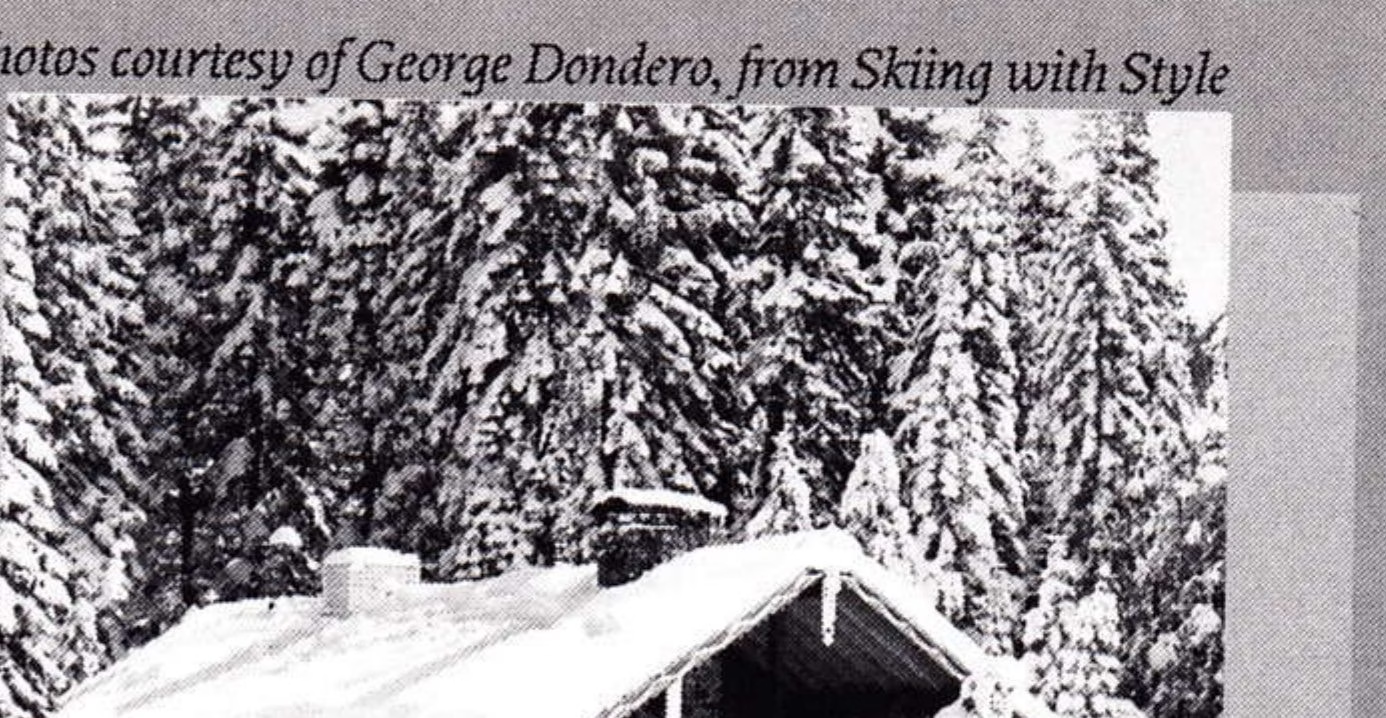
Photos courtesy of George Dondero, from Skiing with Style
Today, we think—and build—big. And for better or worse, to have a ski condo, or better still, a ski house, at Vail or Aspen has become the ultimate cachet, the imprimatur of worldly success. This dynamic has now become a factor in trying to understand what we refer to as the “ski industry.” Numerically, of course, there aren’t enough of super-rich to make much of a percentage showing in an inventory of active skiers and boarders, or to account for that critical percentage of the total skier visits our industry likes to tally.
Indeed, this writer was struck a couple of years ago by a panelist at Ski Industry Week, Harry Frampton, who had earlier served as Vail’s president and who in recent years has been one of the region’s kings of real estate sales. In response to another panelist’s concerns about increasing the skier base and getting skiers to ski more often, Frampton airily said it really made no difference to him if the people who bought real estate in the region even skied at all. The region’s economy, he said, was driven by people who might come to the mountains for many reasons, among them skiing or boarding, but that the regional economy was not dependent on skier growth. It was a sobering reminder.
But another reality is in play here: the impact of the very rich and super-rich resonates in the media. To an ever-increasing extent we are blessed (or tarred?) by the image of affluence. Mention our sport and the world sees rich, lily-white skiers at Vail and Aspen, not happy recreationists at Ausblick Ski Area in Sussex, Wisc.
But is this image or reality? One wonders. Preliminary figures from this year’s National Skier/Boarder Opinion Survey (NSOS) have some astonishing income figures: a household median income of $91,400, and 17.5 percent with incomes over $200,000. To be sure, NSOS undercounts the Ausblicks of the world, but still, mustn’t our ski world look to many as if there’s a means test attached?
I remember, as a child, acknowledging to myself I would never become a polo player. The financial bar was clearly set too high. Are we, perhaps, sending a similar message?
There has always been a disconnect between the worlds of Ausblick and Vail, but is it becoming an unbridgeable gulf? Are we all still in the same business?
