


Remember the good old days? No environmentalists screaming at you; no mounds of environmental impact reports when you wanted to expand your parking lot or survey your own lands; no citizen’s law suit filed by the Friends of the Trees against the development of your own lands that you have been paying taxes on for years. And remember when the Forest Service would issue development prospectives inviting you to build a resort on their land because they thought they were creating a valid use for the public lands?
Maybe it was a childhood dream. The early 1960’s were the beginning age of our industry. In 1967, there were over a hundred new resorts started; in 1976, there were none. The slight period of economic adjustment of 1973 had a lot to do with discouraging new development, but all the new environmental and other bureaucratic roadblocks are the major factors that have created the unfriendly and very expensive process for prospective developers.
The developers of the 1960’s did not have to worry about anything except how to survive economically. Remember Peter Seibert selling off single family lots at the base of a mountain to get enough loose change to get the ball rolling? It was tough going at first, but he showed us all how. Now, Vail expansion plans have taken years to get approved; hundreds of thousands of dollars have gone to prepare plans, environmental impact statements and to hire lawyers to fight special interest groups who, for their own limited political reasons, did not think that there should be any more ski slopes or private development in the Vail area. I wonder if the new Vail will be any more successful or more exciting than the original Vail concept. Have all the new constraints, public input and bureaucratic delaying tactics contributed to the overall quality of the resort?
One thing that has happened is that most of the original creative entrepreneurs have been driven out of business. Peter Seibert has gone from Vail; Bill Janss from Sun Valley, Max Durcum from Keystone, Sepp Ruschp from Stowe. Now the corporations have taken over. The destination resort owner/entrepreneur no longer has the long-term staying power to fight both the financial potholes and the wispy environmentalists. This has been both good news and bad news.
The bad news is that some of the spontaneity is gone from the operations and developments. Decisions used to be made based on an intuition. Creative ideas could be carried out immediately. However, the greatest limitation of the entrepreneur/ operator/ developer was his need to take short-term financial outlooks regarding the planning and developing of his resort. The major financial limitation for the individual operator was that for every $1.00 spent during a year’s real estate development, $1.20 had to be returned during that same year.
The good news is that the new corporate owners can afford to take a longer-term view of the financial picture. The Ralston-Purina people at Keystone could make five-year plans and look at the financial goals as returns on investments. Keystone had to invest very large funds in order to satisfy the County’s utility requirements. They had to contribute the major portion of the sewer plant system before they accelerated their project. Normally, a single developer would not have been able to do this. They were only able to develop real estate projects which required a minimum of off-site expenditures. The Keystone people also could afford to hire experienced personnel who understand that a quality operation and development will be most beneficial over the long run. Consequently, they have set high performance standards for themselves which are reflected in the overall image of their resort. Keystone was one of the first destination resort operations to decide not to base resort operation profitability on evasive real estate profits. They saw what happened at Big Sky and other areas when the resort became overburdened with unsold, ill-conceived and uncompleted condominium developments.
However, one of the offshoots of Keystone’s quality commitment is that they have found out that the real estate portion of the organization has enjoyed tremendous success. Their buyers are so impressed with the resort operation that they have flocked to invest in their condominium developments.
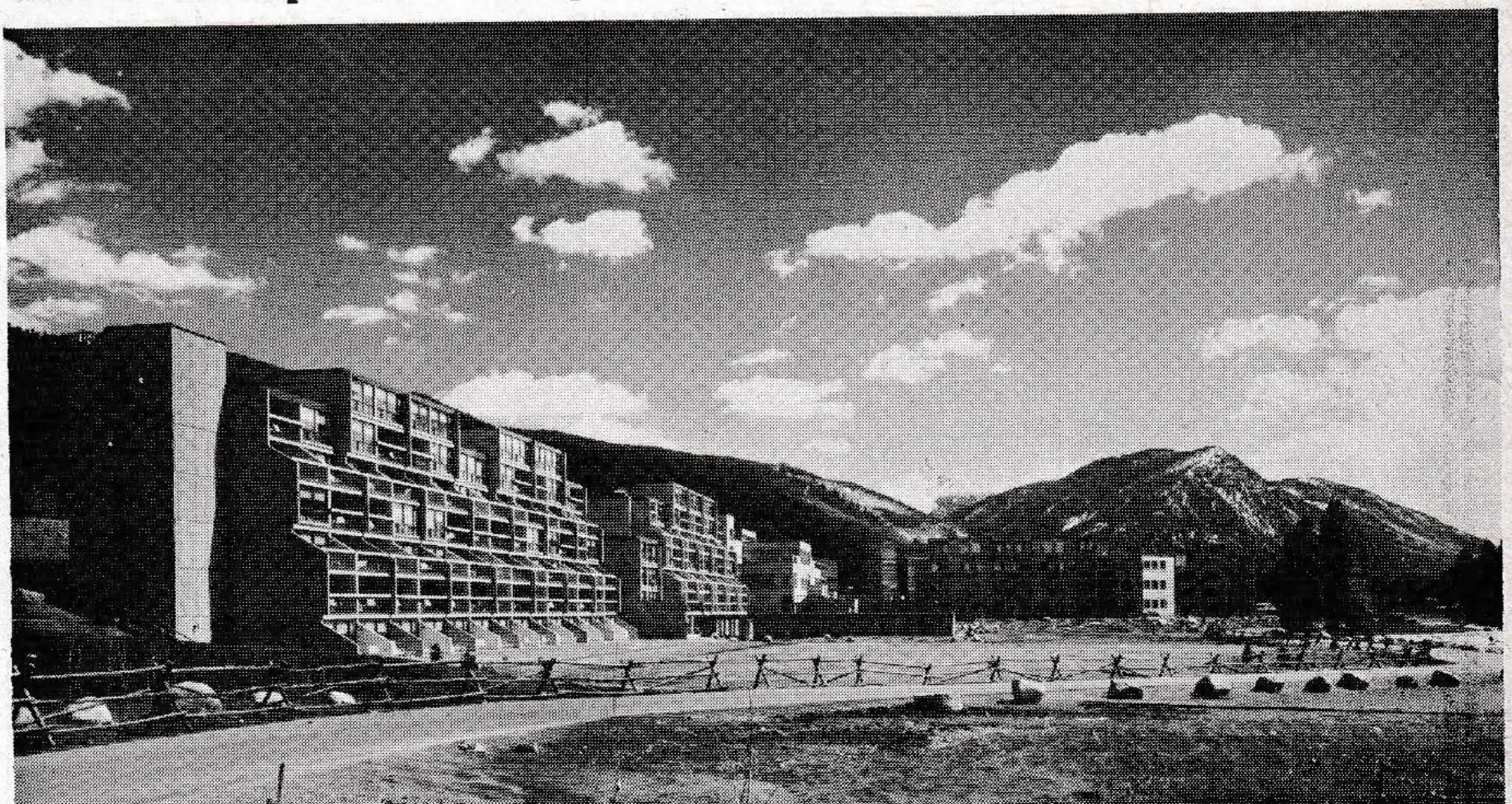
The risks of the 1960’s real estate developments were warranted at that time because there was an emerging market for these developments. Money was available. The banks and savings institutions were delighted to make loans at higher rates than they could get in their urban areas. Everyone got on the wagon. Potential profits were everywhere: build them, sell them and reap the profits. Right? Wrong.
At Sun Valley, development during the late 1960’s was not limited to what we could build, but what we wanted to build. We could sell almost as many condominiums as we wanted to. However, Harry Holmes, then president of Sun Valley, figured out in his infinite wisdom that all these condominiums were creating more than a real estate profit — they were also creating a burden on the rest of the resort operation.
Every time we added 50 condominiums, we were creating a need for more restaurant seats, employee housing, linen storage, transportation requirements and an increased load on sewer and water capacities. This analysis of the overall impact of the resort operation created by real estate sales meant that those 20 percent real estate profits were illusory. We found that each year, most of the real estate profits were needed to increase the operation facilities within the resort to handle the increased guest services needs. During Harry Holmes’ seven-year tenure at Sun Valley the gross cash flow quadrupled. However, the Profit and Loss statement showed very little change.
The developers who made the profits during these times were the builders who got in and out. They bought the land from the resort, built and sold the condominiums, then bailed out, leaving the resort and the surrounding communities to deal with the impact.
So, where are we today? Most of the real estate developers are gone, the boom is bust. The market is still there but, because of high prices, it is very limited. The Forest Service policy of no new resorts, and the bureaucratic environmental roadblocks required in expanding existing resorts, have created a high demand for a limited commodity. No more $30,000 condominiums. Now, most condominiums in quality resorts are over $100,000. This means that there will be no more major ski resort real estate projects, leaving everyone where Keystone started out: an operation-oriented resort.
The growing skier population still requires food, lodging, booze and other services that generate cash flow. By expanding or building facilities to take care of the increased user load, and orienting expansion to service the needs and comforts of the visitor, you are likely to end up with long-term yearly profits rather than just the elusive short-term real estate profits.

This means that you are in the management business. You have to control costs and set goals for your corporation as well as for your people. You are going to have to hire qualified hotel, food and bar personnel and expand your company’s operating capabilities.
What have these changes meant to your master plan? At Purgatory, near Durango, Colorado, we revised the master plan in an attempt to respond to these changing needs and markets. The original 120 acres of the Purgatory master plan was primarily oriented toward condominium developments, with some commercial and parking development at the base area. Now, after re-analyzing these changing times with the Purgatory management and Dick Peterson of Vail, we have developed a new master plan oriented to operational needs. The new base area plan shows an expanded multi-use cafeteria building, an enlarged ski rental and sports shop, the old cafeteria converted into a steak house, apres ski bars, all planned to be a part of a pedestrian village within walking distance of the ski lifts. The village will have inns with small condominium developments in place of a dusty day-skier parking lot. The analysis of the changing market at Purgatory has led us to believe that the most valuable land is now oriented toward public uses. The lodges, the restaurants, the shops have replaced the condominium sites as the most valuable developable property.
Once you have defined or redefined your master planning goals, you now have to deal with the bureaucratic approval process and all their changing goals. Energy, protection of the environment, utilities, the process time and the public’s rights are some of the concerns with new priorities. In the 60’s, you just hooked up your development to the local electric outlet. Now, ski areas are a low priority energy use, so you had better justify and economize your energy uses. In California, there is a new energy agency that has defined the amount of glass for windows that you can use, the wall and roof insulation factors and has almost eliminated electric resistant heat as an energy source in residential developments. This creates somewhat of a hardship in building in remote mountain areas. In Vermont, at Burke Mountain, the local power company required us to use some mystic electrically-heated hot brick appliance in our condominium development to cut down on energy use during peak loads. The appliance turned out to be larger than the end tables in the living rooms. We investigated the use of solar energy, but found out that we would need more solar panels than ski trails to solve the energy needs. Now we are trying to use wood-burning stoves as a creative “new” alternative renewable heat source.
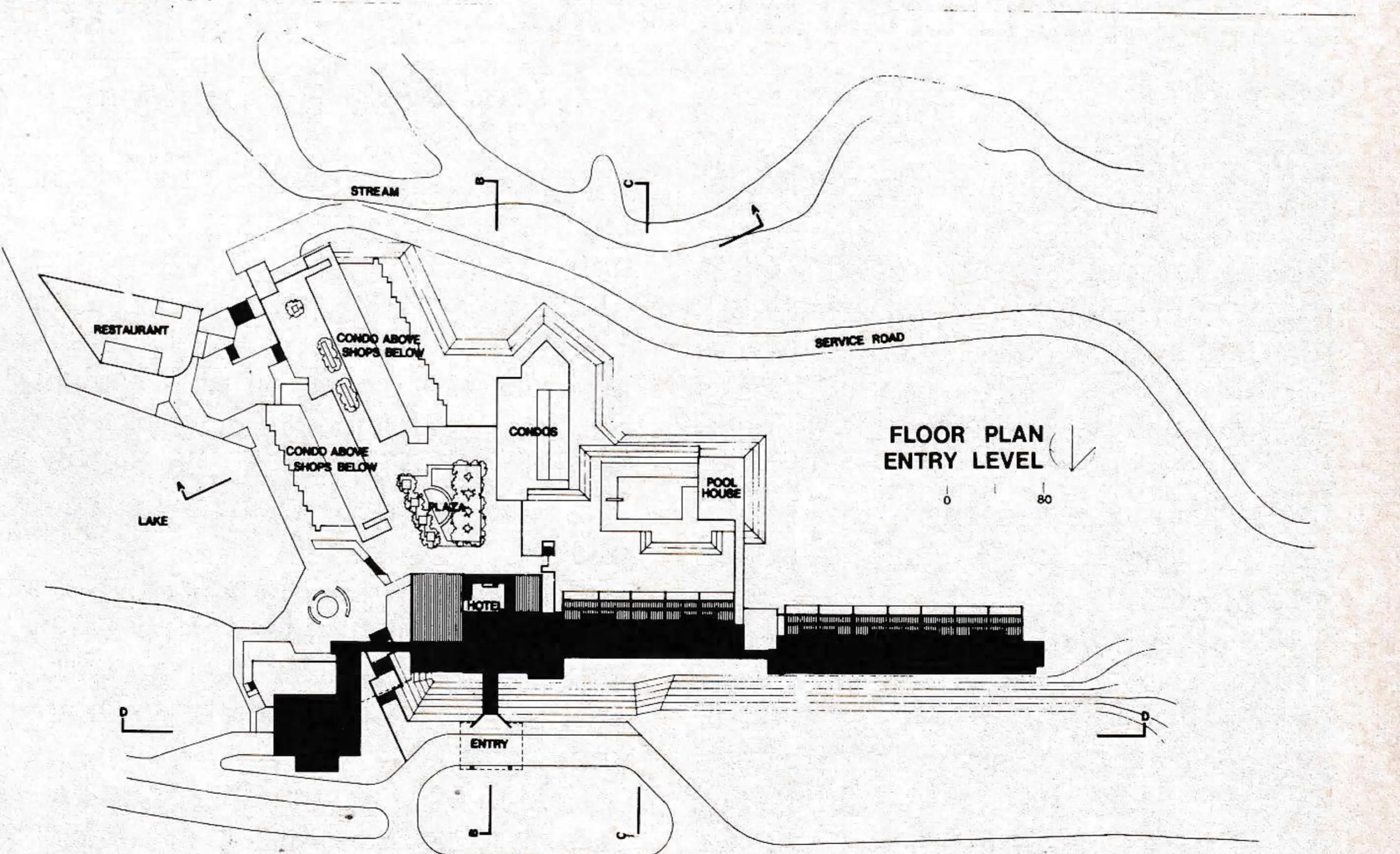
Large major developers will have to be extremely sensitive and practical in their building designs. They must tell the bureaucrats that they are doing everything they can to conserve energy. Most electrical loads and costs are determined by the peak demand load. To minimize this load factor, try to even out your electrical load throughout the day and night. Do not heat your swimming pool, hot water storage tank and turn on the ski lifts all at the same time. Energy conservation can also make economic sense.
The protection of the environment sometimes takes on strange shapes. The environmentalists wanted to sue Disney when they knocked down one small tree on their 20,000 acre project while surveying their lands. One environmentalist consultant provided a two-volume report for a potential ski area defining all sorts of species of fruiting moss, flora and fauna, and charged the developer over $150,000, while neglecting to point out that the 16 miles of access road could not be cleared of snow to allow vehicular access to the potential ski area.
The environment is important and we should worry about silting Lake Tahoe, dumping phosphates from sewage plants into pristine streams and belching smoke from power plants. We should also worry about skiers, their needs and the jobs the ski areas create. At Burke Mountain, in Vermont, they have been able to receive governmental financial support because they can employ and create jobs within a community which has been economically depressed since the Civil War.
The days of individual septic systems and water wells are over. Now you need sophisticated utility systems with chlorinated water tanks and distribution and three-stage purifying sewer plants. All these cost a lot of money and are usually funded with utility bond financing. The initial developer’s capital costs are comparatively low when weighed against the total cost, but don’t forget, someone has to pay the bill sometime and over a long period of time. Once installed, it is a long-term financial commitment.
And then there is the time — costly time — that it will take to process your plan. The public hearings, the meetings with local concerned citizens, and the appeals time will surely test your patience.
But all of this is the way the game is played today. A great many ski areas are located near or on public lands, and there is a still-emerging political concern of: What are the public’s rights? And most significantly, who is the public? In the long run it may be perceived as more than just the Friends of the Trees. Skiers, too, have their rights.
Jay Flood, one of the foremost ski resort master planners, was a frequent contributor to Skiing Area News. His firm, David Jay Flood & Assoc. is based in Los Angeles. His most recent projects include Burke Mt. in Vermont and Purgatory in Colorado.