Wisp, Maryland
Located in the Appalachian Mountains in the far-western corner of Maryland, Wisp at Deep Creek Mountain Resort is bent on becoming a mini-Tahoe. The resort includes skiing, a golf course and associated community, and (of course) a lake. The ambitious plan was initiated by new management (Deep Creek Mountain Resort) a few years ago. More recently, general manager Hank Thiess arrived from Keystone, Colo., to direct the project. The area drew approximately 245,000 visitors last winter, up from 179,000 in 2001-02 and 135,000 the year before that. With a market of nearly 20 million people in the Washington, D.C., Baltimore and Pittsburgh orbits less than three hours away, the area is hoping to reach 300,000 skier visits in the near future.
To help reach its target, Wisp is in the midst of a major physical and architectural makeover. Last year the resort added 13,000 square feet to the base lodge, with finishing work this summer. The architecture creates a rustic, mountain-lodge style, heavy on wood trim and stone facings.
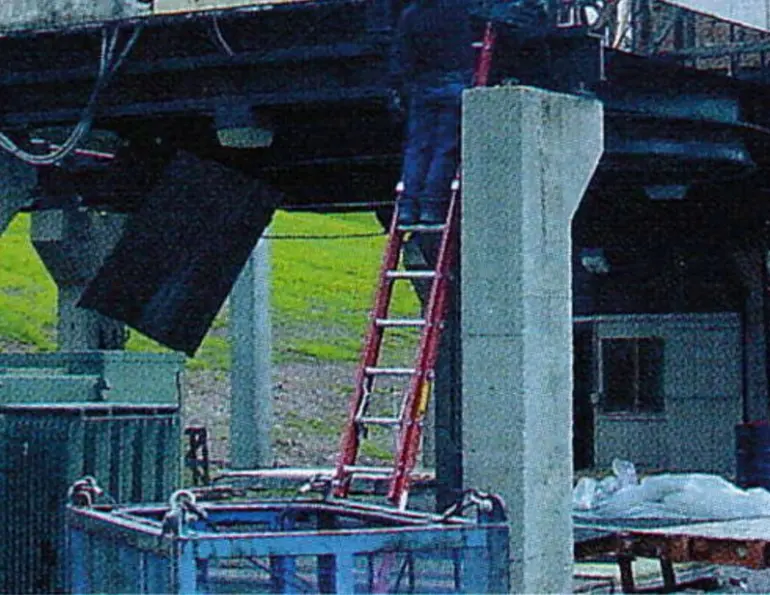
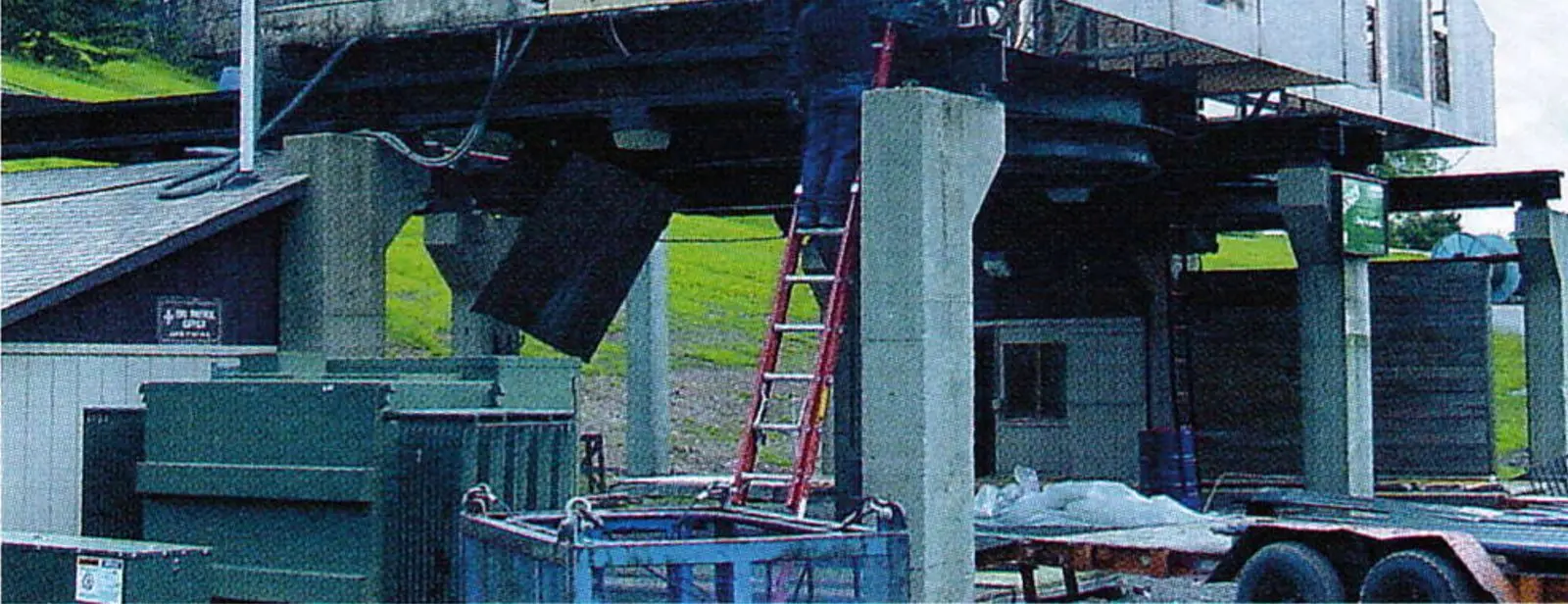
The resort is also upgrading the on-mountain facilities. Two main double chairs (fluid-drive Halls) are becoming triples (Doppelmayr/CTEC hydrostatic DC drives, with 150 hp). The parallel lifts rise 610 vertical feet over a length of 3,170 feet. One will serve as an intermediates’ lift; the other as a novice lift. Both become more guest-friendly by lowering the height and decreasing the grade of the mid-station and top unloading ramps. Since the original developers envisioned the eventual upgrade to triples when the Halls were installed, the new lifts use the existing towers and sheave assemblies. But the top and bottom terminals are all-new.
The area is also upgrading the beginner terrain, installing a Kaser carpet lift to replace an ineffectual beginner rope tow. Along with expanded children’s facilities and an improved instruction program, plus a “get on board” season’s pass ($249 three-day rental, lesson and lift package that converts to a season’s pass), the carpet and the new chairs make that 300,000 target look quite doable.
Crystal Mountain, Michigan
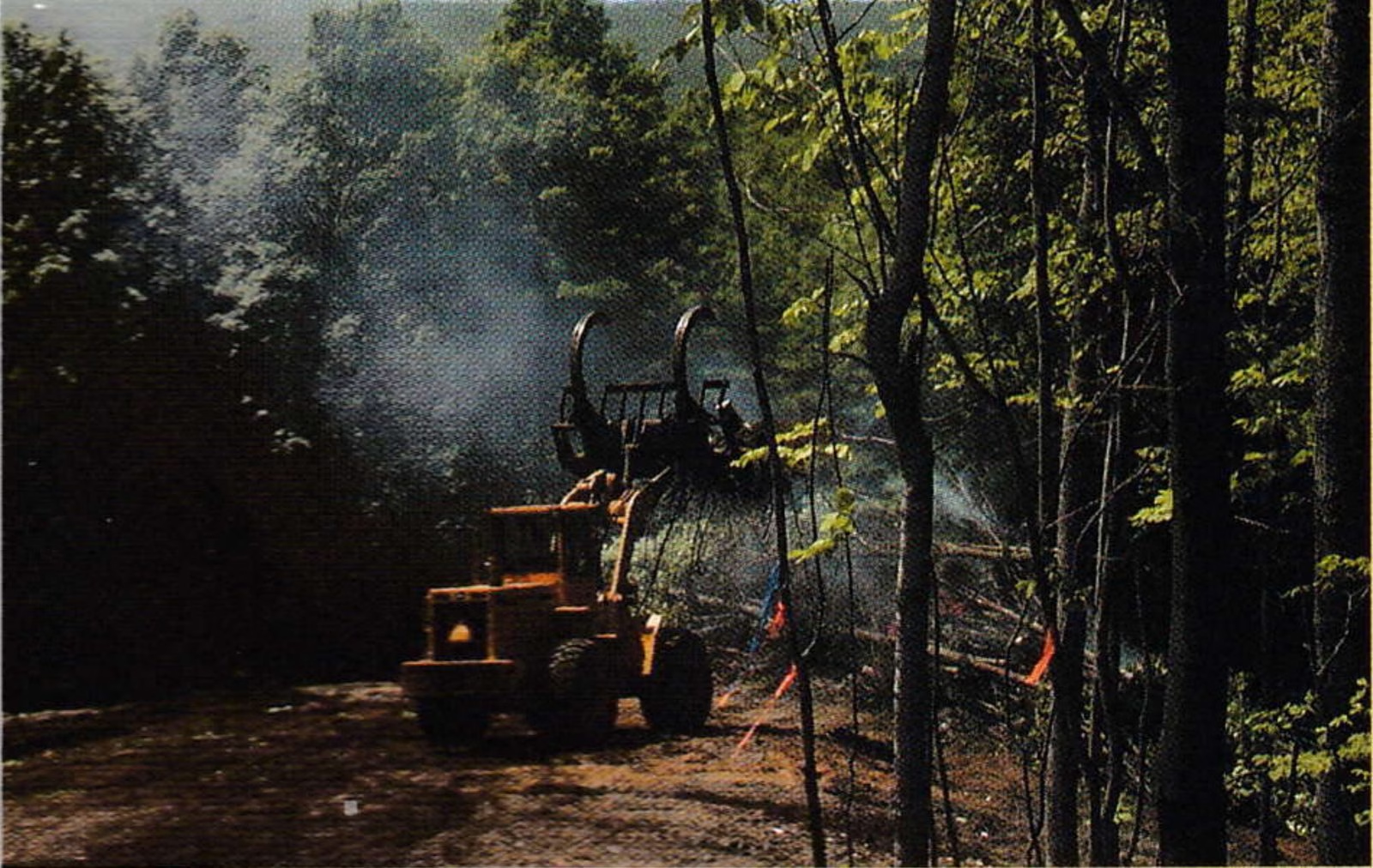
Crystal has been undergoing several developments as part of its Vision 2010 plan. This summer the resort is cutting 10 trails in its new North Face area, primarily advanced intermediate to advanced terrain, which will be served by a new $1.2 million Doppelmayr CTEC fixed-grip quad. The lift has a capacity of 2,400/hour, a 275-foot vertical and a length of approximately 1,300 feet. Other work includes completion of Phase 3 of the Mountaintop condos, and beginning of a major infill project at the base—The Cottages and Park at Water’s Edge. The fractional ownership Cottages are 1,200 to 1,500 square feet, and modeled on the traditional style of northern Michigan getaways from 1900 to 1920. The character of the Cottages will be further defined by distinctive land- and waterscaping; the units are connected by ponds and streams. The park will have a playground, climbing wall, and 4,500 square feet of water—including a lap-lane pool and a hot tub.
Lake Louise, Alberta
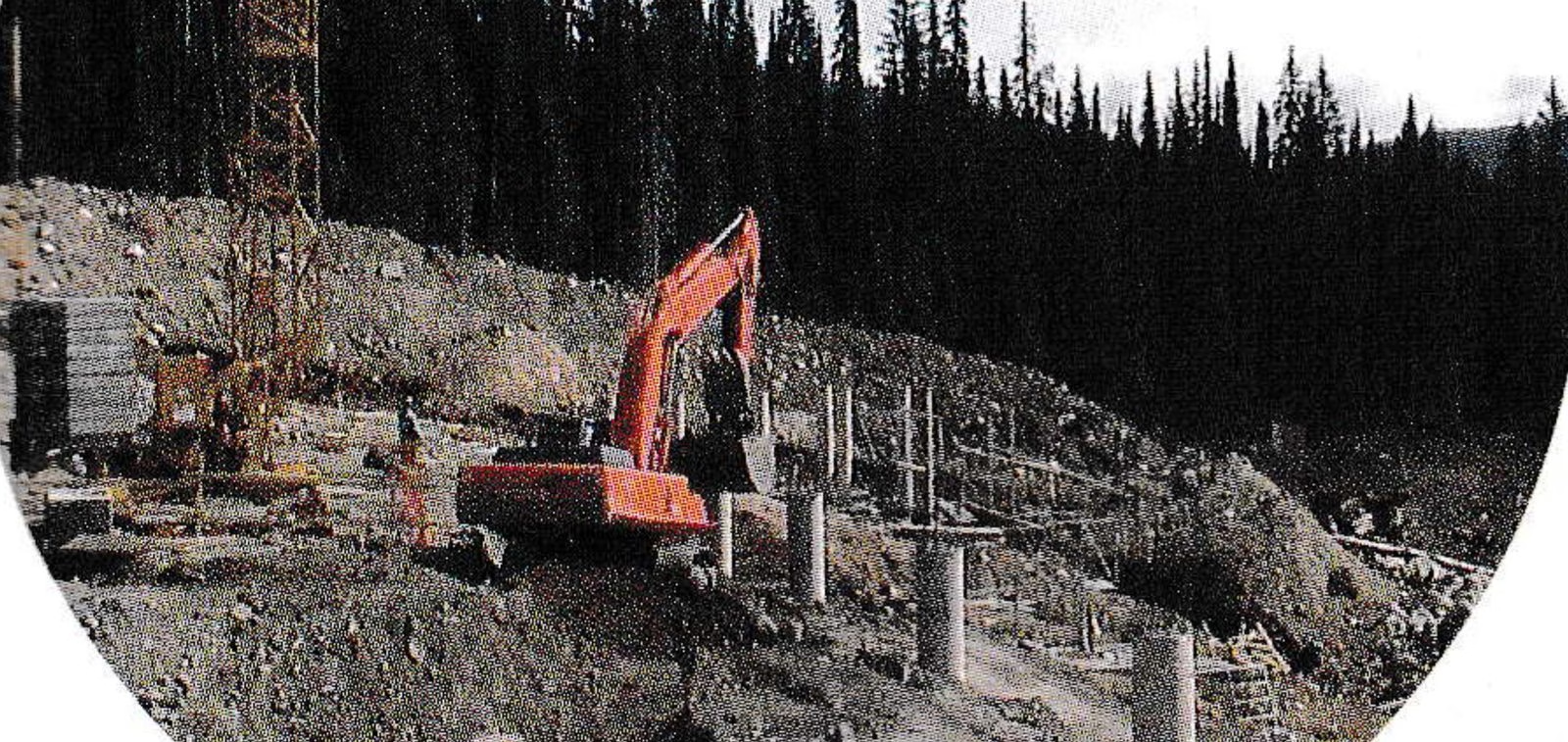
Lake Louise installed Alberta’s first high-speed six-pack, the aptly-named Top of the World, to increase access to the main summit and to thousands of acres of terrain on several faces of this resort in Banff National Park. On the surface, it is a standard Leitner-Poma Omega Phat Boy. The lift rises 1,383 vertical feet over a length of 3,876 feet, with a 600-horsepower DC motor and ABB DCS 500 digital regenerative drive. But it was not a standard installation in some key respects. First, due to extensive environmental regulations in the national park, the top station and tower modifications had to be hiked or flown in. Machine access was only allowed as far as the bottom drive station, and there was no power beyond that point. And second, the lift replaces a 1989 Yan detachable quad, and uses as many components of that installation as possible. An environmental protection specialist was on the site full-time, and construction was scheduled to protect wildlife, including the area’s population of grizzly bears.
As a result, Louise went to great lengths to minimize environmental impacts. For example, the top return foundation had to be enlarged, since the original Yan foundation was not adequate for the tension of the six-pack. Ninety yards of concrete were helicoptered in, and ninety yards of fill were flown out—Parks Canada would not allow the area surrounding the unloading to be disturbed, to protect sensitive lichen and grasses that grow in the area. To fit towers with new top plates for the Leitner tower heads, workers hiked 200-pound plates and a welding machine to each of the 16 towers. Tower head plates were raised by hand to the tower tops and fitted.

The standard Leitner-Poma station mechanisms had to be specially modified to ensure that all of the components could be lifted by a Komov helicopter with its 9,000-pound limit, yet still permit maximum preassembly due to the lack of equipment at the top for installation. The 26,000-pound side mechanisms, the 27-tire acceleration/deceleration assemblies, contour, and return bullwheel and frame—all were broken down and assembled in place. Top-station components that could not be placed by helicopter, such as the entire roof structure, were manually lifted into place.
Big White, British Columbia
The ski-in, ski-out Copper Kettle Lodge at Big White will provide the newest accommodations at this resort, the second largest in the province to Whistler/Blackcomb. The Kettle is a five-minute walk from the village core and has spectacular views of the Monashee range. Construction on the lodge began in April 2003; at buildout, the four-story, $35-million project will include 85 two-bedroom-plus-den and three-bedroom units. The first phase, to be ready for the coming winter season, includes 21 units, most of them pre-sold. The project includes some unusual features. For example, its concrete frame construction, in which all walls and floors are made of concrete, offers excellent sound control. The 1,550-square-foot units also have radiant floor heating, supplied by a hydronic system. Each unit also has a 90 percent efficient heat recovery and ventilation (HRV) system.
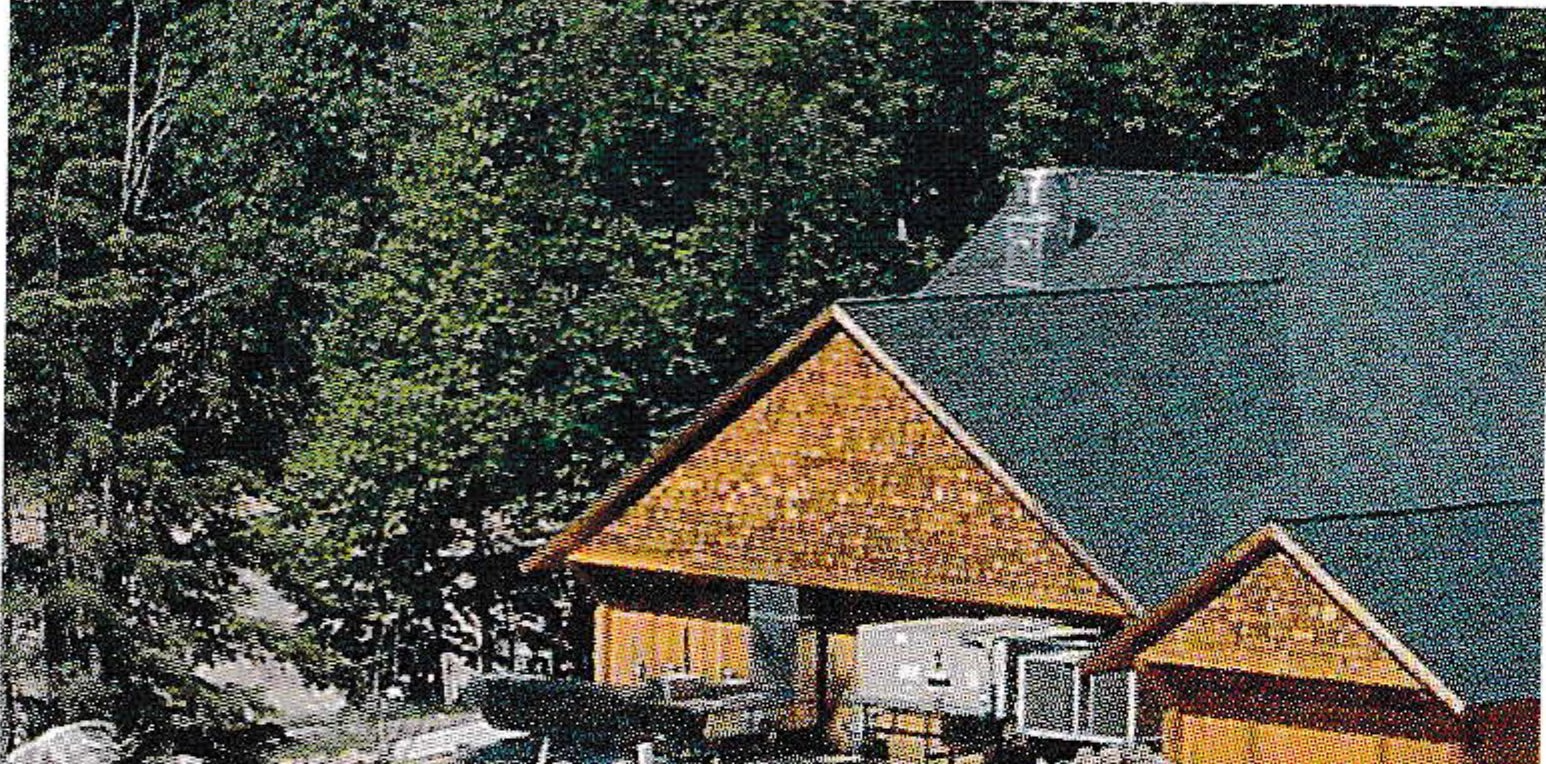
Price for the units is C$400,000 (about US$300,000 at current exchange rates). While the $200/sf price has understandably attracted a number of U.S. buyers, interest from Americans has waned since the Gulf War, developer Paul Mailey of Maicon Construction told SAM.
Granite Peak, Wisconsin
Granite Peak, formerly Rib Mountain, has been on a development tear since being purchased by Charles Skinner three years ago. This summer, the expansion culminates with the installation of a high-speed Leitner-Poma six-pack. With a vertical of nearly 600 feet and a length of 3,200 feet, the Comet (the lifts are all named after Santa’s reindeer) rises up the center of the area. This top-drive installation is also unusual for its decor: the terminals are clad in cedar.
The area has vastly increased its visits and tripled its skier/rider revenues in three years, the result of previous improvements, such as expanding skiable terrain, increasing the trail count from 14 to 72 and erecting three other new lifts on the area’s 700 vertical. In addition, Skinner is building a new $1 million chalet alongside the area’s base lodge, which is being renovated as well.