


Scattered across two states and a half-dozen counties, Tahoe has been a bubbling cauldron of competing tourism interests that are joined at the hip by a common denominator—the lake. But they’ve each been singing a different tune and, as a result, out-of-state travelers have no singular impression of the place. Is it a gaming destination? A skiers’ paradise? A boating mecca? A hiking and biking complex? A honeymooners’ retreat?
To say that Tahoe has an identity crisis is an understatement. Despite 14 ski areas, an investment of more than $800 million thus far to create villages at four of them, and an alpine lake that has 72 miles of shoreline and never freezes over, the region consistently lags behind Colorado, Utah and Whistler in attracting the high-spending destination skier who comes for an average of five days.
But the separate voices that have been promoting Tahoe with different messages are finally harmonizing. In an historic milestone for the region, and perhaps in ski marketing in general, the major players at the lake next season will roll out a cooperative national advertising program keyed on the asset that’s always been at their feet—the lake. Never mind how many lifts or how much vertical feet are here. The Blue World campaign, created by a high-profile California ad agency, aims to push the one hot button that all visitors seem to agree on—the overpowering “blueness” of the water and its blue-sky horizon.
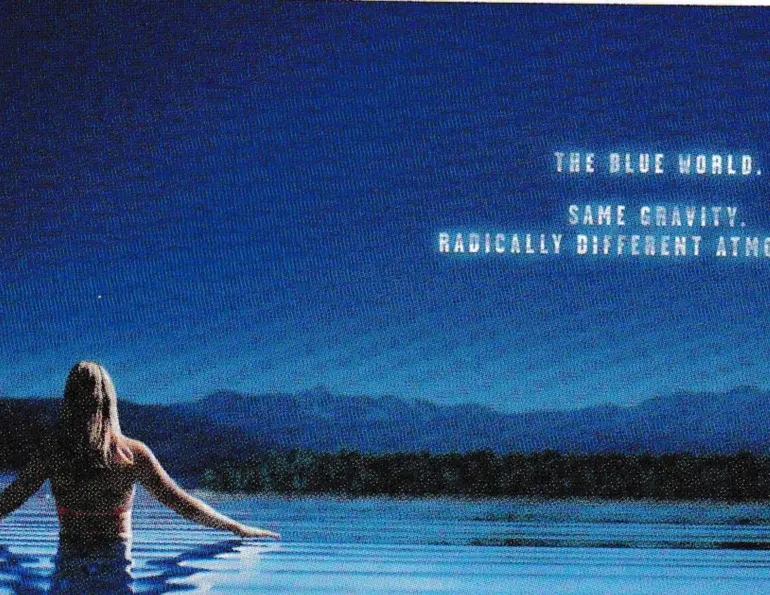
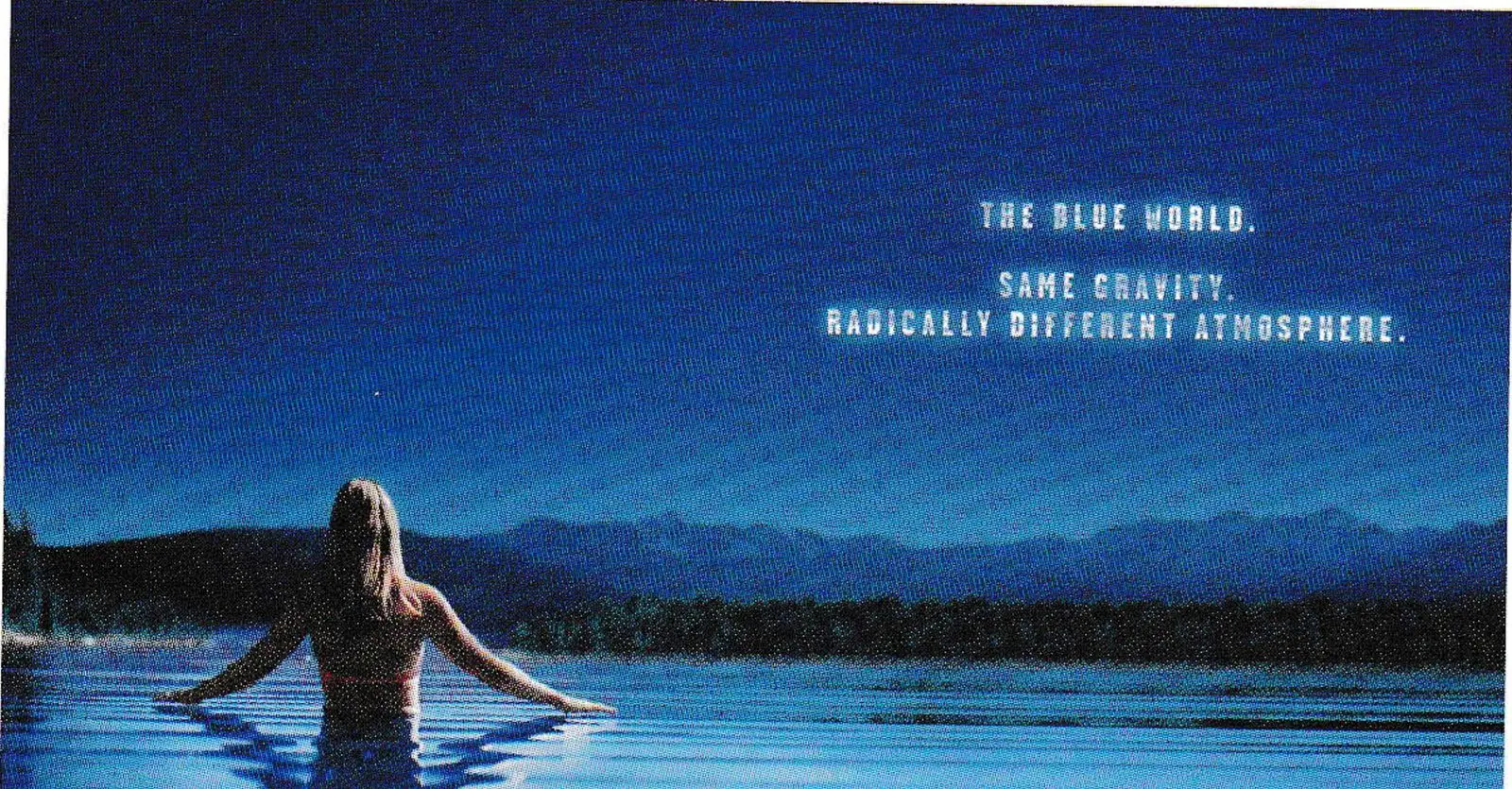
The ads, planned for national magazines, are blue-tinted with stream-of-consciousness slogans and people engaged in simple and singular things. One ad with an image of a man jumping off a pier into the lake says: “You Are Now Entering the Blue World. Population: Happy.” Another shows a bikini-clad woman half-submerged in the lake and says, “The Blue World. Same Gravity. Radically Different Atmosphere.” (A separate set of slogans is being developed for the ski season.)
And those ads are just the beginning. There is talk of bringing the motif to a grass-roots level, with blue cocktails, blue dice, a new South Lake Tahoe transit system named “Blue Go,” blue-plate specials at local restaurants, maybe a Tahoe blues festival. Of course, corporate partners will be asked to join in. Think of the possibilities if Jet Blue begins airline service to Reno (talks have been ongoing). Perhaps Tahoe can convince Skyy vodka or the new blue liqueur Hpnotiq to feature you-know-where in its ads, or American Express to create a tie-in with its blue card, or Chevrolet to announce a unique blue-tinted Tahoe SUV, or Pepsi to dream up a blue soft drink, or even Crayola to develop a Tahoe Blue crayon. On Madison Avenue, blue is the red-hot color right now, and Tahoe is anxious to be part of the trend.
The theme may seem ridiculously elemental, as if someone scrawled on a Post-It note, “It’s the lake, stupid!” More than a few promoters at Tahoe have been pointing repeatedly to the lake until, well, they were blue in the face. But the largest attribute of the region has not always been the obvious one to promote, especially when you get a roomful of marketing warriors arguing over territorial rights and market share. Provincialism has been rampant at Tahoe for as long as anyone can remember, and that’s at least 30 years.
Why? Because conflicting agendas have produced enough battle lines to form a crossword puzzle. There’s the classic North vs. South conflict, something like the Hatfields and McCoys feud, in which the casino-dominated South Shore, which has the lion’s share of lodging and nightlife, has sparred with the woodsier, back-to-nature North Shore, which has the lion’s share of ski areas (11). Then there’s the California-Nevada lifestyle clash that pits erudite, granola-crunching San Franciscans against meat-eating, chain-smoking sagebrush Nevadans. And the Reno vs. Tahoe skirmish, in which Reno bills itself as the adventure capital of the region and has named its airport “Reno-Tahoe International.”
The Genesis of Blue
It’s that last brouhaha that got John Wagnon riled. Heavenly Resort’s veteran vice-president of marketing looked over the hill at Reno and saw an identity hijacking in the works. Faced with an uprising of Native American casinos in California (which now has 52 built or planned in the three years since voters legalized them), Reno is losing millions in gaming and lodging revenues, and is frantically seeking to reinvent itself. The tourism interests there are actively portraying the city as an outdoor adventure destination, essentially hitching their wagon to Lake Tahoe’s rising star. (Ironically, this was the place that kicked out the twice-annual Outdoor Retailer trade show, the city’s largest convention, a few years ago because the casinos complained that attendees weren’t exactly up for all-night sessions of blackjack or craps.)
“I’m not an anti-Reno guy,” says Wagnon. “I don’t blame them and I don’t hold it against them. But we’ve had 20 years invested in building the Lake Tahoe brand, and we can’t sit back and let a third party that is not in the ski business influence our destiny. We need to have control of our image and define our identity in a cohesive, consistent way.”
Just over 18 months ago, Wagnon, who sits on several local tourism boards, saw that the main destination marketing organizations at South Shore were poised to launch separate advertising programs. The Lake Tahoe Visitors Authority (LTVA), which is headquartered on the California side of the border, was interviewing agencies, as was the Tahoe-Douglas Visitors Authority (TDVA), which is located on the Nevada side a few miles away. “Here were two different entities working on two different campaigns to respond to the same area, and that didn’t make sense,” says Wagnon.
So he arranged a power lunch with Skip Sayre, the new vice-president of marketing for Harrah’s and Harvey’s, which merged operations in 2001, and suggested that enough is enough. Sayre, a former executive director of the LTVA, is an influential voice in the Lake Tahoe Gaming Alliance, which represents most of the casinos at the lake.
Strange Bedfellows
To understand the significance of this meeting, a partnership of gaming and skiing was once considered less likely than a peace accord between Israel and the PLO. Fifteen years ago the casinos snubbed skiers as skinflints who mooched on cheap buffets and free drinks but wouldn’t open their pocketbooks for a song. Now, of course, those skiers, mainly Baby Boomers, are older and more affluent. They are buying second homes and they have money to burn. They are now the upscale clients that casinos need to replace the nickel-and-dime slot addicts who are likely to stop at Indian casinos down the road rather than slug their way over snowbound mountain passes. New tribal-owned casinos, some of them as lavish as anything in Las Vegas, have sprung up off highways 80 and 88 west of Tahoe, right in the path of skiers heading up from the Bay Area and the Central Valley. A third, proposed by the Miwok Indians, is planned for Highway 50 and, many fear, would shoot an arrow into South Lake Tahoe’s own gaming industry.
Necessity, as they say, is the mother of invention. Now the Tahoe casinos are ready to embrace the skier/outdoor aficionados with serious promotion dollars. “We had been doing the same imaging of the lake for four or five years and nothing was happening,” says Sayre. “You have to continually reinvent yourself, and we had fallen behind other, more sophisticated destinations. It was time for the entire lake to find common ground.”
From the meeting between Wagnon and Sayre came the genesis of the Blue World campaign, and things literally began to snowball. They created an informal steering committee. Then they convinced the two South Shore visitors’ authorities to combine advertising budgets, which are largely supported by the gaming sector, and to develop a coordinated campaign. Taking the lead, the LTVA screened ad agencies, awarded a contract to Mering and Associates of Sacramento, and began working on an outline for a novel campaign.
With rough ads in hand, the LTVA approached Ski Lake Tahoe, a marketing co-op of the six largest resorts (Heavenly, Squaw Valley, Kirkwood, Northstar, Sierra-at-Tahoe and Alpine Meadows). Ski Lake Tahoe agreed to join, and this was the forum that could unite the opposing factions. Why not make the campaign lake-wide? The idea of One Tahoe, united for the common good, sprung forth with all the fervor of the colonies signing the U.S. Constitution.
What finally made this partnership a reality was a thumbs-up from the North Lake Tahoe Resort Association, which, despite its name, actually represents both ends of the lake with a jointly-funded lodging reservation service. This was a big step, because the Association typically allocates the majority of its promotional dollars to the regional drive-up market, which comprises 70 percent of its clientele. By contrast, South Shore depends largely on destination skiers and normally stands to gain the most from national advertising—at least in the short term. “Our view is that we have to be in both markets at the same time,” says Steve Teshara, executive director of the Resort Association. “This was an opportunity to leverage our dollars into a bigger campaign with more firepower.”

The $2.5 Million Gamble
So now the largest marketing stakeholders at Tahoe have combined to fill a print media kitty with close to $1 million—just to sell skiing to fly-in travelers. (Another $1.5 million is being earmarked for summer promotions.) That represents a four-fold increase over what Ski Lake Tahoe and the Sierra Ski Marketing Council (which includes the Reno-Sparks Convention and Visitors Authority and the Reno airport) have been able to come up with.
“In the 18 years that I’ve been here, I’ve never seen anything of this scope,” says Carl Ribaudo, executive director of Ski Lake Tahoe. “We’re reaching a threshold here, and this collective effort could lead to others.” Ribaudo defines the momentum from cooperative marketing, huge investments from large companies such as Vail Resorts and Intrawest, and major redevelopment around the lake as “The New Tahoe Era.”
But the sudden cooperation might not have emerged if it hadn’t been for the compelling ad message developed by Mering and Associates. One reason that Mering won the contract was its work for the California Office of Tourism on a post 9/11 television commercial that featured personalized vignettes of Californians enjoying the various recreational delights of the state. Among the faces of the famous and not-so-famous were actors Clint Eastwood and Jack Nicholson. And there was this memorable tagline at the end: “All work and no play…makes Jack a dull boy,” the last half of which was uttered by Nicholson himself with his impish raised eyebrows.
Agency founder David Mering says it was time for Tahoe to take a new direction. “Our goal was to find the nugget that would pull everything together and create a bigger meaning for the brand of Lake Tahoe,” he says. “In the past, Tahoe was very functionally oriented, but these days you can’t win the hearts and minds of people by telling them you have the same stuff that everyone else has.”
The agency hired Smith & Company, an opinion research firm, to conduct six months of interviews with consumers at focus groups in major markets, such as Texas, Phoenix, Seattle and Los Angeles, and to mail out postcard questionnaires nationwide. The company also canvassed local tourism leaders as well as employees at ski areas and casinos.
“What we heard from Tahoe was a kind of inferiority complex. They were feeling that their product wasn’t up to snuff, that it couldn’t compete with other destinations,” says Mering. “But what the public told us was a different story; they saw some of the so-called flaws as charming. And people repeatedly told us that the lake was more powerful than anything that anybody else had. Even those who stayed mainly in the casinos spoke of walking outside and getting energy from the lake; that it was the epicenter of their entire experience. This presence defies description in many ways. But beyond that, what struck everyone was the amazing blue color of the lake.”
So the brainstorming over “Blue” began. “What does blue suggest to the consumer? We came up with a list of qualities: It rejuvenates, it has both calming and energizing effects, it has a connection to nature and at the same it’s involved with activities,” says Mering. “We wrapped it in attributes as if it were a personality. So the message is about human feelings, not so much about coming to Lake Tahoe. It sounds a little heady, but we’re in a world of tourism marketing in which everybody is saying that they have everything. So our goal was to make an emotional connection first, to create desire, and then people will seek out the information to make the final decision.”
And where will they go? Why, to www.bluelaketahoe.com, the website organized by LTVA.
When the Blue World campaign was unveiled to the public at a reception in Harrah’s at Stateline earlier this year, the community reaction was instantly positive. It was as if that intangible “something” of the lake, the essence that drew everyone here, had finally been distilled. And now it could be bottled and sold.
Bill Chernock, executive director of LTVA, said the winter ads will run in the skiing publications, as well as in travel and lifestyle magazines that had been financially out of range in the past. Although television spots have been created for a summer celebrity golf event at South Shore, there are no plans to air these in the winter. “Blue” will not supplant each company’s own advertising efforts, but businesses that range from ski areas to casino hotels are looking to have logos or other tie-ins with their ad campaigns and direct marketing programs. And, at South Shore, citizens groups already are meeting on ideas to immerse winter visitors in blueness.
Chernock sees the promotion as a “three- to five-year cycle” that will evolve each year. “It has longevity; it can be refined and matured over several generations of ads,” he says. “Launching it for the ski season makes sense because skiing and snowboarding are nicely defined markets and we understand them. It’s a test case on how well we can do this together and whether it will help us move Tahoe up the list of winter destinations.”
If “Blue” strikes gold and yields green, as in dollars, then the payoff may be in avoiding red, as in ink. In fact, there’s a lot riding on the hope that “Blue” will put the Tahoe region in the pink.

