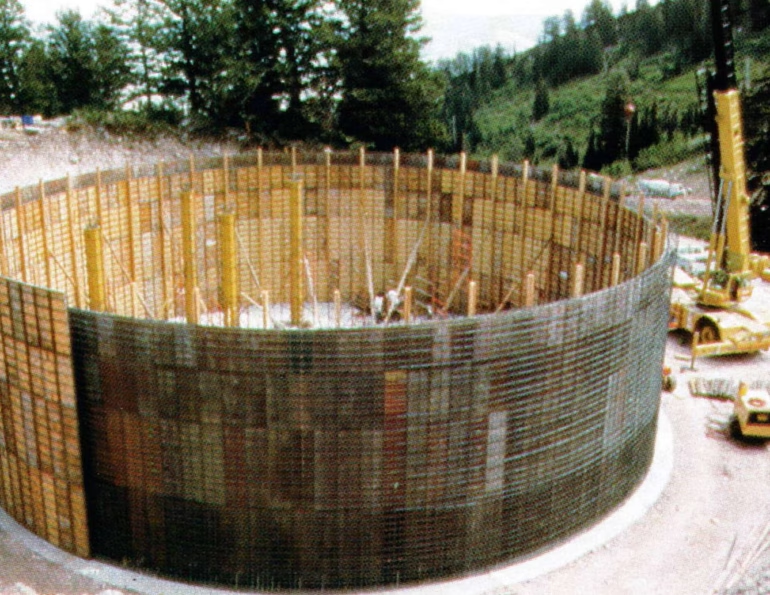
Brodie Mountain
The first thing Joe O’Donnell and I did after we purchased Brodie Mountain Ski Resort, Mass., in November, 1999, was to evaluate the true water capacity of the snowmaking system. Fortunately, a short cold snap with temperatures at 20 degrees F enabled us to take the snowmaking system to the max. With five fan guns borrowed from nearby Jiminy Peak added to the existing eight guns, we discovered the feed pumps for the snowmaking system could not keep up with maximum production capabilities. The management team quickly recognized that increased water flow would be required for a competitive snowmaking system. Unfortunately, timetables for getting additional feed pumps or high-pressure pumps were unrealistic because it was almost opening day.
Fearful of another La Niña-inspired snowless winter, we looked for alternatives. Based on our experience at Jiminy Peak, we came to the conclusion that a summit reservoir was the only answer. A top-of-the-mountain reservoir would not only provide a place to store pumped-in water during warm spells, but it would provide adequate gravity-head pressure to serve the snowmaking system on the lower half of the mountain during cold weather without the need to pump.
Fortunately, there were unused pipes coming down the mountain that enabled us to use separate lines for gravity-fed water on the lower half of the mountain. This would allow the high-pressure pumps to serve the upper mountain during snowmaking periods.
A quick look at the Brodie topographic map revealed a relatively flat area near the summit of the mountain that was approximately two to three acres in size. The area was devoid of wetlands and did not fall under any state regulations. The containment area would be less than three acres in size.
The town Conservation Commission did not need to act on this project, but was brought into the process to ensure that there was support, not misunderstanding, within the community. The commission quickly gave the go-ahead to commence construction immediately. All they asked for was a map and pumping data within a few weeks.
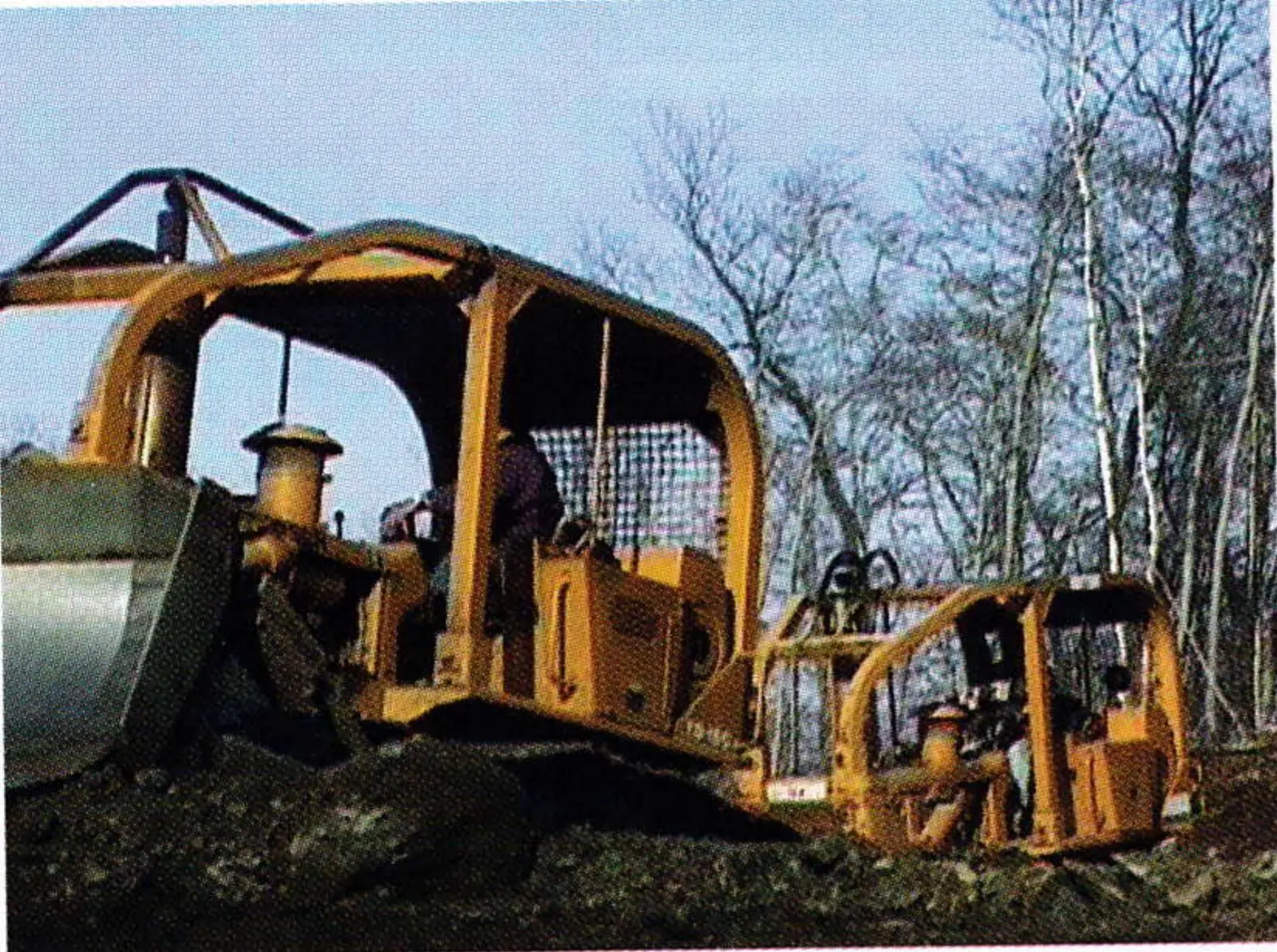
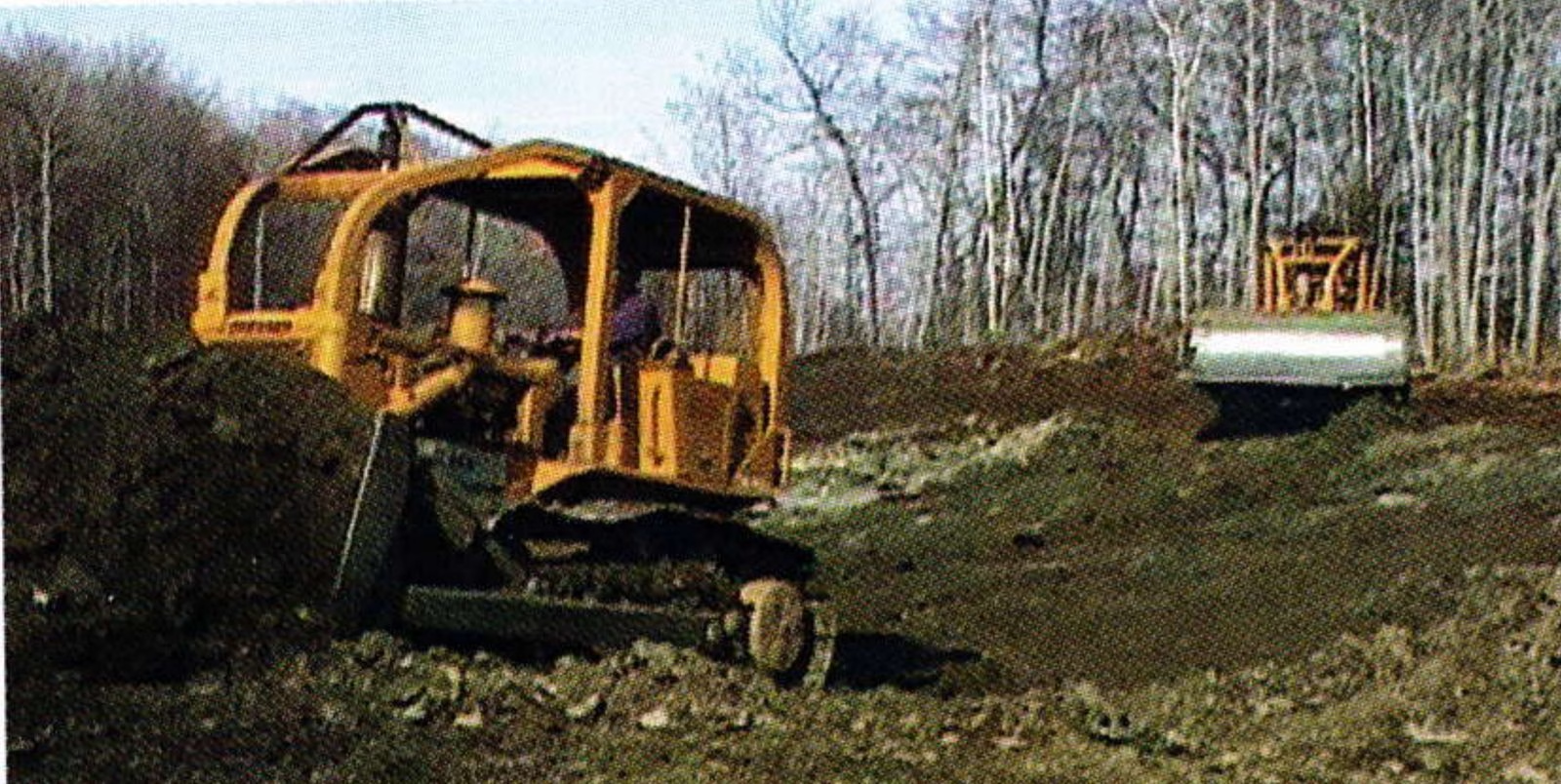
Just 10 days after we purchased Brodie, a crew went to work cutting small trees. The next day, at noon, the area was brushed and cleared and the bulldozers began excavating. Up to three bulldozers were working together at any given time.
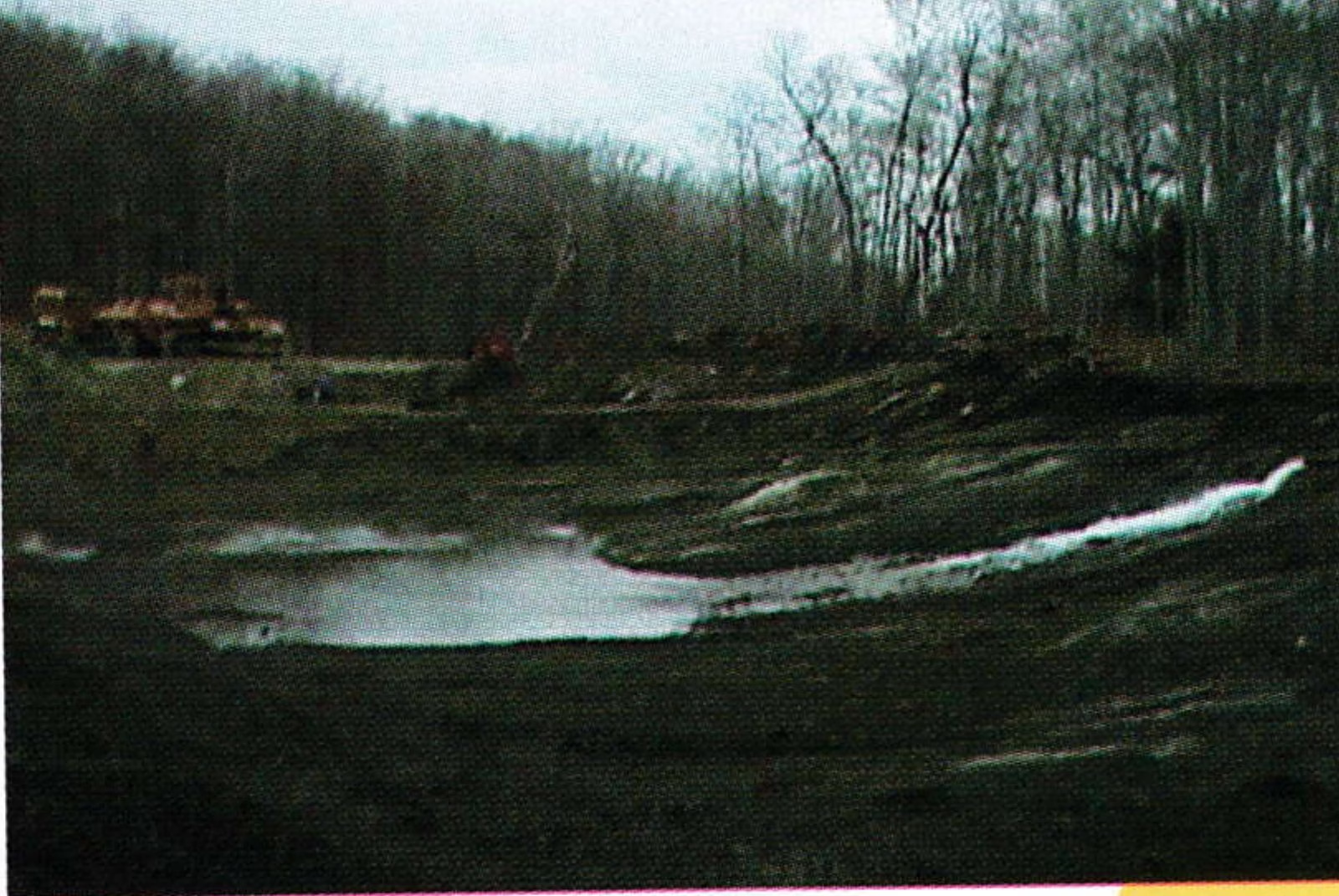
Fortunately, there was no rain of consequence during the heavy earth pushing and rock ripping—softened ground could have halted the project for the winter. Only on the final day and a half did the skies let loose with just under four inches of rain. Within a week after excavation began, the existing speed pump and high-pressure pumps worked for 60 hours to fill the new reservoir.
The beauty of this project was that it enabled the resort to use existing equipment more efficiently, thereby saving on additional energy demands. This process also minimized taxing the aquifer, as the requirements for water were not increased from what had been used in the last 15 years. It was an opportunity to double the snowmaking production by merely acquiring additional fan guns.
As it turned out, the winter did start off just as the prior year’s La Niña situation, offering minimal snowmaking opportunities and no real cold spells until mid-January. Still, Brodie Mountain was able to provide twice as many miles of skiing during the Christmas holidays as the previous year. The secret was a seven-day reservoir that doubled snowmaking capacity.
By Brian H. Fairbank

Snowbasin
The past two summers have seen numerous improvements at Snowbasin, Utah, in preparation for hosting the men’s and women’s downhill and super-G events during the 2002 Olympic Games. Add these completed changes to projects underway and scheduled for this summer as well as 2001, and a total $70 million ($13.8 million of which is to come from the Salt Lake Organizing Committee) is expected to be spent on trails and facilities in time for the winter games.
Part of the capital expenditures paid for the addition of a 15-passenger jig-back tram, two high-speed eight-passenger gondolas and a high-speed quad over the summer and fall of 1998. Taken together, those lifts opened an additional 1,400 acres of terrain to give the resort a total of 3,200 skiable acres. The lifts, all manufactured by Doppelmayr, have a combined capacity of 6,150 pph for a total VTFH of 13,921. The resort also purchased six Bombardier grooming vehicles, including two winch cats for prepping the steep sections of the Olympic downhills.
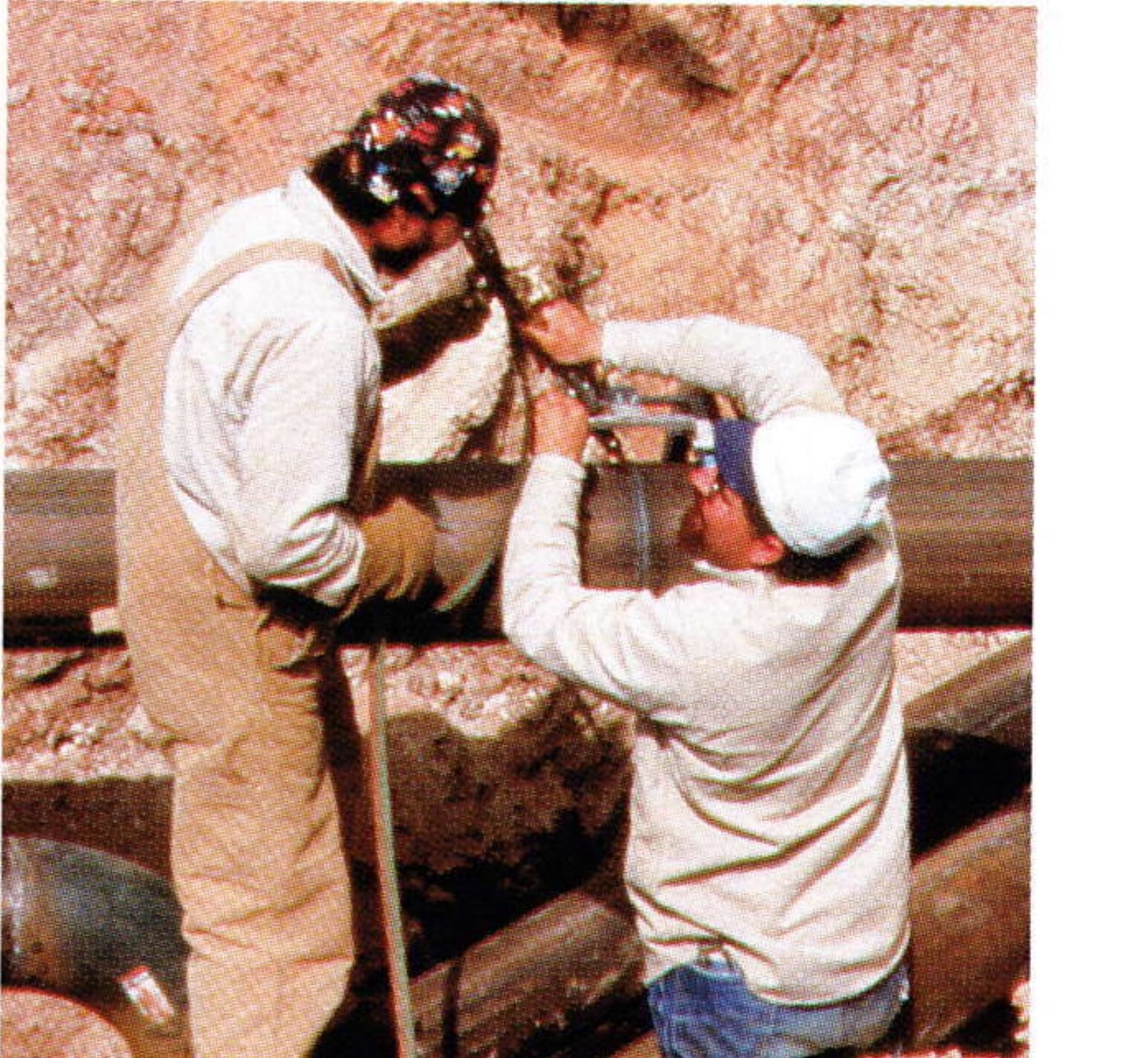
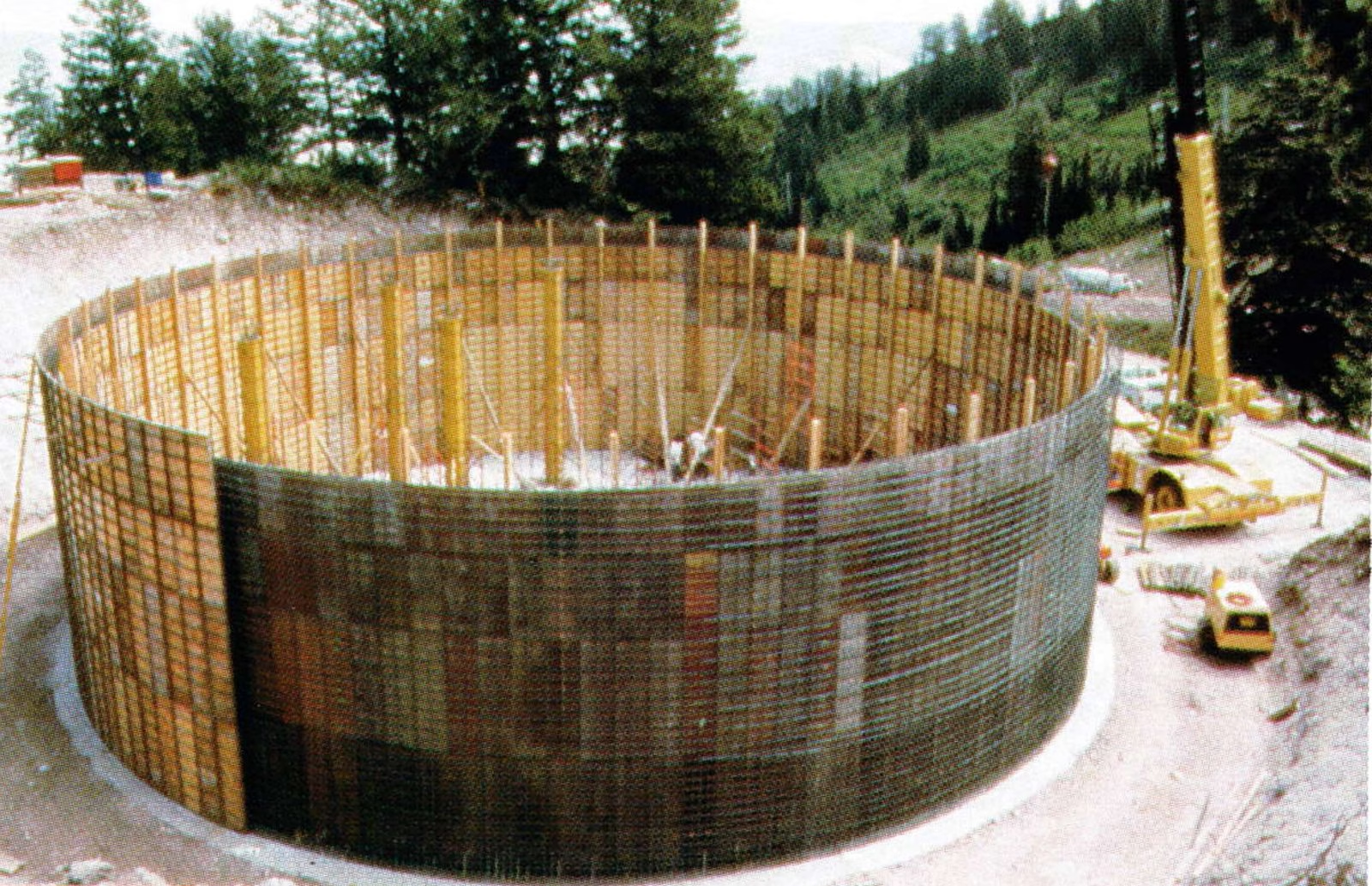
Last summer, work crews installed snowmaking and an avalanche control system. The York-designed snowmaking system uses 41 miles of pipe and 521 guns to provide coverage on 579 acres of terrain. A combination of York B-6 tower guns and SIL guns, Ratnik Snow Giants and Ratnik Baby Snow Giants cover key areas of the resort. The men’s downhill is lined with 59 tower guns spaced an average of 163 feet apart. The women’s course currently uses 48 tower guns and will get 10 more this summer. The system uses seven cooling towers and is driven by three high-pressure pumps, three low-pressure pumps and four cooling pumps for a maximum flow capacity of 3,000 gpm. Part of the project involved building and completely burying three steel-and-concrete water storage tanks. One is a one-million-gallon monster, while the other two are comparatively small at 300,000 gallons each. While adding snow to high-traffic areas, ironically the resort is looking to remove it from others when too much natural snow falls too quickly. A new Gaz-Ex avalanche control system was put in place along the ridge on top of No Name Mountain. The system uses powerful blasts of air-generated by oxygen-and-propane exploders-to trigger controlled slides. Three exploders were installed, each aimed at strategic release points along the ridge. The remotely triggered explosions are ignited and powered by solar energy and can be operated from a station at the base or by ski patrollers via their radios.
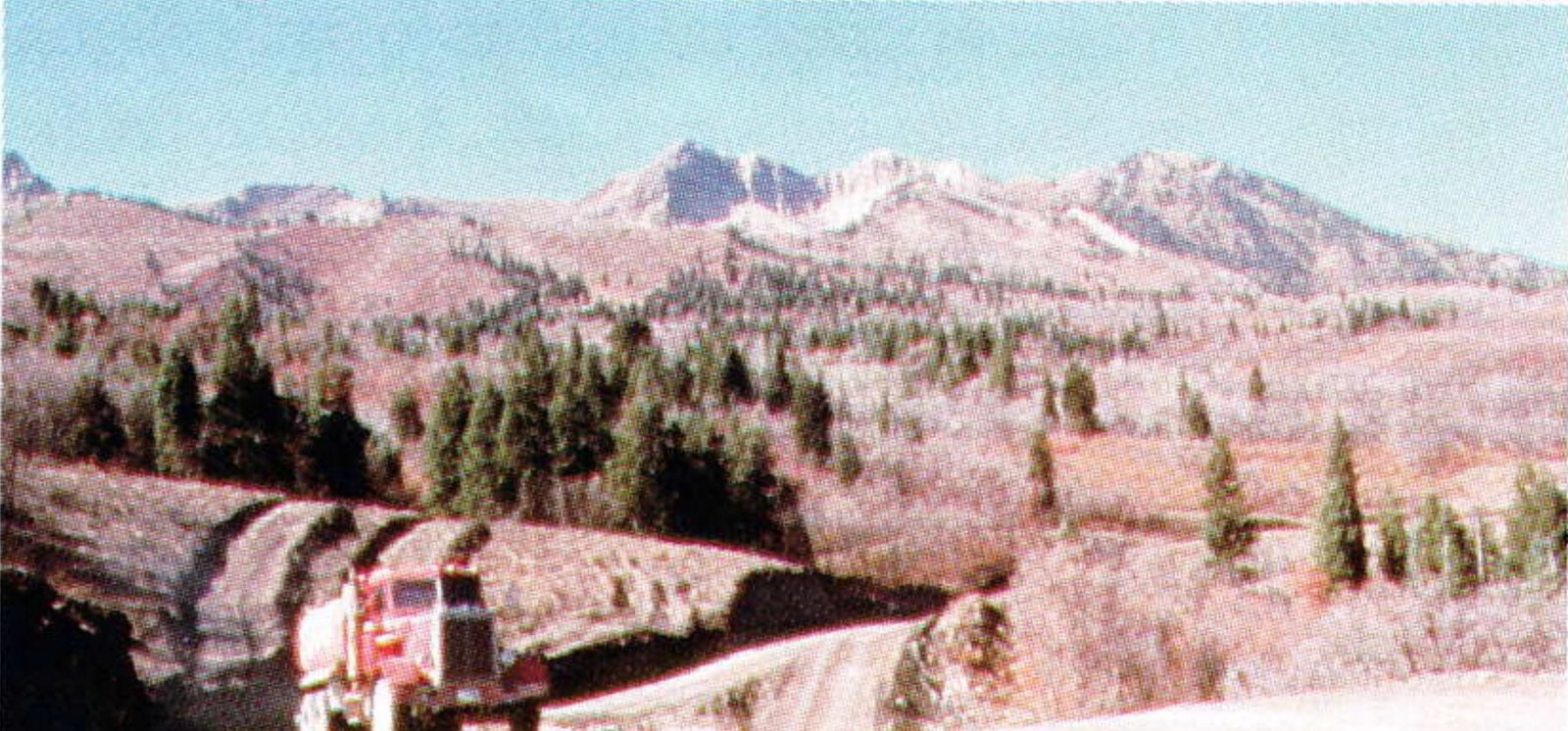
To get competitors and spectators to the site more efficiently, a new connector road linking Trapper’s Loop Road with the ski area will be 3 1/2 miles long when complete. The new connection, expected to be finished this October, will shorten the distance from Salt Lake City International Airport to the downhill finish area by 13 miles.
And, finally, seven new buildings will be constructed at the mountain. All will be built of log, rock and stucco with cedar roof shingles. The Strawberry Express Lift House has been completed, has a covered loading area, large rest rooms and will house gondolas overnight to cut down on start-up and shut-down times. A new 20,000-square-foot, three-story mountain operations building will contain offices, employee locker rooms and a snowcat service area with eight bays. Also in the works right next door is a 15,000-square-foot equipment and storage building.
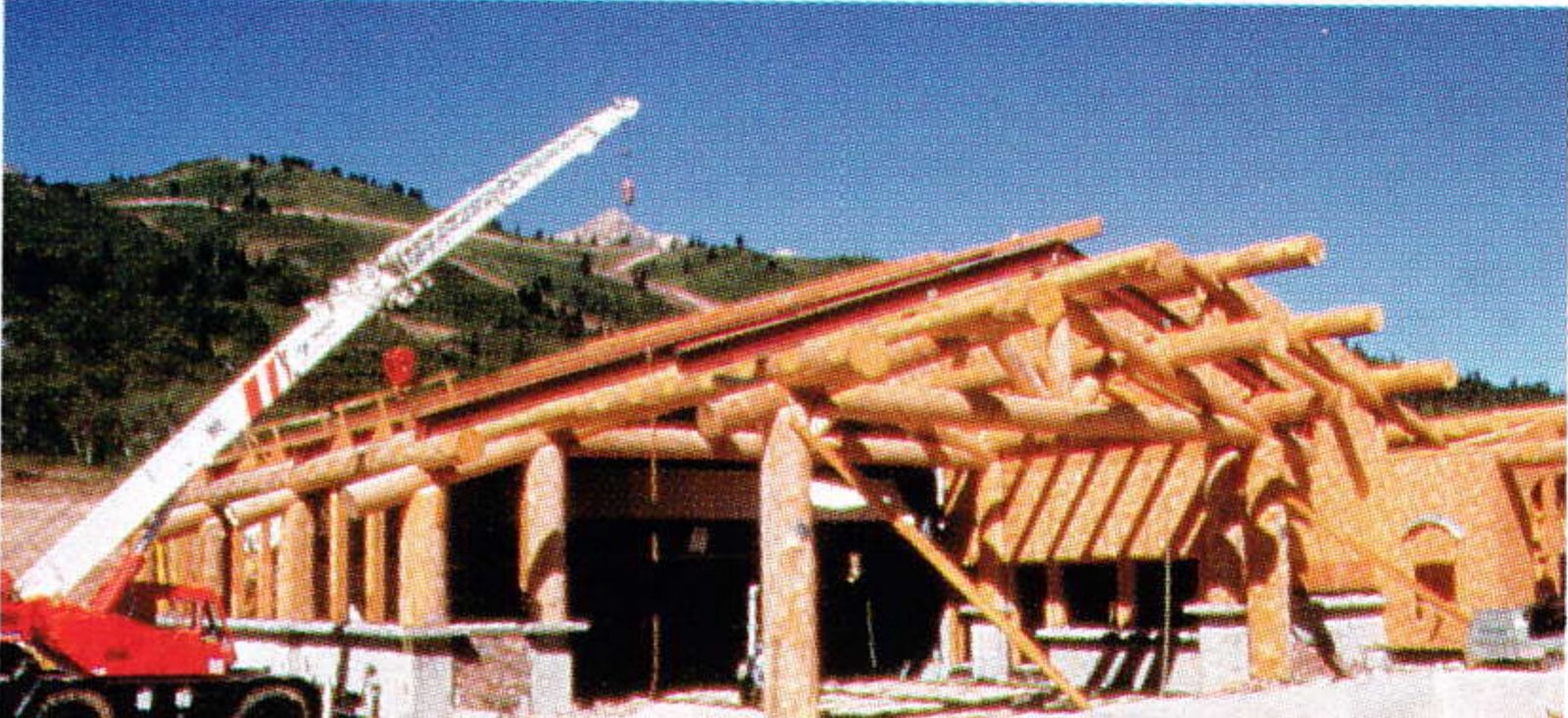
Slated to have begun going up this spring is a 38,000-square-foot day lodge to be located on the east side of the lower parking lot. It will contain food services, a bar and lounge, ski school desk and two offices for the U.S. Forest Service. Concurrently, crews will begin work on the new skier services building across from the day lodge. The 25,000-square-foot structure will house ticket sales, the rental shop and a retail store. It will also be home to the children’s ski school and contain shower facilities for guests. To cap off the building boom, two mountain lodges will be built during 2001. One will be 12,000 square feet in size and sit at the top of the Middle Bowl Express gondola. The second, at 10,000 square feet, will be located at the terminal station for the Strawberry Express gondola.
By Jonathan Gourlay