


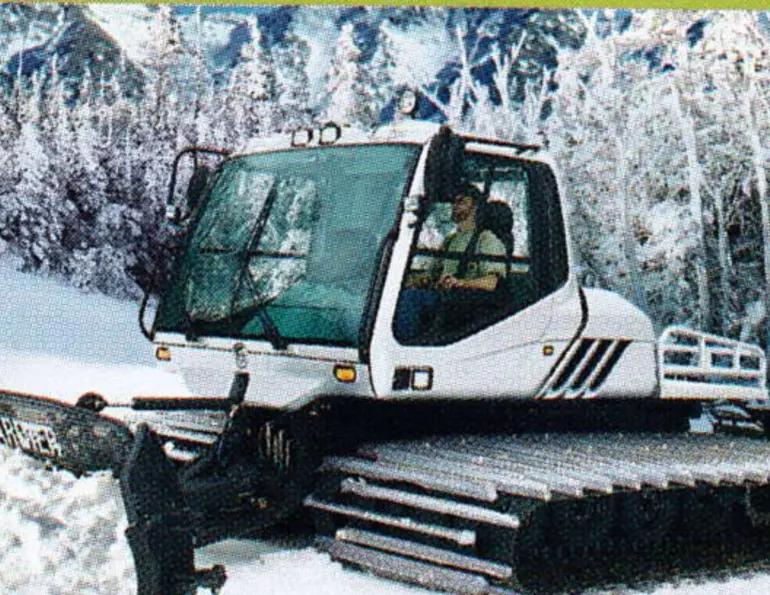
Park groomers are the hot vehicle for the upcoming ski season with both Kassbohrer’s Pisten Bully and Bombardier making a play for a share of the terrain park business with their adaptable and highly-specialized terrain park maintenance cats. Outside the terrain parks, Pisten Bully and Bombardier remain the only two active alpine grooming providers in North America as suggested in last year’s report on grooming vehicles. This is because LMC is no longer manufacturing alpine machines and Tucker is sticking with transport vehicles and grooming machines for snowmobile and nordic trails. As a result, buyers will see a reduced selection of vehicle styles (i.e. no center-cab machine for LMC lovers—at least not yet). Prinoth, which has not sold any machines in three years, has also been retired from our chart.
But the vacancy on the supplier side has led to some rumblings that Leitner is preparing an Italian vehicle assault on North America similar to the recent push introducing its line of lifts. Why the interest in this market? In spite of the relatively healthy world economy, Euro-
[Editor’s note: the text connecting this page to the next is missing from the archive scan.]
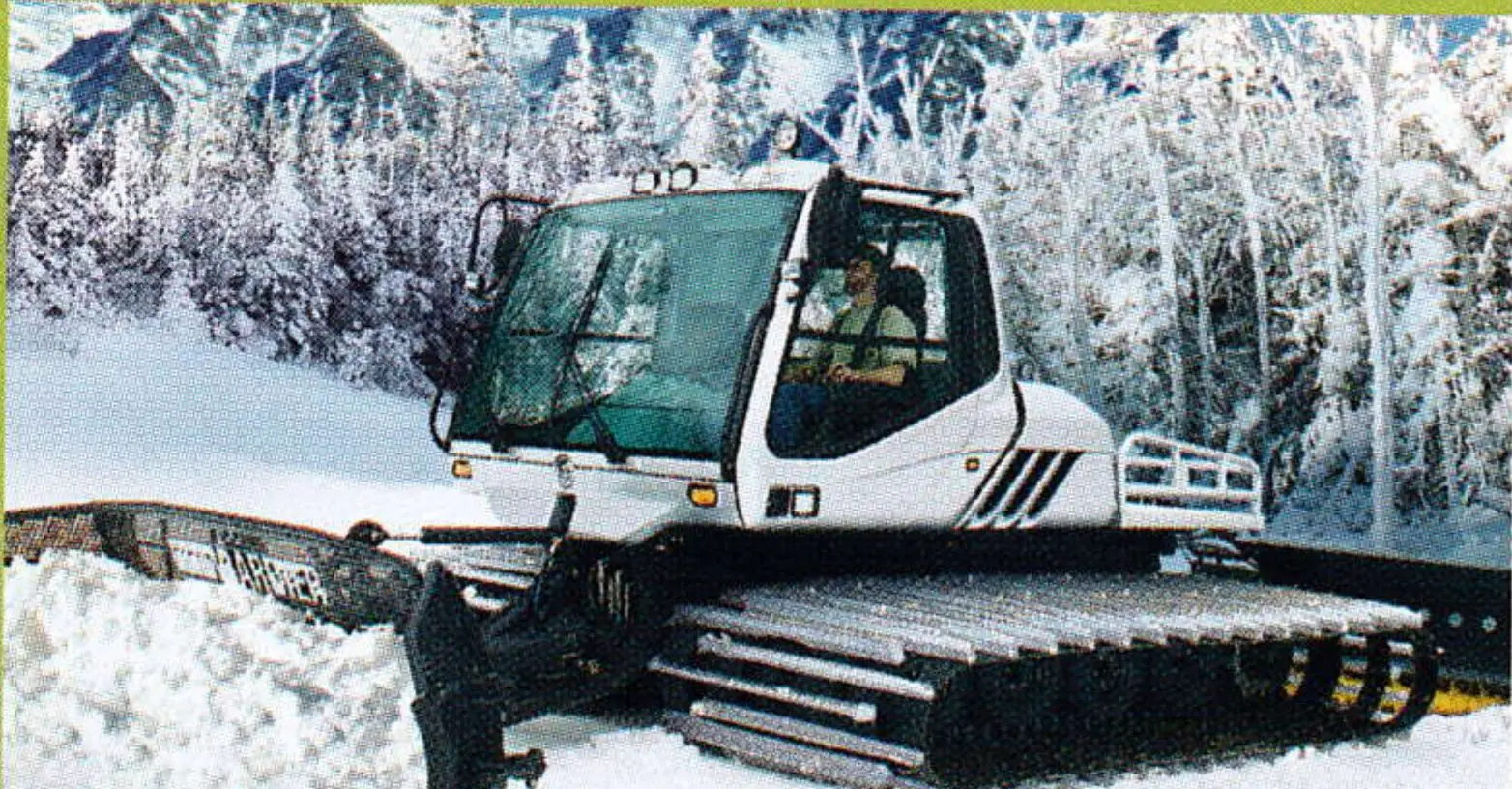
91 percent while blade-lifting range has increased by 76 percent. The height variation for the tiller is up 34 percent and the vertical angle of the lifting frame has increased by 184 percent. By re-engineering the vehicle’s overall undercarriage profile, the approach angle to a snow wall, for example, has been enhanced by 44 percent while the reverse approach is up a full 49 percent.
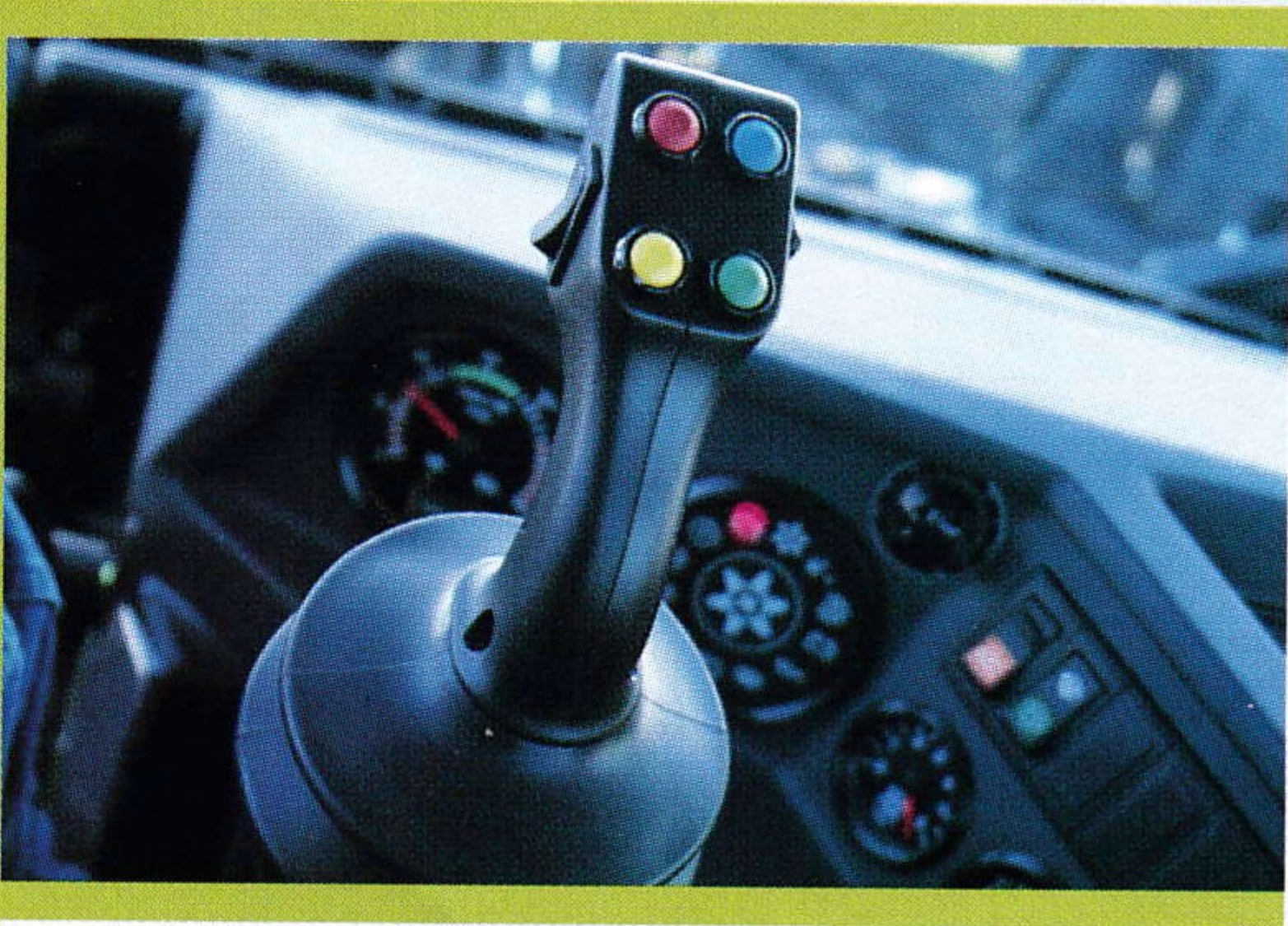
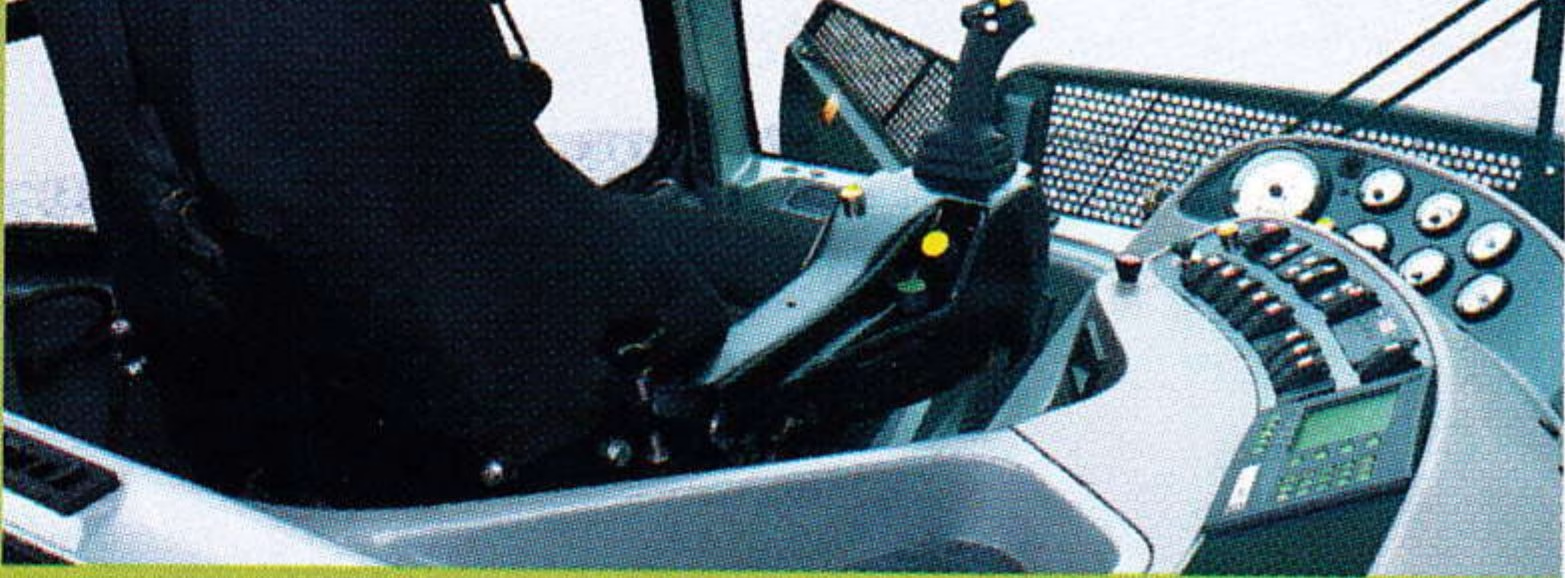
The machine also has a new pistol-grip joystick that houses tiller switches that control faster hydraulics as well as control two blade functions at one time. When backed up to a snow wall that needs cutting, the tiller can be raised to the desired height, lowered against the wall and then activated with the joystick’s trigger switch. The cutter can be used with the tiller raised as long as there’s downward pressure on the assembly. And for operators who are tired of looking over their shoulders to see what’s happening behind their backs, the company has solved the problem of strained neck muscles by providing all Park Bullys with a new swiveling pilot’s seat that rotates 15 degrees to the right.
Other goodies built into the Park Bully include a 3-inch by 6-inch slope meter mounted on the passenger door’s upper window quadrant to determine feature steepness, a four-point safety harness for the operator and filament-free Xenon lights for creating day-like conditions at night.
Beginning with this model year, all Bullys will be powered by Mercedes engines. The last of the holdouts to be converted was the 300W winch cat. While the 300W had previously carried Detroit iron under the bonnet with a displacement of 8.7 liters pushing 1,050 foot-pounds of torque at 1300 rpm, the Mercedes OM926 displaces 7.2 liters and has 980 foot-pounds of torque, but still makes 300 horsepower using less fuel. It owes its reduced power consumption (at an estimated 10 to 20 percent decrease in fuel flow) to a 660-pound savings in weight. It also has windshield wiper blades that are actually heated with engine coolant. Rounding out the accessory list on the 300W is an automobile-type, remote locking system for both cabin doors that includes automatic cabin lights that turn off when the engine is started. It’s also quieter. Information: (775) 857-5000.
On-the-Spot Snow Depth Radar
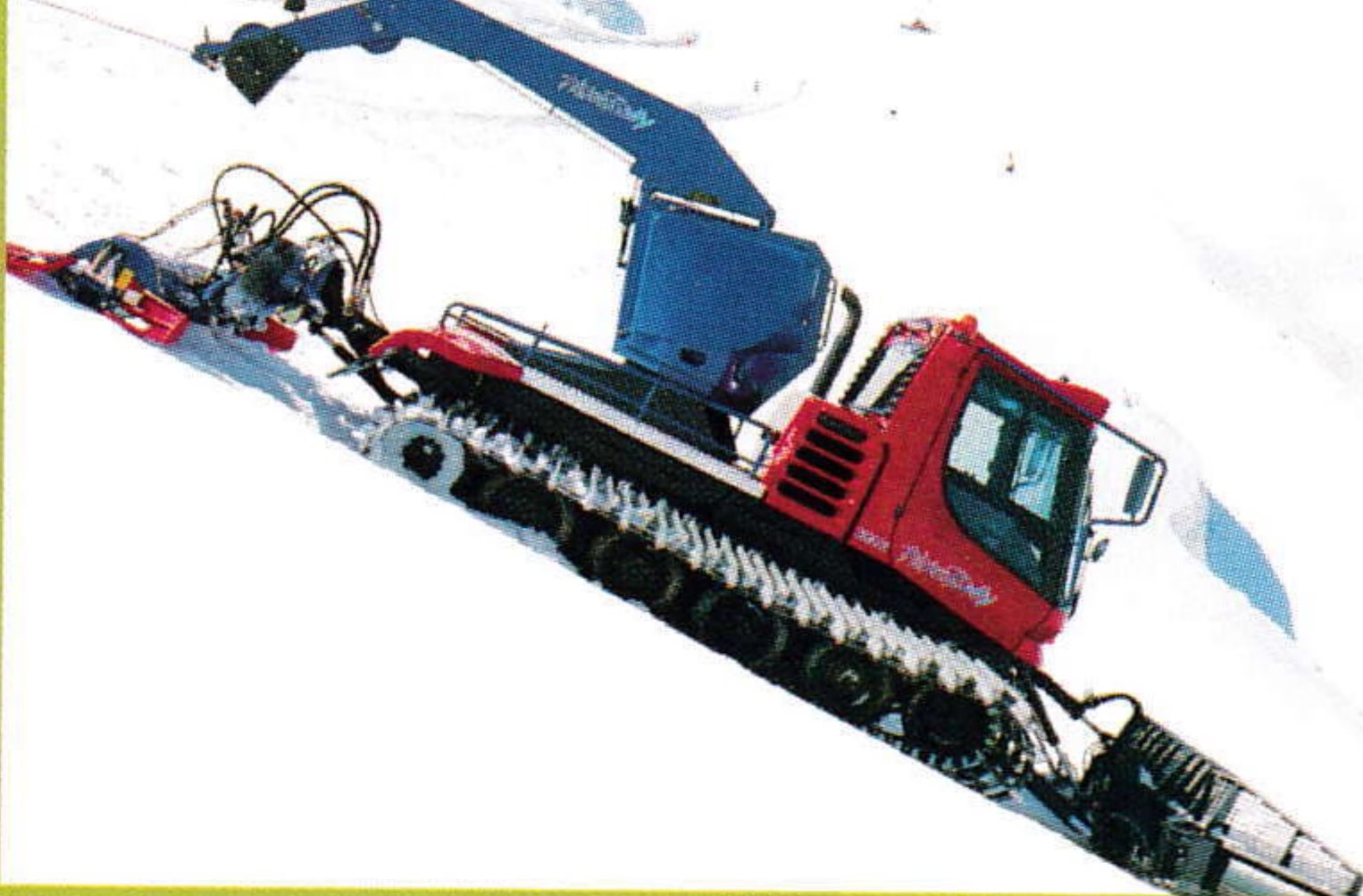
The latest technology in slope maintenance uses Ground Penetrating Radar (GPR) to measure snow depth under grooming machines as they work. Currently, SnowScan of Ontario, Canada, supplies snow-depth measuring equipment specifically for the ski industry. During the 1998-1999 ski season, SnowScan conducted field tests across North America. Operators who filled out surveys were unanimous in liking the real-time data on actual snow depths, but were also unanimous in asking for a better data display with more contrast for daytime grooming. Detailed evaluations are available on the manufacturer’s Website (www.snowscan.com).
The system works using a transducer or antenna to send a broadband radio wave down through snow to the ground. Anything in the path of the pulses will deflect, absorb or reflect the radio waves by varying degrees. The returning stream of data is picked up by a receiver and processed to display the vertical distance to the ground. A picture of the return time (bounce) and strength of the millions of signals sent and received every second provides an image or shape of the target area on a multi-color screen. Computer magic produces two lines on a small display in the cab that indicates the ground topography and the actual snow depth under the antenna, usually mounted on the blade push-frame. According to managers at ski areas that have tried the product, it takes a short time for experienced drivers to use the information to their advantage.
Grooming benefits include knowing where thin snow cover exists so tillers can be raised, finding deep pockets of snow for removal to thin spots and being able to “see” snow depth even when familiar landmarks are covered. An early purchaser and strong proponent of the system is Brian Fairbank, president and CEO of Jiminy Peak, Mass., who says the product cost (an estimated $22,000) will be easily recovered in more efficient use of equipment, utilities and labor.
Will GPS technology be married to GPR snow-depth scanning in the near future? It already is. At several test areas, a vehicle-mounted GPS receiver constantly records the location of the grooming vehicle and merges that information with snow-depth readings. The result is a color map of trails groomed that indicates where snow is needed. As Fairbank says, “It will allow us to measure what we manage and manage what we measure.”
—N.E.

Bombardier
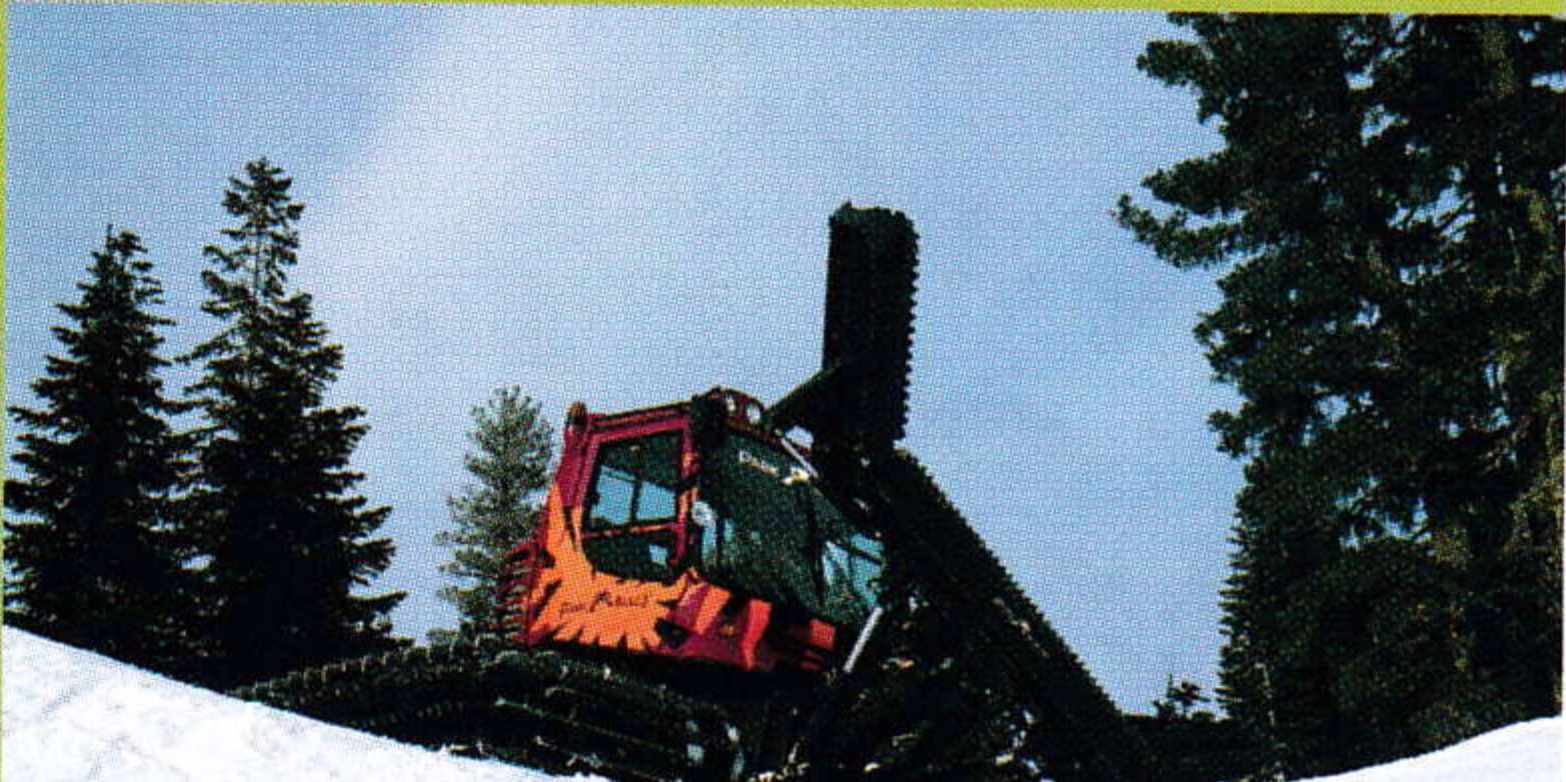
Bombardier’s answer to the Park Bully is a new concept vehicle, the BR SP (Snow Park). The groomer is loaded with accessories. A new blade and frame design makes it possible for the operator to raise the blade to nearly 8 feet in full tilt position because of two hydraulic cylinders instead of one. It was developed to make building ramps, tables and other park features easier. The blade’s wings are longer and its center section is shorter than on a conventional blade. A standard quick-attach setup allows for mounting attachments like a conventional blade or HPG pipe groomer.
Changes in the Posi-flex tiller have almost eliminated “spill out” or track wash that can occur after a tiller pass. A high-tech tiller control allows the operator to dial in “V” shape angles and individually control the pressure on each cutter independent of the lift frame. A new rear lift frame and other undisclosed tinkering has made it possible to tilt the tiller to a near-vertical position. The addition of two roof-mounted spot lights and Xenon lamps in the driving lights greatly improves night visibility.
In addition to a new Rexroth joystick with lateral tiller movement control there are side windshield wipers and a pilot’s seat—with control levers—that swivels 15 degrees for less neck strain when looking out the back. The vehicle also has a traction-control system designed to match track tension for variable conditions and tiller comb retainers that prevent roll-under.
Bombardier has also added a tower winch with direct cable pull to its new BR2000. With high line speeds and more drum horsepower available, the machine’s productivity has been increased. The company’s popular main-stay machines—the BR400 Plus MP and ME—will see only minor changes for next season, one of which is a new high-capacity cooling system for high-altitude work. Information: (802) 773-2213.
Tucker
The folks at Tucker Sno-Cat have zeroed in on the recent trend that shows snowmobiling matching and surpassing alpine skiing revenues in some states by concentrating their efforts on sales of their four-track groomers. Although new versions of the well-known bright-orange four-footed machines are not prevalent at today’s alpine skiing areas, they are popular for cross-country and snowmobile trail maintenance.
All new models are now fitted with Spicer 70HD differentials and the smaller 60 series will be phased out. In addition, “air lockups” for either or both axles controlled from the cab will now be available as an option on the 2000 series groomer. An interesting adaptation to the smaller model 1000 is the option of a rear-access PTO and category II three-point hitch powered through an Allison AT 545 automatic transmission. One ski area plans to operate a manure spreader for transporting snow onto it’s cross-country trails. On the maintenance side, the nine-tooth drive sprockets introduced for the rubber tracks in 1997 have reportedly reduced wear and the associated costs dramatically. This final tip from the New England rep: replace the 80-90 weight gear oil in the final drives with a synthetic 75-140W. At a cost of about $80 for the five gallons required, you just might save on having to replace the pinion bearings prematurely. On year 2000 vehicles currently being built, the synthetic oil will be standard. Information: (802) 334-7779.
LMC
Following a series of major setbacks at LMC, the 40+-year march from the early model 1200 through the 1404, the famous Thiokol Packmaster and on to the very desirable center-cab 260C with the Tri-Flex Tiller is over. According to company representatives, the utility vehicle models 1500 and 1800 may be phased out in the near future. While it seems the final chapter on LMC has been written, parts will still available from the
Table Headings
Definition of selected column headings is as follows: Engine Manuf/Model – manufacturer abbreviations are shown at the bottom of the table; model designation is from engine supplier. Turbo-charged engines are now commonplace in grooming vehicles. They differ mainly in the type of cooling that is employed to remove heat from combustion and friction. Noticeable improvements in horsepower and torque can be attributed to either Aftercooling or Intercooling. The horsepower listed is uncertified SAE (Society of Automotive Engineers) at the flywheel, including fan load. CID – is total cylinder displacement in cubic inches and liters. Torque is a direct indication of lugging power and at lower rpm’s than horsepower ratings. Fuel Consumption – represents average claimed fuel use during work cycle. Length – includes blade and tiller (if available). Width – with tracks normally supplied but without blade or tiller. Ground clearance – the least dimension between the undercarriage and the snow surface with track belts resting on the snow. Working Blade Width – is with wings closed and measured to outside of moldboard. Tiller Drum Width – is total cylinder length without finishers or box. Hydraulics Pressure – highest system pressure anywhere in vehicle. Weight – includes blade, tiller and all fluids and standard accessories. Pounds per HP – an indication of the power-to-static load factor. Approximate Price – the price of a complete vehicle with blade and tiller, unless noted.
| Class | Manufacturer Model | Cyl. # | Manuf. Model | T = Turbo, A = after, I = inter | HP @ rpm | CID in3/L | Torque Ft-lbs @ rpm | Fuel Rate GPH | Fuel Cap. Gal. | Length Ft.-In. | Width w/Tracks Ft.-In. | Height Ft.-In. | Grnd. Clr. In. | Blade Working Width Ft.-In. | Cutting Shaft Width Ft.-In. | Pumps Manuf. | Working Press. psi | Weight Lbs. | Pounds per HP | Approx. Price ($000’s) |
|---|---|---|---|---|---|---|---|---|---|---|---|---|---|---|---|---|---|---|---|---|
| Utility, Class I | Tucker 1000D-4 | 4 | CM/4B | T/A | 130 @ 2500 | 239/3.9 | 360 @ 1500 | 2 to 3 | 30 | 14′ 5″ | 7′ | 7′ 3″ | 10″ | – | Drag 8′ 9″ | Vickers | 1800 | 5,500 | 42.3 | 75 |
| Utility, Class I | Tucker Terra 2000D-6 | 6 | CM/6B | T | 152 @ 2500 | 360/5.9 | 414 @ 1500 | 4 to 6 | 50 | 19′ | 7′ 9″ | 8′ 2″ | 15″ | 8′ | – | Vickers | 1800 | 9,040 | 59.5 | 85 |
| Trail Grooming, Class II | Pisten Bully PB100D | 4 | MB/OM 904 | T/I | 170 @ 3200 | 256/4.2 | 488 @1200 | 2.2 | 34 | 23′ 4″ | 8′ 2″/10’2″ | 8′ 2″ | 12″ | 8′ 10″/10’3″ | 8′ 2″/10’2″ | Rexroth | 5900 | 7,495 | 55.9 | 143 |
| Trail Grooming, Class II | Bombardier BR 180 | 6 | PK 1006-6 | T | 180 @ 2500 | 385/6.3 | 469 @ 1500 | 3 to 5 | 75 | 19′ 8″ | 8’/9’/10′ | 8′ 6″ | 13″ | 8’/10′ | 10′ | Sundstrand | 6300 | 9,015 | 49.8 | 110 |
| Trail Grooming, Class II | Tucker 2000D-6 | 6 | CM/6B | T/A | 185 @ 2500 | 360/5.9 | 453 @ 1500 | 3 to 6 | 50 | 23′ | 9′ 9″ | 8′ 3″ | 15″ | 8′ 6″ to 11′ 4″ | 10′ | Vickers/Sund. | 5800 | 11,125 | 60.1 | 140+ |
| Alpine Grooming, Class III | Park Bully 200 | 6 | MB/OM 906 LA | T/I | 278@ 2300 | 388/6.3 | 815 @ 1300 | 4.5 | 50 | 28′ | 8′ 1″/12′ 9″ | 9′ 1″ | 12″ | 14′ 2″ | 12′ 8″/14′ 1″ | Rexroth | 6500 | 12,345 | 44.4 | 191 |
| Alpine Grooming, Class III | Bombardier PLUS me/mp (W) | 6 | CM | T/I | 275 @ 2000 | 506/8.3 | 825 @ 1500 | 4.5 to 7.5 | 69 | 26′ 3″ | 13′ 10″ | 8′ 10″ | 12″ | 13′ 10″ | 13′ 10″ | Sundstrand | 6300 | 17,450 | 63.5 | 180-185 |
| Alpine Grooming, Class IV | Pisten Bully 300 (W) | 6 | MB-OM926LA | T/I | 330 @ 2200 | 439/7.2 | 981 @ 1500 | 4.5 | 50 | 33′ | 8′ 1″/13′ 7″ | 9′ 5″ | 12″ | 14′ 2″ | 14′ 1″ | Rexroth | 6500 | 15,212 | 46.1 | 225 |
| Alpine Grooming, Class IV | Bombardier BR2000 | 6 | CM 330 | T/A | 330 @2000 | 507/8.3 | 1300 @ 1600 | 4.5 | 69 | 25′ 6″ | 13’10” | 9’9″ | 12 | 16’2″ | 14’1″ | Sunstrand | 6300 | 17,526 | 53.1 | 195+ |
CM Cummins; MB Mercedes Benz; PK Perkins; SC Scania; W winch available.
