


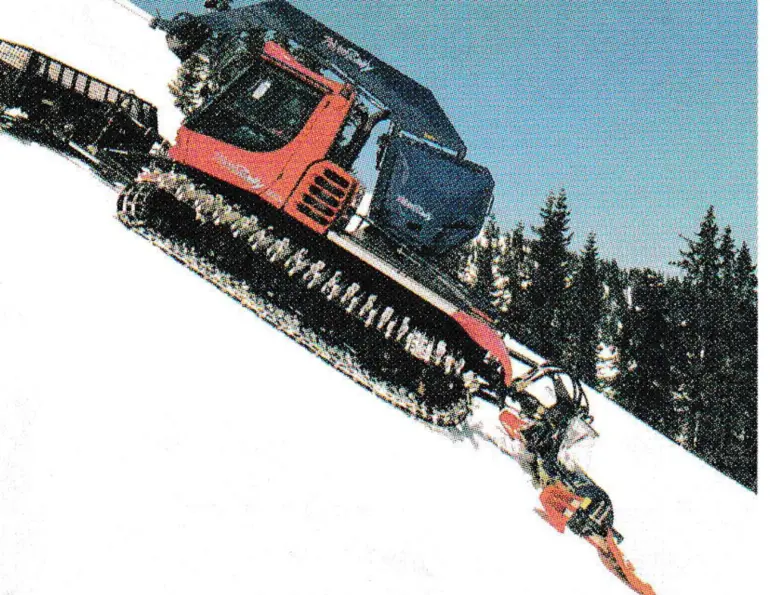
But, there is some return. The recent evolution of snow maintenance vehicles has increased cockpit comfort to luxury-car levels.
In years prior, suppliers have upgraded their power plants to meet the raised expectations of buyers, who have demanded more productivity and lower fuel consumption. Having unleashed the horsepower and torque required to drive their highly-detailed and -tested track profiles, suppliers have had more time to continue fine-tuning these colorful, comfortable, productive and expensive snow Ferraris.
Here’s a look at how suppliers have tweaked, enhanced and made their machines easier to operate and maintain.
Kässbohrer
Kässbohrer is just completing its brand new production facility in the small community of Laupheim, Germany, 75 miles west of Munich. John Glockhamer, national marketing manager of Kässbohrer, says that the new plant centralizes all support departments—service, parts, shipping, receiving, clerical and research—in a modern, 7.5-acre building. Vendors who provide components for the vehicles are responsible for providing the universally-accepted “just-in-time” method of parts supply. Congratulations.
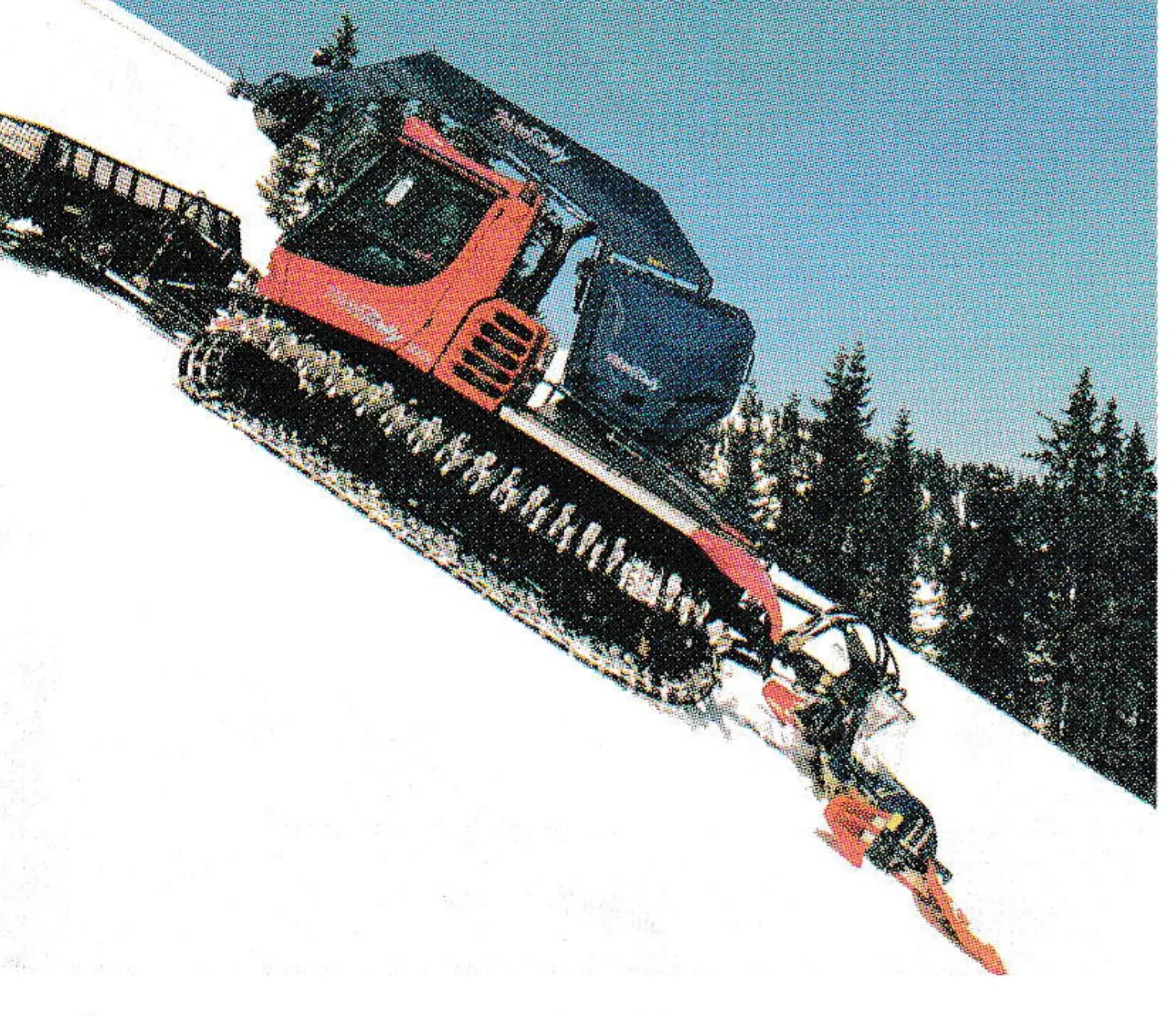
Model 300W
Three distinct improvements appear in the winching system. First, a 33 percent increase in cable pull, from 3 metric tons to 4 metric tons (remember, a metric ton is 2,200 pounds), provides more push power on the steeps. This results from the use of a larger pump and motor, as well as a seriously reworked frame and a gearbox with extended service intervals. Winch rope capacity of 1,050 meters provides a useful rope length of 1,000 meters (3,281 feet) using a standard 11mm rope (7/16 inch). Second, top grooming speed increases from 11.2 mph to 11.8 mph (i.e., from 18 to 19 km/h). Winch and vehicle speeds are electronically matched to eliminate rope slack during slope operations. A three-position switch allows the operator to select one of three winch speeds, accommodating the new top speed as follows:
| Position | Speed (km/h) | Line Pull (m-ton) |
|---|---|---|
| 1 = Low | 6 | 4.0 |
| 2 = Med | 10 | 3.2 |
| 3 = High | 19 | 2.5 |
The third upgrade, a new hydraulically-steerable boom, is also controlled from the cab. Gone is the cumbersome braking of a freely rotating boom. Now, steering the boom into the “pick point” for hookup is easier than ever before. Also, this new heavy-duty boom has been redesigned to provide greater resistance to undesirable side loading.
Model 300 (Special)
House movers, look out. This new, specially rigged, high-performance version of the popular 300 is aptly named the “Push Bully.” Take the massive frame and suspension of the 300 Winch Cat, reduce the ratios in the planetary gear sets, add some weight and increase the blade size and voila, a Push Bully. The already huge blade receives a 7-inch width increase to 15 feet and a moldboard/screen height increase of 12 inches. To balance the extra snow carrying capability, Kässbohrer engineers bolted a flat, 1,200-pound steel counterweight directly to the rear deck, which still allows room for the standard tiller attachment. Drive electronics have been tuned to take advantage of the different gear ratios and anticipated monster snow loads.
Model 200
The PB200 series groomer gets only minor adjustments to what was already an ergonomically designed cab—an infinitely-variable wiper speed control and driver-adjustable reach to the throttle pedal. Also, the Park Bully 200 will incorporate control “sticks” mounted on the driver’s left armrest. The ergonomic design conforms to the operator’s hand and includes switches that control track speed and the rear Stinger side shift and float.
Model 100
With a 10- to 12-foot-wide tiller, the 100 is the right size for Nordic and snowmobile grooming, or for utility use with optional cabs for up to 10 people. A 34 USG tank permits at least 12 hours of continuous work while maintaining a comfortable reserve. This 7,500-pound machine has four enhancements. All new models will offer a wider-base aluminum cleat (35mm) with steel wear bar that is riveted to the top edge. (Previous models offered only the steel or aluminum closed-profile cleats, but not the aluminum/steel Combi.) Next, a more aggressive tiller benefits from additional steel teeth. Plus, engine oil levels can now be checked without raising the cab. And finally, mobile radio reception is improved by redesigning the built-in antenna plate. Speed range remains unchanged at zero to 15.5 mph. For more information, check out www.katvpb.com or call (775) 857-5000.
Bombardier
Chris Nyberg, VP international sales, reports that a great deal of effort has gone into research and development as Bombardier focuses on the details to make tracks and implements as productive and user friendly as possible.
Tracks
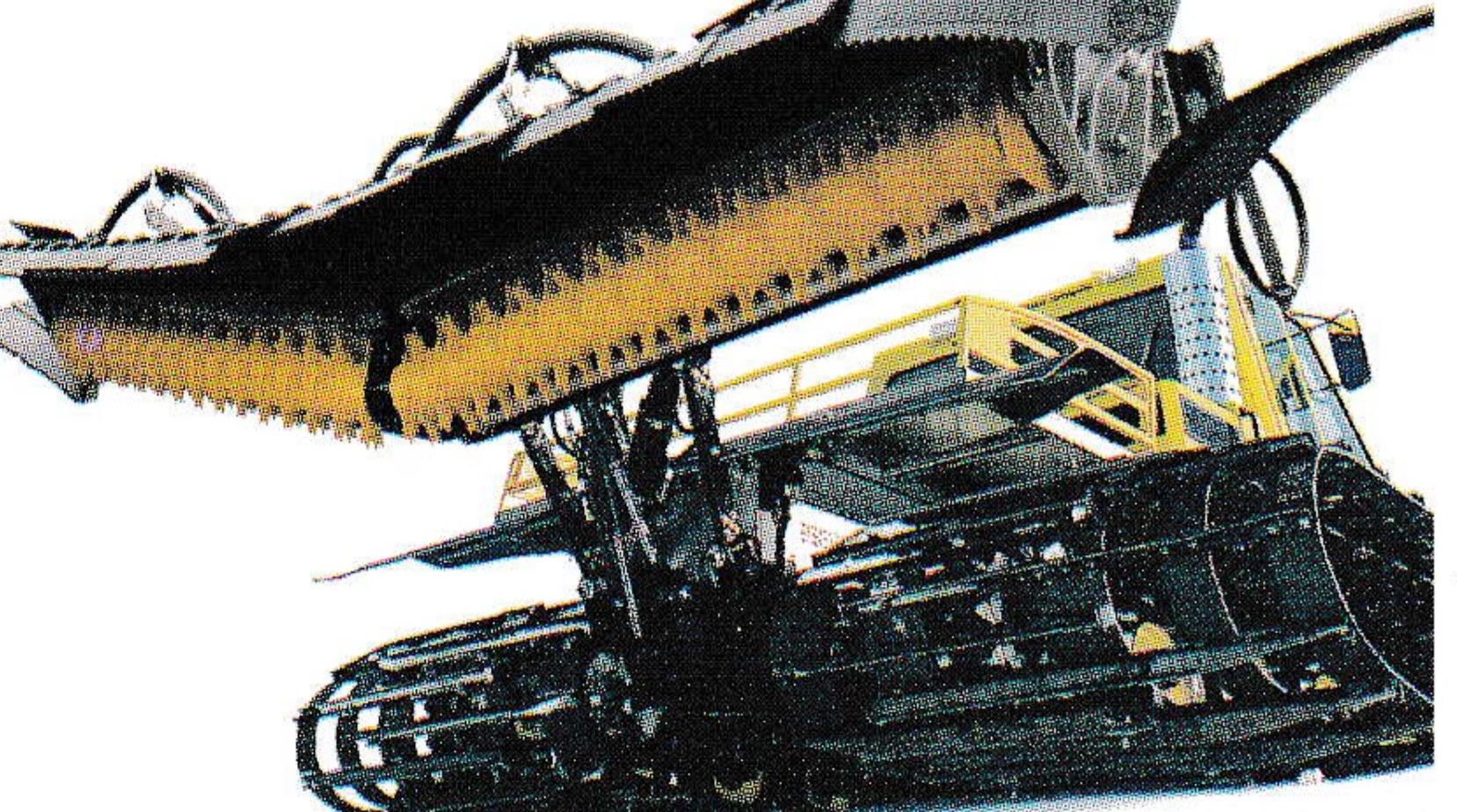
Asymmetrical tracks (more track area to the outside of tire centerline) have been around for many years. However, following two years of computer-controlled bench testing, the Bombardier SnowHow Department has modified the standard semi-closed “climbing profile” track section for more push power and longer life. Existing grousers have a long, 17-inch taper on the outboard end of the J-shaped, formed pieces of treated steel. The new profile reduces the taper to only 11 inches, placing more cutting edge into the snow surface. In addition, the center 20 inches of J section are formed to an almost closed shape, providing more strength over the tires where it is most needed. Split-fleet test customers found the new tracks provide greater penetration, smoother ride and improved life cycle and have converted all of their vehicles to the shorter taper style. A plus for the shop crew: by using a newly designed “bolt plate,” it takes only one person to install new grousers on existing belts. And, the well-established aluminum grousers will continue to be available.
Blade
Two years ago, Bombardier introduced the Terrain Master grooming machine for grooming terrain park features and related sculpting projects. The new Terrain Master II sports more blade curl forward and back, controlled by a miniature joy stick located on top of the existing main stick. Slight thumb pressure right or left moves the blade in the same direction, while pressing fore and aft controls blade curl. Both sticks are fully independent of each other, which should please those operators who prefer to set the blade height and adjust the curl as well as those who prefer to set the curl and adjust the height.
Winch
Bombardier has adopted a new style grooving system for the winch drum with much-improved rope lead-in features. Standard spiral grooves are acceptable, but adjacent ropes still rub against each other during the winding/unwinding process, causing accelerated rope wear. Grooves on the new drums run parallel for the first 180 degrees of wrap, then shift over one-half of a rope diameter. A longer rope life and quieter operation are promised. In addition to new grooves, Bombardier added 200 meters (640 feet) of rope to the spool. To make room for the extra number of wraps, rope diameter was decreased from 1/2 inch to a more standard, off-the-shelf size of 11mm (7/16 inch). Rope speed still exceeds maximum vehicle speed to prevent SRS (Slack Rope Syndrome).
Tiller
Only minor changes are planned for the Terrain Master Tiller, introduced last season. The adjustable wing option is still available but with softer plastics, a fine screw adjustment on the lifting cylinders and a system pressure relief valve just in case an operator tags a lift tower at 15 mph. The concave/convex Posi-Flex controls and side shift remain the same, with minor changes in construction.
HPG (Halfpipe Groomer)
New for next season is what might be described as a baby HPG. Instead of the usual 12-foot standard radius or 17-foot super pipe builder, Bombardier has developed the HPG Adventure. Its smaller 6-foot radius is perfect for beginner terrain parks and novice halfpipes. Side shift is standard, and it will mount to existing full size HPG frame and hydraulics using the same “third” pump. If you plan to buy a new machine, make sure you order the “front drive kit.”

Although Bombardier is known for its bright yellow paint job and classy graphics package, there are other colors that have become standards. Examples are Ferrari Red, Snow White with graphics, various shades of blue and, could it be, British Racing Green with gold accents. And, be advised, the venerable yellow Muskeg utility vehicle is available with a Cummins diesel, hydrostatic drive and high load carrying capability on its rear deck.
As mentioned in the May 2001 issue, Bombardier now represents Prinoth in North America. New vehicles will be provided in response to market demand. For existing equipment, complete parts inventories are maintained in Calgary, Alb., and Grand Junction, Colo. For more information, check out www.bombardier.com (Click: English-Site Map-Recreational Products-Utility Vehicles-Snowgrooming-Alpine Snowgrooming-Model) or call (450) 776-3600.
Tucker
Yes, Tucker Sno-Cat is very much alive in the snow grooming business. Is it selling groomers to the ski industry, though?
Yes, sort of. Last year, according to Dan Dressler, sales manager, Tucker Sno-Cat sold so many vehicles that they were working overtime just to catch up with orders already in place. Unofficial industry estimates place the total number of Tuckers sold each year between 80 and 110.
Why don’t we see new units at alpine ski resorts? First of all, Tucker is selling all it can reasonably produce to supply the snowmobile grooming and utility market plus a handful of units for Nordic trail maintenance. Secondly, it is difficult for a 10-foot-wide machine to compete with the higher productivity of more maneuverable, 14-foot-wide, high-horsepower two-track behemoths.
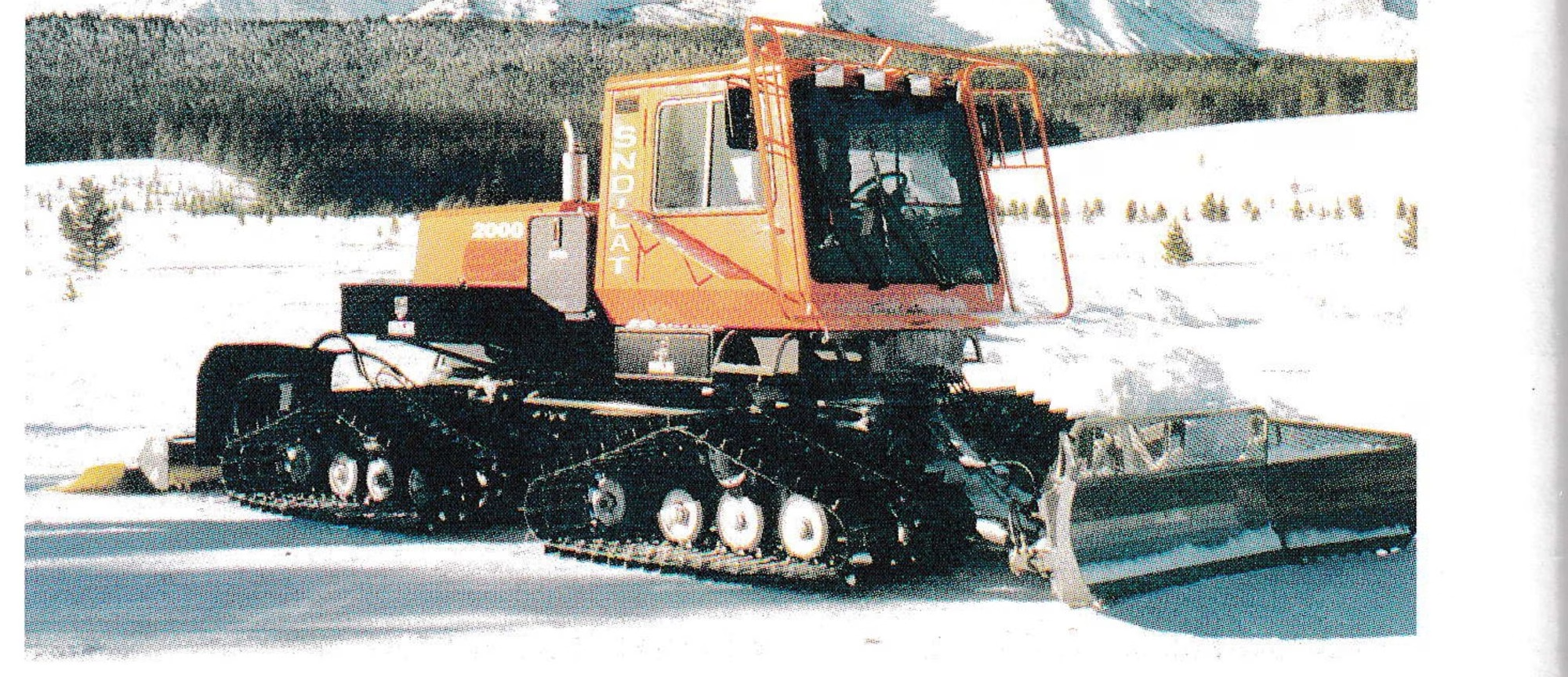
Is there a place for the venerable California Orange four-track at alpine areas? “Certainly,” says Bill Cook, east coast (North America) distributor for Tucker. He recommends the Model 2000 with a 10-foot, 12-way blade and a powered 10-foot tiller for smaller ski areas. A turbocharged, inter-cooled 185 hp Cummins power plant and Allison 545 four-speed automatic easily powers the non-hydrostatic machine that is 6,000 pounds less than the 14-foot-wide groomers.
For those who may be considering the Tucker 2000 for grooming snow, a major change is afoot. A new Funk transmission is now available that not only allows bolting the tiller pump directly to the PTO (vs. the engine) but also provides a very fast reverse speed for blading purposes.
A newly offered air-lockup for front and rear differentials provides true four-wheel drive to the popular Terra Track, which has rubber-encased grousers. Stu Campbell, of Track Inc., Tucker’s Midwest distributor, says these machines retain their value; it’s not unusual for a three-year-old machine to fetch 80 percent of its purchase price, he says.
The automotive-type machines are great for first-time or occasional drivers, like those found at snowmobile clubs.
The 15-passenger Diplomat contains amenities normally found just in high-end road vehicles. Equipped with a 76-inch wide cab, seat belts, rollover protection system, tinted glass, heated mirrors and power disc brakes on all fours, ski touring and customer appreciation take on a new meaning.
When you order a Tucker, Bill Cook suggests adding the brush guard option. Not only does it protect the vehicle, it also allows easier entry into the cab. For more information, check out www.snocat.com or call (541) 779-3731.
Vehicle Specifications
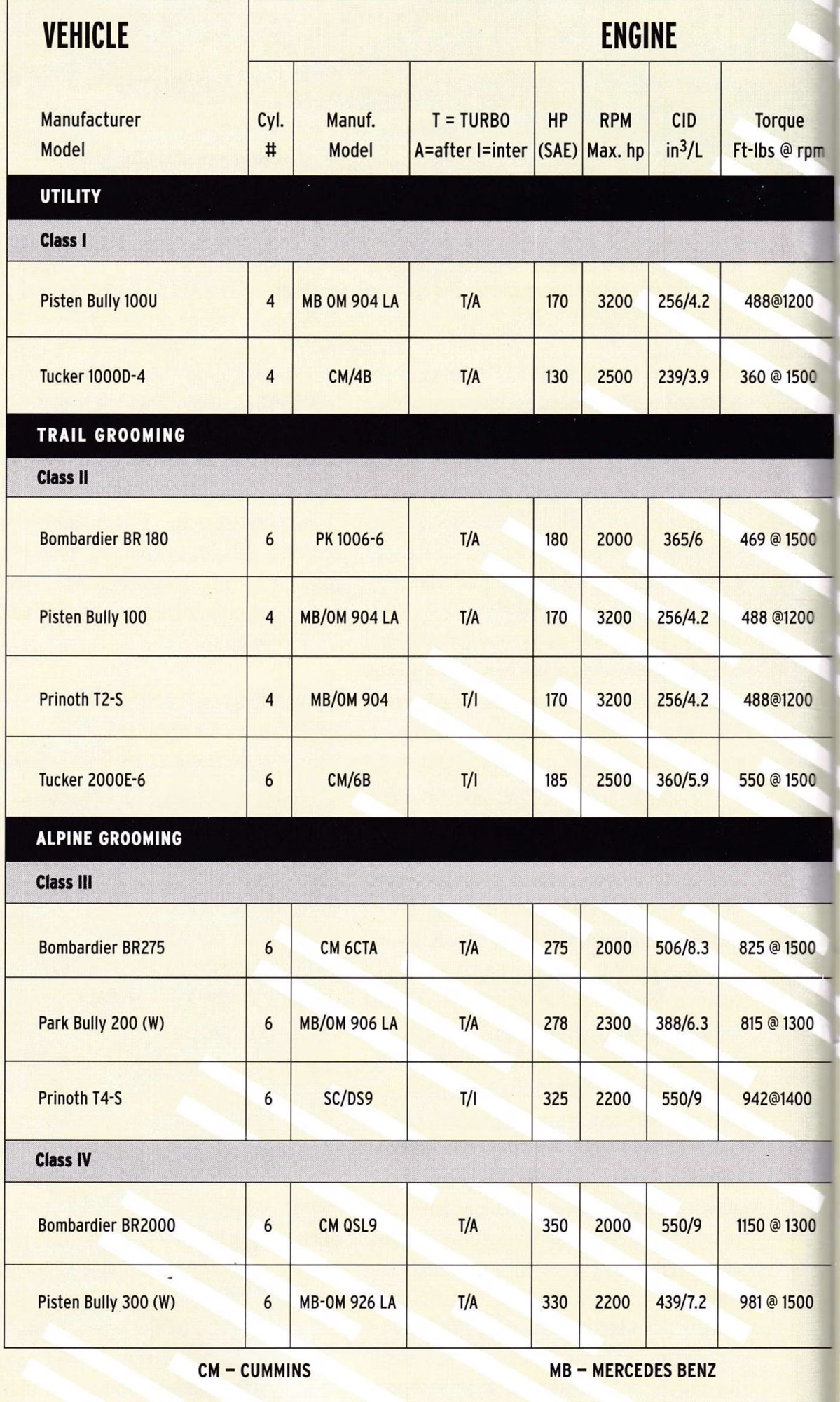
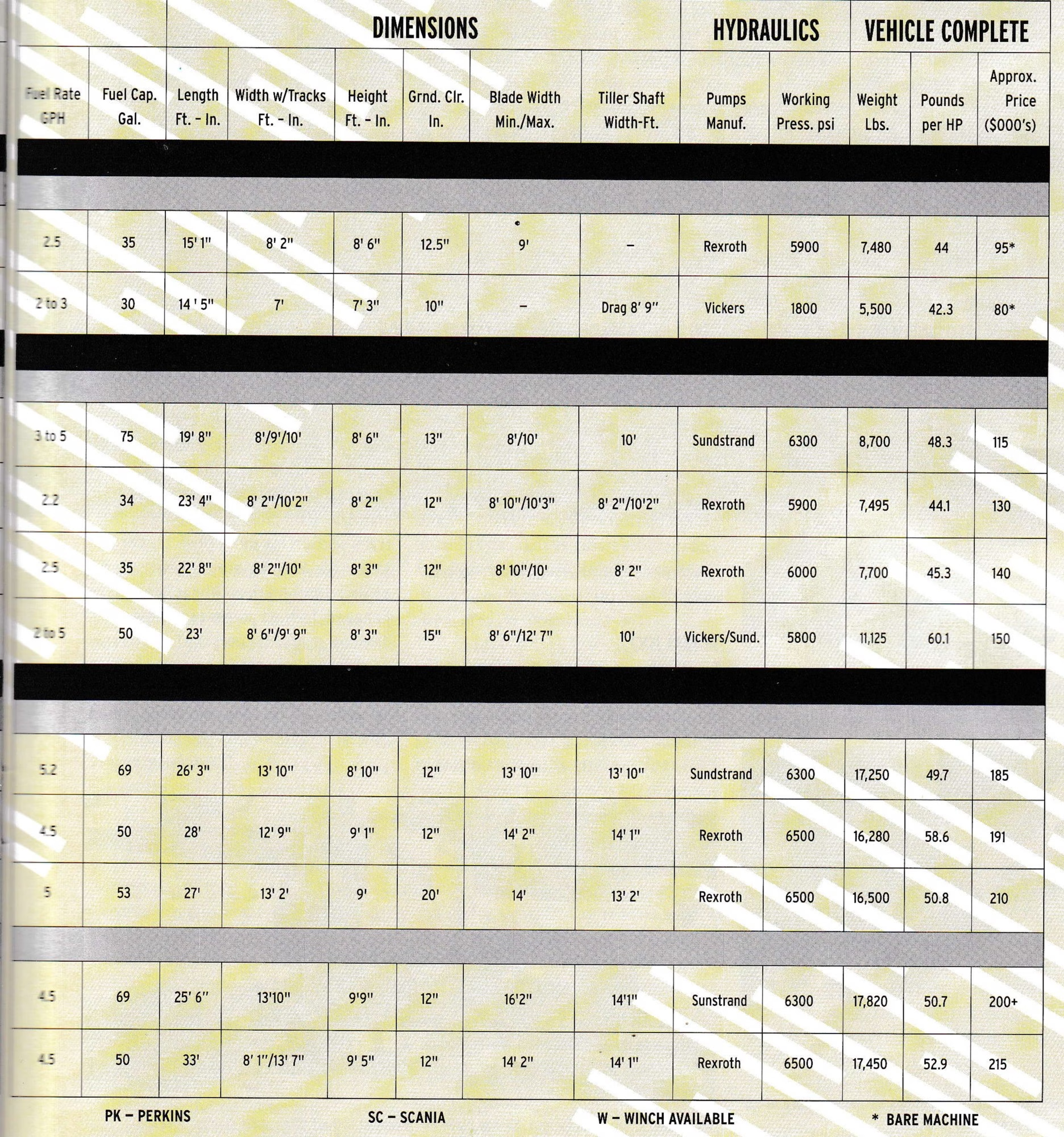
Table Headings
Definition of selected column headings is as follows: Engine Manuf/Model – manufacturer abbreviations are shown at the bottom of the table; model designation is from engine supplier. Turbo-charged engines are now commonplace in grooming vehicles. They differ mainly in the type of cooling that is employed to remove heat from combustion and friction. Noticeable improvements in horsepower and torque can be attributed to either Aftercooling or Intercooling. The horsepower listed is uncertified SAE (Society of Automotive Engineers) at the flywheel, including fan load. CID – is total cylinder displacement in cubic inches and liters. Torque – is a direct indication of lugging power and at lower rpm’s than horsepower ratings. Fuel Consumption – represents average claimed fuel use during work cycle. Length – includes blade and tiller (if available). Width – with tracks normally supplied but without blade or tiller. Ground clearance – the least dimension between the undercarriage and the snow surface with track belts resting on the snow. Working Blade Width – is with wings closed and measured to outside of moldboard. Tiller Drum Width – is total cylinder length without finishers or box. Hydraulics Pressure – highest system pressure anywhere in vehicle. Weight – includes blade, tiller and all fluids and standard accessories. Pounds per HP – an indication of the power-to-static load factor. Approximate Price – the price of a complete vehicle with blade and tiller, unless noted.
