
When the area is Aspen Highlands and the spark plug behind it all is George Gordon, your second reaction is to sit back, listen and learn how you can do it too.
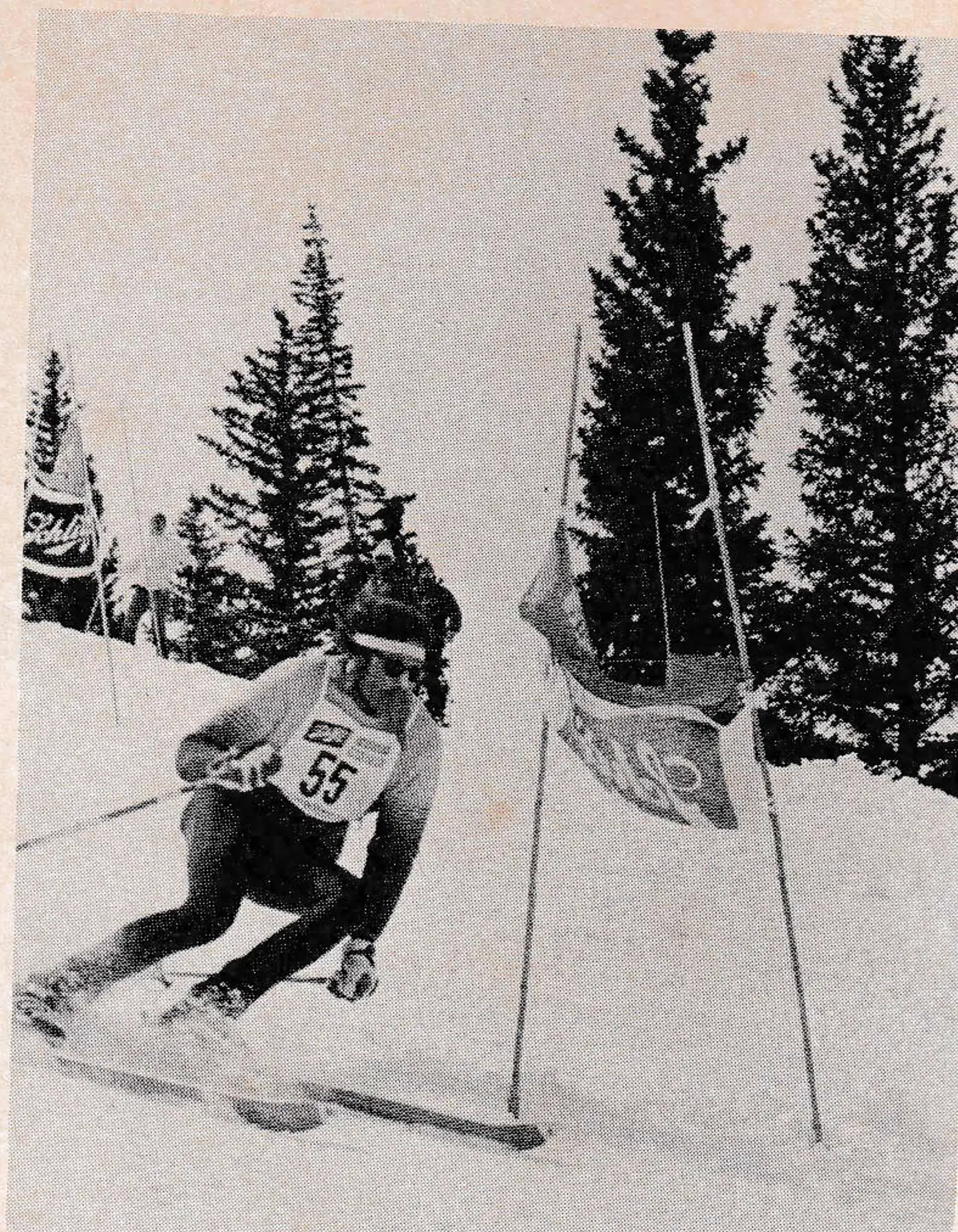
“The big problem is that most areas fail to take Nastar seriously,” says Gordon. “Those who race in Nastar, however, take it very seriously. We run clinics, set a challenging course, promote Nastar like hell in our marketing programs and run the races on time.”
More important, and this has really been the key to Highlands’ Nastar success, the responsibility for the program was put in the hands of one person who devoted his full time to the scheduling, running and promoting of Nastar.
“All too often,” says Gordon, “Nastar becomes just another adjunct of the ski school, used only to drum up more ski school business. The program is sloughed off on a part-timer who has no real stake in the program, and the results show it.”
The “one person” responsible for Highland’s Nastar last year was Gordon. An ex-World Cupper weaned on the slopes of Big Mountain, Mont., Gordon did such a bang-up job for Highlands last year as Nastar coordinator that this year he was made assistant marketing director. He will be working under Bill Brehmer, Highlands’ marketing chief and the man responsible for bringing Nastar to Aspen Highlands in 1970 under an exclusive two-year franchise (recently extended for another year owing to Highlands’ success with the program).
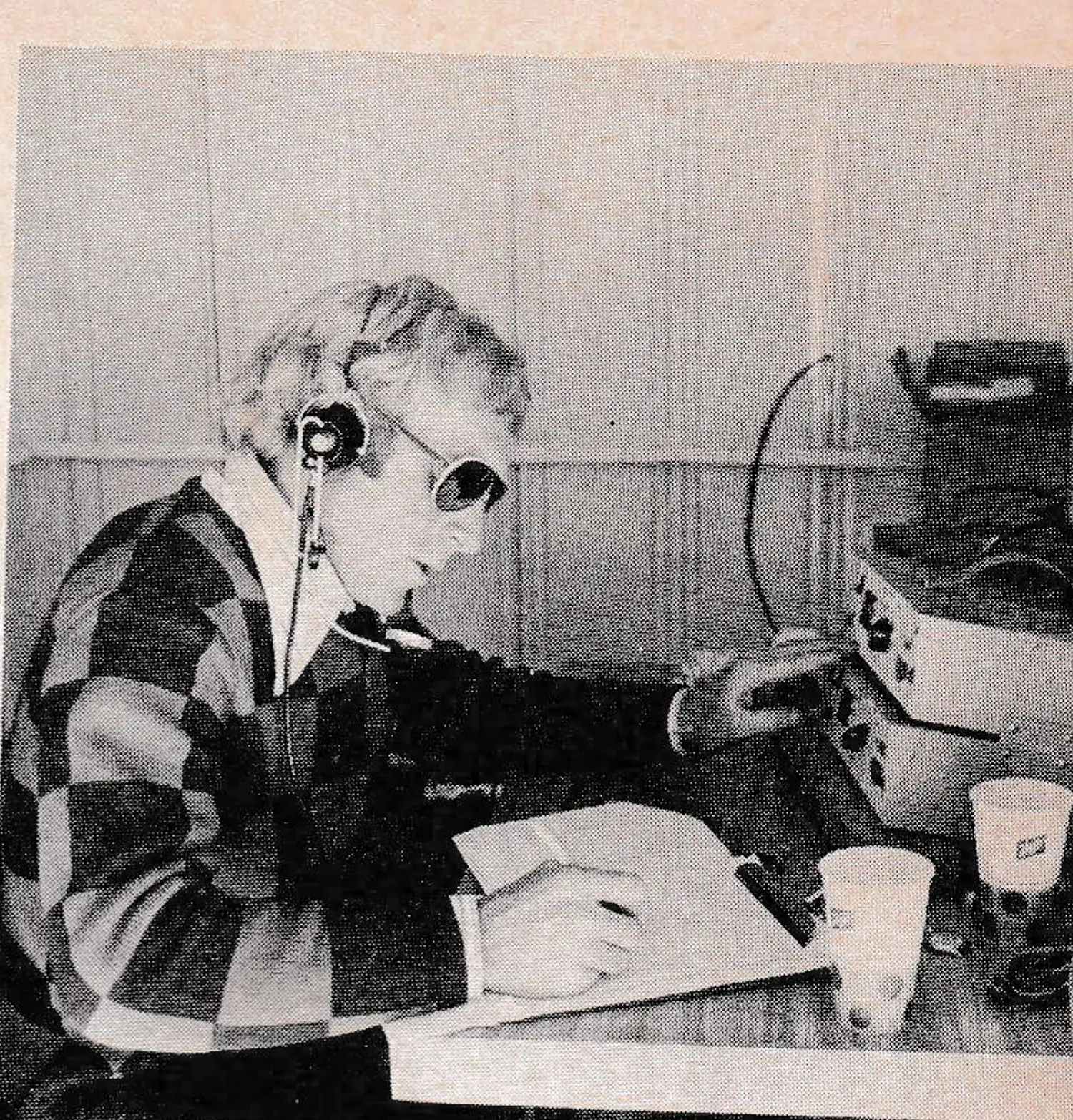
Aspen Highlands, No. 1 in participation among the 80 areas that ran Nastar last year, is a textbook case, though none too classic, on how a Nastar program should be run.
Item: The Nastar coordinator—Gordon—was made solely responsible for the program and paid on an incentive basis for the revenues Nastar produced. “Anytime you add a monetary incentive,” says Gordon, “it makes people work a little harder. Especially in the spring when you can get mighty sick of snow.”
Item: The course was moved up the mountain to more challenging terrain and roped off for Nastar use only. Participants who wanted to practice were asked to do so elsewhere. Result: no mogul build-up and races that started on a freshly groomed course.
“Most areas,” says Gordon, “run their course on a flat hill and orient it to beginning and low-intermediate skiers. Ours was strictly intermediate, but it was perfectly groomed—it could be negotiated by even a beginner.”
Item: No closed gates were used. Gordon: “Closed gates confuse the recreational skier. If they miss one, they ruin their run and you’ve lost a Nastar racer. We set all our gates open, but in such a way as to simulate a closed-gate rhythm.”
Item: Nastar clinics were held at Highlands. The charge was $5 a person and classes, coached by Gordon and co-pacesetter Hans Schwartz, were limited to 10. The clinics were thorough half-day sessions that concentrated on race technique and strategy. According to Gordon, these “prep courses” brought in many would-be participants, predisposed to the “ski racing isn’t for me” attitude, who might never have tried Nastar.
“The clinics were no great shakes as income producers,” says Gordon, “but it got more people into Nastar. We also offered a special program for ski clubs in which we’d give any club that came to Highlands a half-day clinic free. We also ran special races for the clubs and got other clubs in town for the week to race against them.
Item: On Nastar days at Highlands (Tuesdays, Wednesdays and Thursdays this year), you know a race is on. There are hundreds of banners, flags, colors—attention-getters that Gordon admits prompt a “purely plastic excitement, but are effective nonetheless.”

Item: Nastar competitions at Highlands start on time. Says Gordon, “Too many areas announce the race for noon and don’t start setting the course until 11:45. The racers stand around with little other prospect than cold feet. If the area runs a sloppy Nastar, people quickly lose interest.”
Item: Highlands has taken the ego aspects of Nastar and capitalized on them. Photograhers cover the course, and when the racer crosses the finish line, an action photo of him is waiting. If the participant wishes, an enlargement can be made for a fee. And if he wants coverage in his hometown newspaper, all he has to do is ask.
This year at Highlands, Nastar racers can, again for a fee, see themselves on videotape with some before-the-screen coaching at the finish line by the Nastar staff. Skiers, reports Gordon, appreciate these frills, and it’s all grist for the kitty.
Item: Nastar is very much part and parcel of Highlands’ marketing program. Through Aspenglow, the Aspen-area ski package reservations service, Highlands is offering a free Nastar race and speed-timing trials through its coupon book of on-the-house attractions.
The Nastar hopeful can also buy a season pass for $10 (not including lifts) that entiles him to run the course as many times as he wishes.
“Plenty of pass-holders have made their money many times over,” says Gordon. “We have several locals that ski in every race. Some of them, in fact, have arranged to take time off from their jobs to race. After they’ve run the course, they head back to work.”
So much for the revenue picture. What did all this cost? “We broke even,” says Gordon. “We made $6,000, and we spent about that.” A cost-accounting shows that wages (for two to four people who were used as starters, recorders and board statisticians) made up about $4,000 of that figure, the franchise fee cost $1,000, timing equipment ran $600 (actual cost was $1,200 but the expenditure was pro-rated over two years), and other equipment—slalom poles, banners, p.a. system and the like—made up the balance. The $6,000 figure, of course, was Nastar revenue alone. “It’s impossible to project what Nastar generated in terms of lift revenue, ski school, food service and ski shop,” says Gordon, “but there’s no doubt that it was a substantial factor.”
Much of Aspen Highlands’ cost in running Nastar was defrayed by revenues produced by other programs that used the Nastar boost to get them going. Timing equipment, for instance, will be used for another Highlands first—a speed-timing competition that the area will run every Friday this season. Skiers are clocked, à la Bonneville, between gates set 100 feet apart. There’s a pacesetter, as in Nastar, and awards will be given by Highlands every week based on skier times relative to the pacesetter’s and to others of the skier’s ability.
“You simply have to have different programs,” says Gordon. “Your aim should be to increase and promote the fun of skiing.
“Nastar has been a total success for us.” It’s given us an edge in an area where the skier has his choice of several excellent mountains. I have a friend in ski school at another Aspen area, in fact, who said that during Nastar days at Highlands, his ski school rates were dropped up to 50 per cent. I’ve seen how it works here—I can’t imagine it working any better elsewhere.”