
When Blacktail Mountain, Mont., cranks up its lifts around Thanksgiving, it will be the first new ski area on U.S. Forest Service land since Beaver Creek received its permit back in 1978. Unlike Beaver Creek, Blacktail is a relatively modest local ski hill, designed and built on a tight schedule and on a budget to match. The total investment of $2.7 million, about the price of a high-speed quad, will result in a complete ski area with three chairlifts and 24 runs on 1,440 vertical feet.
When so many other planned ski centers of the past two decades have capsized, what combination of planning smarts, USFS policies, virtual absence of environmental issues and lucky stars shone upon Blacktail? The glib answer is that it appears to be the right-size project built at the right time by the right combination of talents in the right national forest.
Claire Walter
To set the stage, the Blacktail Mountain ski area occupies 1,000 acres on a mountain of the same name in the Flathead National Forest. The Flathead Valley is a summer tourist mecca, whose visitors are attracted primarily by Flathead Lake and Glacier National Park. In addition to tourism, agriculture and timber provide an economic base.
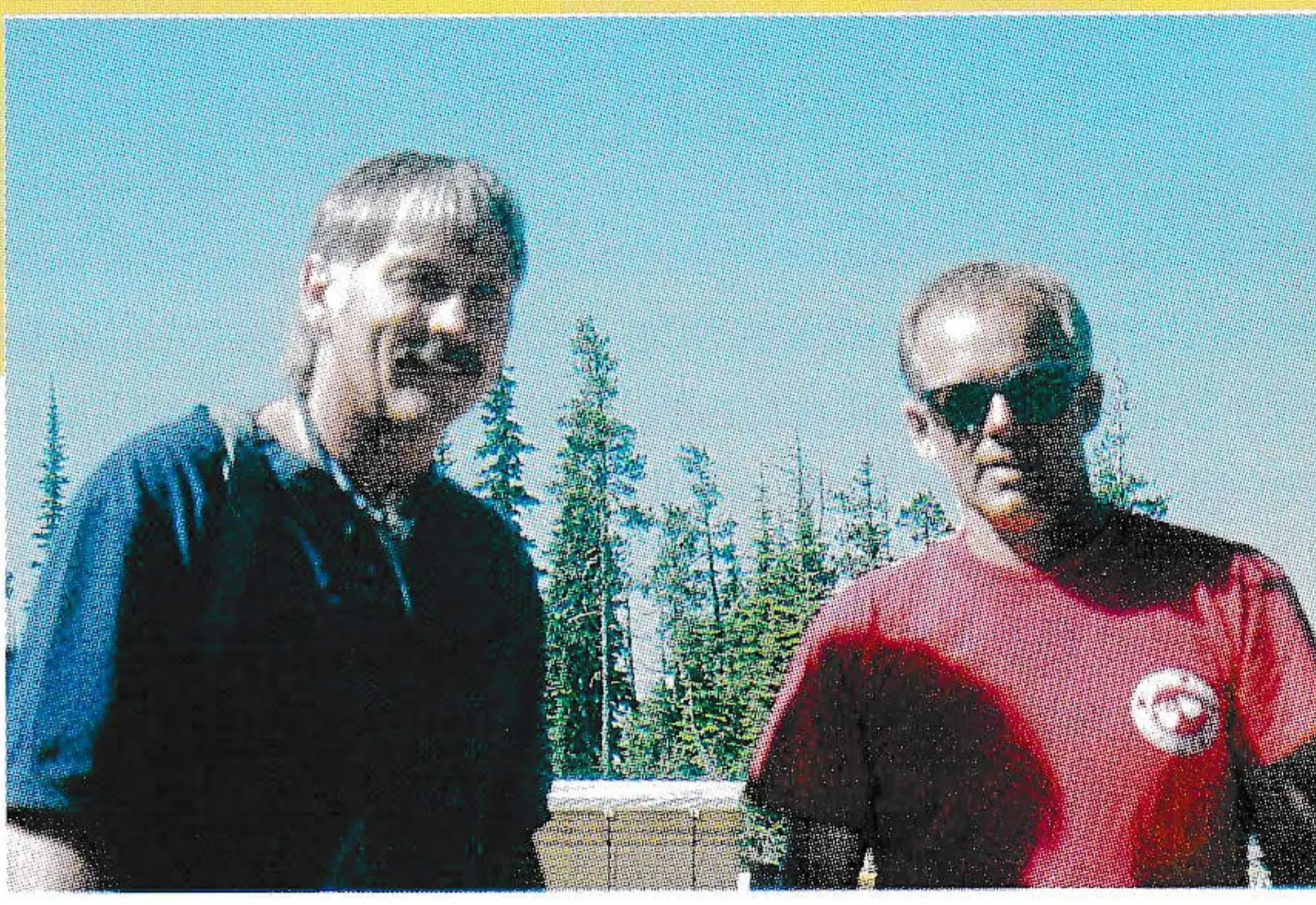
A trio of original partners brought diverse expertise needed to launch a ski area. The general manager, Steve Spencer, is a 14-year veteran of nearby Big Mountain, where he was patrol director and then mountain manager. Dennis Carver runs a local engineering company and Tom Sands is a surveyor. Jeff Sorg, who joined them later, is a local contractor. Wearing the hats of ski school director and marketing director is Dan Bovee, a long-time member of the Vail Ski School who, until recently, ran a pre-cast concrete business in the Flathead Valley. “The surveyor surveyed, the engineer designed the systems and the builder is building,” said Bovee, in the midst of a summer filled with earth moving, trail cutting, lift erection, day-lodge construction and trail seeding. All very logical.
Spencer can condense what was less than a four-year timetable from concept to completion into a few similarly concise sentences. “We started in the fall of ’94,” he said. “We contracted out the NEPA work to Land & Water Consulting of Missoula and a master plan to Ecosign of Whistler. We had a formal proposal for a small, affordable day-use area in May 1995 and received our permit in September ’97. We cut a quarter-mile road in November ’97. We were lucky that we had a low-snow winter, so we could start cutting timber and burning slash. We’ll be open in November.”
Claire Walter
And what of the controversial issues that have stymied ski area planners for decades? Virtually none, which is why Spencer said the project was feasible to begin with.
“There were no endangered species issues and no water issues,” Spencer said. The project ended up dealing with only two appeals and they modified the lift lines to accommodate the concerns of an environmental group over an old-growth patch.
In fact, the sort of logging concerns that have tripped up other projects worked in Blacktail’s favor. One of three permitted clear-cuts had not been done when construction plans were formulated. It ended up producing 1.4 million board feet and netted Blacktail $75,000, which Spencer put toward brush-cutting. Blacktail even inherited a logging road they could use as a work road.
Cash and a road weren’t all that came Blacktail’s way. The federal government had long ago constructed a 14-mile road and strung a 12,000 KVA power line to serve a radar installation at the summit of Blacktail Mountain, just above the ski area location. Thus, the ski area just needed a short road to the parking lot and a 300-yard power line.
Blacktail didn’t spend big bucks on lifts, either. Taking advantage of a buyers’ market as major resorts rush to replace fixed-grip lifts with high-speed models, Blacktail is opening three chairlifts, named for their origins: the Olympic, a Hall triple from Calgary’s Olympic Park; the Thunderhead, the original name of a Yan double from Steamboat; and Crystal, a Ski Lift International double from Crystal Mountain, Wash.

With an hourly lift capacity of 3,500 and an estimated 2,000 comfortable capacity, lift lines should be no longer than five minutes, 10 at the most, which Spencer refers to as “the industry standard.”
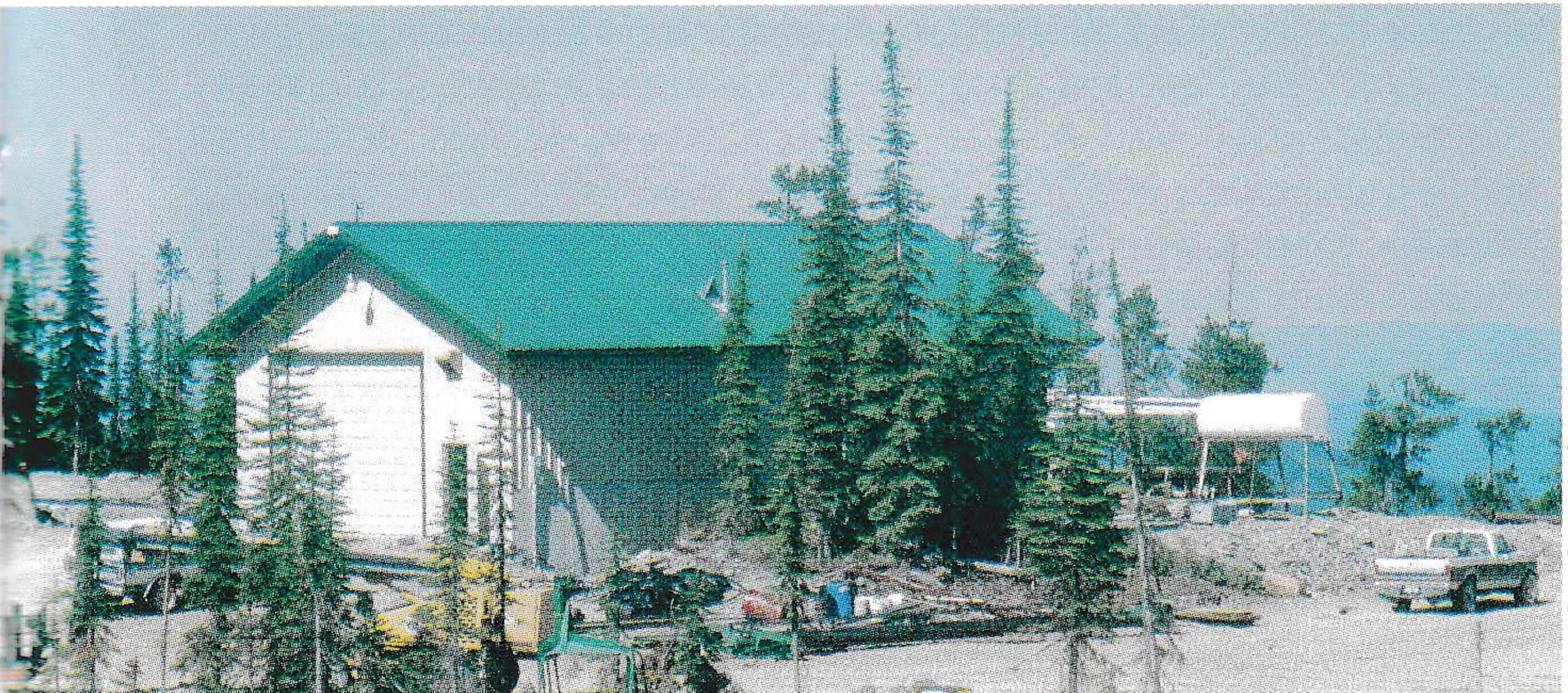
A new 16,000-square-foot, three-story day lodge perches near the unloading stations of two of the chairlifts, with the beginner lift beside it and the rest of the ski terrain arrayed below.
Snowboarders will be welcome at Blacktail and there will be a terrain park, but no halfpipe for now. There will not be night skiing either. For the first season, at least, Blacktail plans to operate Wednesdays through Sundays during non-holiday weeks and daily through the holidays.
With 250 inches of average snowfall a year and what Spencer calls “hardly any wind” on the slopes, there will be no snowmaking on this mostly northeast-facing ski area. The trails were overcut width-wise, but cleared to the ground almost Eastern-style. Spencer estimates that Blacktail can open with about 18 inches of snowfall, packing down to four to five inches—very little by Western standards. A mid-station enables skiers to stay on the top half of the mountain during the early season.
Dan Bovee’s marketing plan reflects the comfort of having a projected break-even of just 40,000 skier/boarder visits. The main market is the Kalispell-Evergreen area, roughly 45 minutes away, and home to about 22,000 of the Flathead Valley’s 62,000 residents, only about four percent of whom currently ski or snowboard.
The $24 adult day ticket (students 8 to 18 at $15, free for seven-and-unders and over-70s) is well below the prices at The Big Mountain. While their big neighbor acts more and more like a destination resort, with plans to replace close-in free parking with a resort village, Bovee is concentrating on developing five- to seven-week school programs, complete with instruction and rental gear, to increase the skier base from grade school up. He is also going after other local groups. Early-purchase season passes were just $325 for adults, later rising to $375.
While destination skiers are hardly Blacktail’s focus, it is not unreasonable to expect to attract some with balanced terrain, low prices and accessibility by road, air and rail. But with so modest an investment and such an attainable number of skier visits to meet their goal, Spencer and his partners are confident—confident that their projections are not unrealistic, and their plans not excessive.