The Voice of the Mountain Resort Industry  |  Est. 1962

Advertisement

Pro Deals Leaderboard

November 1985 Issue

High Tech Lift Evac

It's no secret that most ski areas are still using primitive lift evacuation equipment. The rope and the T-seat work very well, but in this day and age, there ought to be something more advanced.

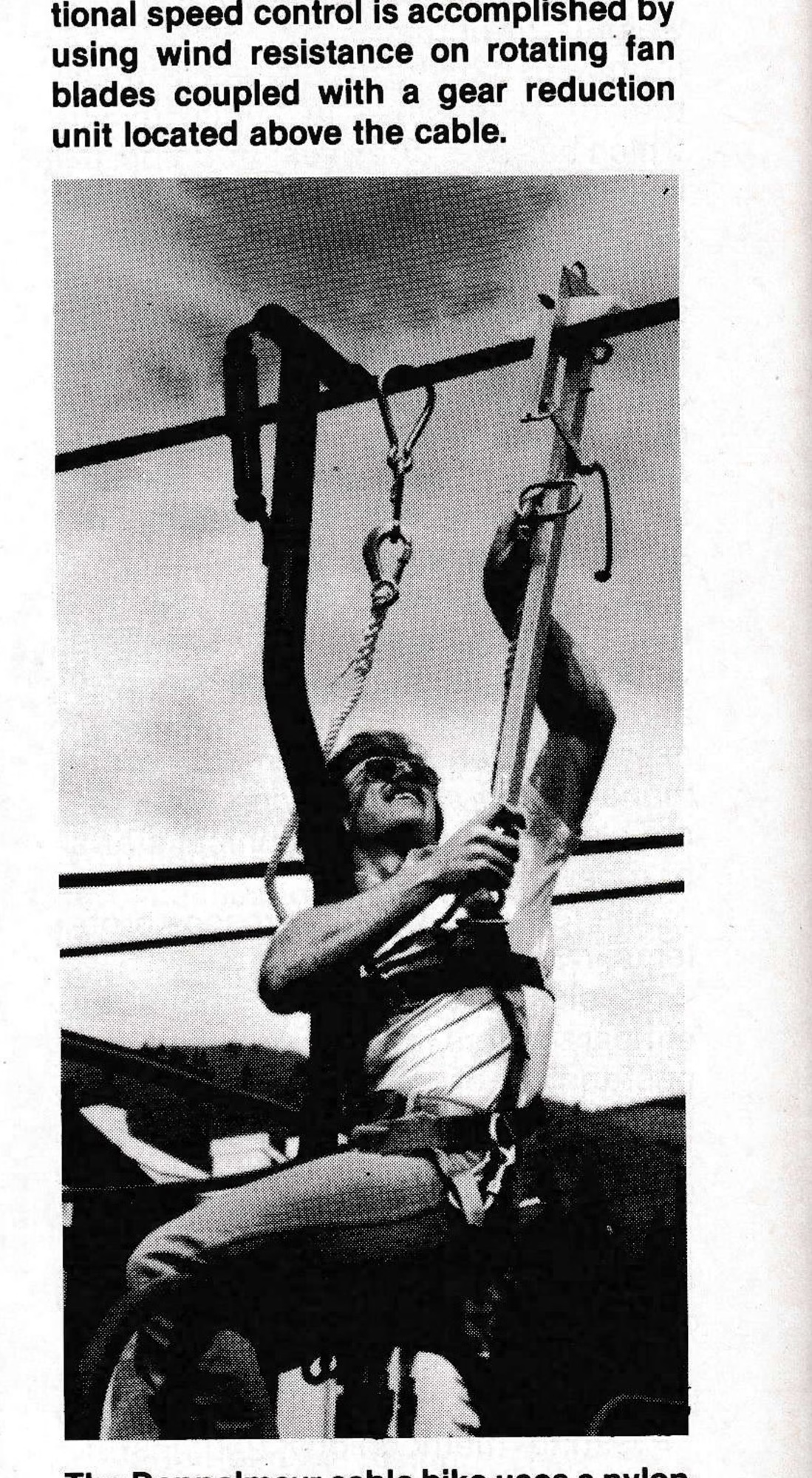
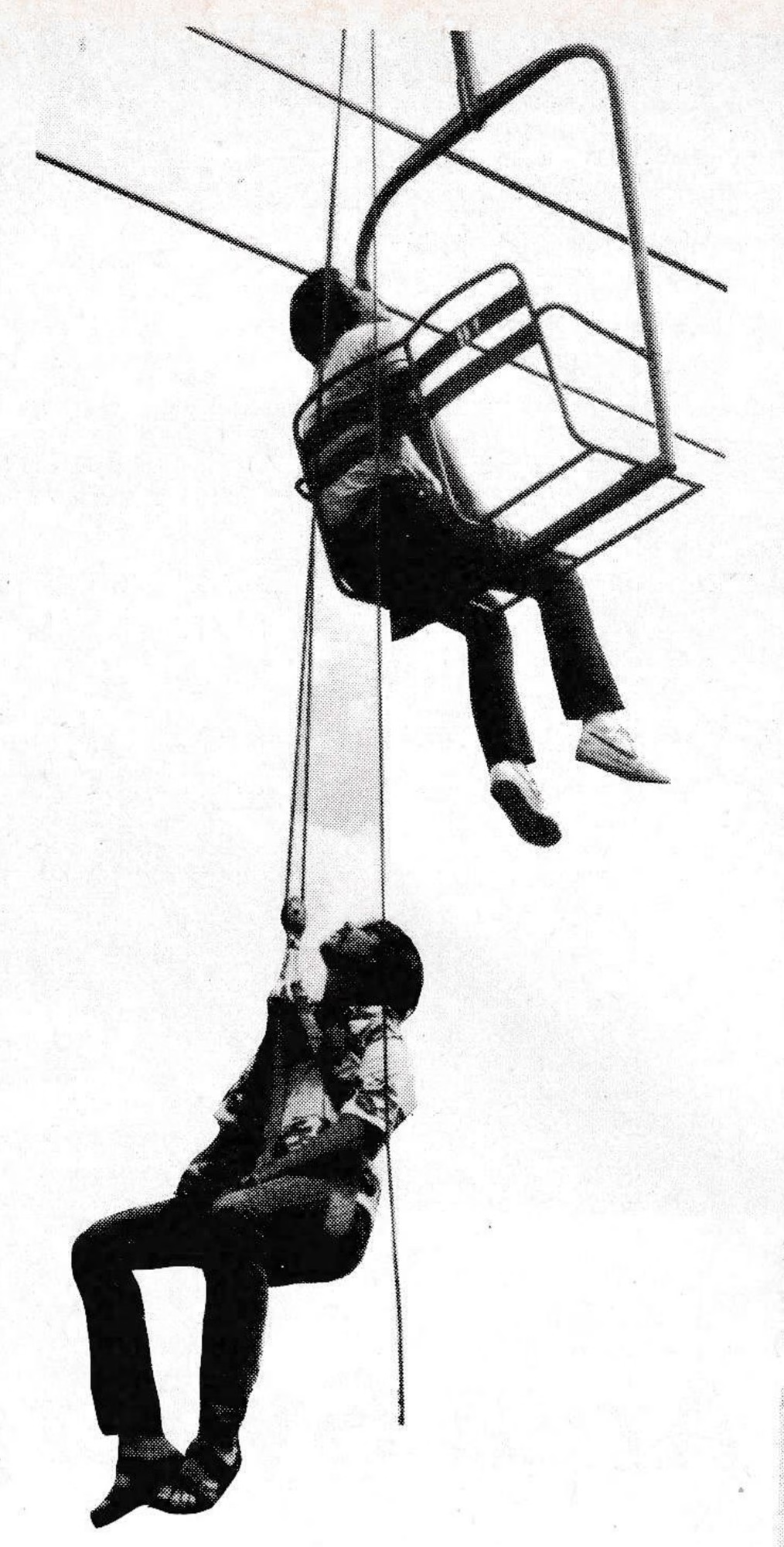
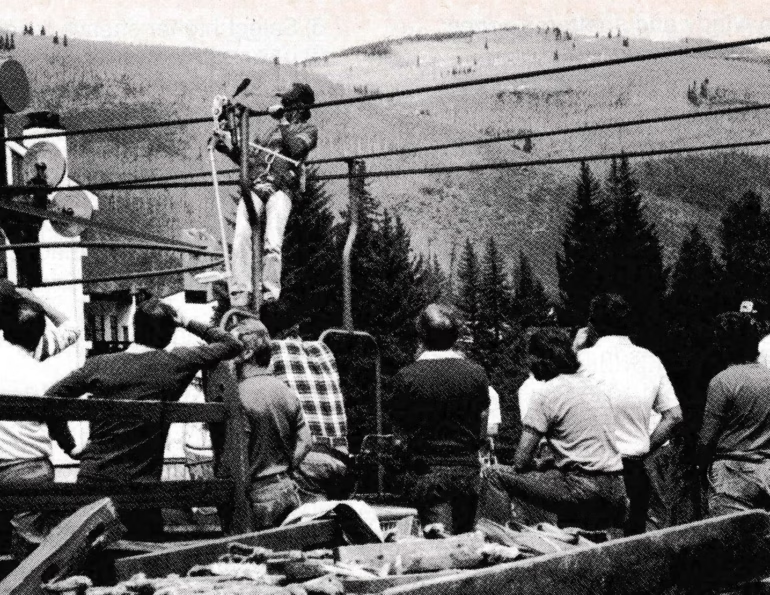
Poma's Helipoma cable bike is mounted on a chairlift cable as seminar participants watch.

People who attended the Rocky Mountain Lift Association’s Spring Conference discovered there is high tech in lift evacuation. Three manufacturers and distributors of evacuation equipment in the United States demonstrated their state-of-the-art cable bikes and rescue kits. One experimental cable bike from New Zealand was also shown.

The reaction of the participants was amazement at the disparity between the currently used equipment and the new stuff available. It seems that the awareness of this modern gear is also very timely with the introduction of many more high capacity lifts.

Close to two dozen people attended the lift evacuation sessions during the two-day meeting at Vail, Colo., and while most of them were lift managers and ski patrollers from ski resorts, there was also a lift manager of the gondola at the San Diego Zoo. How would you like the job of evacuating people from a gondola suspended over a zoo pit filled with growling mountain gorillas?
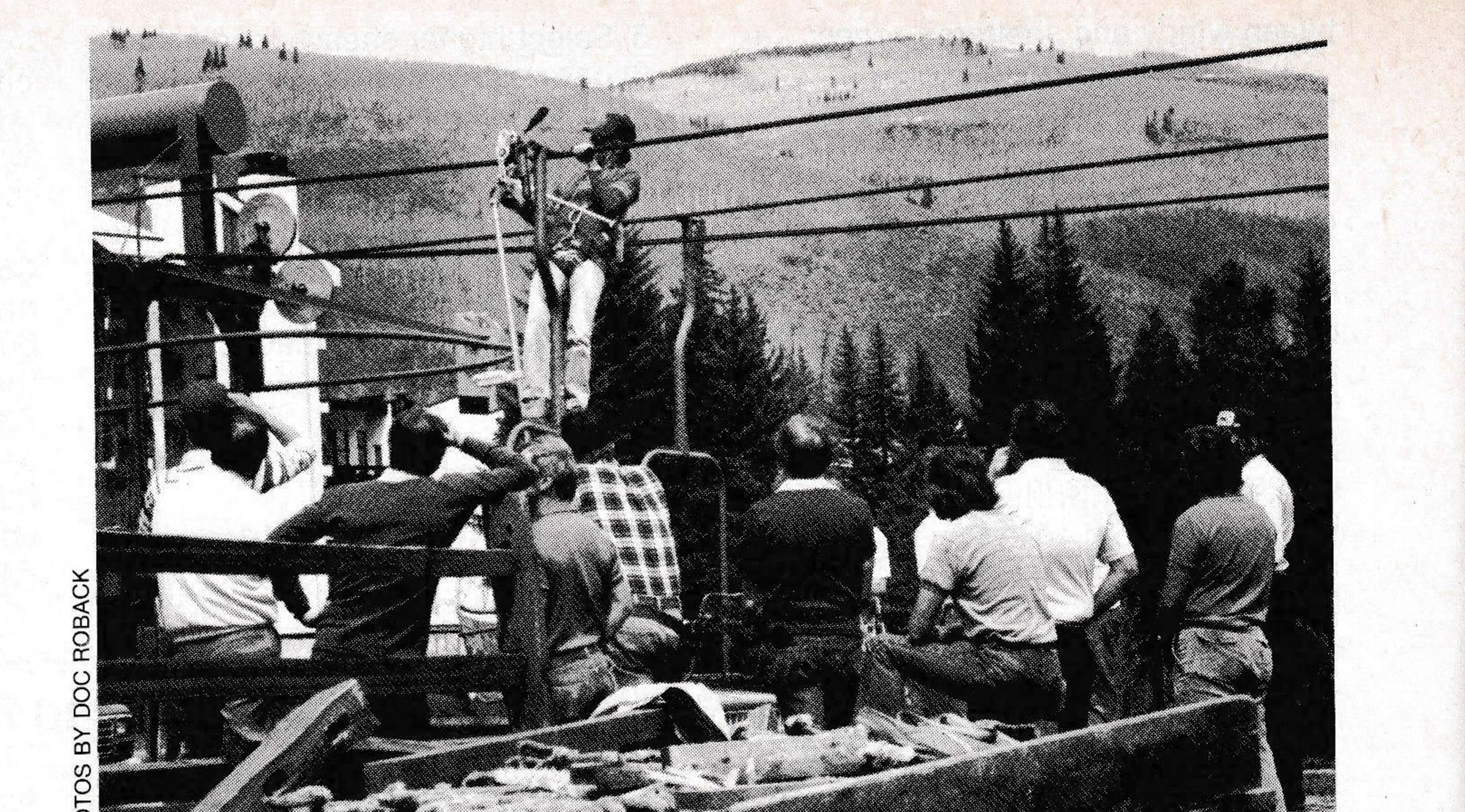
Poma's Helipoma cable bike is mounted on a chairlift cable as seminar participants watch.
Poma’s Helipoma cable bike is mounted on a chairlift cable as seminar participants watch.
Doc Roback
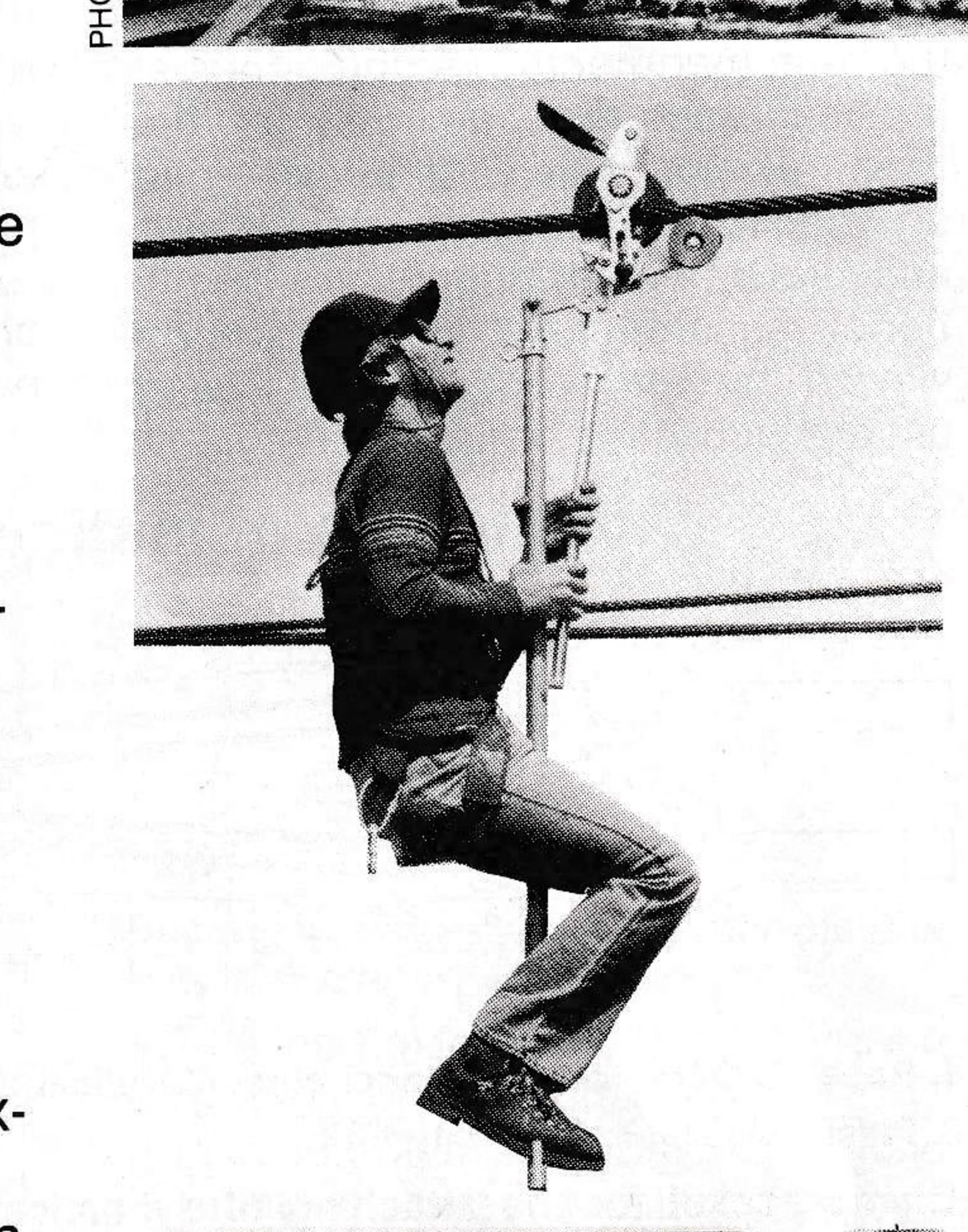
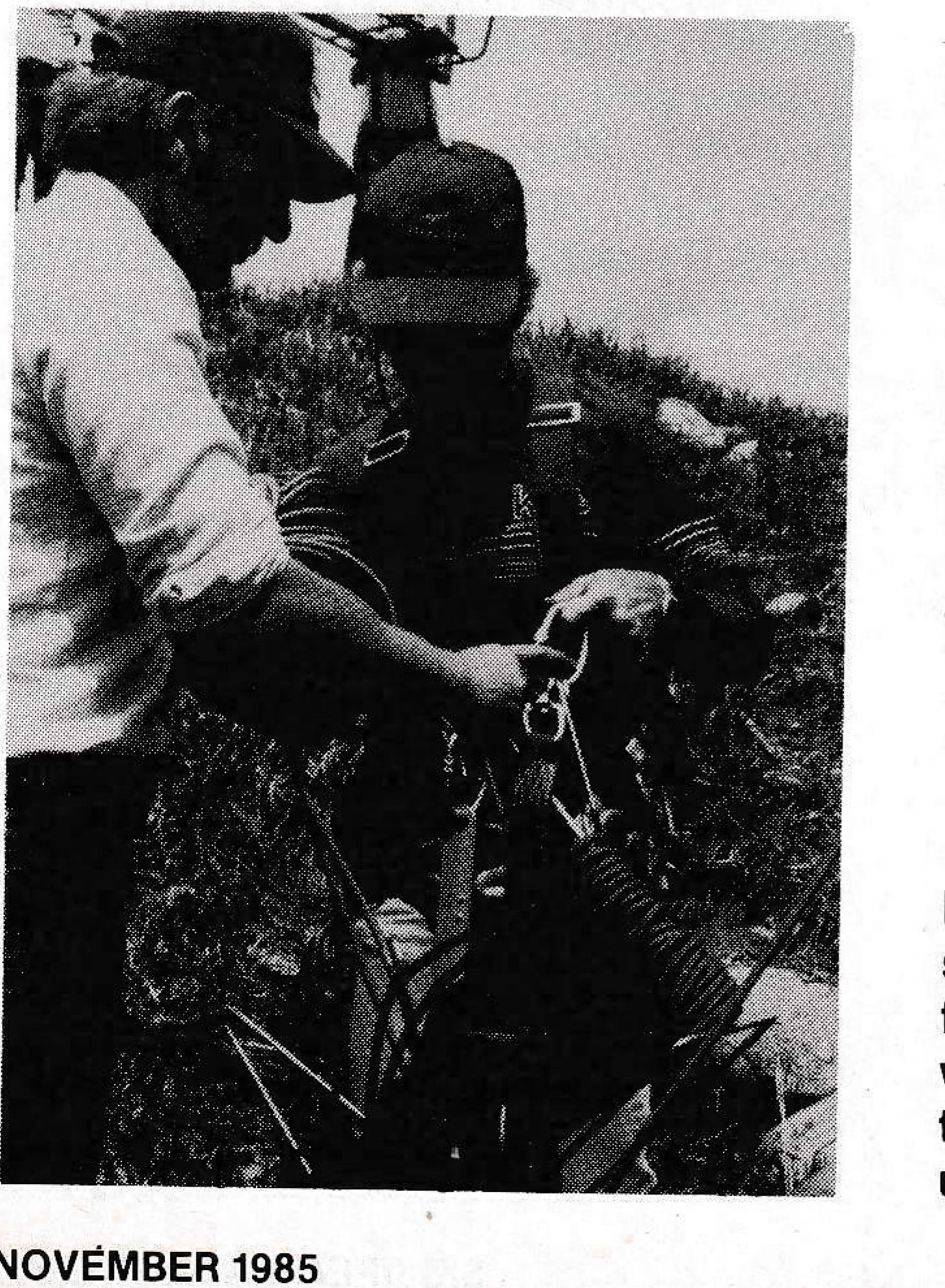
A demonstrator uses the Helipoma deadman brake. If the operator releases the handle, his weight automatically activates the brake. Additional speed control is accomplished by using wind resistance on rotating fan blades coupled with a gear reduction unit located above the cable.
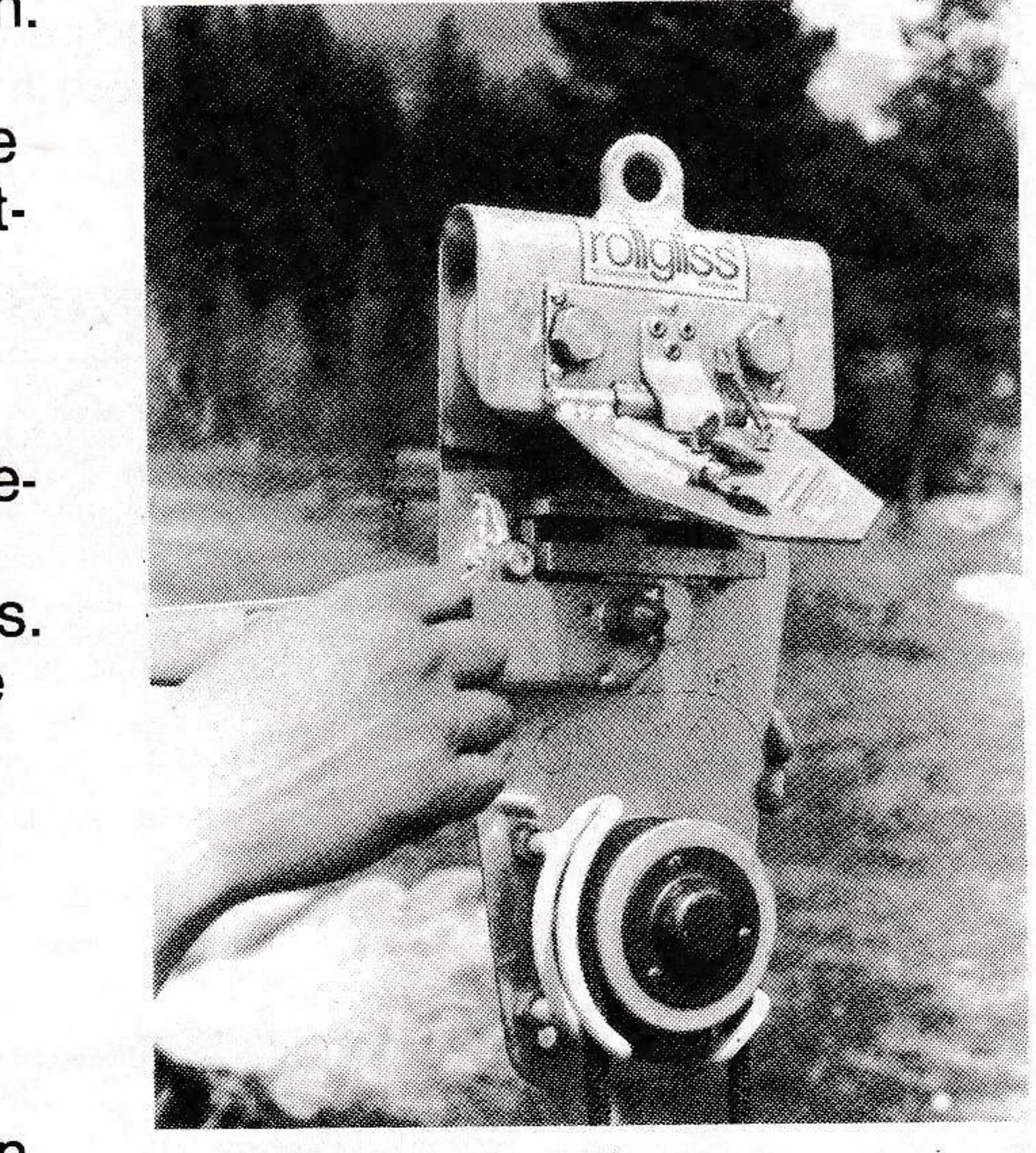
The Rollgliss cable bike, distributed by Defensor, utilizes an eccentrically-mounted brass friction plate for braking. It also has a positive locking cable gate for security.
The Doppelmayr cable bike uses a nylon sliding block instead of conventional wheels on the cable. The sliding block is very smooth to ride and easy to attach. The "rescuer" pictured is hooking an additional safety rope to the cable bike for security when moving the bike around a chair or sheave train.
The Doppelmayr cable bike uses a nylon sliding block instead of conventional wheels on the cable. The sliding block is very smooth to ride and easy to attach. The “rescuer” pictured is hooking an additional safety rope to the cable bike for security when moving the bike around a chair or sheave train.
The Rollgliss descending drum utilizes one-way rotation and multiple wraps of rope to achieve friction braking. With two wraps around the drum, five pounds of belay tension supports 200 pounds in the harness.
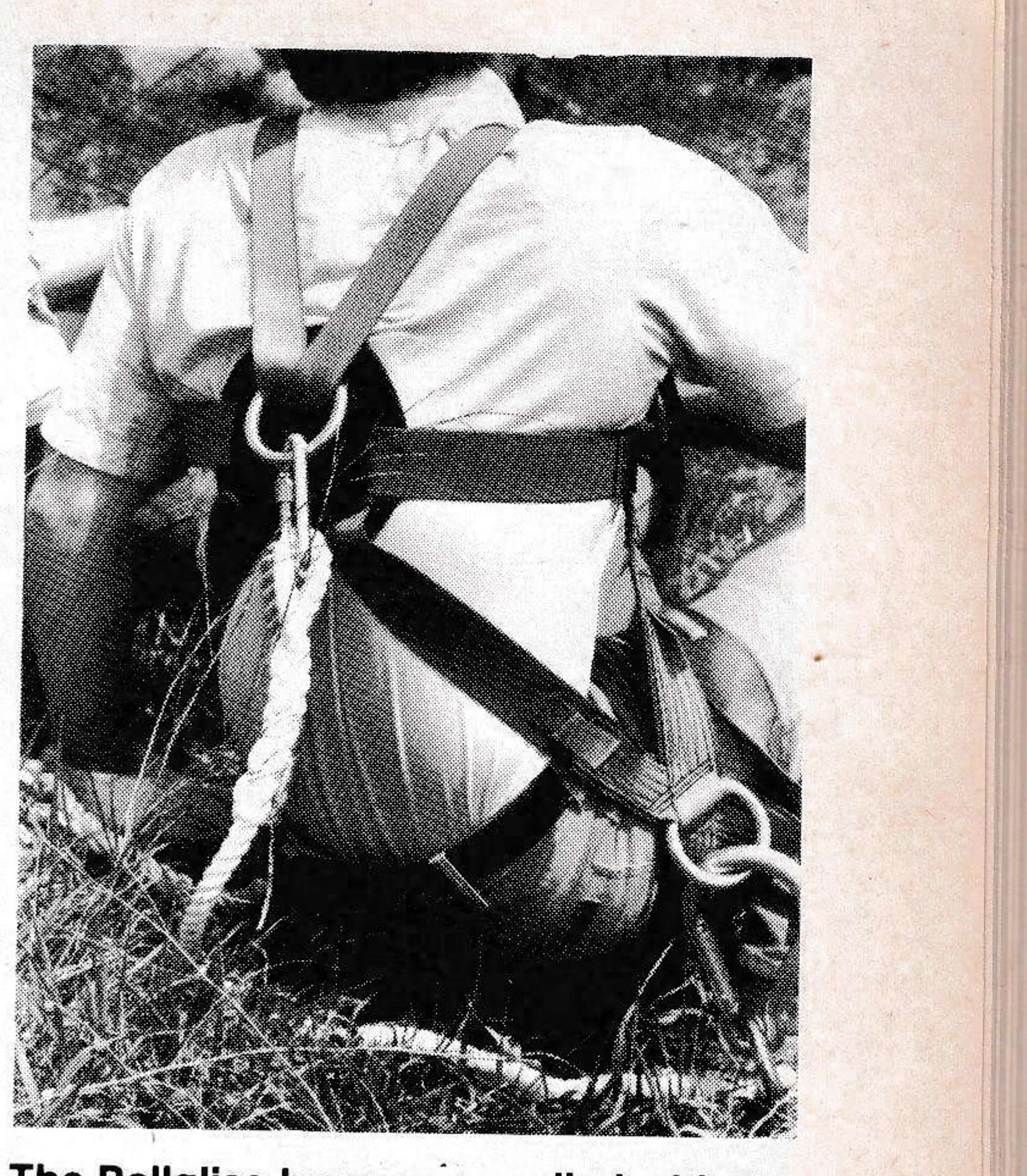
The Rollgliss passenger harness is quick and easy to put on and is comfortable. Without adjustments, it fits people from a 90-pound child to a 300-pound adult. It can be used without removing skis.

The Rollgliss harness supplied with the Doppelmayr rescue kit is extremely safe and sturdy, fully adjustable, with additional attachment locations for back-up safety lines and equipment.
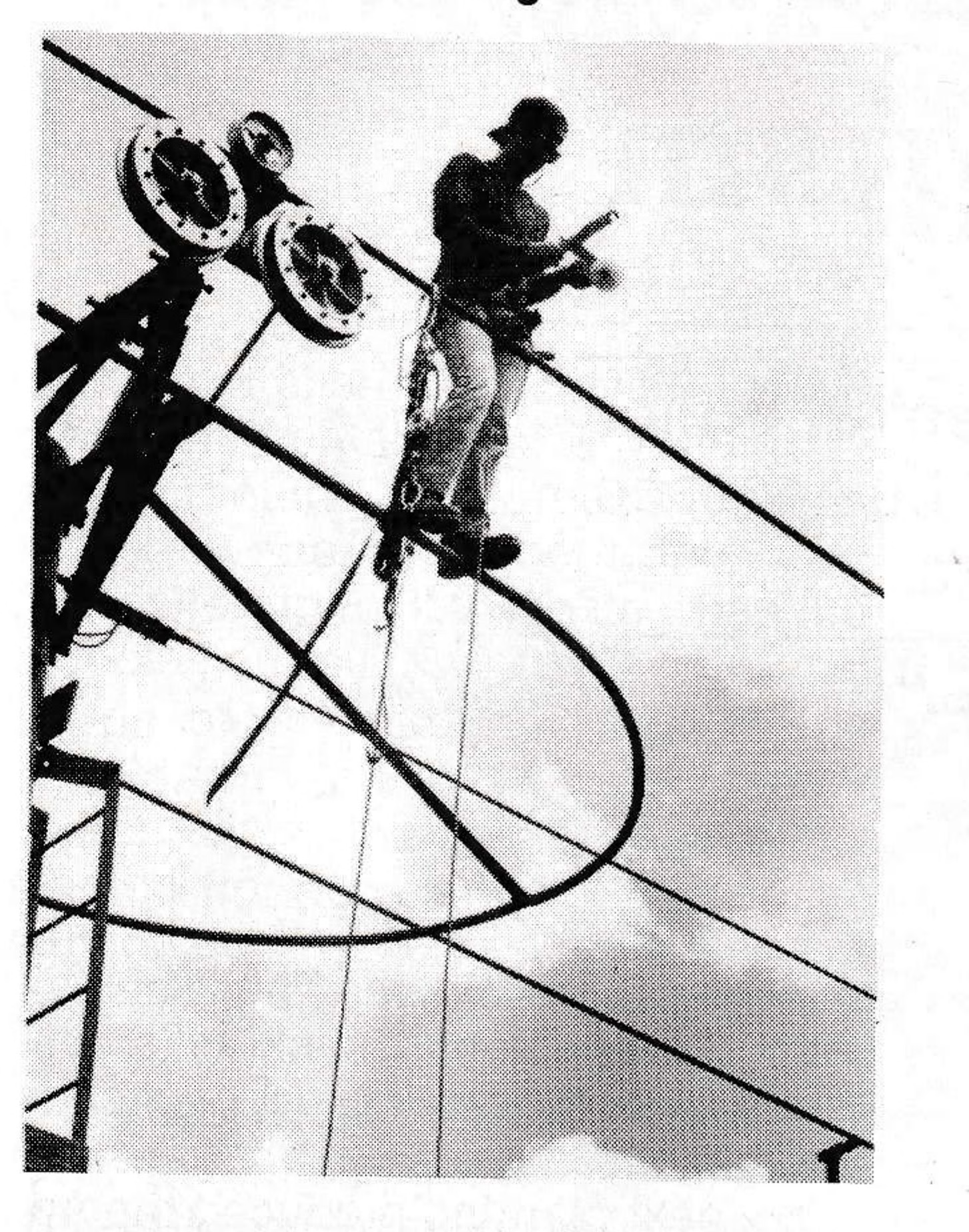
A "rescuer" prepares to clip the Poma rescue wheel on the cable. Speed of descent is controlled by a belay team on the ground or at the tower.
A “rescuer” prepares to clip the Poma rescue wheel on the cable. Speed of descent is controlled by a belay team on the ground or at the tower.
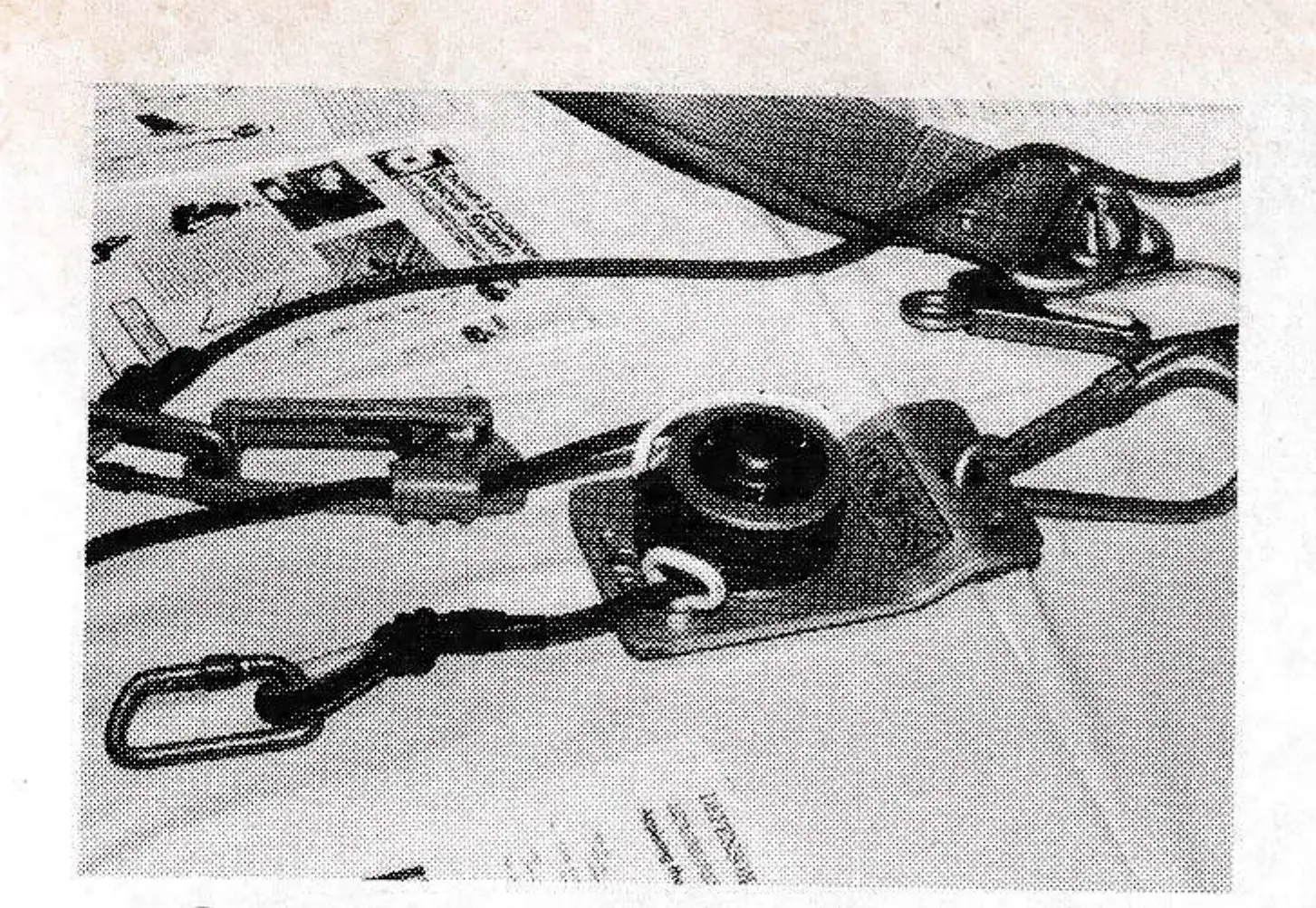
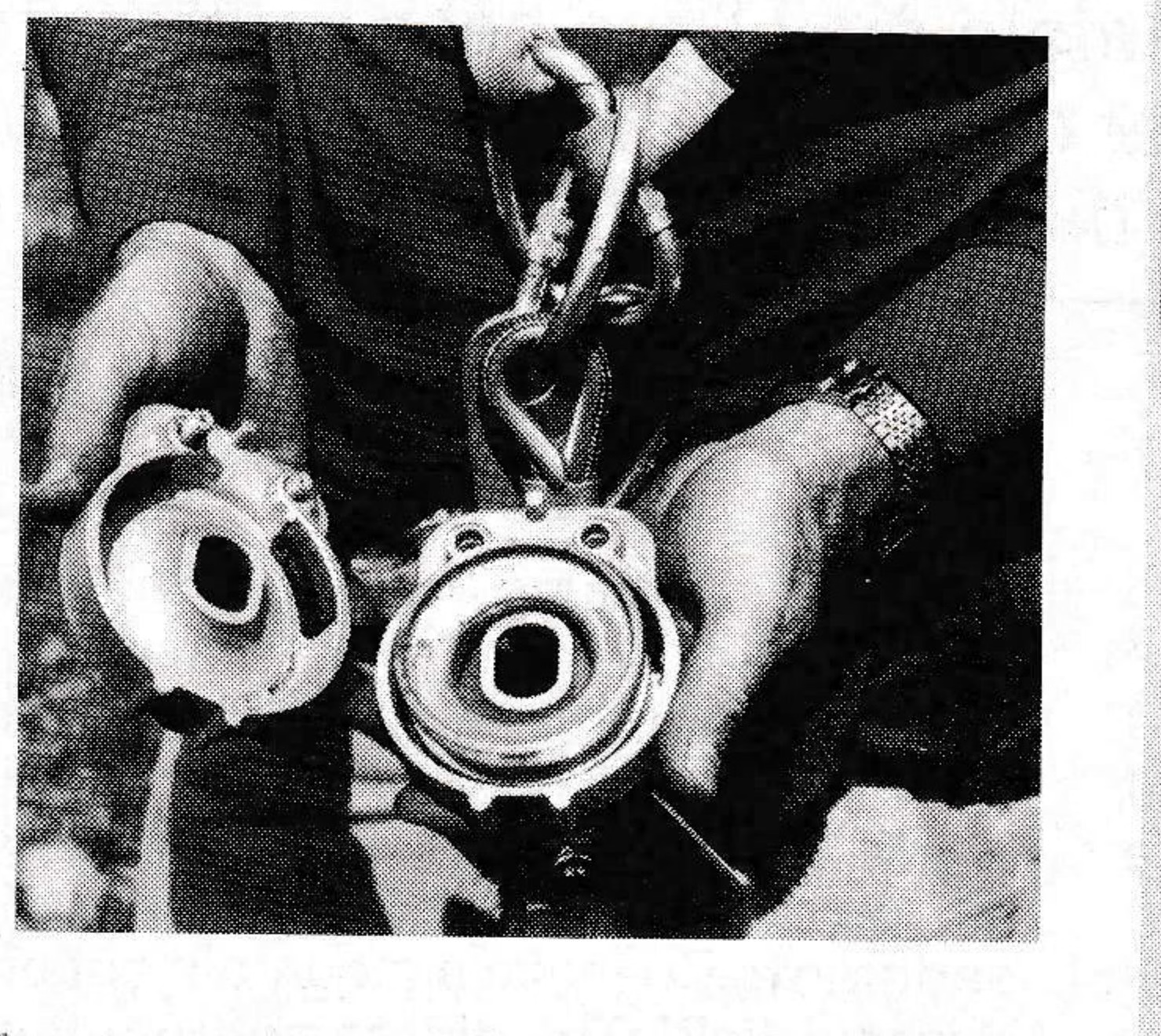
The Diablo, shown opened up, is the heart of the Poma evacuation kit. The rope passes around a brass drum inside the Diablo case; small brake shoes slow the drum's rotation in relation to the weight applied to the rope.
The Diablo, shown opened up, is the heart of the Poma evacuation kit. The rope passes around a brass drum inside the Diablo case; small brake shoes slow the drum’s rotation in relation to the weight applied to the rope.
The Poma kit includes a controlled descent device used by the rescuer at each chair or gondola car to be evacuated — an inertia-controlled, self-retracting seat belt that stops an unplanned descent.
The Poma rescue pole facilitates rescues up to 40 feet off the ground.

In the photos

The Rollgliss cable bike, distributed by Defensor, utilizes an eccentrically-mounted brass friction plate for braking. It also has a positive locking cable gate for security. The Rollgliss descending drum uses one-way rotation and multiple wraps of rope to achieve friction braking during descent.

Poma’s Helipoma cable bike is mounted on a chairlift cable as seminar participants watch (above). A demonstrator uses the deadman brake (left). If the operator releases the handle, his weight automatically activates the brake. Additional speed control is accomplished by using wind resistance on rotating fan blades coupled with a gear reduction unit located above the cable.

The Doppelmayr cable bike uses a nylon sliding block instead of conventional wheels on the cable. The sliding block is very smooth to ride and easy to attach. The “rescuer” pictured is hooking an additional safety rope to the cable bike for security when moving the bike around a chair or sheave train.

The Rollgliss descending drum (above) utilizes one-way rotation and multiple wraps of rope to achieve friction braking. The drum rotates freely counterclockwise as a rescuer raises the evacuation harness to passengers. As weight is applied, the drum is prevented from clockwise rotation, causing the rope to slide around the drum, resulting in frictional drag. With two wraps around the drum, this drag allows five pounds of belay tension to support 200 pounds in the harness. The Rollgliss passenger harness (right) is quick and easy to put on and is comfortable. Without adjustments, it fits people from a 90-pound child to a 300-pound adult. It can be used without removing skis.

Advertisement

Commerce B

A “rescuer” prepares to clip the Poma rescue wheel on the cable (left). Speed of descent is controlled by a belay team on the ground or at the tower. The Diablo (above) shown opened up, is the heart of the Poma evacuation kit. The rope passes around a brass drum inside the Diablo case. Mounted on the base of the case are small brake shoes that slow the drum’s rotation in relation to the weight applied to the rope.

The Poma kit (left) includes a controlled descent device that is used by the rescuer at each chair or gondola car to be evacuated. It is an inertia-controlled, self-retracting seat belt that allows freedom of movement while working with passengers. In the event of a fall, the device activates, stopping an unplanned descent.

The Rollgliss harness supplied with the Doppelmayr rescue kit is extremely safe and sturdy. Similar to sophisticated mountaineering gear, the harness is fully adjustable to comfortably fit rescuers and allows for additional attachment locations for back-up safety lines and equipment.

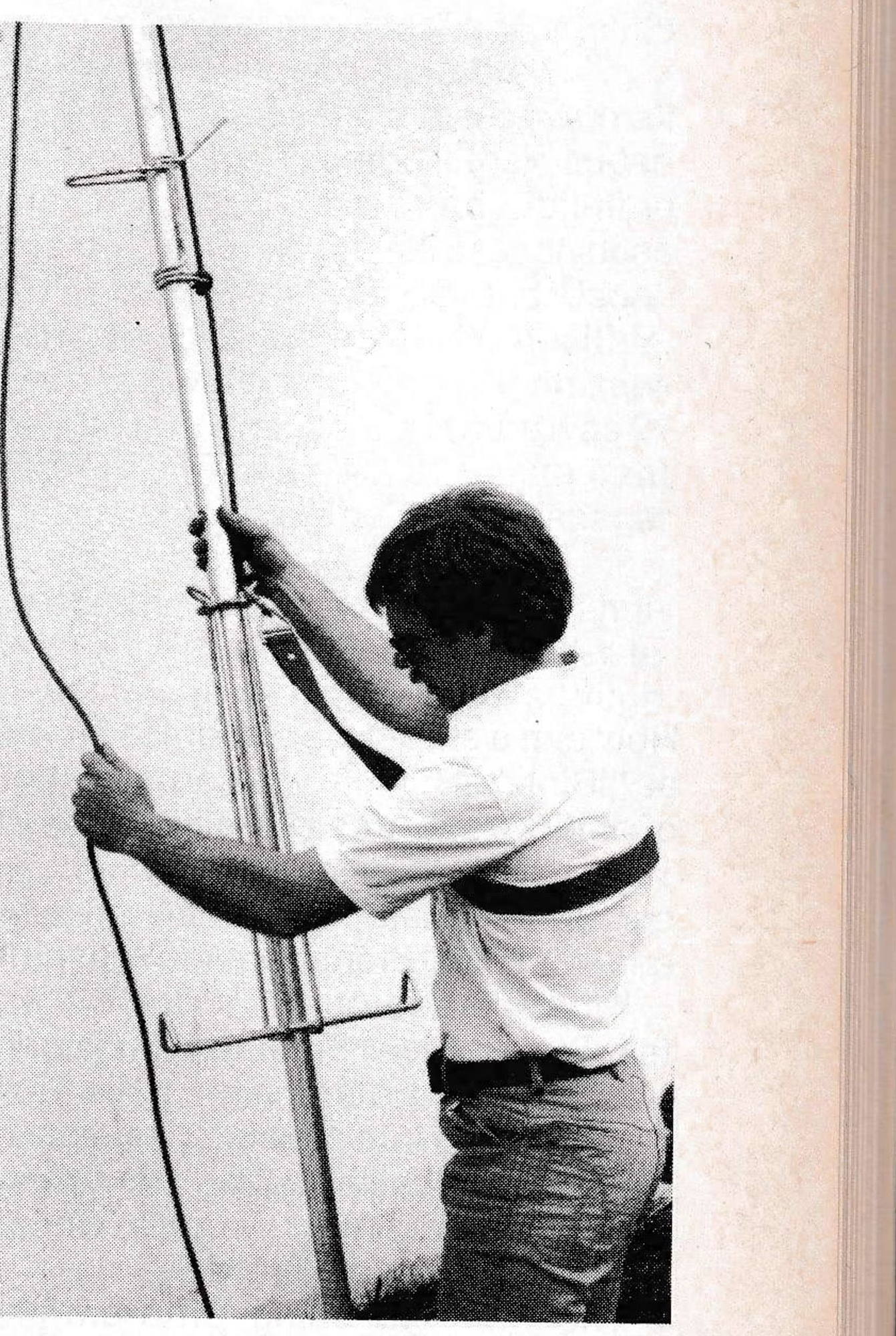
The Poma rescue pole facilitates rescues up to 40 feet off the ground. It has a hook that adjusts to different cable heights by sliding up and down the pole. The platform for passengers consists of a T-shaped foot pad and a handhold. At the top of the pole is a wheel that rotates only as the platform is raised. When weight is applied to the platform, the wheel will not rotate, resulting in frictional drag on the rope. This unit is connected to a belay rope to which a frictional braking force can be applied.

*Photos by Doc Roback. Curtis W. Bender is Associate Professor, Ski Area Operations, Colorado Mountain College.*


Advertisement

Climb Zip Whip Leaderboard