


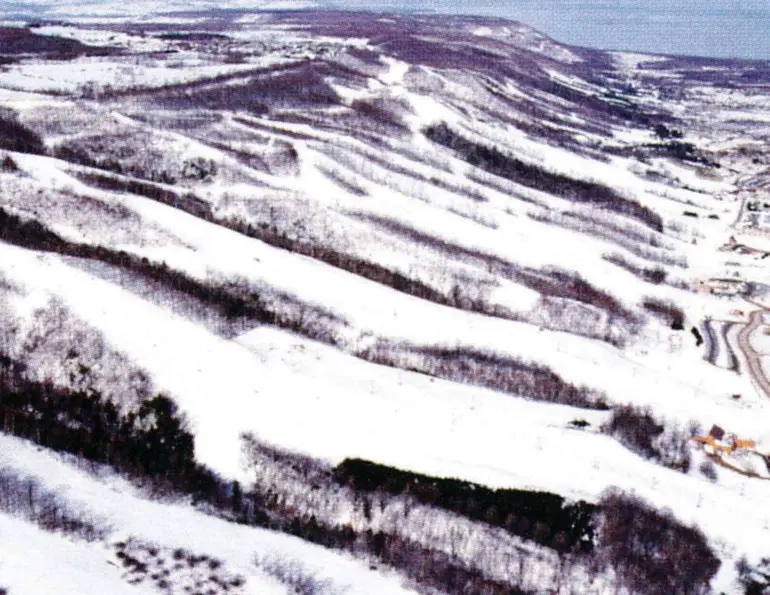
When Intrawest acquired a 50 percent stake in Blue Mountain, Ont., in 1999, more than a few people asked why. What did this big company see in this regional resort, 2 1/2 miles across with just 720 feet of vertical drop, overlooking Lake Huron’s Georgian Bay? Intrawest Corporation’s management claimed that Blue Mountain offered the company one of the most promising growth opportunities anywhere.
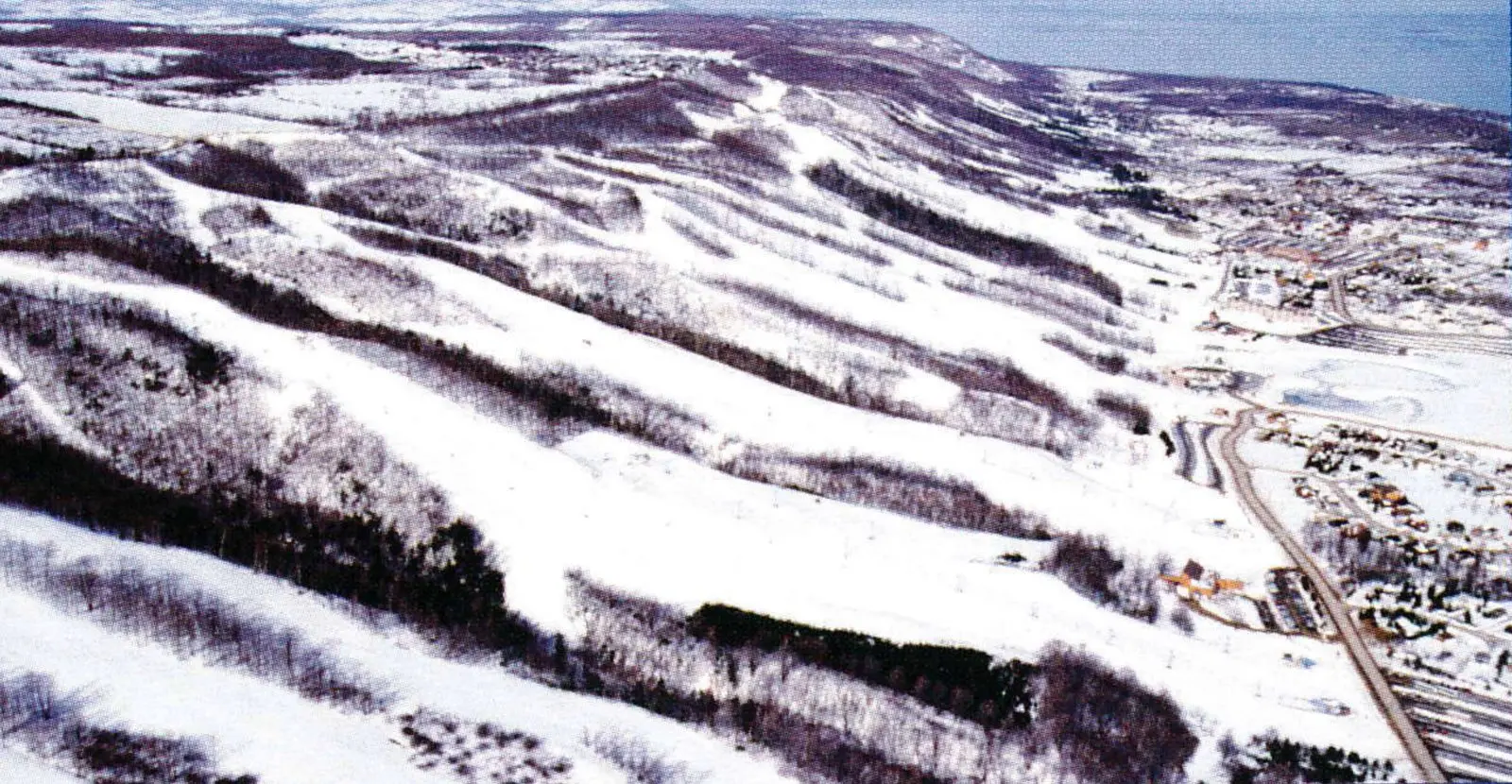
Blue Mountain, situated 90 minutes north of Toronto near Collingwood, consistently draws more than 400,000 skier visits per year (more than 500,000 visits for the 2000-2001 ski season). It is also the largest resort in Ontario and neighboring Michigan. (Toronto, by the way, is the fourth largest city in North America after New York, Los Angeles and Chicago, with 4.5 million people.)
Blue Mountain also had an innovative, experienced and capable resort management team. President Gord Canning and his five senior staff members comprise more than 147 years of, not just ski industry experience, but actual Blue Mountain experience. Because of that leadership, Blue has set standards in guest service, snowmaking efficiency, group and conference business and just plain entrepreneurship.
Intrawest saw exciting potential in combining the talents and resources of the two companies. When Intrawest purchased its 50 percent stake in 1999, it also bought 100 percent of a 32-acre parcel of prime development land at the base of the resort. Today, The Village at Blue is filling that land with more than 1,000 condo-hotel units; 200 townhome units; 100,000 square feet of commercial space, including 60 to 70 shops and restaurants, and a doubling of existing conference space to 70,000 square feet. These plans call for $585 million in investment before the end of the decade.
Record of Growth
Blue Mountain is the partially-realized dream of Jozo Weider, a Czechoslovakian-born alpinist, innkeeper and ski enthusiast who came to Blue in 1941 with his wife, Helen. He worked with local craftsmen that summer to build a lodge at the base of the mountain and welcomed skiers with the first snowfall.
“He’d pursue any new challenge, whether it was designing his own lodge or mountain-climbing,” Helen once said. “And sometimes you’d even see him cooking dinner still in his ski boots.”
Weider died in a car accident in 1971. By then, Blue was a successful winter resort with four double chairs and several surface lifts, a base lodge and a two-story inn. His vision for expanding and building a village, however, was far from completely realized. Jozo’s son, George, assumed the presidency and Gord Canning, who had married the Weiders’ daughter, Kathy, came to Blue Mountain with computer systems experience.
Development continued steadily over the next 15 years. An approved master plan called for creation of a resort village. To make the village possible, Canning lobbied for and helped secure an $18 million provincial grant for the construction of a sewage plant and trunk lines to connect to Collingwood Township. Though management postponed village construction until a suitable partner could be found, the most important pieces for the long-term future of the resort had been put into place.
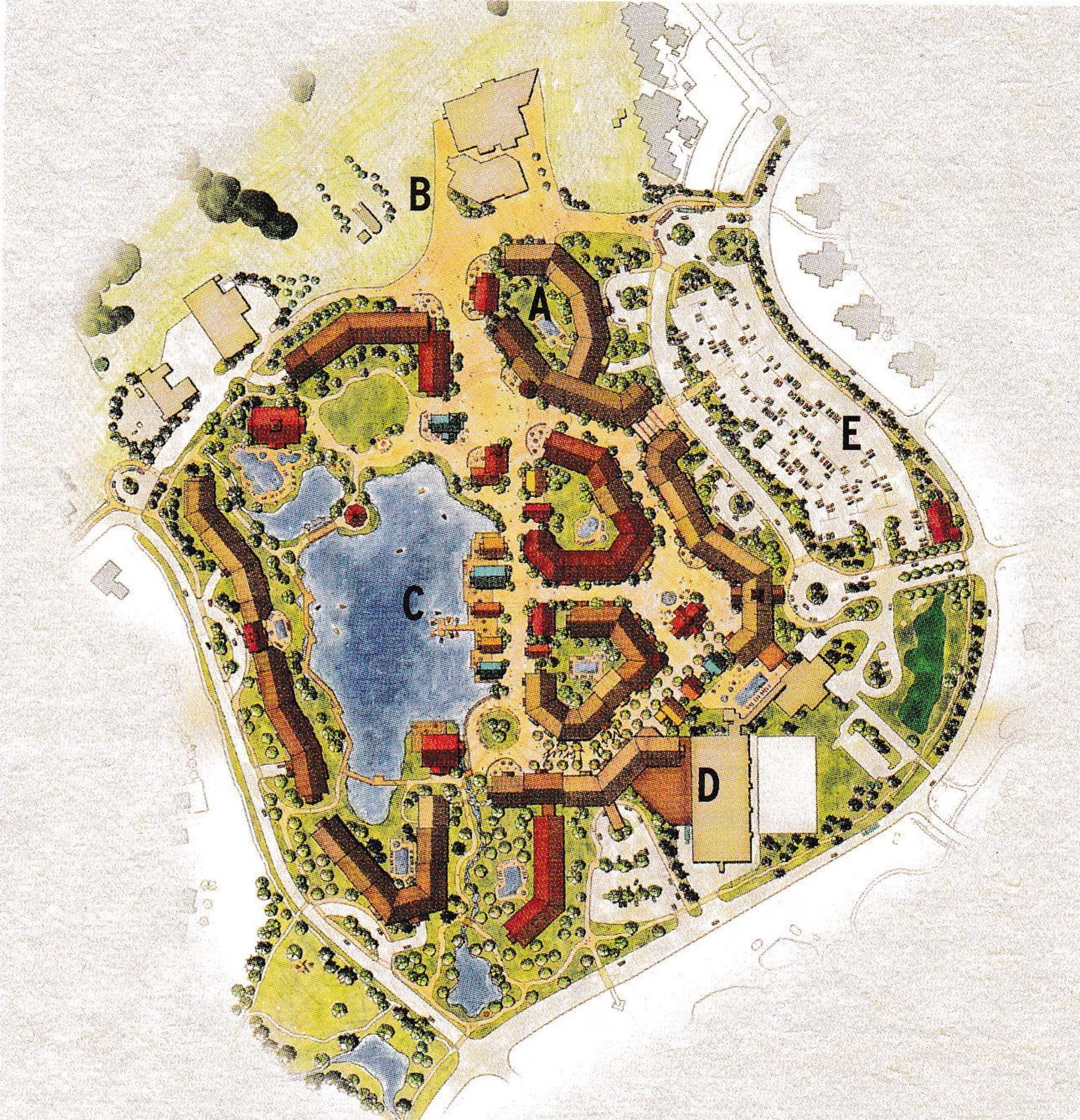
Diagram courtesy of Intrawest Corp.
Intrawest Involvement
Improvements to Blue Mountain over the next 14 years included new lifts, summer amenities, more terrain options and additional snowmaking. Then, in January 1999, Blue Mountain announced that it had entered into a long-term agreement with Intrawest. A number of industry watchers wondered about this move. After all, Blue remained consistently profitable, with earnings before interest, taxes, depreciation and amortization showing a 20 percent return on net fixed assets when the deal with Intrawest was announced. With results like this, what more did Blue need?
“A number of reasons lie behind our decision to join Intrawest,” says Canning. “We remained intent on implementing the original vision for Blue and while we had most of the approvals in place, it was difficult as a family-owned company to raise the substantial capital required to launch the village.
“Second, we wanted to create more growth opportunities for our staff. We believed that both accelerated growth with Intrawest as a partner and career development opportunities that come from being a part of the Intrawest resort system would prove a real benefit to Blue Mountain and our employees.
“We’re much too young to retire,” says Canning, 57, about his management team, but he notes that the partnership will provide a viable exit strategy for family members while they remain involved in running the business and “make good on Jozo Weider’s dream.”
Innovative Focus
For Intrawest’s part, aside from the potential village, they saw Blue’s passion for innovation. The obvious example is snowmaking. When Bill Skelton, Blue’s VP of recreation, attended HKD snowgun developer Herman K. Dupre’s first snowmaking workshop in 1991, he was the only person to accept the invitation. That visit to Pennsylvania’s Seven Springs Resort would launch Blue Mountain toward its goal of operating one of the most efficient snowmaking operations in North America. When Skelton told Canning about the man-made blizzard he’d witnessed, Canning gave the green light to begin adopting the technology in a big way.
Today, Blue’s computerized system is Intrawest’s benchmark for snow production and cost-per-acre foot produced. It is based on 10,000 gpm pumping capacity, using a 45-million-gallon reservoir and 20,000 CFM of air. The backbone of the system, however, is a network of 350 HKD tower guns covering 98 percent of Blue’s 253 skiable acres (20 HKD short tower guns mounted on wagons and 20 high air pressure, sled-mounted guns round out the arsenal). Half of the HKD tower guns are fully automated and work at full capacity in less than 15 minutes from start-up, using between 6,000 and 8,000 gpm, depending on conditions.
In fact, at -5 degrees C (23 degrees F) and lower, Blue Mountain is capable of covering all 253 acres with a foot of snow in 2 1/2 days. The resort operates the system, both inside the plant and out on the hill, using one, four-man crew per shift.

Skelton also saw an opportunity to serve the Ontario ski industry as well as Blue’s interests by becoming the sole Bombardier distributor for the Province. The distributorship enhances Blue’s own extensive grooming operation, and each year contributes six figures to Blue Mountain’s bottom line.
Another example of Blue Mountain’s innovation is its early adoption of service-quality training for employees. In 1990, Canning assigned human resources director Dave Sinclair to research and recommend a program to bring fundamental change in employee attitudes toward guests and each other. The result is a training program now in its second decade of development. What Canning and CFO Harold Abbott sought was an “architecture” for ensuring that training benefits would persist.
The program entails employee performance evaluations, regular departmental meetings focus on improvement of the guest experience and a host of employee initiatives are designed to reinforce the communication objectives for each department. In addition, Canning personally hosts more than 40 lunches each winter to gain insights from frontline employees. In addition, a detailed annual scorecard is distributed to each hotel and condo unit so guests can rate the resort on numerous aspects. It allows Blue to find out where it needs to make improvements year to year.
A fourth example of Blue Mountain’s focus on innovation is its success in increasing group and conference business. In 1997, Blue attracted 14,000 conference room nights. A year later, with the addition of new conference space, room nights grew by 21 percent to 17,000. Steady growth continues, with 25,000 conference room nights expected this year. This summer, Blue will add more than 4,000 new, and 4,000 refurbished square feet of conference space through expansion of the Central Base Lodge. Partially due to the success of conference business, Blue’s food and beverage department is profitable in 11 months of the year.
Looking Ahead
Since Intrawest’s arrival, an additional $5 million has been spent on mountain improvements including a third Poma high-speed six-pack, bringing Blue’s uphill capacity to 22,600 people per hour. This new lift is located at the south end, meaning sliders now can access a high-speed lift from any of Blue’s 34 trails. A Magic Carpet was also added and night skiing terrain was nearly doubled from 12 to 23 trails, while light candlepower was increased by 50 percent. More lifts, trails and snowmaking expansions are planned over the next three years.
Intrawest launched the mountain’s first real estate development project, Historic Snowbridge, in fall of 1999. Phase I consisted of 40 single-family dwellings in and around the Monterra golf course. All the units sold in one day, producing more than $10 million in sales.
Intrawest launched The Village at Blue at a Toronto event in June, 2000. Plans for The Grand Georgian lodge were unveiled and by late afternoon, 131 condo-hotel units were sold, representing more than $30 million in sales. In total, there are 187 ski-in, ski-out suites, two restaurants and eight retail shops.
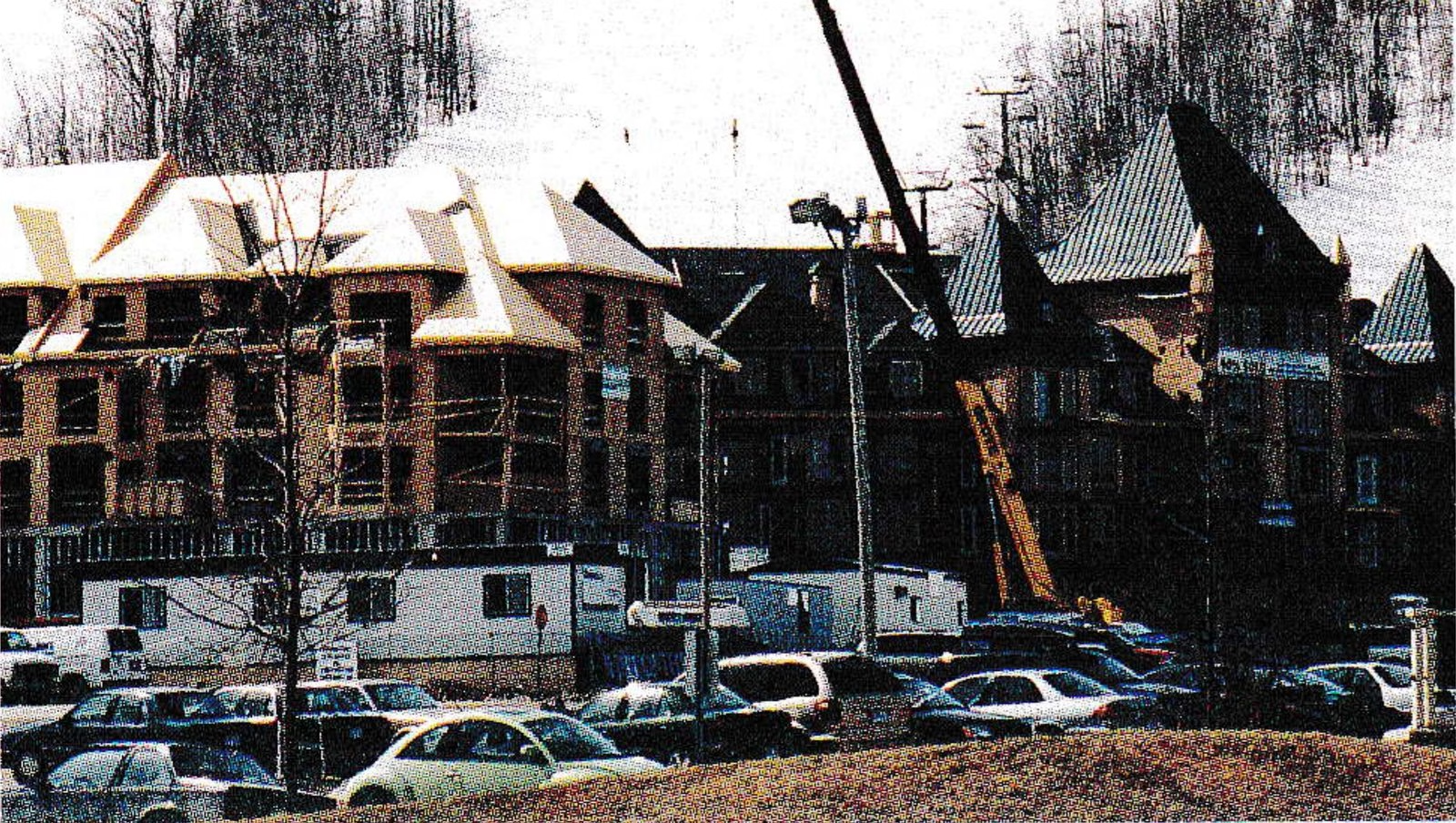
The Grand Georgian anchors the new village. Currently under construction, its units are scheduled to be ready for owners prior to the 2001-2002 ski season. Building on these successes, Intrawest launched its next village development project, the slope-side Weider Lodge in February. Strong sales continue in this second condo-hotel with delivery of units expected in 2002.
A five-acre mill pond with a boardwalk, boat dock and small boathouses with retail uses will serve as a focal point for the new village and double as a snowmaking reservoir. The pond will support small boats and catch-and-release fishing since storm water is diverted elsewhere and a steady supply of fresh water pumped from Lake Huron will prevent water levels from fluctuating.
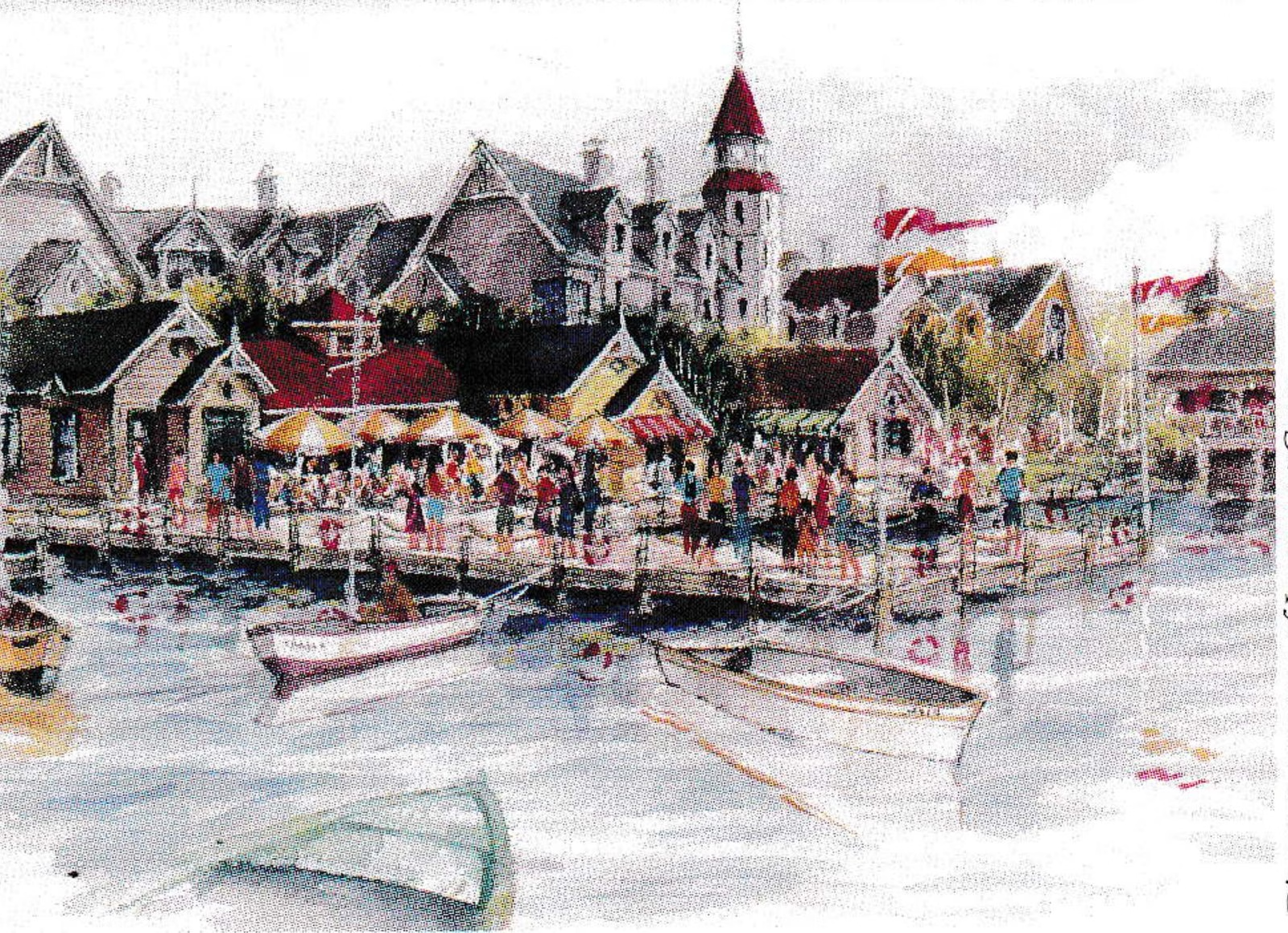
Diagram courtesy of Intrawest Corp.
Architectural themes are locally influenced with choice of building materials and roof styles evocative of more than a century of design in the villages of the surrounding region. Ranging from log, squared timber, weatherboard, stamped tin, quarried limestone or smooth river rock (used alone or occasionally in combination), the building materials are expected to contribute to a diverse village environment.
A 1981 Ski Area Management article extolled the resort’s efficient management and consistent profitability. It concluded with a quote from Gord Canning, who said, “You’ve got to understand that we’re only 700 vertical. We’ve got to do something extra at Blue Mountain.”
Canning and his team “did something extra” in the ensuing 20 years. Now, with the addition of Intrawest’s involvement and investment, management at Blue Mountain expects to continue Canning’s credo to propel the resort to new levels of achievement.
Blue Mountain Timeline
- 1971: Jozo Weider dies
- 1973: $11 million spent on snowmaking and new base lodge
- 1974-1976: Added 3 triples, 1 double and 2 surface lifts
- 1977: Alpine slide
- 1979: Night skiing
- 1980: $5.5 million hotel, water slide added
- 1985: Beginner lift added, Master Plan approved
- 1987-1989: $9 million spent on add’l. snowmaking, Ontario’s first high-speed quad, major lodge renovation, tennis courts and golf course
- 1990-1995: New conference space, retail, expert terrain and snowmaking
- 1996: Second halfpipe, second terrain park
- 1997: Six-pack
- 1999: 2nd Six-pack, Intrawest arrives

