


“A lot of areas will put $10,000 towards something that isn’t particularly useful,” said Bruce Wilson, general manager and co-owner with his wife of the area that his father founded in 1957 on what was once a dairy farm. “We don’t do that. We’ll put that $10,000 in something where there’s a long-term payoff.”
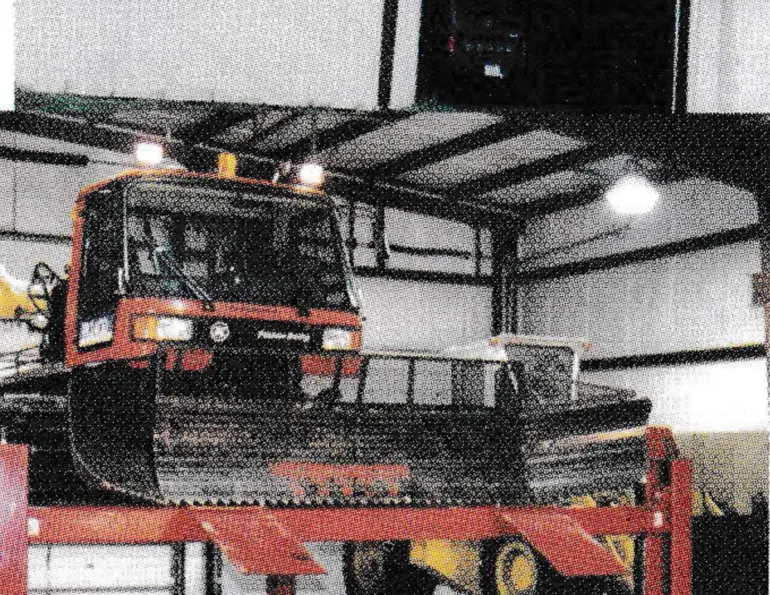
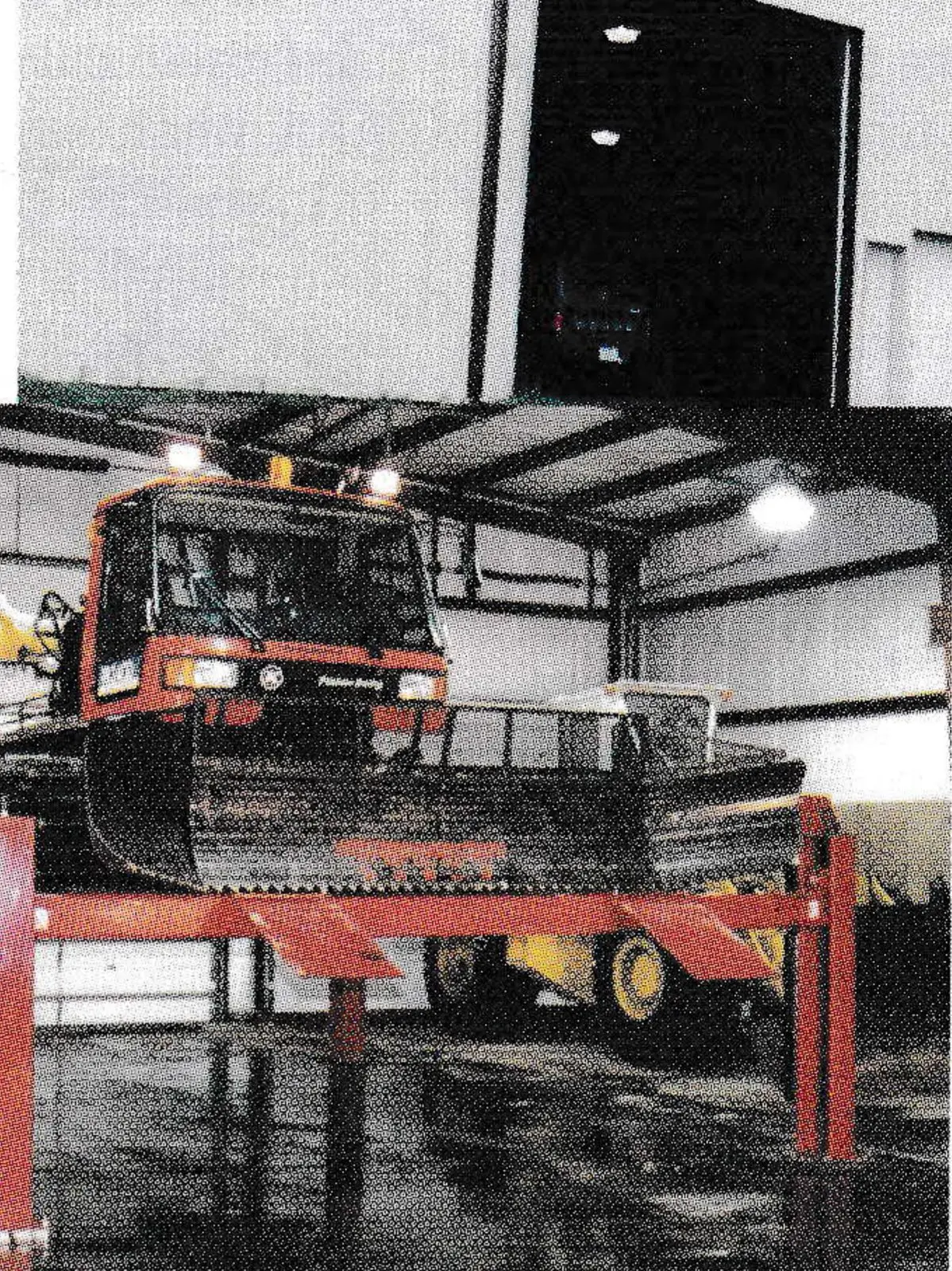
That means the maintenance shop and, more particularly, the jewel in its crown, a lift capable of raising heavy tracked equipment to levels where workers standing comfortably can fix or maintain them. That lift, called Lif-Track, is the first of its kind for ski areas.
When Wilson describes his maintenance shop, he speaks from the heart. He says he has spent entirely too much time in his career lying on his back on a creeper in a cold and wet environment trying to repair or troubleshoot heavy equipment.
In the late 1980s, he decided the time was overdue to replace the wooden structure that had been the maintenance shop from the beginning. The building could no longer accommodate the dimensions of modern snowmaking and grooming equipment.
While trail maintenance is important at any ski area, it is particularly important for small feeder areas with limited terrain. Labrador is such an area. It competes with Toggenburg, Song Mountain and Greek Peak for central New York skiers. Wilson said Labrador, with a 700-foot vertical, averaged 120,000 skier visits during the past five years.
“We all compete for the same market,” he said, “We built our reputation on our ability to make snow and keep it fresh with superb grooming.”
In an effort to keep costs under control, all of the fabrication and maintenance at Labrador is performed at the shop. Additionally, the six-person year-round crew are all cross-trained. They are mechanics, welders, equipment operators and, Wilson added, “when the occasion arises, they will take money at the ticket window.”
The new maintenance building opened in 1992 as a $76,000 investment in the future, a hefty amount for any small day-trip area. The bottom line payoff will come this year, when Wilson estimates the building will have paid for itself through savings in efficiency and productivity. “I can tell you without question this building has saved 30 to 35 percent annually in our maintenance operations,” he said.
Designing the building was easy. Wilson wanted accommodations for tracked vehicles—including a lift for maintenance and repairs. That meant a 60 by 120 foot building with overhead doors at each end. The doors had to be 20 feet wide and the eaves of the roof had to be 20 feet above the ground to allow clearance for large vehicles on a raised lift.
The lift, however, turned out to be a journey through uncharted territory. While there were heavy lifts on the market, there were none wide enough to service grooming vehicles with 16-foot-wide blades, tillers and related snow grooming apparatus. At the same time, Wilson categorically refused to consider construction of a pit—a hole dug below the foundation that would allow work to be performed from underneath.
“Pits have all sorts of problems, particularly environmental,” he said. “They are dirty, dangerous and the days are long gone when you could let oil just seep into the ground.”
As for a lift, he said, “it’s not that manufacturers couldn’t make one. The problem was that in a market as small as the ski industry, the manufacturers couldn’t see payback. We needed to find a company that would stick its neck out.”
That company turned out to be Lif-Tech Equipment Sales Inc. of Rensselaer, N.Y. Gary Pavlick, Lif-Tech’s product manager, said the company had years of specialty experience in the sales and installation of lifts for heavy vehicles. Pavlick is also a skier and was acutely aware that the ski industry needed its own type of lift to accommodate tracked vehicles.
“All the hydraulics are underneath and it’s really difficult to get at them without a lift,” he said. “I knew such lifts would be a tremendous asset for ski areas, but there’s a huge cost involved—$40,000 to $45,000 for a high-quality lift—and not enough ski areas in the country to provide a market. Then one day Bruce Wilson at Labrador called.”

On the spot, Pavlick said, he decided to focus his lift expertise on the ski industry. He said he knew the kind of lift would have to be a conventional “four post” above-the-floor design to make it affordable. He also knew the lifts manufactured—about 10 feet wide—were way too narrow for groomers. Initial measurements revealed that a lift for grooming vehicles would have to be more than 17 feet wide to accommodate blades and tillers. That fact meant re-engineering and heavier construction to carry the load over a wider span.
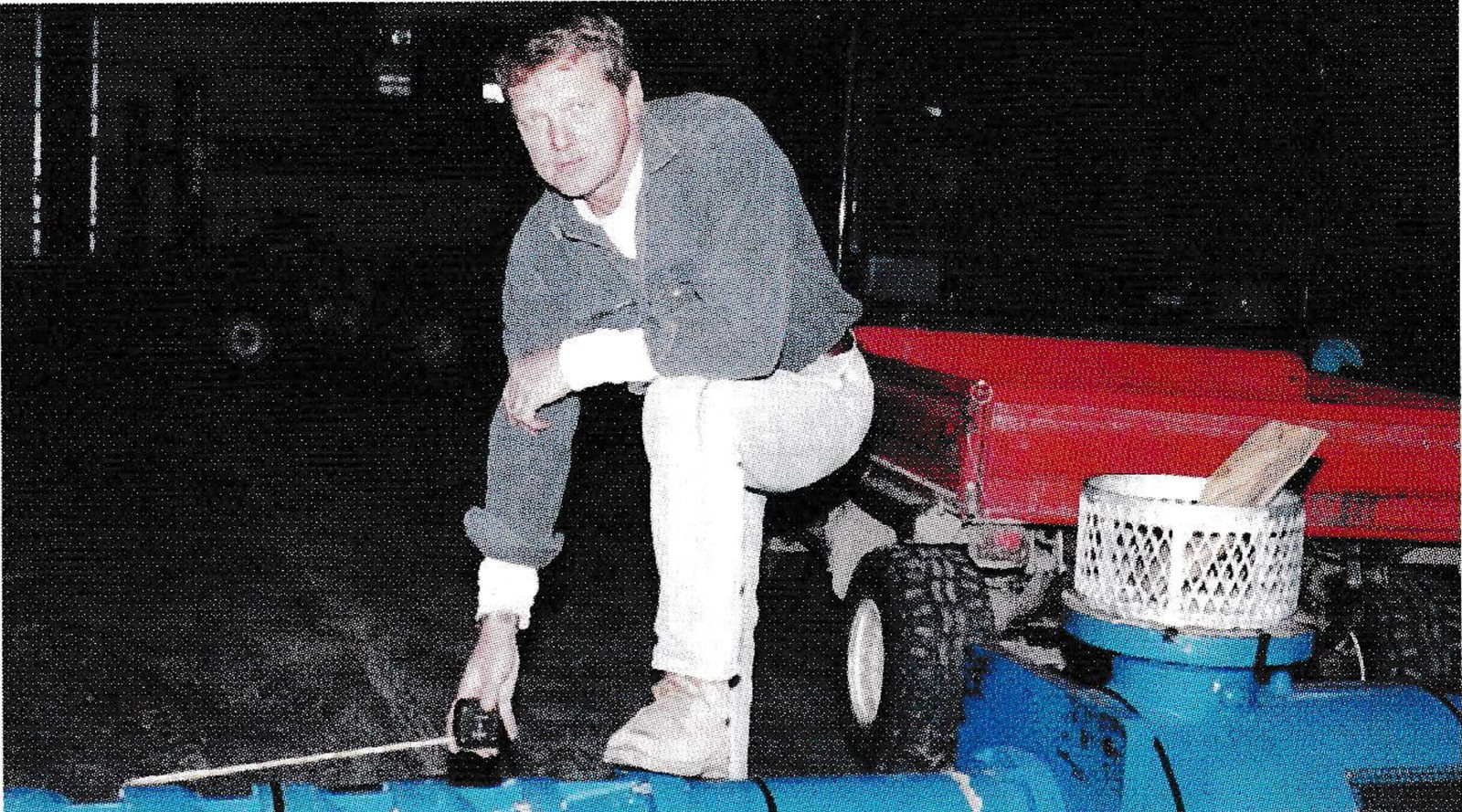
“We saw that what had to be done was pretty easy,” said Pavlick. “It just required an engineering commitment.” His company, however, was in for a surprise. The manufacturers it had regularly used, for various reasons, weren’t interested in making that engineering commitment.
“It took a lot of telephoning, but we finally found a lift manufacturer in Texas that would work with us,” Pavlick said. Not only did it mean re-engineering, the end result had to be affordable, simple, safe and reliable. The project took much more work than originally anticipated, but when the lift went on the market following its installation at Labrador, its price tag was $14,595, excluding freight and installation.
“There’s a lot of Bruce Wilson in that lift,” Pavlick said. Not only did Wilson provide input for dozens of features designed into the lift, he also inspired two important modifications to the original.
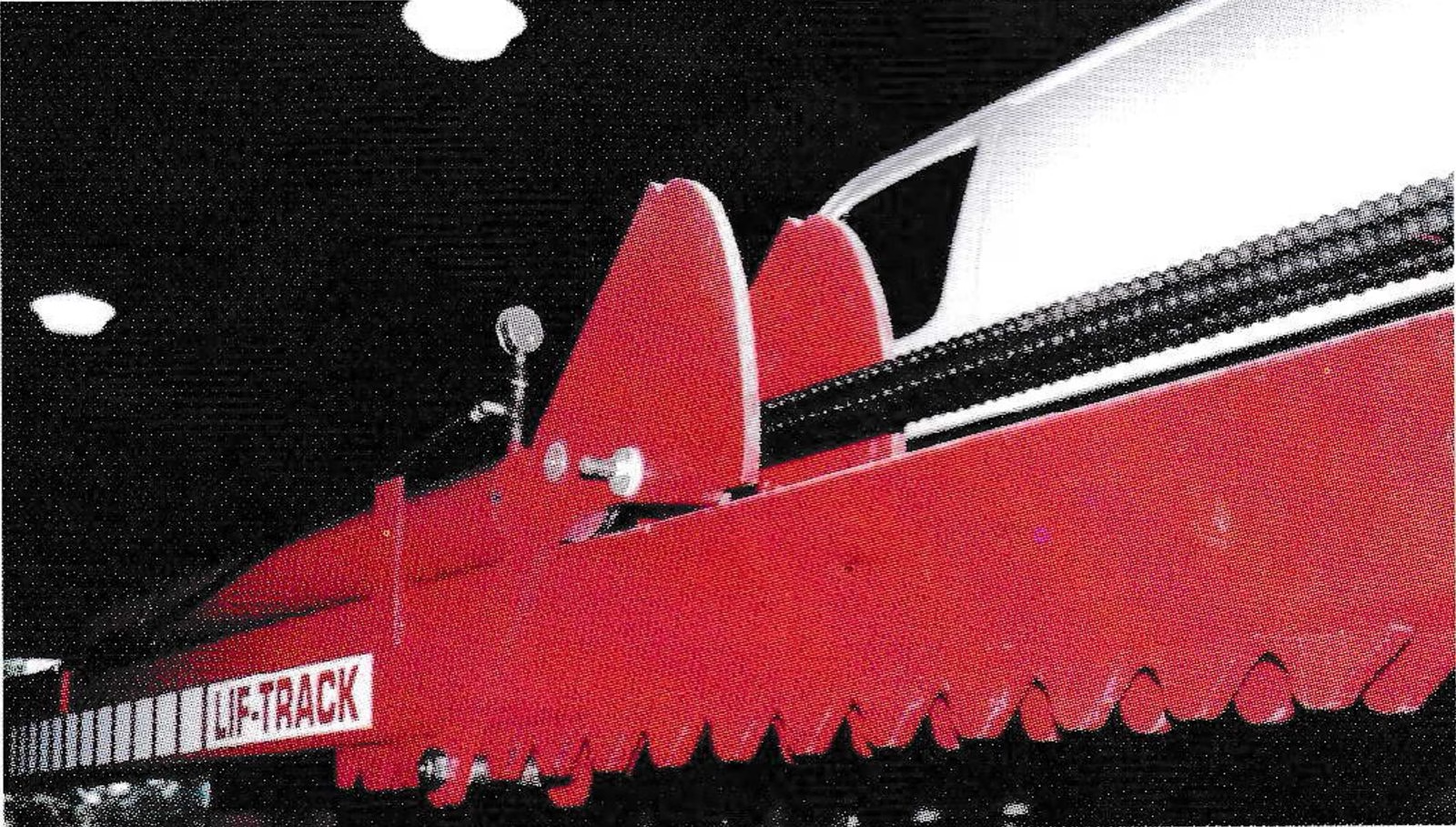
The first was a movable platform, enabling the lift to be used for the wide variety of ski area vehicles. One of the two platforms for the lift is on rollers, making it simple and quick to adjust the width.
The second was anti-skid belting materials. At first, Pavlick said, they thought hardwood planks would eliminate the metal-to-metal contact between the track grouzers and the platform, a situation that invites slippage because of ice and water. “Bruce didn’t like the idea because his experience told him that snowcat tracks would chew up the lumber. He said we should use something like rubber and I immediately knew he was right,” Pavlick said.
The Lif-Track now comes with a textured heavy-duty rubber belt fastened to each platform. Not only does this keep the vehicle from sliding, it provides a much more secure surface, alleviating the hazard of drivers stepping out of their vehicles onto a wet, slippery steel deck. Wilson also uses rubber belts to protect the concrete floor when the vehicles are being maneuvered inside. Ice-laden, snow-encrusted vehicles can be driven directly onto the lift from the outside. They are hoisted to whatever height is comfortable for inspection, then maintenance or repair is done. Vehicles also can be jacked on the lift for track, wheel or tire repair. And, there are three different safety features in the event of hydraulic failure.
The lift is also used to raise snowmaking guns and related equipment as well as chairlift parts to comfortable heights for welding or mechanical adjustments. “One of the ways we’ve realized savings is in the comfort of the workers,” Wilson said. “If they are comfortable making a repair, it will go much faster.”
Aside from the lift, perhaps the greatest advantage of the new maintenance shop is that it is large enough to house all the grooming vehicles inside.
“I can’t even begin to estimate the savings achieved for cold-weather starts,” Wilson said. “We save on batteries, starting fluid, chargers and time. Equipment is thawed out each 24 hour period. We can see if there’s any breakage or damage, then make repairs before it gets serious. Inside storage just makes a huge difference on the positive side in the cost of maintenance.”
Shop Efficiency
While the lift is Labrador’s jewel in the crown, the maintenance shop has dozens of other features that make it an efficient workplace:
- A bank of overhead oil drums, each with different grades and its own hose and attachments. The drums are located for easy service to vehicles on the lift. They are elevated to an overhead platform by fork lift. The elevated platform also serves as the rest and locker area for the snowmaking and grooming crews.
- Waste oil is stored in a 1,000 gallon holding tank. It is eventually picked up by area garages that use it for waste-oil stoves.
- Heat for the building is captured from snowmaking air compressors. More conventionally, the shop is heated by fuel oil and a forced-air system.
- Excessive lighting. “We put in more lights than you see in most shops,” Wilson said. “We want to see what we are doing.”
- Different stations located along one wall for different operations. Welding is one, for instance, and that station is supplemented with a portable welding unit. Part of the wall is devoted to a well-organized collection of fasteners.
- The shop is clean and its openness makes it easy to keep clean. Just to be sure, every Friday is cleanup day.

