


In fact, the driving force behind several domes are leisure providers with no expertise in the wintersports business. Nonetheless, these centers will bear watching as they will provide relatively affordable and convenient instruction to new skiers and are an outlet for hardcore snowboarders throughout the year. This effectively anchors snowdomes in the wintersports arena as development arms.
The concept of a snowdome is easy to grasp. Build a large aircraft hangar-like building close to a major population center. Next, build a slope about 150 meters long and put in a lift. Then, find one of several indoor snowmaking systems, such as SnowMec from Australia or ACER, developed in Wales, and switch them on until there is a foot or so of snow. Refrigerate (and use the heat for a swimming pool). Then you run it like any other urban sports or leisure center.
All of the European snowdomes are run by leisure providers. First Leisure Corp, SnowWorld and SnowValley (the European-based developers of a project in Connecticut) are each involved in running or building snowdomes.
In fact, First Leisure, a public company and owner of the Tamworth Snowdome in the U.K., organizes its snowdome enterprise within its Family Entertainment division. The company also has business interests spanning RV parks, bowling alleys and night clubs.
As an example of its entertainment approach, at Tamworth’s Saturday Fresh Nights, when the center is restricted to snowboarders between 10 p.m. and 2 a.m., the house lights are dimmed in favor of swirling colored spots and thumping music, like an on snow roller-disco. One recent event incorporated not only a skateboarding demo but the participation of The Ministry of Sound, currently London’s most cutting-edge nightclub and events impresarios.
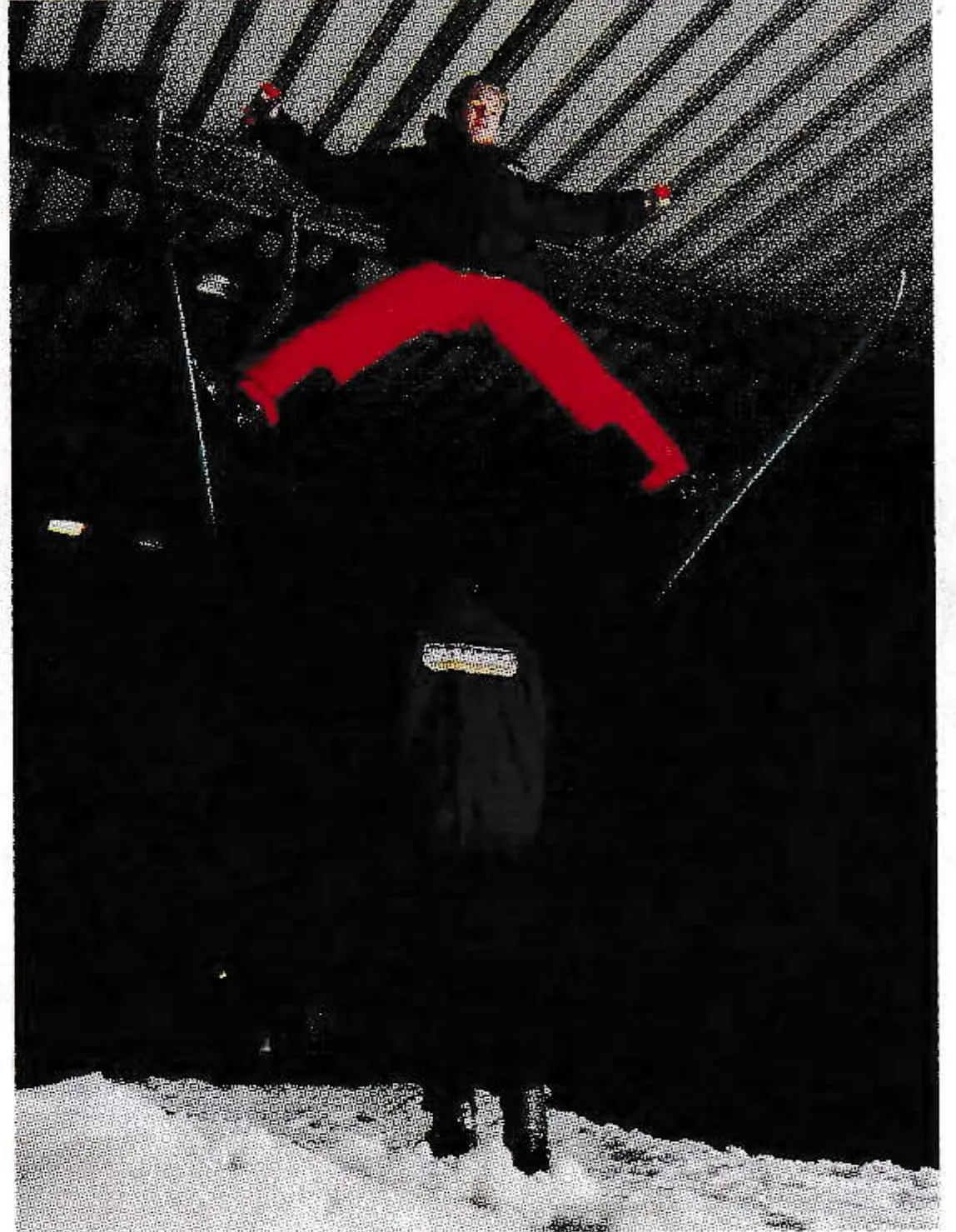
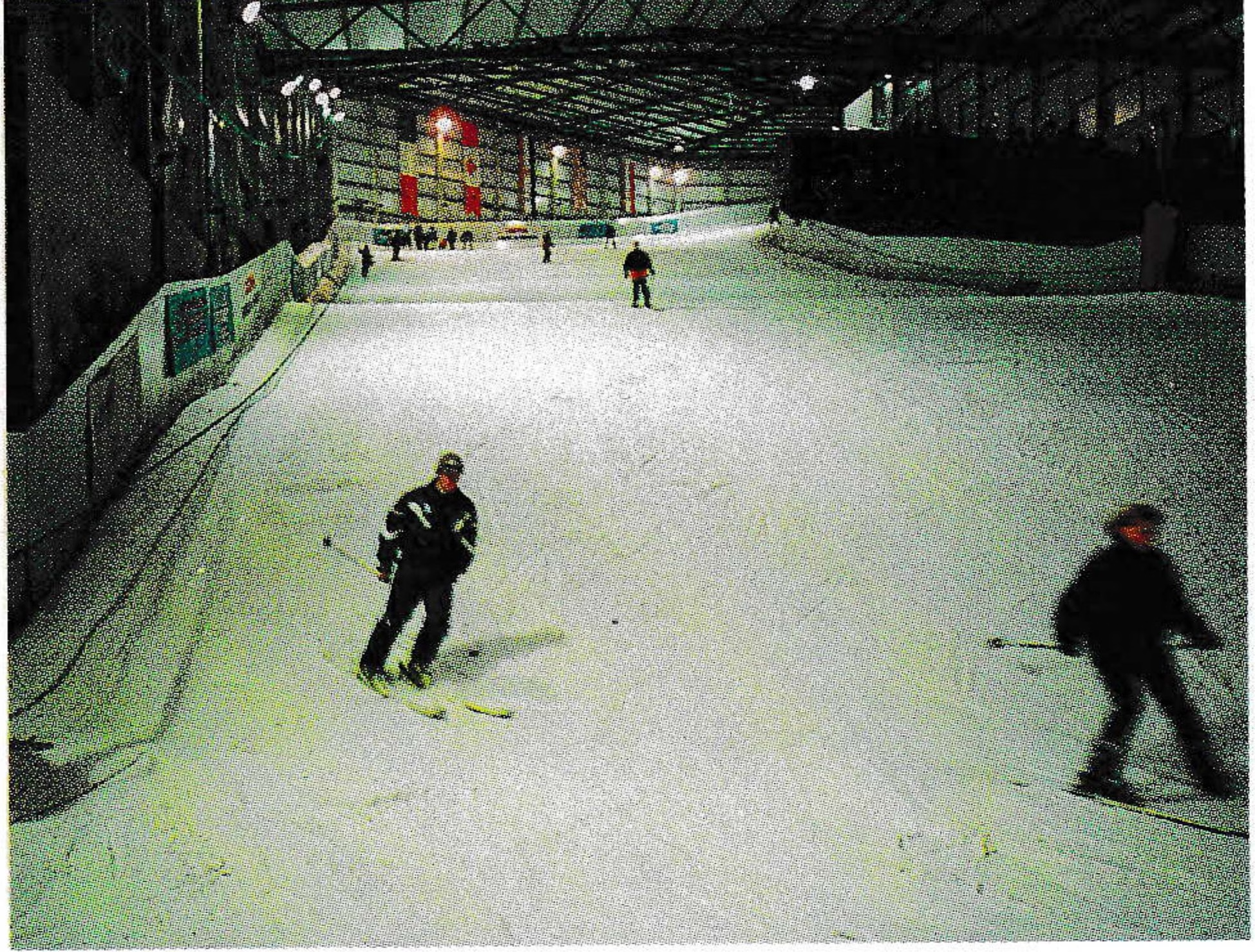
When First Leisure acquired Tamworth, the company management saw no relevance in their lack of ski industry experience. “We saw a product we were interested in that the builders, a construction company, were having difficulty operating,” says Gary Baker, marketing manager of Tamworth. “We had the leisure operating and marketing background to turn it around. We knew how to identify and then make the improvements necessary for a successful operation. These included better financial management, technical upgrades in the snow maintenance and improved health and safety and staff working conditions expected of a public company. Now we can get down to more effective mass marketing.”
SnowWorld, the largest of three snowdomes in Holland, is owned and developed by a former music retailer. Last year, in SnowWorld’s first year of operation (which was not a full year), the dome sold over 50 percent of its 340,000 tickets to corporate groups on “family days” that usually included using conference space and food, picnic, BBQ and (especially) beverage facilities.
“We need about 400,000 people a year to make the minimum revenue of about $10 million to break even,” says SnowWorld’s PR person Geraldine Beckers. “We are making enough, but it’s not a license to print money.”
SnowWorld operates from 9 a.m. until midnight, 365 days per year. In the current summer low season, an average of 250 tickets per day are sold at $25 per hour, including equipment rental. However, during last winter’s high season, the center was almost fully booked at a maximum capacity of 4,000 per day, with staff head count rising from 50 to 350 employees.
“To ensure sufficient business we focused on marketing to groups,” says Beckers. “But this caused problems. The 175 by 65 meter slopes have a capacity of 300 at any one time, which meant on a weekend, with groups ranging from 20 to 300 people, there were constant bottlenecks, with people waiting for tickets, equipment or just to get on snow. We will handle it better this year simply through having more experience. Also, we are now going to start targeting individuals and families that we possibly alienated last season. We will also be pushing our other facilities, such as the gym and mountain-bike track and inline loop.”
The majority of group business comes from within a 40 km radius, which covers most of Holland’s main cities, while individual business comes mostly from local communities. Until now, revenue streams have come almost entirely from ticket sales. SnowWorld has only recently taken over the food and beverage facilities, which had been leased. Also, the company is now planning to expand its merchandising beyond the very basic. Other revenue comes from straightforward sponsorship banners that included a large Vail Resorts banner enticing would-be skiers to the Colorado Rockies.
While First Leisure is committed to building domes in suburban London and Liverpool and SnowWorld has other plans in England and Germany, there is little chance the European market could support the elaborate domes being planned either for Anaheim, Calif., or South Windsor, Conn., (see sidebar on page 59) because of the costs involved and the limited number of concentrated urban centers that, in Europe, rarely make it over the one million mark. On a rainy Thursday lunchtime in Zoetermeer, a bleak modernist dormitory community outside the Dutch capital of The Hague, only about 20 skiers are stumbling around SnowWorld. However, one of the two slopes has been closed for the next day’s Dutch Snowboard championships, and Pepsi, the major sponsor, has festooned the building with their banners.
But operators of these domes still see a big future in beginners and core snowboarders. At Tamworth, there is a strong reliance on beginners who are increasing rapidly in number as the strong British economy makes visits to European resorts relatively affordable.
“We are at our busiest at the beginning of the ski season,” says Martin Smith, manager of the Tamworth Dome. “People who only get a handful of days on snow each year don’t want to spend the first three of them falling over. We expect to see people progress from novice to beginner and then never see them again.”
Every day, Tamworth offers a complete package that guarantees the participant will be able to ski or snowboard down the entire 150-meter slope by the end of the instruction period.

And, while many U.S. ski areas are predicting that snowboarding growth will soon reach its ceiling, indoor domes appear to provide a solution to a big impediment. “Of course an intermediate skier often won’t sacrifice the time during his or her vacation usually required to learn to snowboard,” says Tamworth’s Baker. “But at a dome they can learn before they go so there is no vacation time loss involved.” The greater dedication snowboarders frequently have for their sport means Tamworth’s two snowboard-only nights regularly draw riders from up to three hours’ drive time away.
“Tamworth is now the hot bed of British snowboarding,” says Jeremy Sladden, manager of SnowBoard Asylum, the dome’s retail concession. “The 100-plus people we get twice a week are the focal point of the core UK snowboard scene and usually include several of the few British pro-riders. The local high school offers lessons as part of its curriculum and now accounts for at least half the British junior team.”
One thing is for sure, snowdomes have the ability to grab and neatly target beginners and draw from large urban populations, particularly at the start of their winter sports participation. This makes a range of commercial leisure ventures more feasible than they would be for ski areas. Tie-ins with tour operators or with manufacturers like Gotcha International, a surf/snow/lifestyle company, which is the corporate sponsor of the Anaheim project; or Burton, which is heavily involved in both Tamworth and SnowWorld, is creating early awareness and loyalty among consumers.
Proposed Snowdomes in the United States
SnowValley, the South Windsor, Conn., snowdome project, has announced an investment of about $300 million, compared to some proposed European projects that will have budgets of close to $25 million. The Connecticut dome will feature swimming pools, ice rinks and other sport facilities around a slope covering 67,000 square meters, including five distinct runs with verticals of 140 meters. Company President Tom Stewart says the snow area will be big enough to handle World Cup races.
“Our entire philosophy is based around creating a sports academy,” says Stewart from his office in Dundee, Scotland. “The size and scale of the project will allow us to have 20,000 people, starting as young as five, getting expert tuition in numerous sports disciplines while the slopes remain the centerpiece. And, with the success of our school programs, we will be able to offer lessons for as little as $1.50 per hour with equipment.”
“We will be bringing in people to market SnowValley as a brand image,” says Stewart. “We already have staff whose background has been at Disney.”
Out in Anaheim, Calif., The Gotcha Glacier project (see cover) is getting under way. The $50 million facility will be 250 feet wide and 600 feet long, encompassing 150,000 square feet and including a snowboard terrain park, two halfpipes, a beginner’s ski and snowboarding slope and a snow-play area. Attached to one wall will be a quad chairlift and a conveyor belt for beginners will run along the opposite wall.
On the ground level, under the slopes, an 84,000 square-foot indoor surfing park with stationary waves will be put in. In addition, an ice rink and food court will be adjacent to the snowboarding area so guests can eat while watching snowboarding through a 25-foot-high thermal glass window. Finally, four basketball courts will be built to serve as the headquarters for the National Junior Basketball League.
Besides the sports areas, the facility will contain rental shops for all sports, three arcades, birthday suites, a kids’ entertainment center, rock and ice-climbing walls, a fitness shop, several retail shops, a 16,000-square-foot themed restaurant and stages for live music concerts.
“We are hoping to break ground by the end of the year,” says Michael Gerard, chief of operations and marketing for The Gotcha Glacier. “And we hope to be open by early 2000.”
But this is just the first stop for this group. “We already have 16 sites that we’re working on in major markets across the country,” says Gerard. —JR&MK