

Major NSAA shake-up and reorganization
- Dick Garis formally announced his resignation as executive director. (He had privately made his intentions known in this regard to President Seibert in May.)
- Seibert appointed Cal Conniff of Mt. Tom Ski Area in Holyoke, Mass. the new executive director.
- It was decided to move NSAA offices from New York to Hartford, Conn.
- Frank Snyder and Roland Palmedo resigned from the board and were replaced by Dave Carto (Ski Trails, Mansfield, Ohio) and Preston Smith (Killington, Vt.).
- Subsequently, Channing Murdock (Butternut Basin, Mass.) was named to the board to replace Conniff.
- The NSAA mid-winter meeting scheduled for Sugarloaf, Maine, was moved to Hunter, N.Y.
These moves were rooted in a financial crisis that NSAA faced. Over 40 per cent of the NSAA budget — more than $75,000 — derives from supplier associate members, either through dues or as net profit from the trade shows. Dissatisfied with the cost of exhibiting, as well as with the timing, location and format of the shows, the suppliers had formed their own association, Ski Area Suppliers Association (SASA), and had planned and announced a schedule of in-season regional trade shows.
Faced with an enormous loss of supplier revenue, NSAA moved to hold the organization together. In a key move it also decided to adopt the supplier thinking on trade shows, and authorized SASA-style regional shows for the coming winter.
The second notable date was September 20, when a group of NSAA directors, headed by President Peter Seibert, met in Albany, N.Y. with SASA officials. NSAA made known its decision to hold regional trade shows and invited SASA to merge their announced shows into the new NSAA program.
The principle was quickly accepted, and the broad outlines of an agreement were worked out. The complete text of the joint release is printed below.
Text of NSAA/SASA Joint release
At a joint meeting of board representatives from National Ski Areas Association and Ski Area Suppliers Association in Albany, N.Y., on September 20, agreement was reached on a program of trade shows for the 1973-74 season.
NSAA agreed to take responsibility for staging a series of regional trade shows in addition to the annual convention and trade show already scheduled for Del Coronado. SASA agreed to merge its previously scheduled trade shows into the new and expanded NSAA trade show program.
Among the details agreed upon were the following: First, that the midwinter meeting of NSAA, previously scheduled for Sugarloaf, Me., would be relocated at Hunter Mt., N.Y. January 15-17. The slope grooming and snowmaking demonstrations previously planned for this meeting would be expanded into a full-fledged regional trade show. Secondly, additional regional trade shows would be scheduled by NSAA, adopting the approximate dates and locations previously announced for the SASA shows. Exception to this is the eastern Canada show which will be staged, as announced, by SASA.
NSAA President Pete Seibert said that Cal Conniff, the new Executive Director of NSAA, would appoint a trade show council, composed of ski area suppliers, to advise him on format, timing and other marketing details. “If these trade shows are to be successful, they must meet the marketing needs of the suppliers, and we intend to make sure they do.”
Echoing this thought, SASA President Phil Savage said, “I feel strongly that we are on the right track of suppliers and areas working together on a sensible, practical marketing level. SASA will continue to exist because suppliers need and want this kind of voice.”
A basic feature of the NSAA regional trade shows is that they will be open to all areas, whether association members or not. The registration fee for non-members will carry a premium, but it was the feeling of both SASA and NSAA directors that registration fees be set at a level that would encourage maximum attendance. It was also recognized that exhibit fees would have to be kept commensurate with the marketing objectives of the suppliers.
The same philosophy was expressed on Associate Member dues for suppliers in NSAA. It was recognized that the base of supplier members to NSAA should be greatly increased in order to assure continued revenue for NSAA, and at the same time spread this load over a greater membership. It was likewise recognized that the membership base of NSAA itself could be substantially increased.
There was discussion with regard to the spring convention trade show. With several in-season regional trade shows, it was generally felt that the spring show would inevitably differ from what it has been when NSAA staged only one annual trade show. NSAA undertook to consult fully with suppliers in making these changes. It was unanimously agreed that there would be no change in the Coronado location of the 1974 Spring Convention and Trade Show.
Attending this joint meeting were the following: NSAA President, Peter Seibert (Vail); NSAA Directors Tom Corcoran (Waterville Valley), Phil Gravink (Peek ’n Peak, N.Y.), Cal Conniff (Mt. Tom, Mass.) Stuart Campbell (Buck Hill, Minn.). For SASA were Pesident Phil Savage (Hall Ski-Lift), Dick Cringhton (Bombardier Lt.) Joe Avery (West Mt. Sales), John Mathewson (substituting for Joe Tropeano of Larchmont Engineering), Ann Hasper (SASA Sec/treas) and David Rowan (SASA Director).
Conniff named NSAA Executive Director
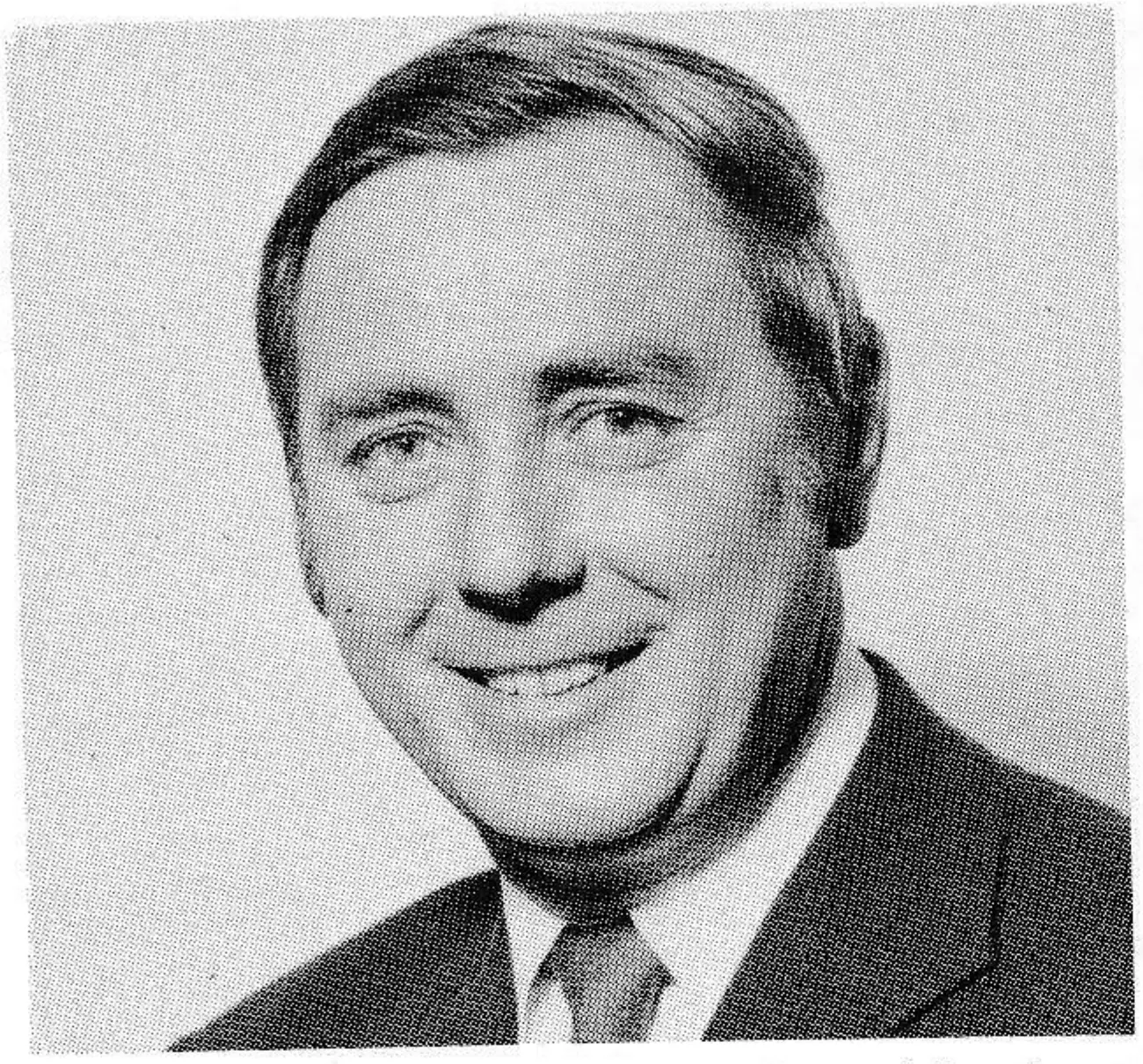
Cal Conniff, 43, Vice President and General Manager of Mt. Tom Ski Area in Holyoke, Mass., was appointed executive director of National Ski Areas Association, replacing Dick Garis, whose resignation was accepted by the board on September 11.
In a related move, it was announced that the national offices of NSAA would be moved from New York to Hartford, Conn. (Hartford is also the headquarters for Barringer and Williams, managers of the NSAA insurance program.)
Conniff said he has a lot of loose ends to clear up before taking the reins, but he expects to be ready by the middle of October. He also said Dick Garis would stay on for a short time to help in assuring a smooth transition.
In announcing Conniff’s appointment, NSAA President, Peter Seibert, said, “I am really pleased that we could get a man of Cal’s caliber to run NSAA. He has years of successful area managership behind him, he has shown himself to be an imaginative and forceful leader in the eastern area association, to say nothing of his contributions as director of NSAA. I just can’t think of anyone better qualified.”
Conniff went to Mt. Tom as general manager in 1961, after three years as merchandising manager for a Springfield, Mass. television station. When he arrived, Mt. Tom had one short T-bar and a small base lodge. Under his managership it grew to a high density area boasting two chairlifts, two T-bars, a J-bar and substantial supporting services.
GARIS RESIGNS FROM NSAA
Following is the complete text of Dick Garis’ announcement of his resignation as Executive Director of NSAA:
Formal announcement was made on September 11th by Richard F. Garis, Executive Director of the National Ski Areas Association since 1967, of his resignation from that position. Garis had advised NSAA President Peter Seibert of his decision last May.
Garis said that he has wrestled with the question of resigning frequently over the last few years. He explained that his six years with the Association have been tremendously satisfying and personally rewarding, but he now feels that he should move on to something which offers new opportunity and challenge. Garis said: “The challenges which faced NSAA six years ago of pulling together the nation’s ski areas and unifying them within the structure of a powerful national trade association, have been met.”
As NSAA’s Executive Director, Garis has traveled throughout the United States, attending and participating in state and regional ski area association meetings, as well as discussing and counselling hundreds of ski areas on problems of all kinds. Garis has also established valuable contacts for NSAA within the Forest Service, the Small Business Administration and the Farmers Home Administration.
When Garis became Executive Director in 1967, the Association had 94 members, a $32,000 budget and no cash reserves. Today, it has 527 members and a $190,000 budget with a $53,000 cash reserve. Prior to becoming Executive Director of NSAA, Garis was General Manager of the Windham Ski Area in New York and had served as a ski area consultant for Bache & Company, the New York brokerage house. Earlier, Garis had been a prominent building contractor in Manchester, Vermont, and White Plains, New York.
Garis will remain with NSAA until mid-November, and will announce his future plans following a December vacation trip.
Eastern areas set to revitalize
The Eastern Ski Area Operators Association will shortly become Eastern Ski Areas Association, if this and other recommendations are accepted by the membership at its annual meeting on Thursday, October 11. More significantly, the membership will be asked to adopt a broad new program for revitalizing itself.
A special planning committee, chaired by Waterville Valley’s Tom Corcoran, was set up in May to make recommendations. The association had become “semi-moribund in recent years” and the directors felt it should either fold tents or come up with a new and active program.
The planning committee recommendations centered around communications. They called for internal communications in the form of a monthly newsletter. They wanted external communications with a mandate to emphasize the positive side of skiing, especially using the thrust of the Eastern Ski Association. Thirdly, they wanted to coordinate trade show activities so that the membership would get maximum exposure to new equipment and a changing technology. This coordination was to be with NSAA and Ski Area Suppliers Association (SASA).
The recommendations pre-supposed a part-time or full-time paid staff and office, and the committee “strongly recommended” that Phillip Camp Assoc., of Woodstock, Vt., “be contracted to provide the necessary staff functions.”

Northeast pinches expansion pennies
Never in the history of Eastern skiing has so much effort been expended during the summer and fall to prepare ski centers for the best possible conditions on the least amount of snow, with the least amount of money being spent.
Two near-disastrous years, particularly in southern New England and down the line to Georgia, left most operators with little in the way of funds for improvements. Skeleton crews worked slowly throughout the spring, summer and fall to get lifts in top shape, snow-making systems as efficient as possible and slopes as smooth as golf courses—if it didn’t cost too much.
New lifts were at a minimum, and the only new area in New England is at Bretton Woods, N.H. Sugarbush was rebuilding its 7600-foot gondola, virtually destroyed last December when fire gutted the upper terminal.
With the cooperation of some banks, mortgage payments were eased at some areas and working cash was provided.
Whenever it was deemed feasible, slight increases are expected to be found at the ticket windows at many areas.
Interestingly, lift manufacturers and the snow-makers report that eastern areas continue to make their expansion plans, many of them major ones. The feeling is that there is an awful lot of business simmering on the back burner that will come to a boil with any favorable combination of good snow year and loosening of credit.
Many eastern operators were also optimistic about the impact of dollar devaluation and domestic inflation. “A lot of the ski vacation money that previously went abroad and out west may well be coming to nest here at home,” said one marketing director.
New ski area for Virginia
A new ski area will open December 15, 1974 in the Blue Ridge Mountains of Virginia. Named Wintergreen, it is being developed by Cabot, Cabot & Forbes of Boston.
The skiing aspect of this year-round recreational community provides three chairlifts serving 45 acres of trails for the first season. Snowmaking will be installed throughout.
Conceptual design was begun three years ago by Dufresne-Henry of Springfield, Vt. Trail layout is by Sel Hannah, Sr., lift consulting by Kinney Associates and snowmaking consulting by Bill Walsh.
Greylock set for 1974 opening
An official ground-breaking ceremony was held Sept. 15 at Greylock Glen in Adams, Mass., climaxing 20 years of various efforts to establish a ski and recreation complex on the state’s highest peak, 3491-foot Mount Greylock. The 600-acre resort, with a total vertical rise of 1220 feet is located entirely on land owned by President Alan S. Canter of Elco Resort Developers Inc. of Springfield, Mass. Sno-Engineering has a turnkey project to build the ski facilities and Cornish-Robinson Associates of Amherst, Mass., is building an 18-hole 6400-yard golf course.
Bromley gets new general manager
Bob Paron, former manager at Mount Ascutney in Brownsville, Vt., was named general manager at Bromley, Vt. Paron had been at Ascutney for five years under a management contract with Kissing Bridge Inc. of Buffalo, N.Y. President John Giles of the Ascutney corporation will take personal charge of the Brownsville area and the Kissing Bridge arrangement will no longer be in effect. Kissing Bridge also operates Jiminy Peak in Hancock, Mass., and is preparing to open a new ski club 20 miles south of Kissing Bridge, which will be open weekends and holidays only, with members enjoying lift privileges at Kissing Bridge during the week.
Resort marketing group formed
Two of the three founders of the Four Seasons Village at Breckenridge, Colo. a $52 million, 114 acre resort center, today announced their partnersship in a new organization aimed at evaluating, marketing and developing resort opportunities in Colorado and the Rocky Mountain west.
Donald Fowler and Read Q. Chalfant, formerly preisdent and executive vice president of The Breckenridge Company, will head Resort Marketing Associates.
Resort Marketing Associates will headquarter at The Four Seasons Village Center in Breckenridge (P.O. Box 366).
Vail sets design limits
Peter Seibert and Richard Peterson, respectively chairman and president of Vail Associates, announced the future design limits of Vail’s mountain ski facilities.
The Vail announcement follows by two years the precedent-setting similar announcement made by the Aspen Skiing Corp.
The figure announced as the eventual design day operating capacity was 11,000 skiers a day on Vail Mountain. (The design day is an average of skier volumes on 30 peak operating days.) To date, Vail has seen a few peak day skier volumes of around 8,500 skiers, according to the announcement.
The Vail Mountain plan measure for skier capacity takes into consideration not only lift and slope capacity, but also the quality of the skiing experience, as expressed in such subjective matters as snow coverage and length of lift lines.
Major expansion at Bogus Basin
One-and-a-half million dollars in expansion costs are going into Idaho’s Bogus Basin. Primary consideration was alleviating the crowded ski conditions on weekends.
Construction includes a 2-mile access rode to the tope of No. 2 chair with parking lots for four hundred cars, a 12,000 sq. ft. day lodge, and a water and waste water treatment system.
In addition, a new chairlift will be installed, and lighting added to two runs. This will give the area three chairlifts available for night skiing.