
Essentially, these are marketing programs of the respective sponsors, who have their own reasons for putting up the dollars: for some it is to generate distribution and sales of a product; for others it is to get the glamorous image of skiing to rub off onto the product; for still others, such as the insurance industry sponsors, it is a program of identifying with a healthy, outdoor activity.
For these programs to work, however, they have to be designed to be beneficial to the marketing objectives of the host areas. With his in mind, SAM’s marketing editor surveyed the scene.
NASTAR
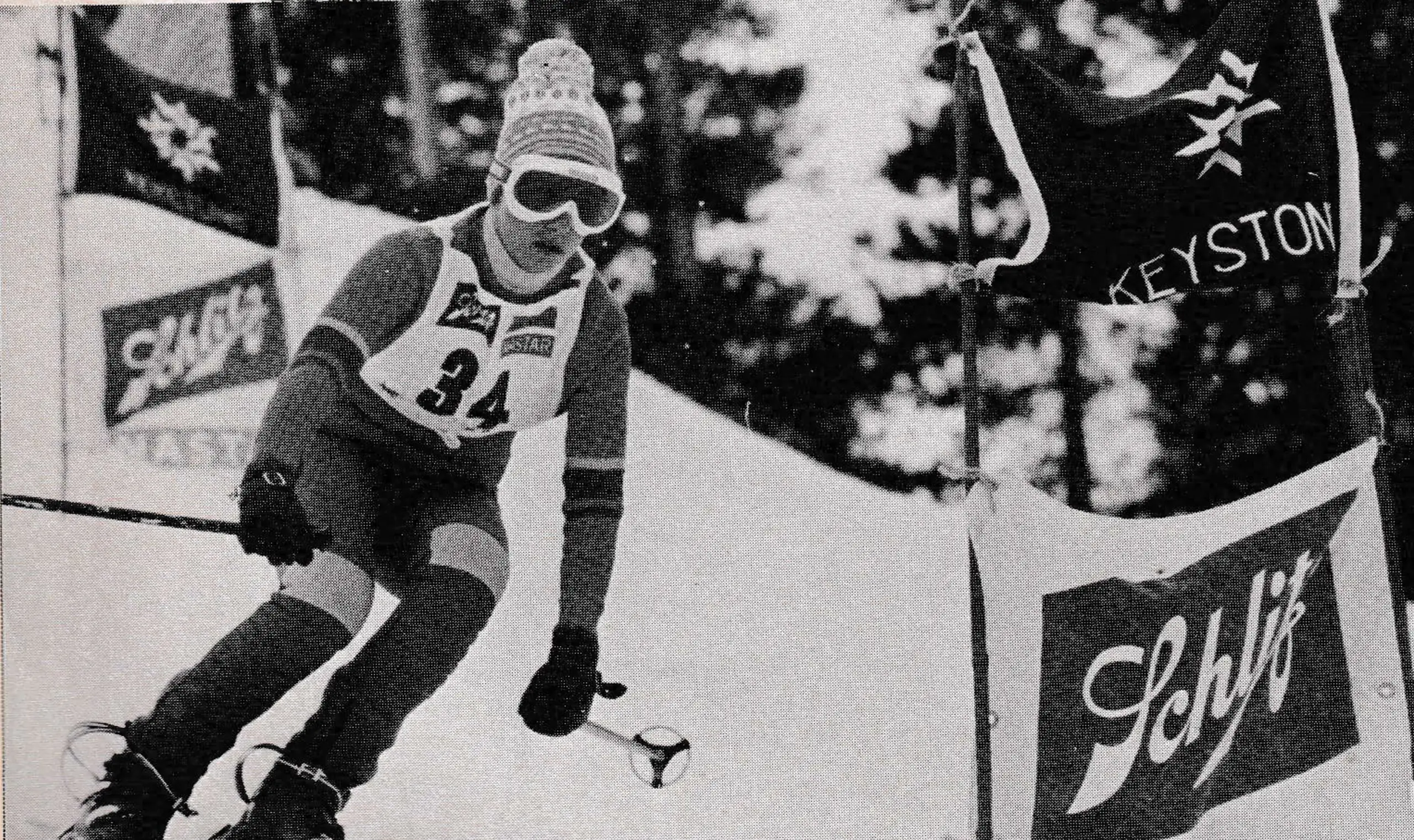
NASTAR is an alpine racing activity for recreatinal skiers who compete within a standardized format so that national comparisons and results are meaningful. It was conceived by Ski magazine to stimulate interest in the sport and racing, as well as to provide a competitive outlet for skiers not in formal amateur or professional racing programs. A program was developed to attract national sponsorship to an effort which would contribute to the growth of skier markets. Ski still owns the rights to the program, but Bob Beattie’s World Wide Ski Corporation holds the responsibility for running NASTAR under a ten-year contract.
The costs of the program and promotional activities are borne by four major sponsors with three additional supporters whose level of participation is less. A ski area pays an annual fee of $1,150 to become an official NASTAR resort, and in return the area receives official banners, racing bibs, registration materials, and NASTAR’s service of computerized results bearing the names and addresses of each participant. Beyond this, the ski area becomes an integral feature of NASTAR’s promotional materials and efforts with significant advertising space in ski publications.
Peter Kirkpatrick, marketing director for NASTAR, reports that 76 ski areas participated in NASTAR this year, up from 70 in 1976. He feels the interest in NASTAR is again building towards its peak membership of 83 ski areas reached prior to the East’s snow drought. Total skier participation in 1976-77 numbers 98,568.
Ski areas are responsible for registering racers, for funding and scheduling the races. Skiers pay a registration fee limited to a maximum of $3 which helps cover ski area costs and includes the NASTAR medals awarded to participants.
Kirkpatrick says, “The potential for ski areas to make money on NASTAR does exist, but the real value of NASTAR is in its promotional efforts which gather skier recognition and interest. NASTAR is also a marketing tool for ski areas which can influence the resort choices of ski groups, clubs and individuals.” In its 10-year history, NASTAR has developed a solid constituency of ski area support with only about five percent of that participation fluctuating from year to year.
BILL KOCH SKI LEAGUE
The term “ski league” was coined this year to describe the program which was initiated seven years ago as one facet of a PEP (Physical Exercise Pays) program sponsored by Travelers Insurance Company. Last year, Olympic Medal winner Bill Koch gave his support, name and assistance to help stimulate interest in cross-country skiing. This program is strictly for children under 13 who, in a program of clinics, learn the fundamentals of cross-country through low-key competition.
Eastern Ski Association is responsible for operating the program for Travelers. Tcych Weed, ESA staffer who fulfills that responsibility, says membership in the program has been doubling each year since 1970 and that 718 children from 6-13 registered with ESA this year, required only if they wish to compete in championship meets. He believes the League served a total of about 1500 youngsters.
There are 11 ski league districts in New York and New England whose activities are centered about recreational programs, YMCA’s, local clubs and schools. Instruction is provided to parents who volunteer to coach the children. There is no cost to the members except for the ESA registration to compete.
Even though the competition is kept “very low-key,” Weed says that the objective of the Bill Koch Ski League, “is to create a pool of talent from which the U.S. Ski Team can draw competitors.”
WAYNE WONG SKI CLUB
William “Skip” Hall, who founded and heads the Massachusetts Ski Club (one of the largest youth ski programs in New England) teamed up with Wayne Wong, freestyle champion and formerly of Waterville Valley, to offer this program of ski instruction for youth, ages 9-17.
The most unusual feature of this program is that organizers are asked to pay $5,000 for a franchise to operate a Wayne Wong Ski Club. Skip Hall believes enterprising persons can produce a second income from the franchise which entitles them to receive materials, bookkeeping assistance, posters, ticket negotiations and travel negotiations from the Wong headquarters.
Designed to “introduce youth ages 9-17 easily, correctly, and inexpensively to the sport of skiing,” the Wong membership program consists of weekend day trips to participating areas. A full program consists of eight weeks of lessons at a participating resort.
Memberships in a Wayne Wong Club cost between $45 and $55 in return for which members receive Wayne Wong Ski Club patches, decals, T-shirts, autographed pictures and eligibility for a wide variety of extra trips. Cost for each day trip is between $11-$16 to the member for lift, lesson and transportation.

Participating ski areas are asked to provide discounted lift and lesson tickets (as much as 40 percent) in return for the Wong trips. This year, 1,400 youngsters joined the major Greater Boston Club which Hall runs and 275 joined a franchise club in Danvers, Mass.
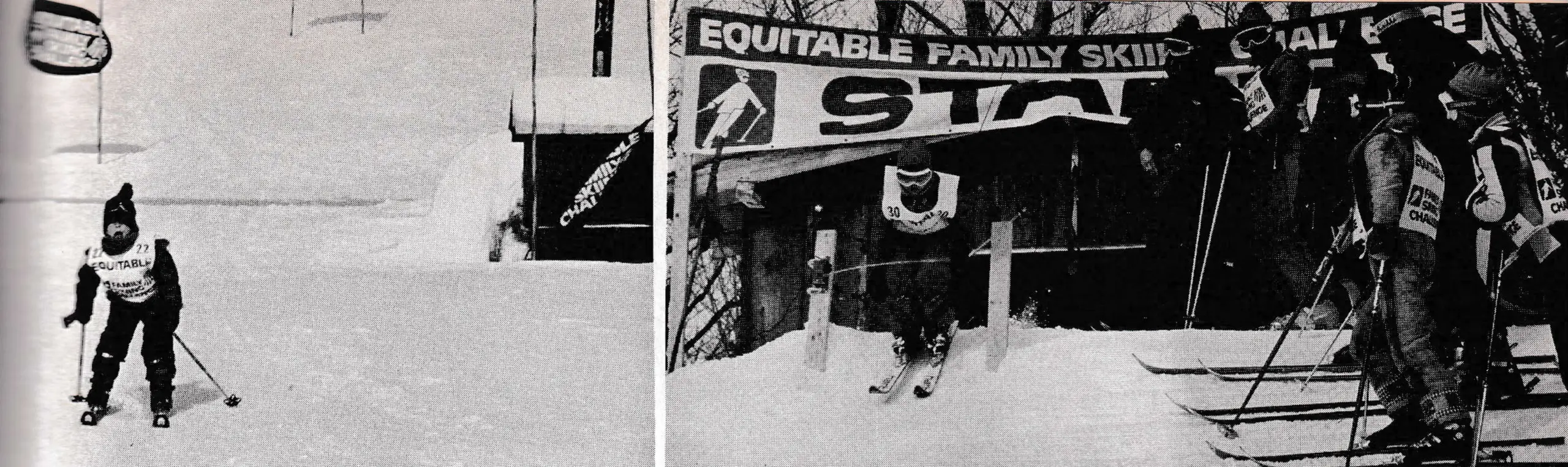
EQUITABLE FAMILY SKIING CHALLENGE
Equitable Life Assurance Society of New York, in cooperation with the U.S. Ski Team, sponsored the new “Family Skiing Challenge” which was launched this past season. Emphasizing the American family as a skiing unit, Equitable named Cindy Nelson and her parents the “first family” of the Challenge program.
Success with the Equitable Family Tennis Challenge which began in 1975 obviously encouraged Equitable to become involved in skiing. Capitol Sports in New York handles the operational responsibilities for the program which was begun on a small scale this past season at six major resorts. Week-long competitions were held for family members who took as many as 25 runs in a day to better their time, a feature of the program. At Stowe, Vermont, over 100 families entered the six-day competition held concurrently with Stowe’s Winter Carnival.
There is no cost to a participating ski area except that it is responsible for running the events. Family members, who compete as father-son, father-daughter, mother-son, etc., register for the races by purchasing a full-price lift ticket, but no entry fee is charged. Results from the participating areas are tabulated to determine the winners who are sent to the national championship meet held at Park City, Utah, home of the U.S. Ski Team. In 1980, the finals will be held at Lake Placid.
Any ski area faced with the choice of participating in these or in any other promotional ski program might want to ask the following questions:
- Who is involved and what is their marketing track record or experience?
- What do these interests stand to gain from the ski area’s participation?
- What is being offered to the ski area in return for its participation?
- How much planning and/or research has gone into the design of this program?
- Are there long-range goals or does the program seek to advance short-term objectives?
- What does ski area participation involve in expense, time and effort?
- Is the program compatible with the ski area’s image and atmosphere?
- Does the program meet a marketing need or objective of the ski area?
- How will the ski area’s market be reached and/or affected by the program?
- How would this program relate to other marketing plans and programs of the ski area?
- What are the risks involved and how are results to be measured?
- Is the program presented in an acceptable written proposal?
In asking these questions of the programs outlined, a ski area operator can make his own judgments based on a cost/benefit evaluation. When trading skiing’s appeal for the time and money someone else will devote to increase skier interest and business, ski areas will want to assure a fair exchange. The value of what is being given must be subjectively weighed against the value of the proposed return.
NASTAR has set the pace for other ski-oriented marketing efforts, but one should not expect ski area operators to agree about its benefits. One operator insists that he is better off running his own racing program than paying for the privilege of calling it NASTAR, while another vehemently defends his participation and claims it contributes significantly to skier visits. A poll of twenty area operators showed most giving answers which fell into one of those two categories, though a few others said that for them, “racing programs were not suitable or necessary.”
Area operators however, do agree on one aspect of NASTAR: that regardless of participation, all ski areas share in the benefits of NASTAR’s promotion. NASTAR, above all else, has sold Schlitz, Pepsi, Datsun and Bonne Bell on the idea of selling skiing. There is little reason to doubt that NASTAR has been good for the ski business.
The Equitable Family Skiing Challenge was represented at the NSAA convention to announce an expansion of the program to 90 or 100 ski areas. These promoters left nothing out of the package: a skiing celebrity, the name of the U.S. Ski Team, emphasis on the American family as a skiing unit and solid financial backing. However ambitious the goal of the expansion may sound, the program was well received this year and skier interest in the family aspect of this competition is high. (Kissing Bridge Ski Area in western New York held its own “Family Racing Series” this past season with the help of local sponsors interested in the natural appeal of this activity.)
Whether the Wayne Wong Ski Club program will interest ski areas may depend on whether or not the costs of participation are adjusted. At this time, the cost is high for franchise purchasers and for members. The agreement sought from ski areas also presents a problem to mountains which (a) refrain from weekend ticket discounts (b) offer discounts based on pre-paid, unrefundable numbers of tickets (c) find it less costly and cumbersome to work with tour operators and (d) offer similar programs to youth through in-house sales program. And that means most areas.
The Bill Koch Ski League is a refreshing offering as there are few organized children’s touring programs on the scene. The sponsor’s motives in this case appear much more public service than promotional, but this should not serve to diminish ski area consideration of participation.
Ski area operators are finding money and interest in programs like these, but they must also learn to identify and develop funding sources that carry the necessary appeal to skiers.