
Sketch by Craig Schreiber
With winter gone and the landscape green, most managers would rather leave snow removal to the folks in the southern hemisphere. This is, however, the ideal time to consider better ways to design space so that snow removal is a more efficient and a less costly operation. When site plans fail to incorporate the operating parameters of a snow removal crew, the incremental expense of snow plowing, site repairs and replacing destroyed plants can, over time, add up to far more than the money saved in initial site development costs that accommodate snow removal.
One of the best ways to avoid mistakes is to walk around with your maintenance manager and look for hard evidence of what survived unscathed and what didn’t. Look for chipped curbing, scarred or buckled pavement, bare places in sod at pavement edges, bobcat tracks in hardened mud, broken branches and missing irrigation heads. These clues are signs that snow plows have zeroed in on a flaw in the design.
I took such a walk recently with the co-owners of one of Vail’s private snow plowing businesses. Wolf Mueller and his partner, John Siverly, are snow operators in winter and offer site maintenance services in summer. As you might expect of an observant man whose business rises and falls on snow, Wolf is a virtual avalanche of suggestions and complaints about site design and snow removal.
Sketch by Craig Schreiber
As a landscape architect, I can attest that it’s quite a different matter to evaluate a site plan from the viewpoint of a snow plow operator. It’s not uncommon in my profession to assume that a preoccupation with efficient site maintenance could impede the creation of visually rich outdoor spaces. In cases where a public works perspective completely dominates the design, there may be some justification for this assumption. However, it is equally true that the best design objectives will be frustrated by inadequate provision for maintenance and snow removal. In well designed spaces, both aesthetic and functional needs are addressed, and I suspect that this can only happen when designers take the time to understand how a snow plow operator clears a site.
As Wolf and I walked around to inspect the condition of some of the sites he plows during the winter, among the things that struck me was the extent of the damage the landscape had sustained. While some of it was probably inevitable, much of it might have been avoided with greater foresight in design. A few common oversights emerged as recurring problems:
In only a few instances was it evident that planners had fully anticipated how snow removal vehicles would move through the site. Consequently, snow plow drivers often have to be both inventive and devious to gain access to pedestrian spaces they are supposed to keep clear of snow. If you think of a snowplow as just another engine-driven vehicle moving on the road, you may fail to see the barriers blocking its access to pedestrian areas. Wolf advises that you plan its movement as you would plan for handicapped access, anticipating how curbs, steps and other impediments might necessitate time-consuming detours.
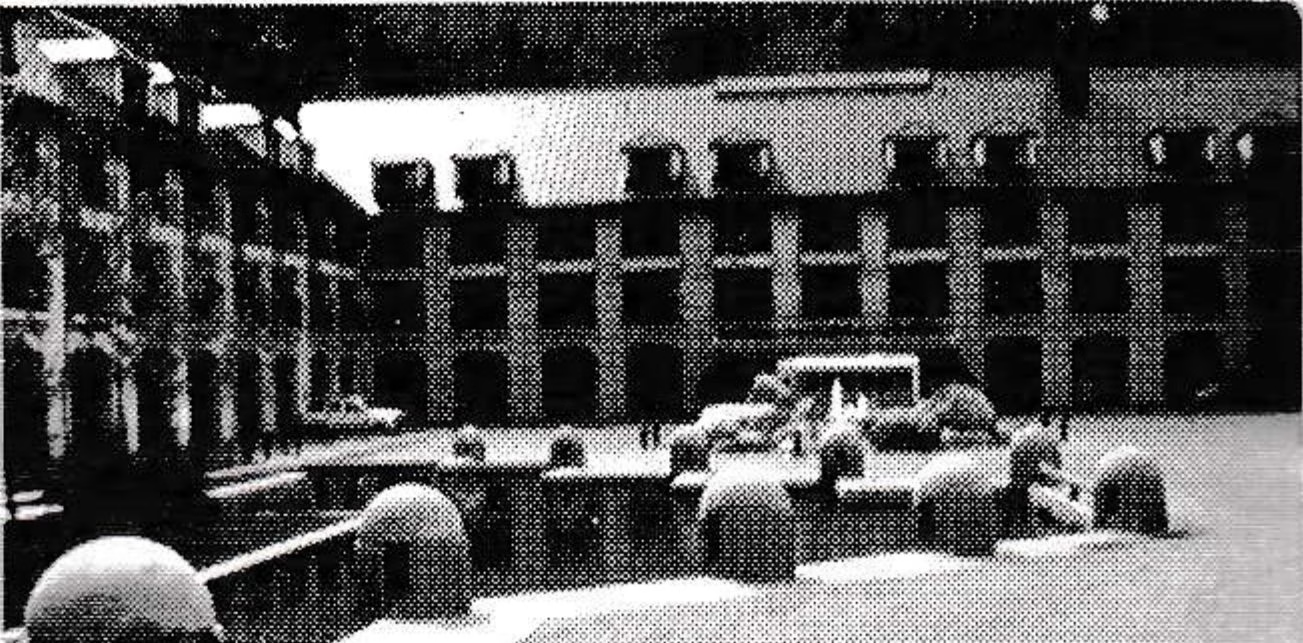
For example, even though a skid steerer is small enough to maneuver on a four- or five-foot sidewalk, how will it gain access to the walk? Are there curb cuts or rolled edges at reasonable intervals? Do the curb cuts occur where they cannot be blocked by parked cars? Are there paved connections from one outdoor space to another on the same plowing circuit? Are the overhead clearances under first-floor stairways and into structured parking adequate for motorized equipment? Are the openings between columns or other architectural elements wide enough? Are ramps needed to circumvent stairs?
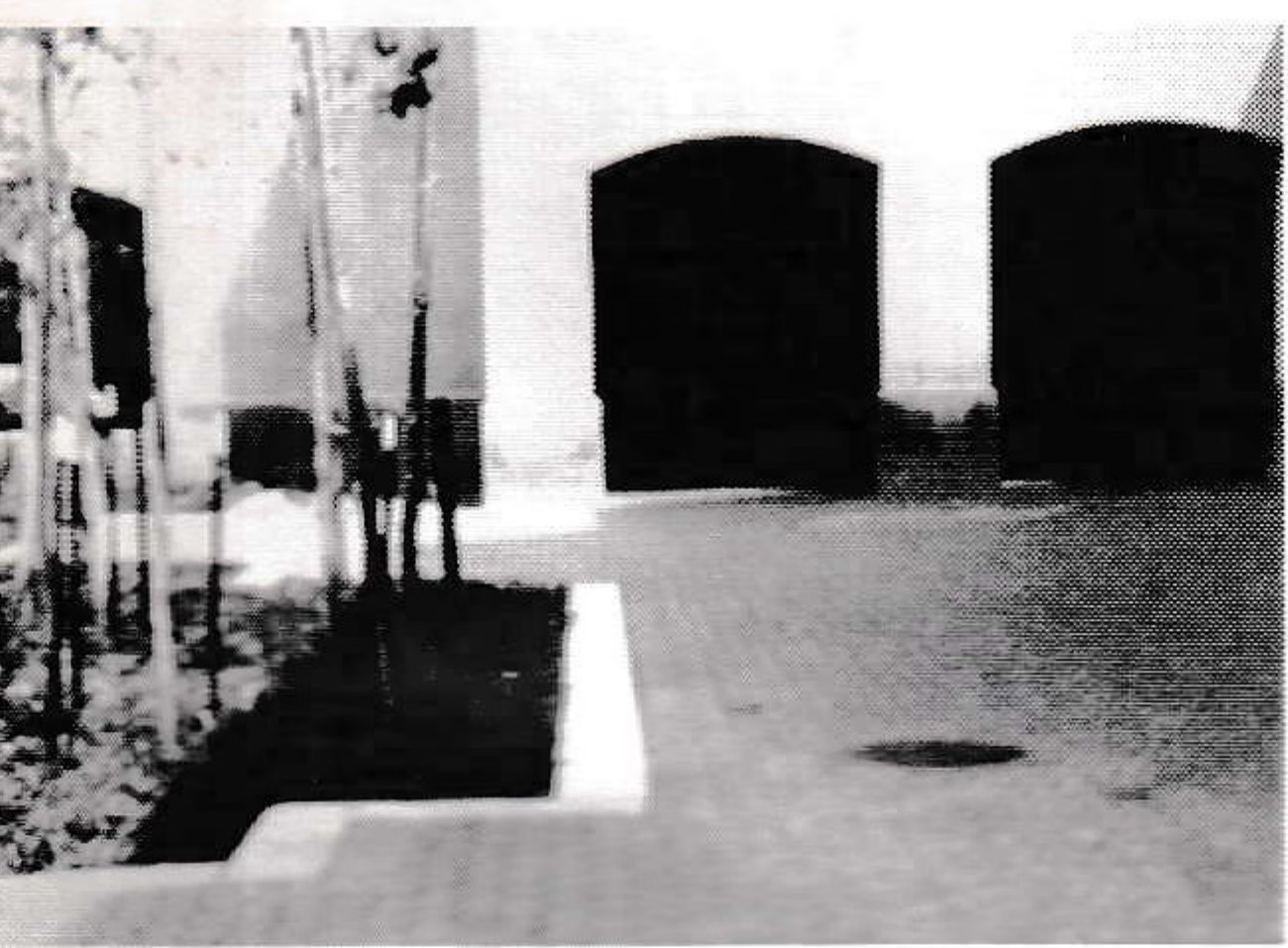
The route and access points of snow plows — in other words, comprehensive plans for snow removal on a site — need to be choreographed before a landscape plan is finalized. This requires the same degree of design attention that is routinely dedicated to the circulation patterns of pedestrians, automobiles and emergency vehicles.

Estimating snow storage needs is an inexact science at best. I can only say with certainty that snow storage areas are often in short supply and as a result, they frequently occur where the landscape architect did not intend for them to be with obvious implications for the life expectancy of the landscaping underneath.
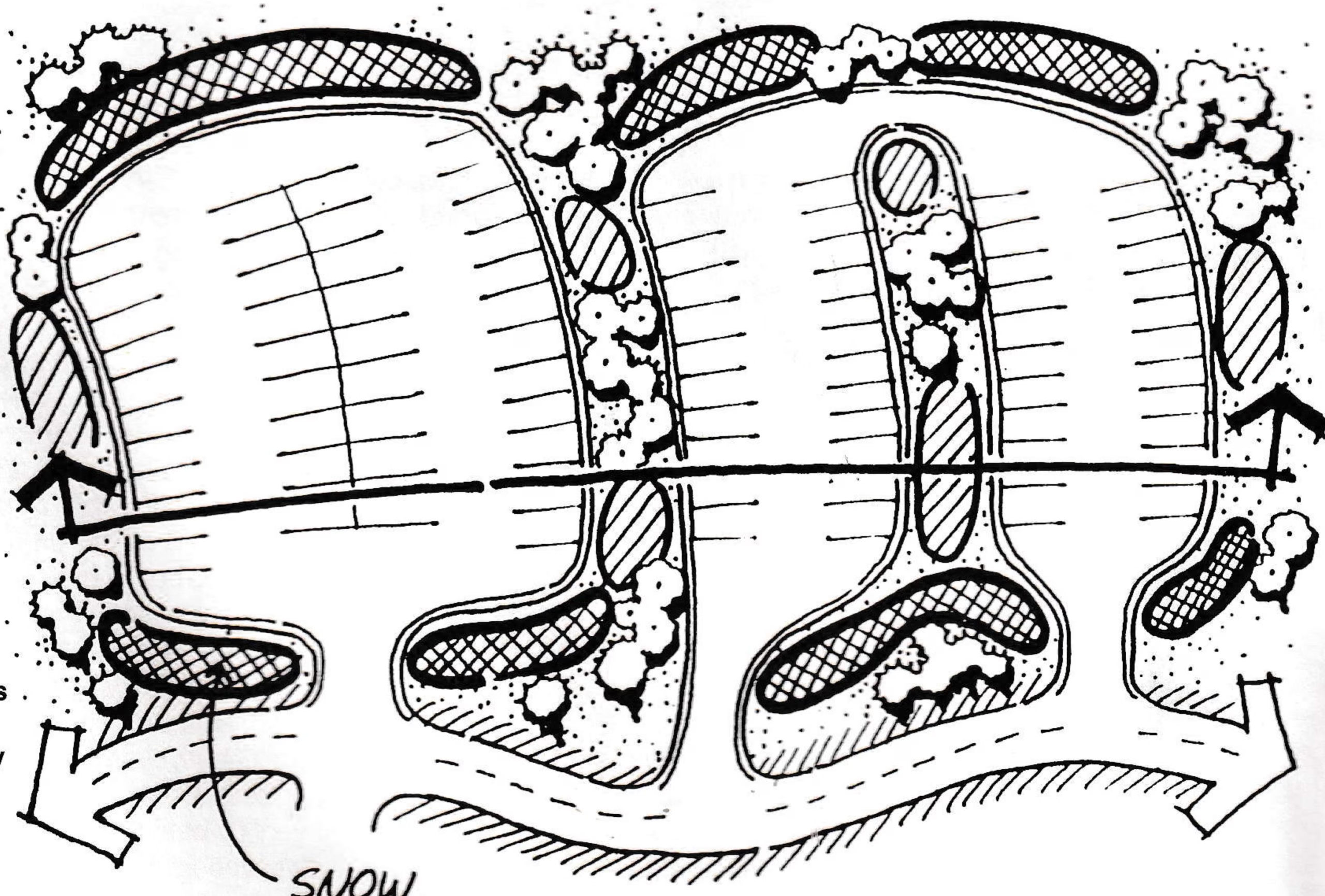
The best places for storing snow have special characteristics. Concave surfaces offer more storage capacity than convex slopes or bermed areas. Storage areas with good sun exposure speed melting, thus making storage continually available. Walls or steeper slopes along the back side, against which snow can be pushed, permit tighter compaction and therefore greater storage capacity. The best plants for storage sites are those that disappear in winter: perennials and grasses. Gently sloping ground free of trees and shrubs is preferable to flat sites, which usually become boggy during snowmelt. In fact, the most common damage I saw on my walk with Wolf was the destruction of turf by equipment mired in early or late winter mud. Paved aprons and well drained sites are effective remedies.
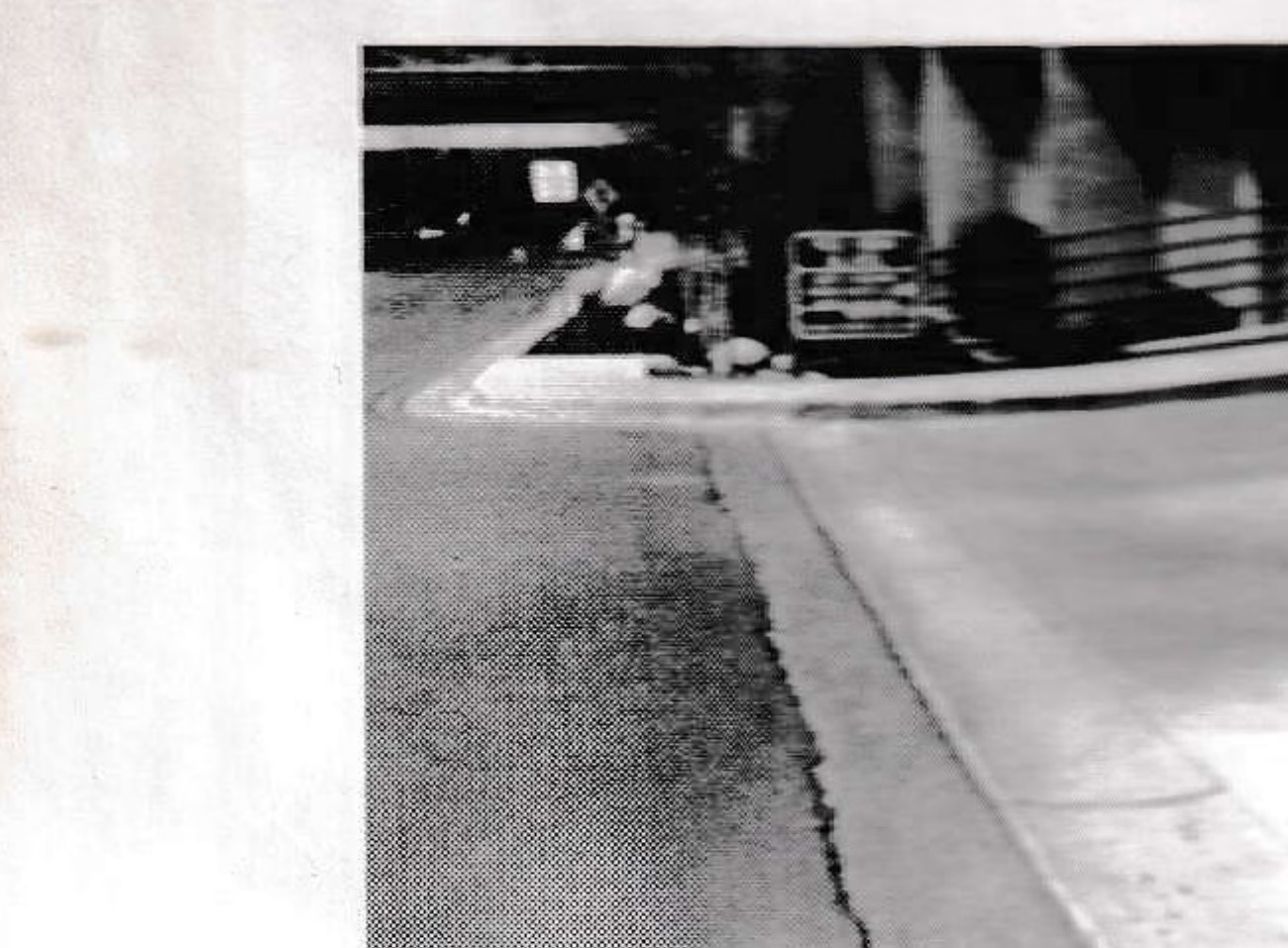
Because wet snow cannot be pushed very far before it becomes hard as a brick, it is generally better to provide a number of well distributed, smaller snow storage sites than to rely on fewer, larger ones. Also, consider how snow plows will access storage sites and whether there is adequate room to back up, turn around or load snow into trucks for removal. Drainage patterns during melting often bear little resemblance to the intended drainage plan. If drain inlets are covered by piles of snow and ice, meltwater will simply back up, making pavements in pedestrian areas impassable. To keep the inlets from freezing over, grates should be located in sunny spots wherever possible and in paving that is regularly plowed, and catch basins should be deeper than the frostline.
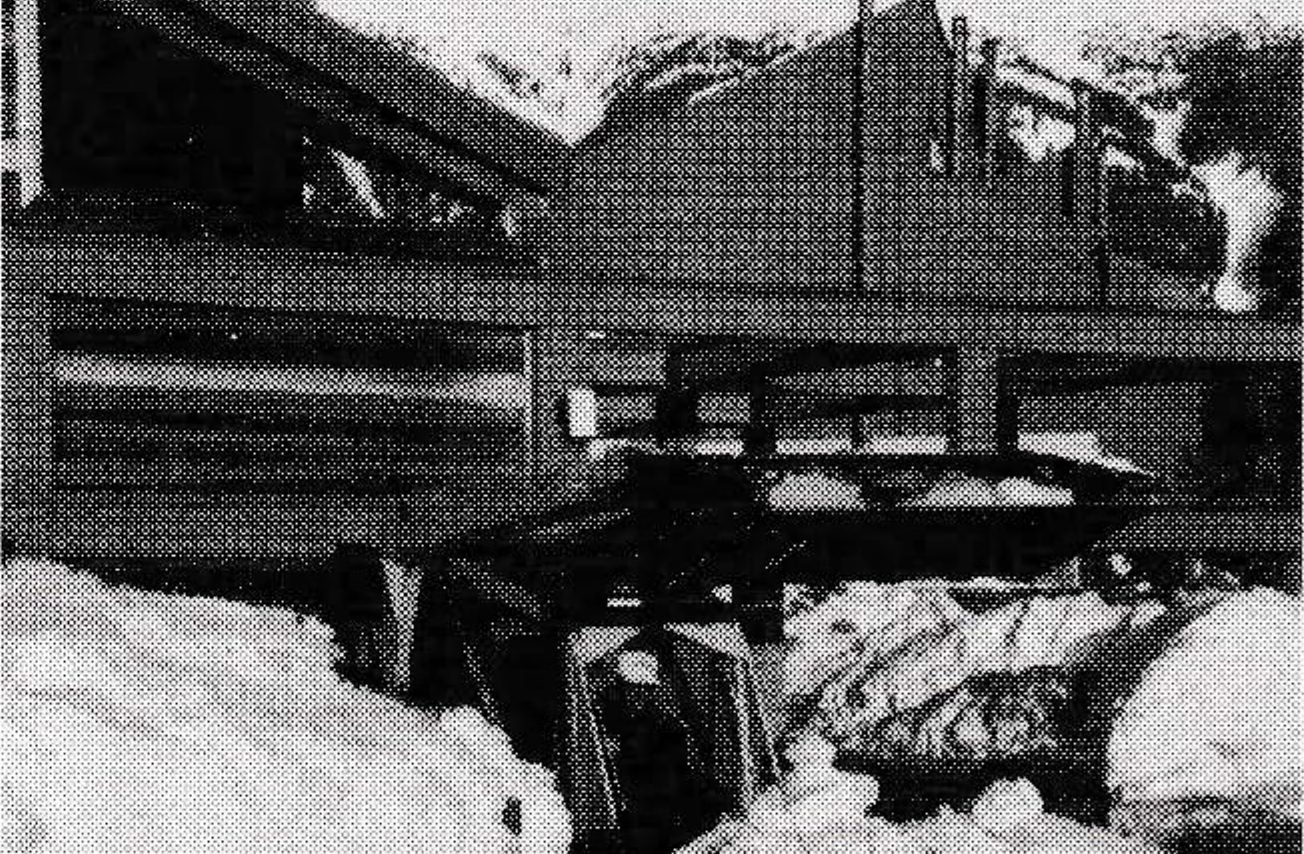
It’s early on a winter morning and still dark. It has been snowing heavily since the day before. Your entire snow removal crew has been occupied all night just keeping up with the snowfall, clearing parking lots and building entries so the ski area will be ready to open for business. Even if your snow removal plan depends on trucking snow to off-site disposal areas, there’s no time to think about it, and there’s no equipment or manpower available to do it. So, where can you pile the snow until it can be hauled away?

Temporary storage space near important entries and traffic spaces is a must, but is frequently overlooked in site planning. So, too, is the necessary space adjacent to a temporary storage site to permit both the loader and the truck adequate room to park and maneuver. These loading zones should be free of costly plantings, irrigation valve boxes, sprinkler heads, utility boxes, lighting fixtures and the like. They should be located away from areas where roofs will shed, snow will drift heavily or meltwater will concentrate. They should have good access to a street or paved corridor wide enough for the truck that will haul the snow away.
The latest storm has deposited several feet of fresh powder and your snow plow driver can’t see much detail on the ground. Without warning his blade hits something solid, sending shockwaves all the way up his arms. Every snow plow operator has a story like this and none of the stories ends until the following spring, when he can see what he hit. Most snowplow operators will tell you that it takes at least a year to become familiar with a job site, learn where the obstacles are and develop a good system for clearing it of snow, even in zero visibility. Designers can hasten to frustrate the learning process.
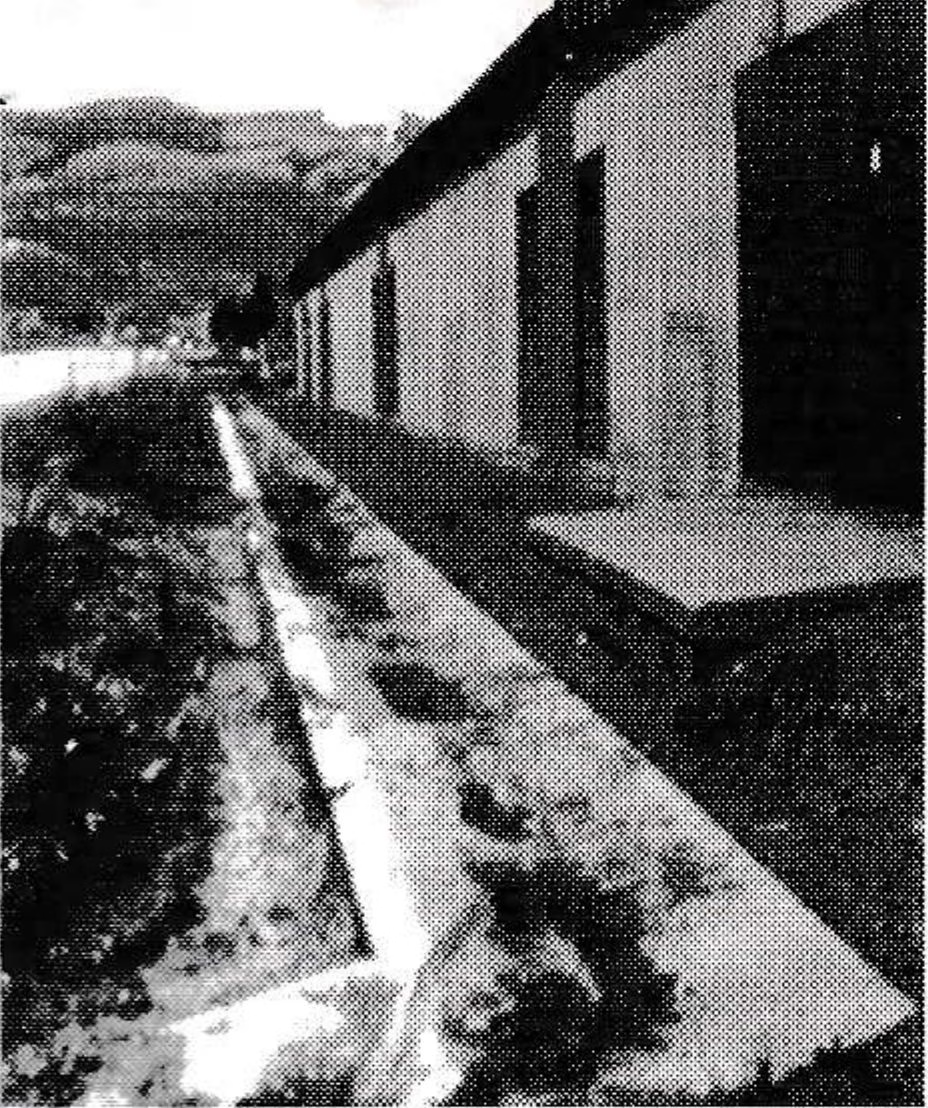
One of the most helpful bits of design advice I got from Wolf is the idea of lines of reference. When a snowplow operator can’t see the ground plane, how does he know where he should or shouldn’t plow, where the edge of pavement angles off, or where he’s safe from hidden obstacles? Wolf’s solution is to project an imaginary line from a building corner or along a wall, a fence, a doorway or a row of trees. He plows along the line. If something unseen extends beyond the line it’s vulnerable; he’s likely to hit it every time until he learns where he has to make exceptions. Designers can use the concept, too, by locating landscape edges and low objects (like boulders, plants, curbs and site furnishings) along discernible lines projected from site elements that are always visible in winter.
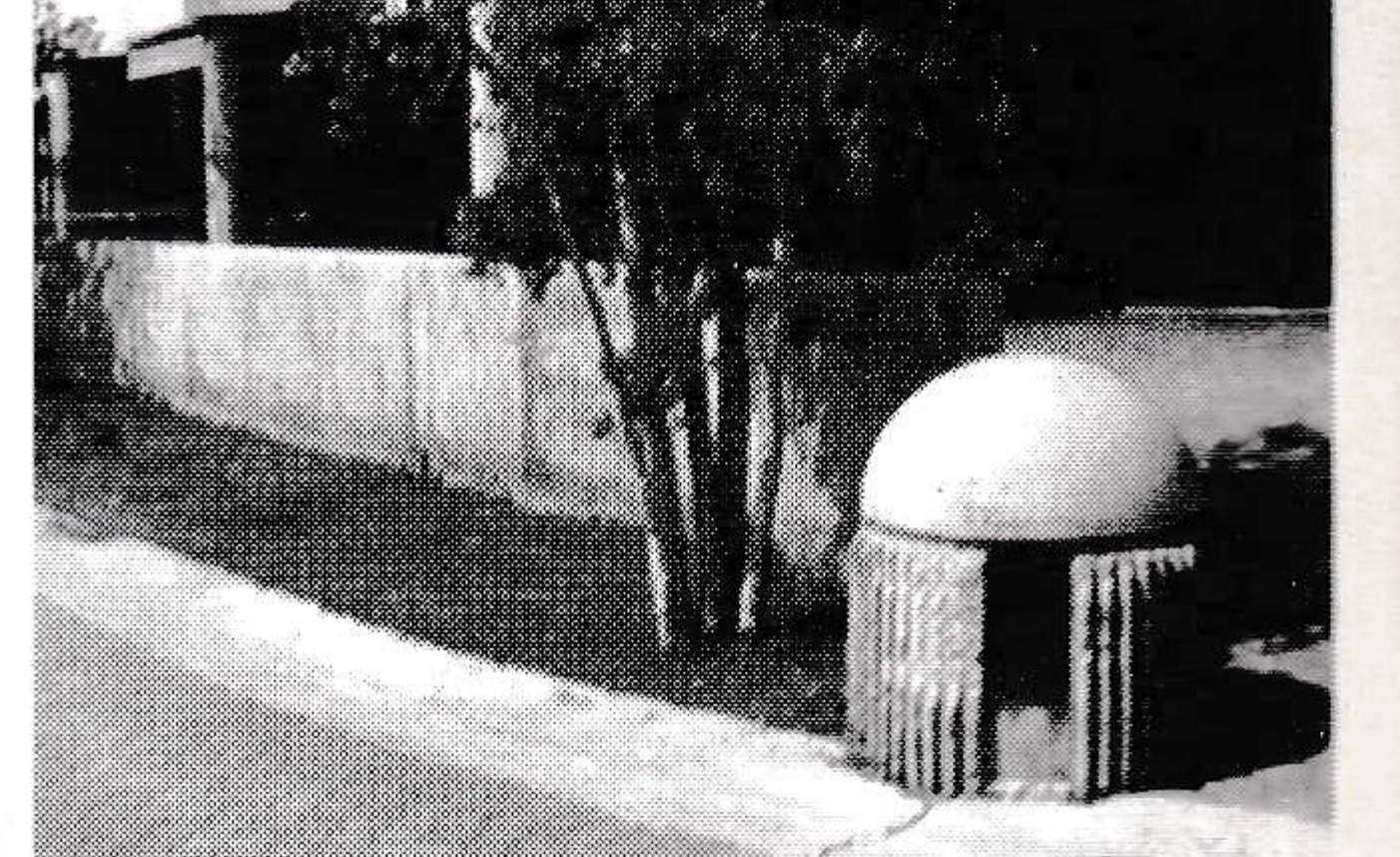
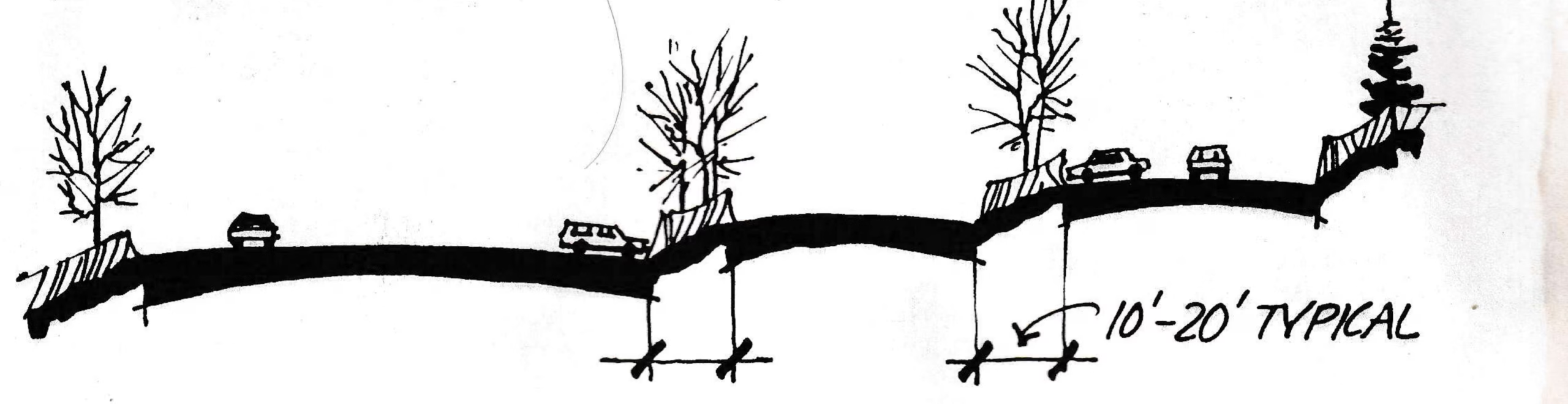
Outside the urban core of a mountain resort, the plow operator’s line of reference is most often the edge of the roadway. This creates a slightly different landscape design problem. Jim Hoza, who for years has been on Vail’s municipal snow removal crew, explained that his job is to clear “from edge of asphalt to edge of asphalt.” Although that supposedly leaves the unpaved road shoulder for snow storage, residential developers and homeowners frequently plant or construct retaining walls to the edge of the pavement in the right-of-way, then complain when their improvements are stripped away by snow plows during the winter. Jim’s preference is admittedly non-rural: a full curb and gutter to limit both the plow line and the landscaping, as well as confine and direct snowmelt runoff. Irrigation spray heads are another vulnerable item often installed at the edges of pavement — and just as often stripped away.
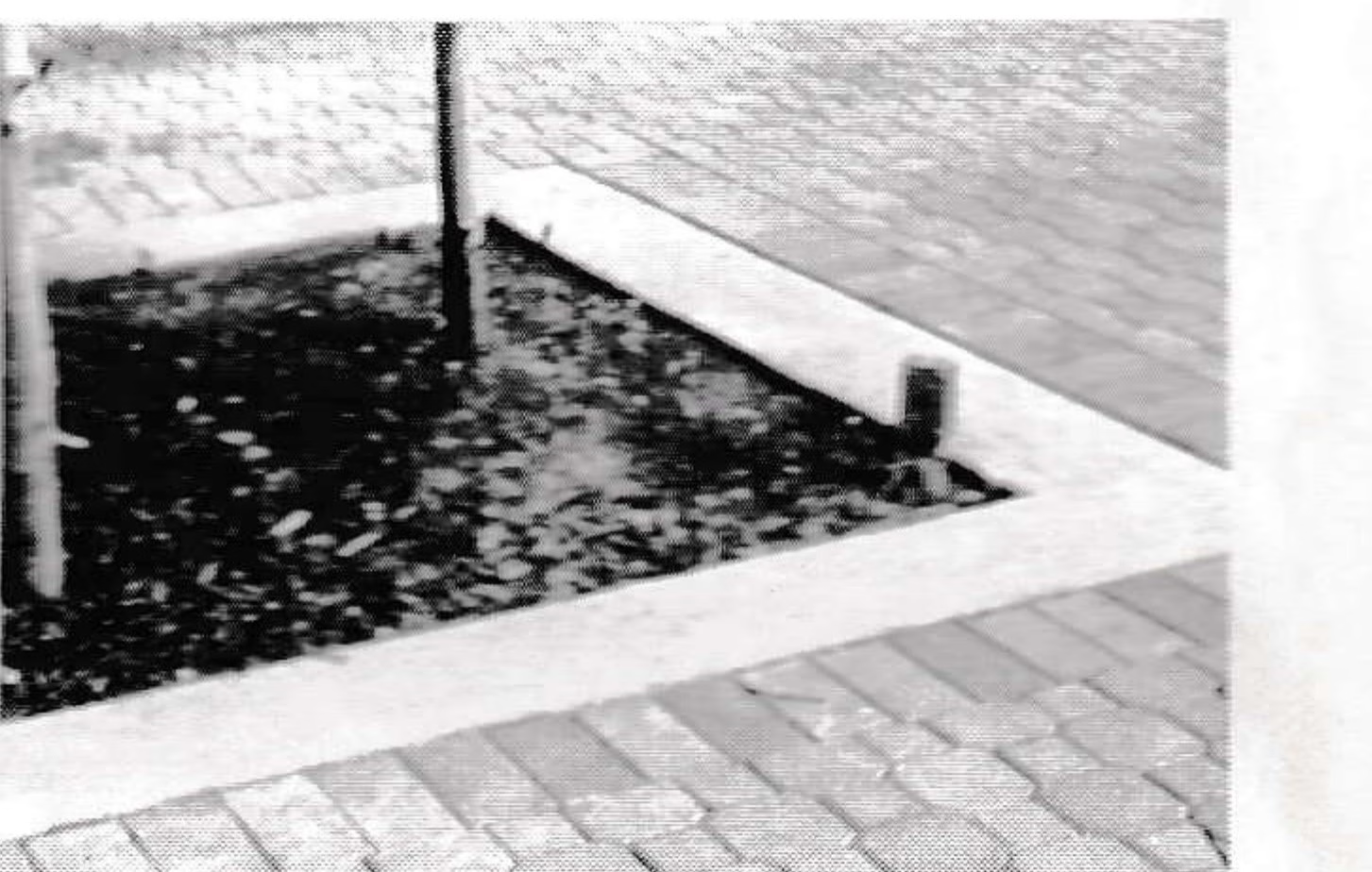
The size and operating parameters of snow removal equipment are not so much design constraints as design (and cost) influencing factors. There is equipment available to fit outdoor spaces of almost any minimum dimension. (The smallest bobcat, for example, can operate on sidewalks as narrow as four feet or in spaces with as little as seven feet of overhead clearance, and able to turn on its own axis, it needs only minimal radius.) In order to design a site properly, site planners should determine the size and maneuvering capabilities of the particular equipment that will be used to clear it. Maintenance crews will want to use the biggest piece of equipment they can in order to reduce their labor time and the number of runs they have to make. They’ll also want to reduce to a minimum the amount of hand-shoveling necessitated by stairs, dead-end corners and corridors narrower than four or five feet. One of the few serious constraints imposed by snow removal machinery is that none can turn square corners. As John Siverly says, arcs are the best ticket; rounded corners are easier to work around.
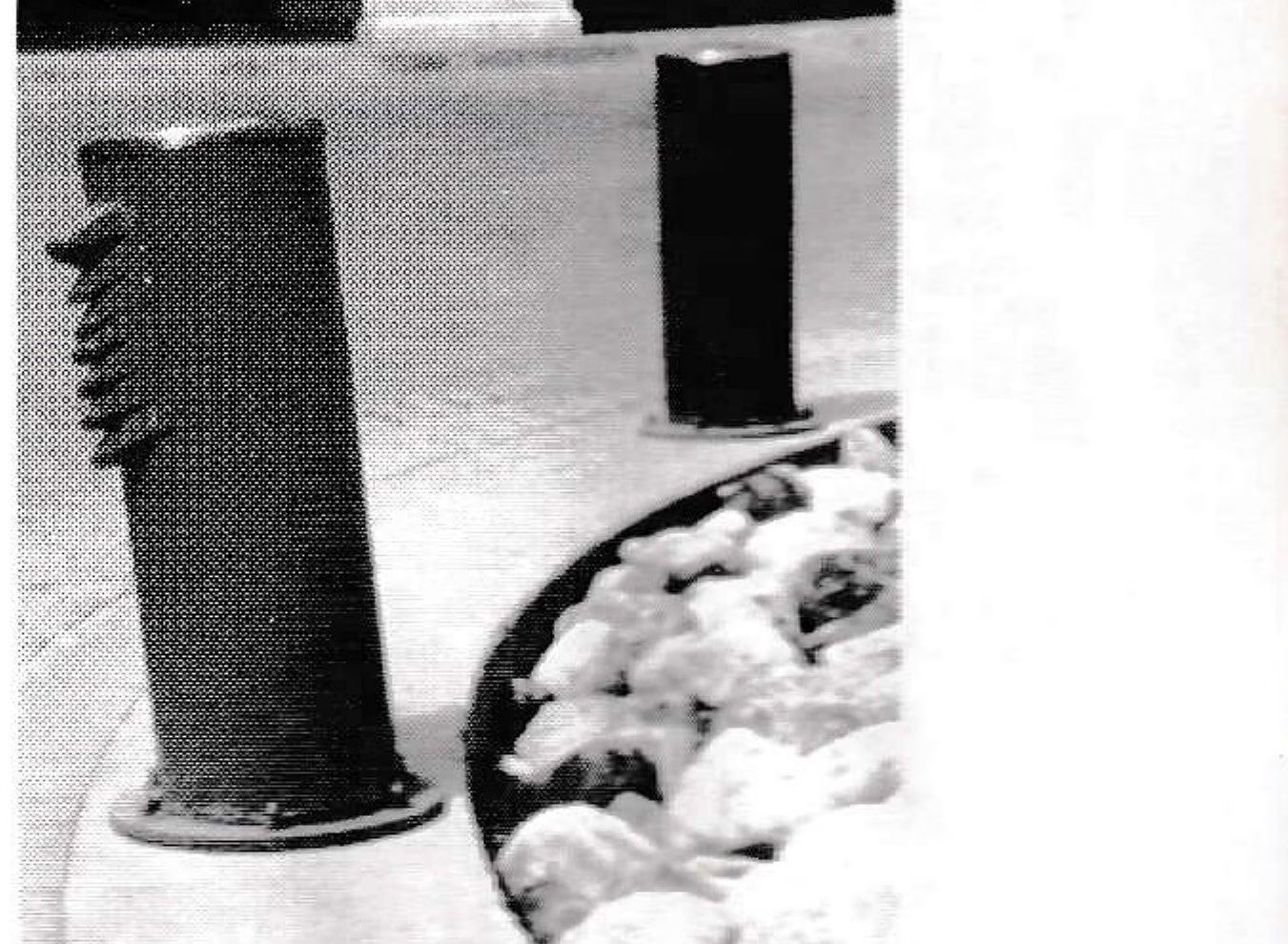
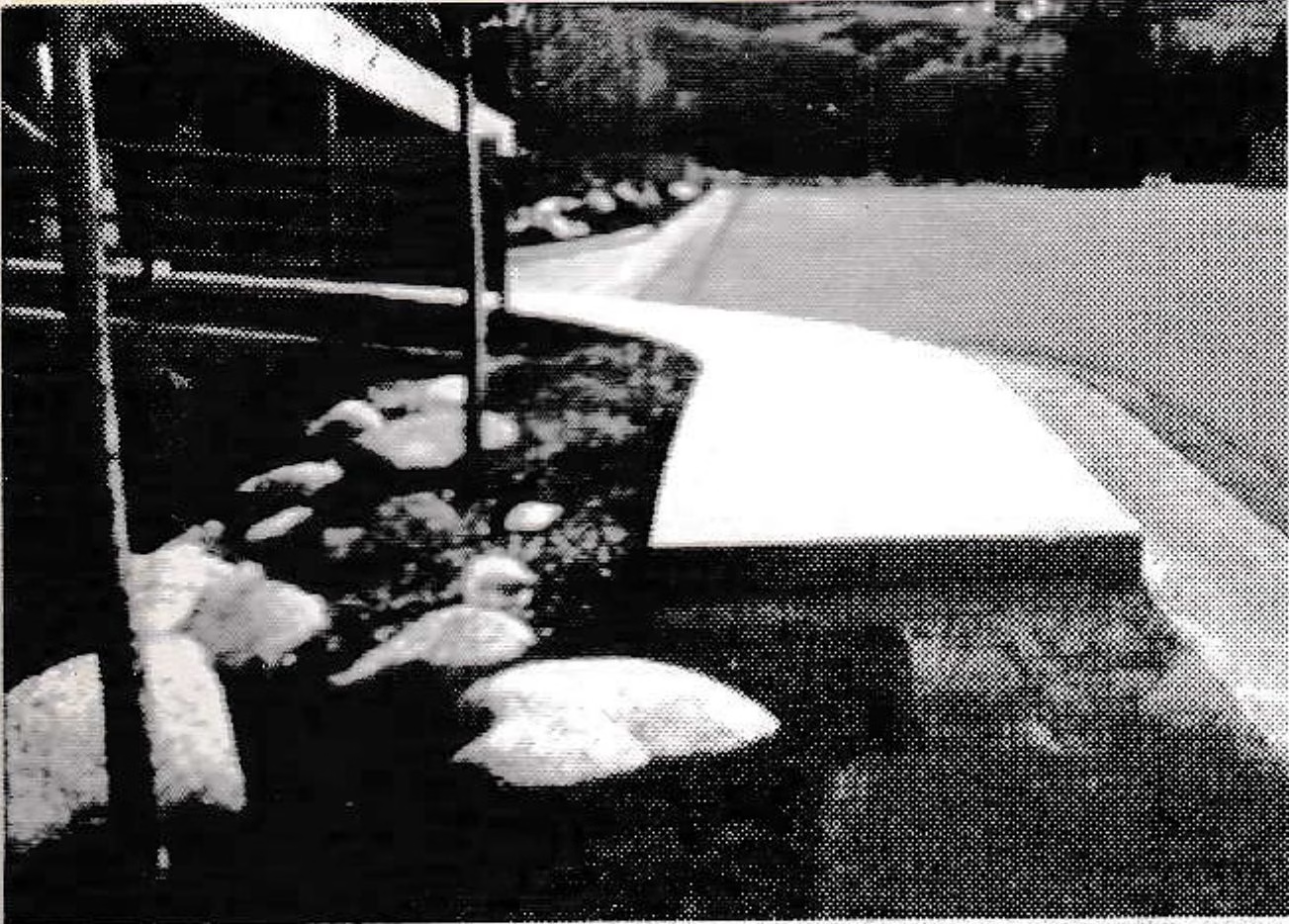
Despite the best intentions, collisions between plows and hidden objects will inevitably happen. So why plan for them? Consider breakaway light poles and bollards, and removable outdoor furniture. Protect valuable landscape features, like stone walls and sculptures, with other elements, like immovable boulders or low curbs that serve as a guide for the snow plow’s blade. In the planting plan, assume from the beginning that plant materials in high-use snow storage areas will suffer casualties; in those spaces, put less expensive, sacrificial material that can be replaced each year.
While astute site planning will surely improve the speed and efficiency of snow removal and thereby save money, it is unrealistic to expect any design to anticipate all potential snow removal problems. You’re bound to find mistakes and face a laundry list of snow plow-caused repairs each summer. While it’s hard to estimate the full cost of snow removal in advance of a landscape installation, I’ve yet to see more than a few landscape maintenance projections that provided for the task and its consequences at a level adequate to assure the long-term aesthetic quality of outdoor space.
Snow removal is a significant added cost of doing business in ski resorts and good quality resort environments cost more money to maintain well. The most effective steps you can take to avoid excessive snow removal costs are a thorough review of conceptual site plans with maintenance managers before building and ongoing communication with them afterwards to fine-tune snow removal systems and procedures.