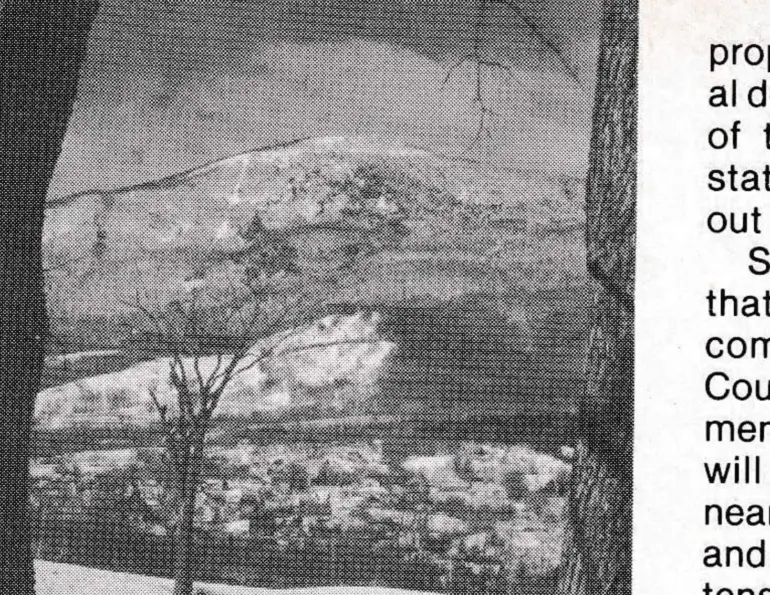
Planning for the project, which would be on land owned by the Commonwealth of Massachusetts, has taken the better part of a year, counting a preliminary study and the state’s more definitive plan.
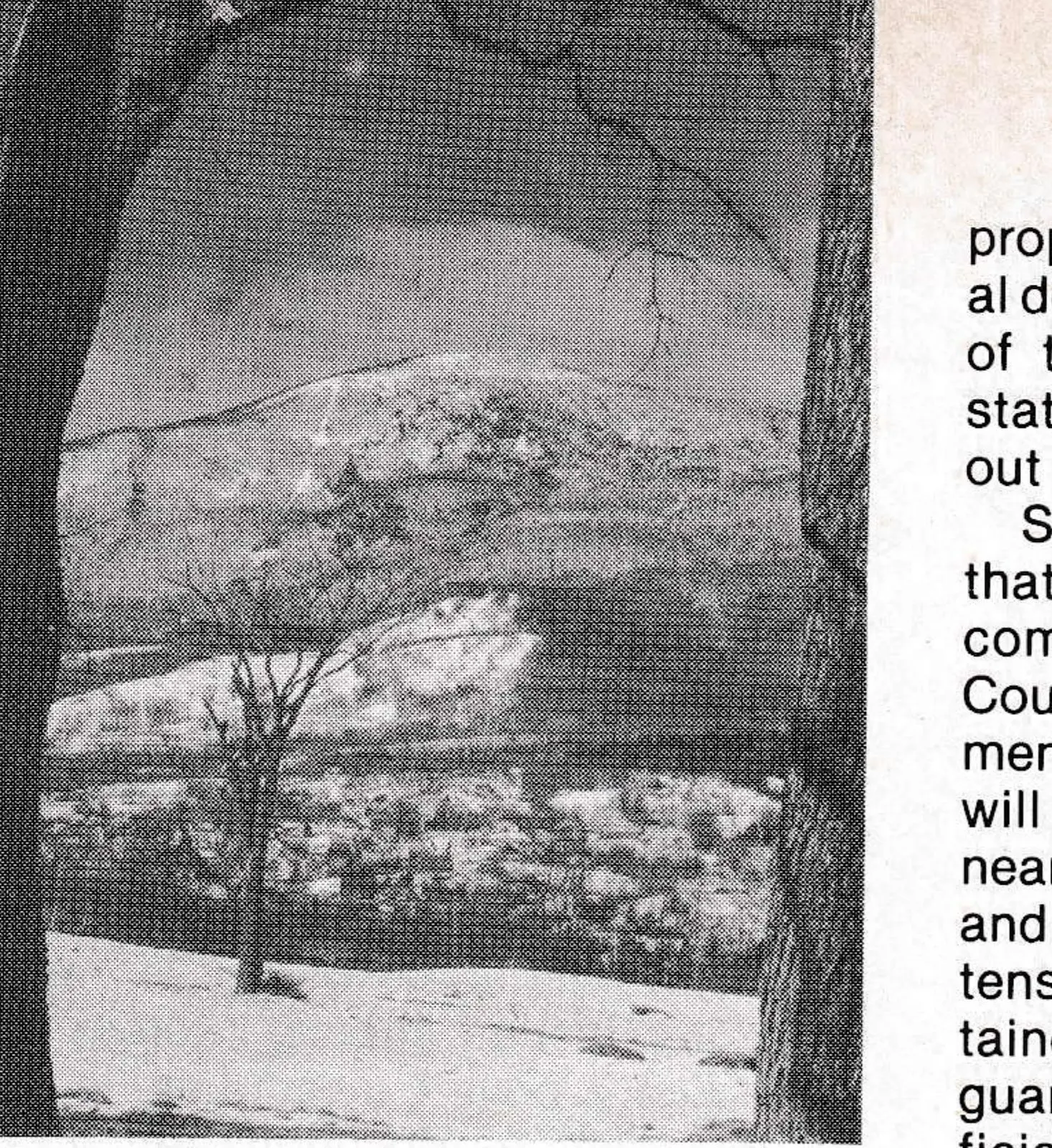
The 3,491-foot mountain, located in western Massachusetts with the town of Adams at its base, for years has prompted development proposals ranging from tramways to the summit to a major downhill ski area to a gambling casino. None have materialized, but the essential attraction remains: land on the Adams side of the mountain affords some of the most scenic views to be found anywhere in New England.
Two large parcels of land are involved: the state-owned 11,000 acre Mt. Greylock Reservation that dominates the middle section of northern Berkshire County and the so-called 1,040-acre Greylock Glen property on the eastern slope.
When the last plan for the Glen property — one that involved casino gambling, a 350-room hotel, a small-scale downhill ski area and an 18-hole golf course—failed, the property with some of the facilities already constructed, was taken over by the Community Savings Bank of Holyoke, holder of the mortgage. For the past few years, the bank has sought a buyer. In the process, it has commissioned studies that conclude a four-season resort with a variety of offerings would be feasible.
The Commonwealth of Massachusetts is interested on two counts. The Glen tract abuts the Mt. Greylock Reservation that, even though largely undeveloped except for the summit with an access road, draws thousands of visitors annually. Second, north Berkshire County, where Mt. Greylock is located, has fallen on economic hard times in an otherwise prosperous state. The administration of Governor Dukakis has undertaken a program to spur economic recovery in the region. The upshot is that the state’s Department of Environmental Management began studying how Mt. Greylock — and the adjacent Glen property could be improved.
The results of those studies were announced in January. The plan is dependent on legislation, the purchase of the Glen property by the state and finally the interest of a developer, or more likely developers, who meet the approval of the state which will act as landlord.
The state envisions a resort village on the Glen property that will provide access to approximately 50 to 60 kilometers of maintained cross country trails, with those closest to the village served by snowmaking. In the summer the trails would be used for hiking and horseback riding.
The state also plans to use the abandoned downhill complex as a facility for telemark skiing, complete with a lift. Part of the lift exists because tower bases were constructed and towers (since removed) erected, before the previous project died.
William F. Malcolm Jr., president of Malcolm Associates of Lyme, N.H., the firm retained by the state for the ski facility planning, says the complex will attract four kinds of cross country skiers: purely recreational on maintained trails near the center where snow will be guaranteed by a snowmaking system; day trippers, who will venture into the reservation on maintained trails; overnighters and backcountry tourers, who may have to do some of their own trail-breaking, but will be able to use huts for shelter; and telemarkers.

Malcolm also predicts that in its initial years the complex would handle about 50,000 skier visits per year during an 80-day season, but in a decade would grow to handling about 100,000 skier visits. He estimates that the budget for the ski facilities alone would be approximately $250,000 annually to start. The resort, he observes, has the potential of ranking among the top dozen in the United States for cross country skiing.
The X-C facilities would be augmented by an 18 hole golf course, built to PGA standards (one is already in place, thanks to the earlier project, but is now abandoned and overgrown); and a 36 acre lake to be created for fishing, swimming and boating in the summer and ice skating in the winter; and tennis courts.
The village would serve as a focal point for the activities. It would include a town common, a ski shop and rental center, other shops, a fitness center, possibly a cultural center for performances, condominiums and lodging that would accommodate all types of vacationers by offering facilities ranging from a country-style inn to dormitory-style hostels.
The state believes that the village proposal will result in attracting several developers, each one doing one part of the whole. All will have to meet state standards that will be spelled out in a master plan.
State officials have emphasized that the project is not envisioned to compete with existing Berkshire County ski facilities, but rather to augment them. They point out that visitors will be able to enjoy alpine skiing at nearly a dozen Berkshire area resorts, and still have the opportunity for extensive cross country skiing on maintained trails where conditions can be guaranteed by snowmaking. State officials also emphasize that they will insist on environmental integrity for the project.
The state estimates the overall start-up costs for the project at approximately $12 million, a figure that includes about $4 million for acquisition and $8 million for development.
Legislation that would enable the state to carry forward the project is expected to be filed in late winter; developer interest would be solicited in the summer and fall; acquisition of the Glen tract would take place about the same time; and ground would be broken in late 1985 or early 1986, if the present, somewhat tentative timetable, is followed. If no developer interest were attracted, the project would probably be dropped.