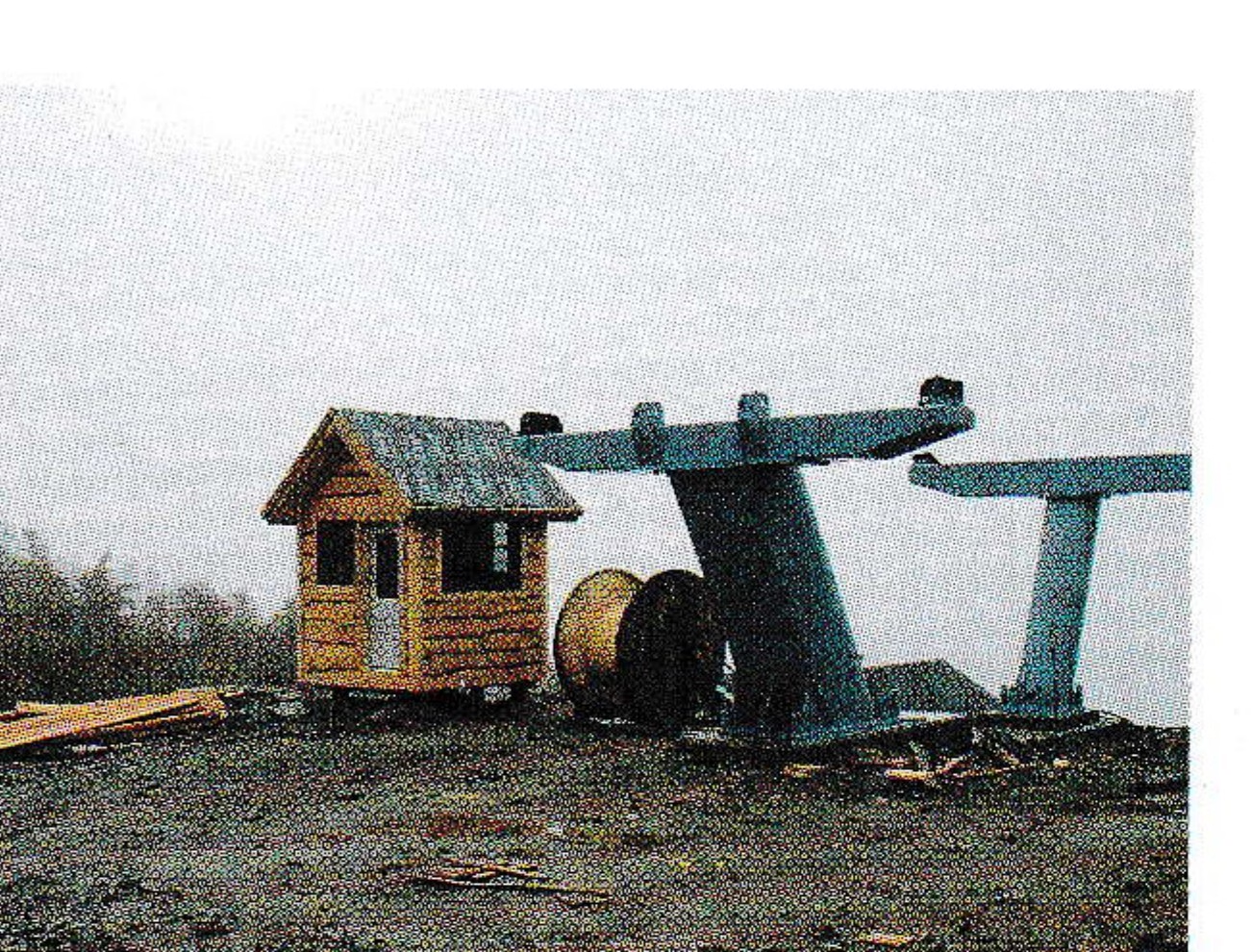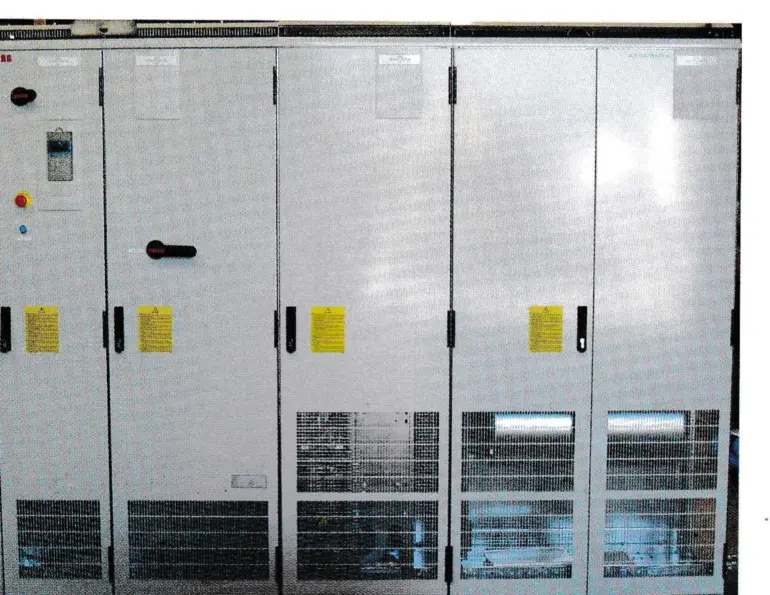
At 700 hp, the Green Mountain Express will be the second-largest AC drive lift in North America. The lift covers a length of 6,250 feet, and a vertical rise of 1,500. The highest-powered AC lift is Breckenridge’s new Independence 7,150-foot detachable six-pack (see Construction Site, page 54), at 900 hp. Both are Leitner-Poma detachables with AC drives manufactured by ABB.
Big-horsepower AC drives are new territory for mountain resorts in the U.S., although they have become the machinery of choice in Europe over the past several seasons. The new drives promise to provide more efficient energy use and significantly lower maintenance costs. These benefits, proponents hope, will offset the higher initial costs of this new technology.
Technology Marches Forward
“The resort’s bottom line was that we wanted to put in the best available technology,” says Jason Lisai, director of planning for Sugarbush. “Our owners met with representatives from Poma and ABB at the beginning of the summer and were intrigued by the idea of more efficient operation and maintenance. We had the necessary state permits for a DC drive lift, but the new technology looked so attractive that we went back and asked to have the permits modified so that we could put in the AC system.”
AC lifts—and there are a number of small ones around the country—and AC motors in general operate more efficiently than their DC counterparts. To date, this operating efficiency has been offset by increased costs for AC drives and installations and a lack of regeneration—the ability to turn the lift’s motor into a power producer instead of a power consumer—during downloading and braking. More important was another shortcoming of older AC drives: the electronics often failed when there was a loss of power to the lift. And they generated high levels of harmonic distortion.
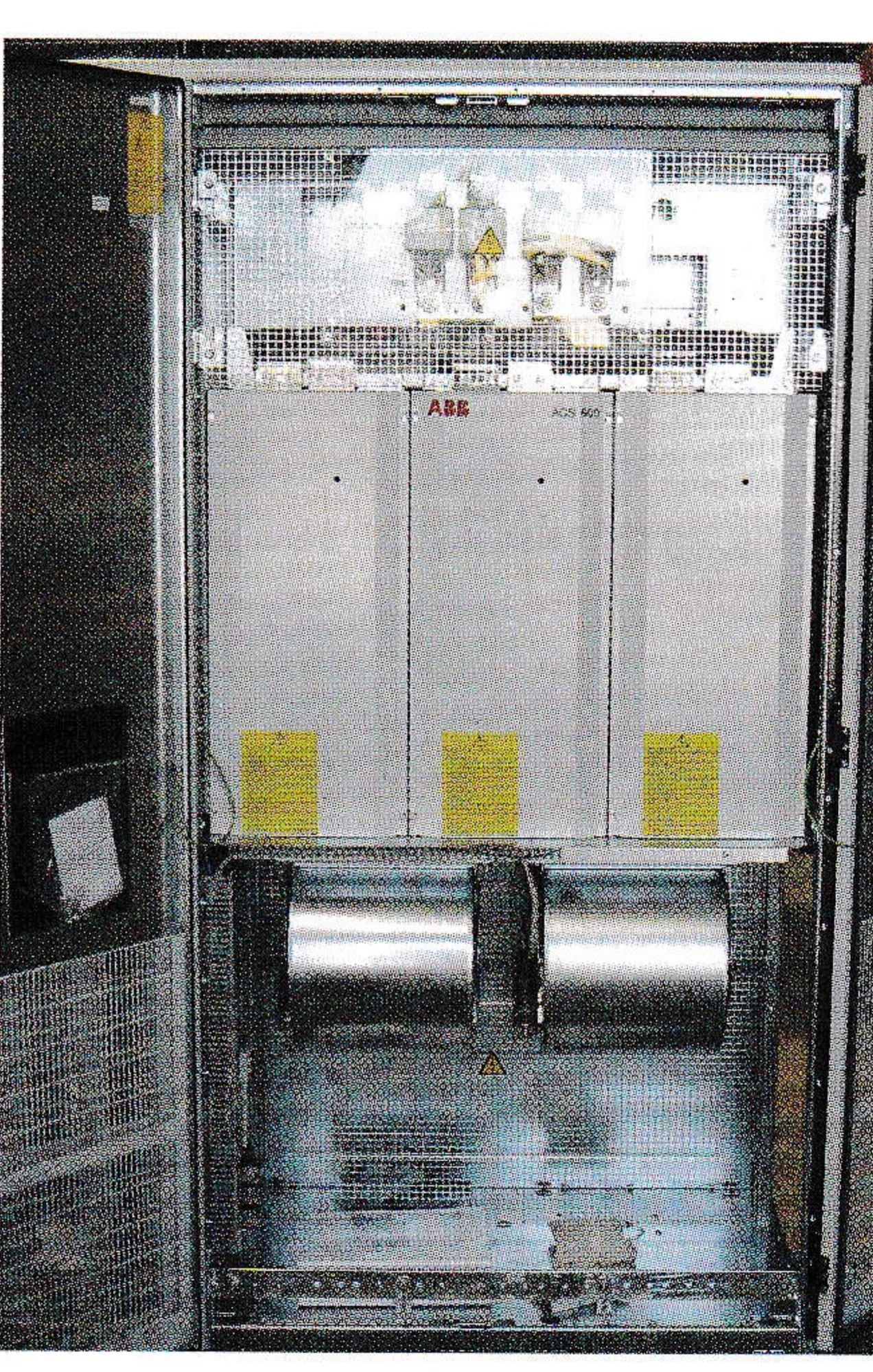
The ABB drive for the new Green Mountain Express, on the other hand, is fully regenerative, and rated for an overhauling load of 50 percent of the lift’s final uphill capacity of 2,600 passengers per hour. The current-generation AC drive is unaffected by power failures, according to ABB, and the harmonics generated by the new AC drive have been reduced to levels approaching those of present DC systems.
Producing AC drives at a competitive price for use in large horsepower lifts is a relatively new development. ABB’s AC drive uses IGBT (integrated gate bipolar transistor) switches, and, like many other things electronic, the cost of IGBT’s has dropped in recent years. “The IGBTs are the building blocks of the drive,” said ABB’s Troy Miller. “And their cost has come down tremendously. That’s helped to make AC drives more competitive in larger horsepower ranges.”
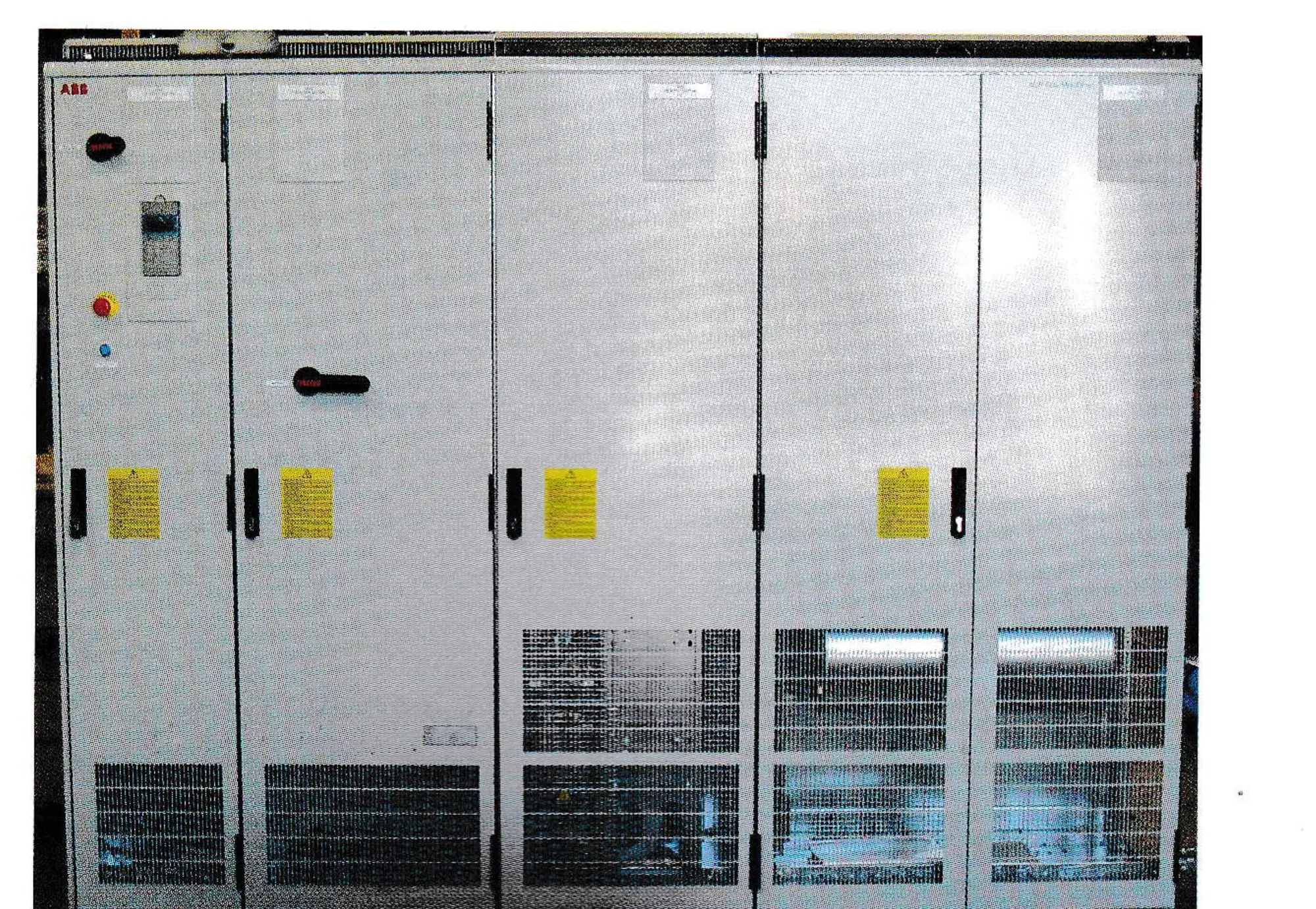
Regardless, the cost of an AC installation is still higher than a comparable DC system and the AC drive is physically larger, so it requires more space. On the Green Mountain Express, a basement under the operator’s top station was constructed to house the unit. When all the costs of installation and purchase are totaled, Sugarbush’s Green Mountain Express came in at about $50,000 to $80,000 more than a DC setup.
Future Cost Savings
It’s only when reduced operating and maintenance costs are figured in that the more expensive AC installations begin to look attractive. Depending on the installation and local power rates, these factors may favor one type of drive over the other in different areas of the country. And this makes the high-horsepower Sugarbush lift interesting as a demonstration of the new technology.
On the lower-cost side of the equation are reduced operating expenses due to power efficiency and—perhaps most important—significantly reduced maintenance. Unlike DC motors, AC motors are brushless, and in lift applications, sealed against contamination. So, unlike DC motors, they require no carbon brush replacement, and no regular maintenance to dismantle and clean the motor of carbon residue and other contaminants.
AC motors don’t require an internal flow of air, with associated filters, for cooling—another additional maintenance expense with DC systems. The new, larger AC drives still generate heat and have their own cooling requirements, but an AC motor is cooled externally, a much simpler setup that helps keep airborne contaminants out of the motor’s core.

“In a ski lift application an AC motor is essentially maintenance-free,” says Leitner-Poma’s Tom Clink. “That’s probably the biggest factor in offsetting the higher initial installation costs. Add to that the reduced power consumption, and you can make a case that an AC drive is the environmentally sound way to go.”
Practical Considerations
Downhill loading with full regeneration capability was an important factor for Sugarbush. The new lift helps straighten out a confusing hodgepodge of lifts installed by the previous ownership, and downloading is an important part of the solution. “Last season skiers needed to ride three lifts to access the summit at Mt. Ellen,” Lisai said. “This year they will only need to ride two. Our operating plan is to focus more of our attention on Mt. Ellen. That’s where we will run early and run late next season.” Mt. Ellen holds snow better than the resort’s Lincoln Peak area, Lisai said, but early and especially late season operation at Mt. Ellen relies on downloading from mid-mountain—top terminus of the Green Mountain Express—to the base area.
A decision to configure the lift with a top drive was in itself an efficiency consideration. As the workhorse lift at Mt. Ellen for both uphill and downhill traffic, the Green Mountain Express will have an opportunity to maximize its efficiencies for both the resort and its power utility. A top drive required 54 less horsepower, at an expected annual saving of over 46,000 kw hours of power. The inherent efficiencies of AC are added to that. “We expect the lift to operate at around 95 percent efficiency, as opposed to DC systems where we expect around 91 percent,” said Gabe Arnold, CEO project manager for Efficiency Vermont, the state’s utility watchdog, and an electrical engineer. That should lead to a savings of around 25,000 kw hours for the season.
The Power-Factor Factor
Even more important than overall consumption is the way that the AC drive uses electricity: its power factor. “The power factor on AC installations is much better than it is with DC drives,” says Arnold. “We expect the AC drive to operate at around .95, near unity. It’s not the case in Vermont, but in many other states, the power company will penalize users based on their power factor. The further from unity, the bigger the penalty.” DC drives typically operate with a much lower power factor, especially when starting or operating at reduced speed. “The total power factor of the AC system, even at 25 percent speed, is nearly equal to the best number attainable by a DC system,” says Brian Kelley, electrical engineer for Leitner-Poma of America.
The Future Is AC
Those numbers are impressive enough that Vermont considered requiring AC drives for all new lift installations, including others already underway for this season, according to Arnold. But the state eventually decided to wait until information on the efficiency of Sugarbush’s new lift was available. “I expect AC drives to be required in the state at some point not far down the line,” Arnold says.
Chances are good that Sugarbush’s Green Mountain Express experience will be positive, and installation of more lifts with AC drives is almost certain. Although AC drives are new and high tech installations for lifts in this country, the mountain resort industry here in North America is one of the last users of large electric motors to begin to make the switch from DC to AC. In addition to the extensive experience with lifts in Europe, ABB has made drives for many other industrial applications.
“Other users of large electric motors, like plastics manufacturers, paper mills and steel mills, have been going with AC for quite some time,” said Troy Miller of ABB. “AC is definitely the wave of the future for large motors.” How large? ABB’s heftiest AC drive to date powers a Mach 2 wind tunnel for NASA. At 135,000 hp, that installation should give confidence to any winter resort that decides to adopt the new technology.