


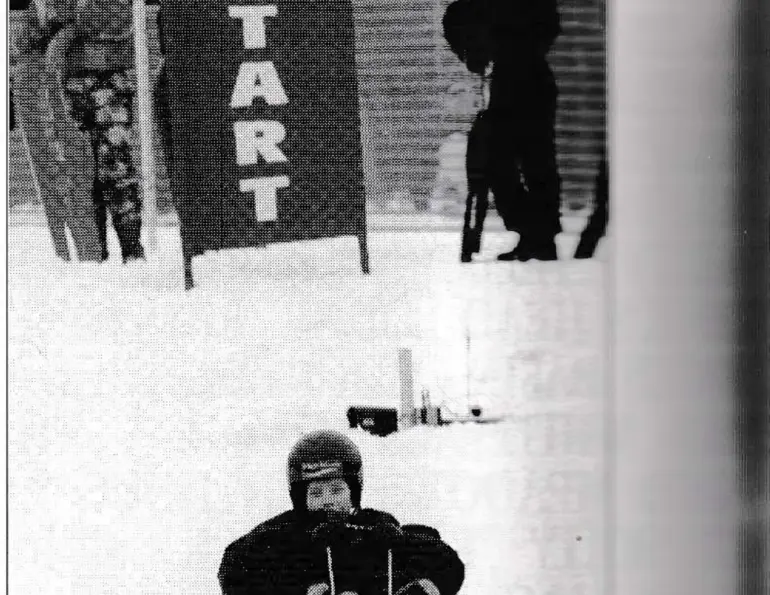
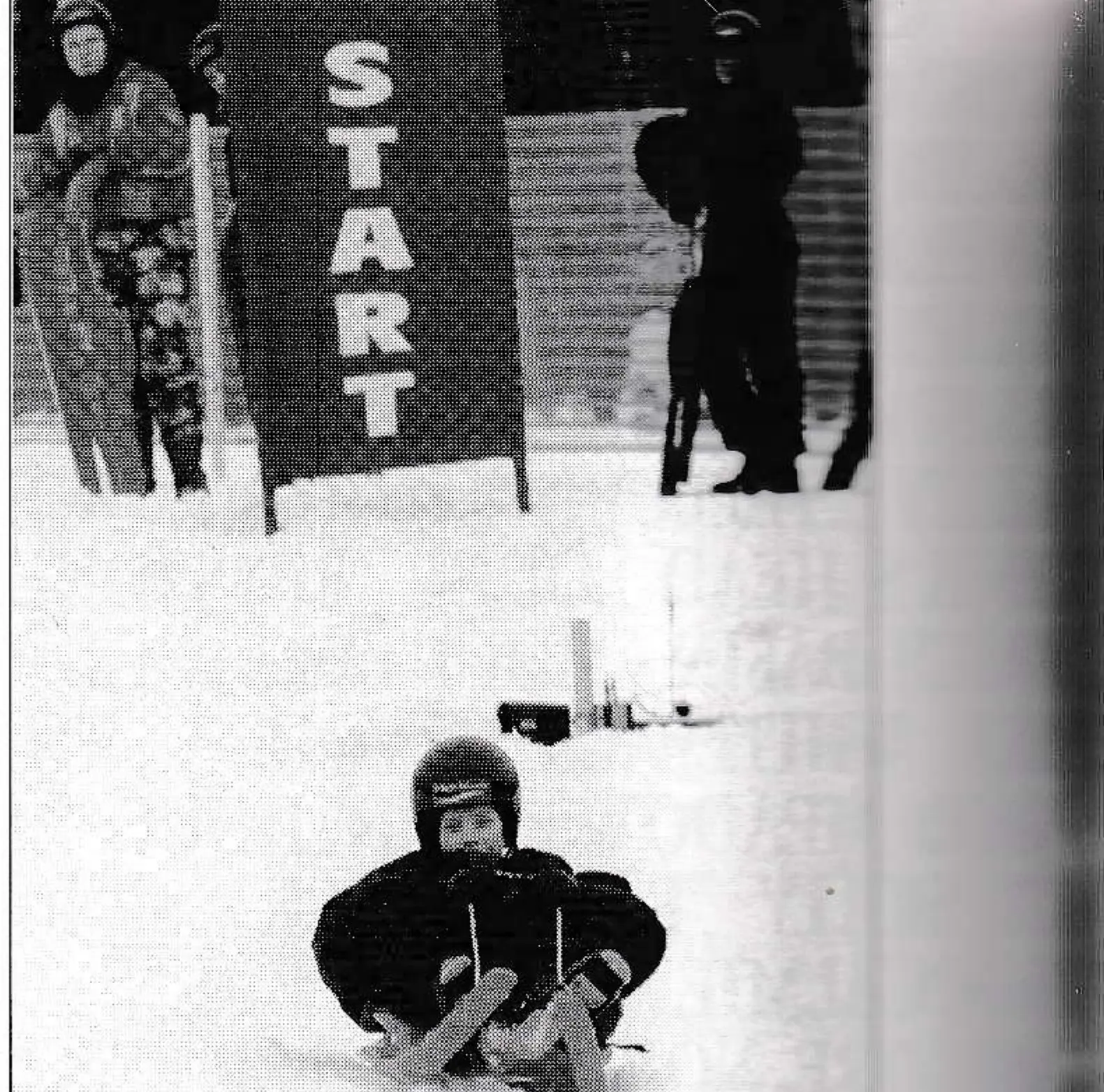
Knowing that real lugers go 80 miles an hour on highly specialized ice tracks must have heightened the excitement among the participants in the Bell Atlantic Luge Challenge. In the tamer event, however, the fastest participants only reached speeds of 20 miles an hour on plastic sleds at six eastern ski resorts this winter.
This year, the Luge Challenge was scheduled to hit six ski areas in the east: Okemo and Stratton, Vt., Ski Windham and Whiteface Mountain, N.Y., Waterville Valley, N.H., and Whitetail, Penn. At the five areas where the event came off, company spokesmen reported that everyone had a great time. Even the spokesman for Whitetail, where the event had to be scrapped for lack of snow, remained excited about the concept.
How It Works
Bell Atlantic—and its predecessor, NYNEX—have been sponsors of USA Luge since 1985, according to Sandy Caligiore, public relations manager for USA Luge. Sponsorship takes several forms, including the Luge Challenge (held at three areas last season, increasing to six this season); TV ads for the national team and a program that sends top U.S. luge athletes into inner-city public schools for inspirational talks.
Bell Atlantic hires The Event Company of Connecticut to run the Challenge, including registration, working with resorts on safety issues, running the race and setting up a post-race party. The Challenge is free to participants, who are not even required to buy a lift ticket to luge. They receive use of a helmet and sled, instruction from USA Luge staff and a chance to win prizes, including a trip to Lake Placid for a chance at serious luge.
Dmitry Feld, communications manager for USA Luge, visits each host resort in the fall to meet with on-scene staff and help choose the site for the challenge.
Feld estimates that the luge track requires a space less than 500 feet long and about 60 feet wide on a novice slope. “We want to keep it fairly simple and fun,” he says. “So we don’t want it too steep.”
The Event Company and USA Luge personnel arrive with sleds and helmets prepared to offer instruction and run the race. The rules specify that a racer must be at least 10 years old and must wear a helmet. Winners are chosen in four categories: girls, boys, women and men.
There are usually as many practice runs as the would-be slider wishes and the size of the crowd permits. Racers then ride the official course and those who make the cut-off return for the final run.
Resort Reaction
Scott Clarkson, marketing director at Okemo, Vt., probably had the toughest time pulling off the Luge Challenge this year but, he says, they would do it again. About 500 people turned out over the two days of the Challenge at Okemo. Many, said Clarkson, were “people who might not have tried the mountain” otherwise. He described one family in particular, “from grandma to a 10-year-old child, who were definitely not skiers.” And, he said, “The father won his age category.”

Okemo’s difficulties arose because the Challenge was scheduled for the weekend after a major ice storm that prevented USA Luge representatives in Lake Placid, N.Y., from reaching the resort. However, considering the advance publicity that had been done and the enthusiasm it had generated, Clarkson made the decision to go ahead. He borrowed Laser Luge sleds from Stratton Mountain and helmets from every nearby ski shop. Okemo mountain personnel created the luge track as well as they could and everyone had a great time on Saturday. USA Luge personnel arrived Saturday afternoon, showed Okemo staff how to recontour the track and, according to Clarkson, “Sunday was an epic day, really phenomenal.”
Whether in the teeth of an ice storm or not, staging the Luge Challenge takes some effort. “You really have to commit a groomer to create the course and we had to do it twice,” Clarkson said. In addition, the preferred space for the track should be near the base area where the slope isn’t too steep, and where skiers and other visitors can watch.
Windham’s then Marketing Director Ingrid Campbell was equally enthusiastic. “We like to have a lot of activities for our guests and this was extremely successful.” However, she, too, said that holding the Challenge required, “considerable resources to build and maintain the course.” According to Campbell, those resources included snow and a grooming vehicle, as well as cargo net to be placed at the tops of each banked turn and hay bales for reinforcement.
Although some Windham staff were worried that the diversion would bother skiers and boarders, Campbell said, “All our regular skiers loved it.” She estimated that 50 percent of those who tried the Luge Challenge were non-skiers.
Last season, at Sugarbush, Vt., the luge track was kept open after the Challenge. This year, Stratton had plans to operate a luge park but chose too steep a slope. Feld said that Stratton plans to relocate the luge track next year and try again. He also said that USA Luge staff would be pleased to help any ski resort create a luge track and to train local personnel to run it safely.
Dirk Gouwens, marketing director of USA Luge, sees the Luge Challenge as win/win: ski resorts attract new people as well as provide an additional activity for their usual skiers and riders, while USA Luge gains exposure and introduces young people to the sport.
Gouwens believes as many as 80 percent of future U.S. Luge Teams will be introduced to this otherwise rather obscure sport through efforts like the Luge Challenge. The Utah Winter Sports Park and the Olympic Training Center at Lake Placid also provide opportunities for members of the public to try luge.

