

The Voice of the Mountain Resort Industry  |  Est. 1962

Advertisement

Mountains Don’t Move Themselves

Spring 1975 Issue

The Rental Boom Is On

The ski rental business is up. In fact, at one area, Mt. Tom, Mass., it jumped 40 per cent from last year, which was the biggest previous business record, to $90,000 gross this season.

“The shorter skis make it possible for people in their 30’s and 40’s to get out and ski without too many falls or worries,” says the shop manager, Durk Vanderkaay, in explaining the increase. In addition, more ski areas are aggressively seeking weekday afternoon group business from schools and colleges.

Mt. Tom is located in Holyoke, Mass., and draws from a huge, close-in market of Springfield, Chicopee, Holyoke and Northampton. This market area is rich in colleges, including the likes of Smith, Holyoke, U. of Massachusetts and Amherst.

In the course of Mt. Tom’s 12-week season, about 35 groups come to the area for lessons and skiing. Vanderkaay plans his staff needs after receiving the package sales schedule from the ski school director at the beginning of the season. His employees are paid on an average $2.40 per hour and also have free skiing privileges at the area.

With maximum utilization of equipment, space and personnel, the Mt. Tom rental shop put skiers on the slopes about 18,000 times last season.
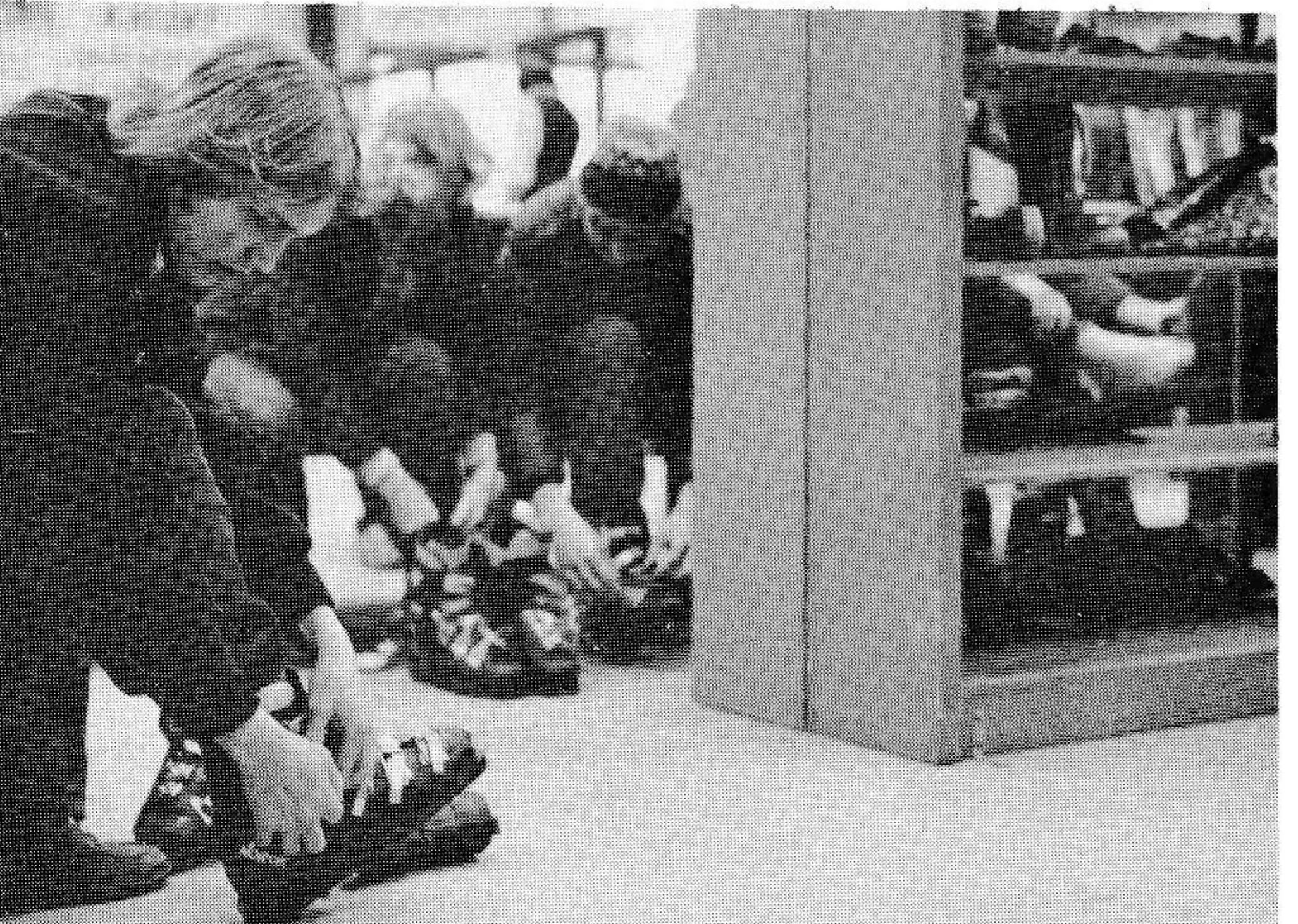
Booting-up space is provided in the center of the rental shop where benches surround shelves to hold shoes. About 65 per cent of the renters are new skiers or are in a school program for inexperienced skiers, according to Durk Vanderkaay, shop manager.
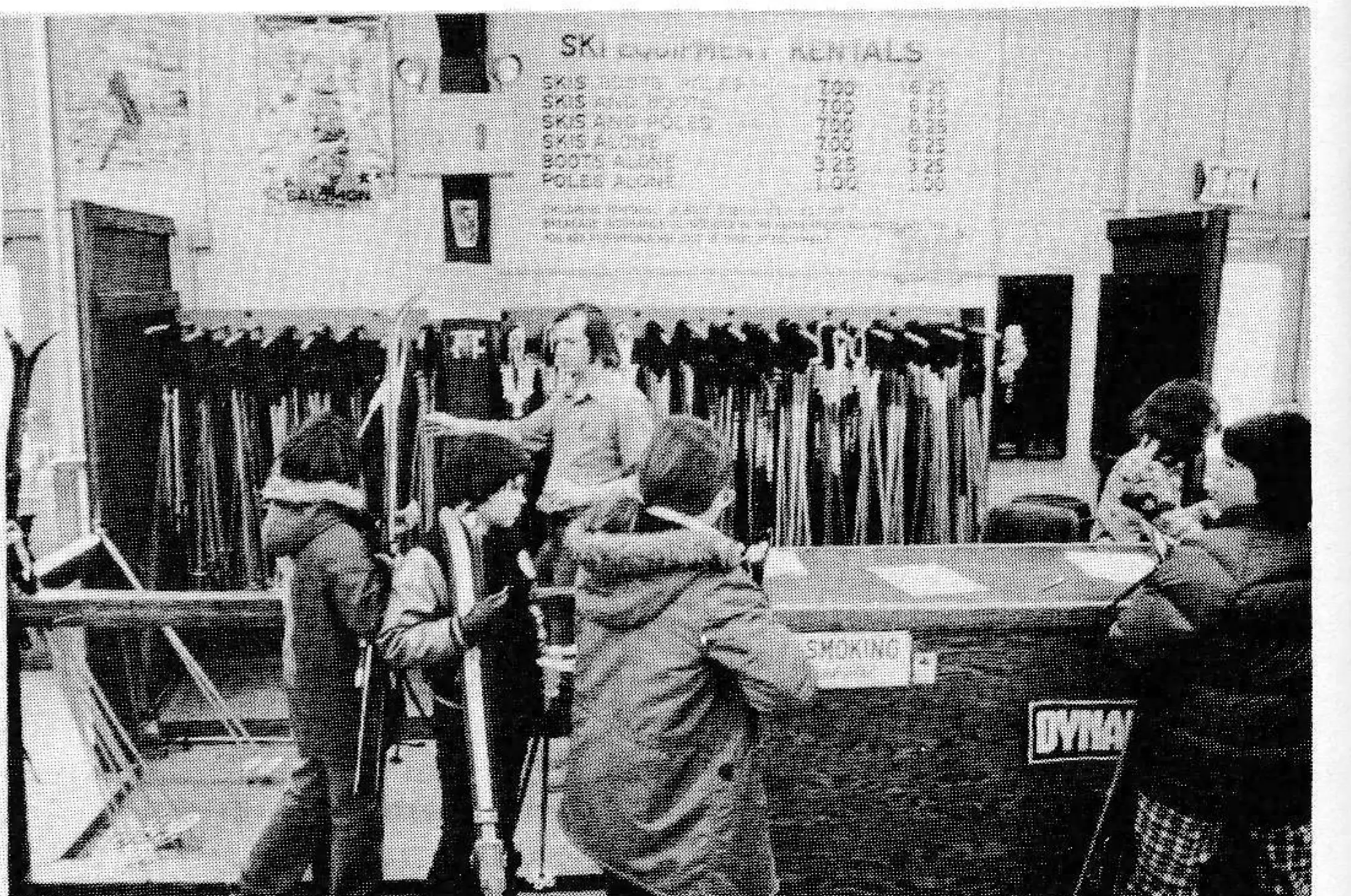
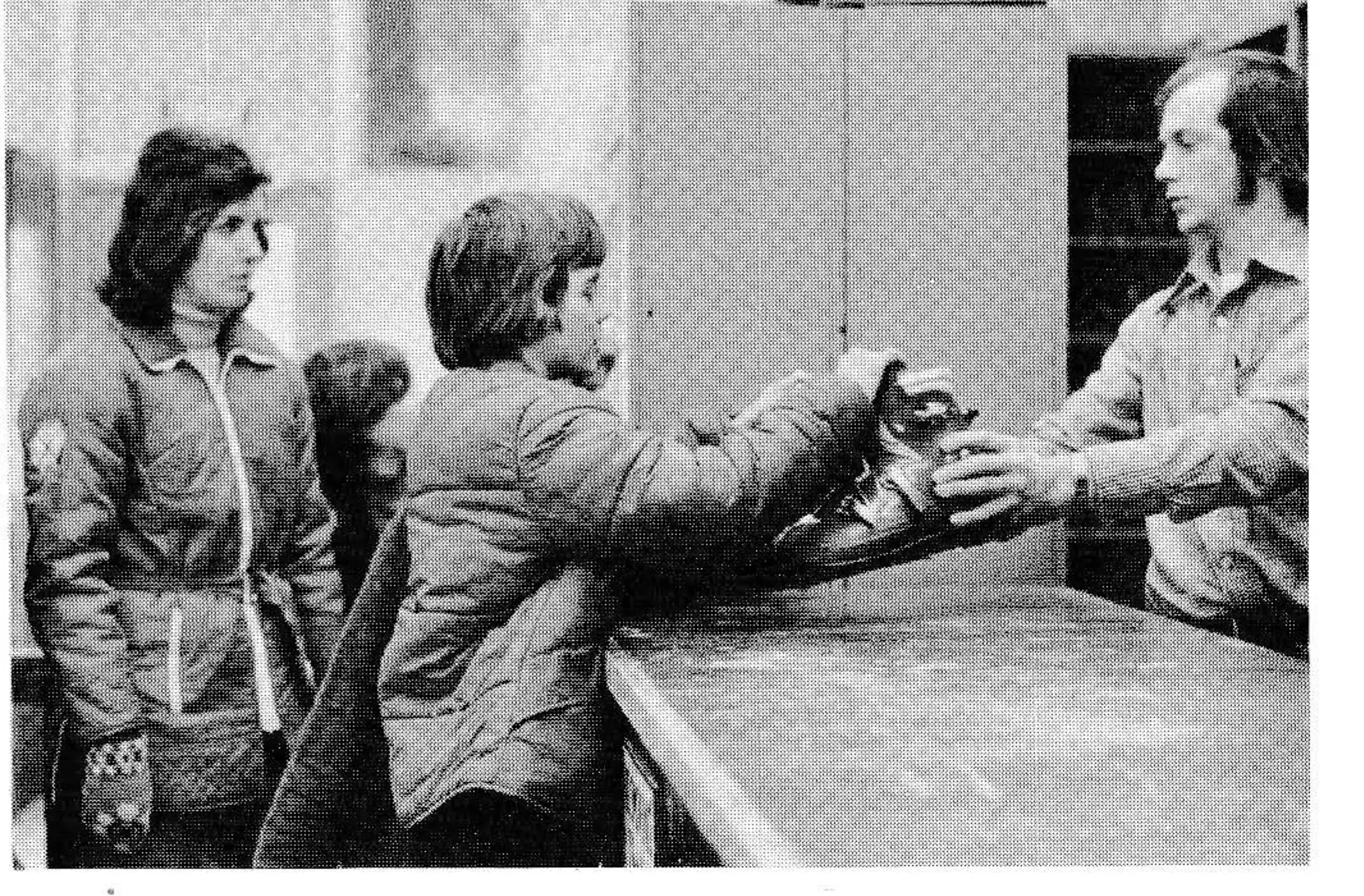
Entering a door next to the ski shop, renters turn a corner and are immediately in front of the boot counter. Mt. Tom has about 300 sets of adult and junior boots and skis. With 13 workers the rental shop can process about 150 people in a half an hour.

Rental Efficiency at Grouse

Only 15 minutes from Vancouver, the Outpost ski rental shop at Grouse Mountain in British Columbia, outfits from 10,000 to 30,000 skiers a month. With about 1,000 pairs of adult skis and 1,200 pairs of adult boots, the shop uses plate bindings which permits pre-mating of the boot to the plate, and adjustment of plates according to a chart.

Besides the Head-Way ski school groups and night skiing traffic for the rental shop. “Our maximum in a 16 hour day is 1,400 skiers,” says Jay Wilson, manager of the shop. He says a crew of six people can process from 225 to 250 people per hour.
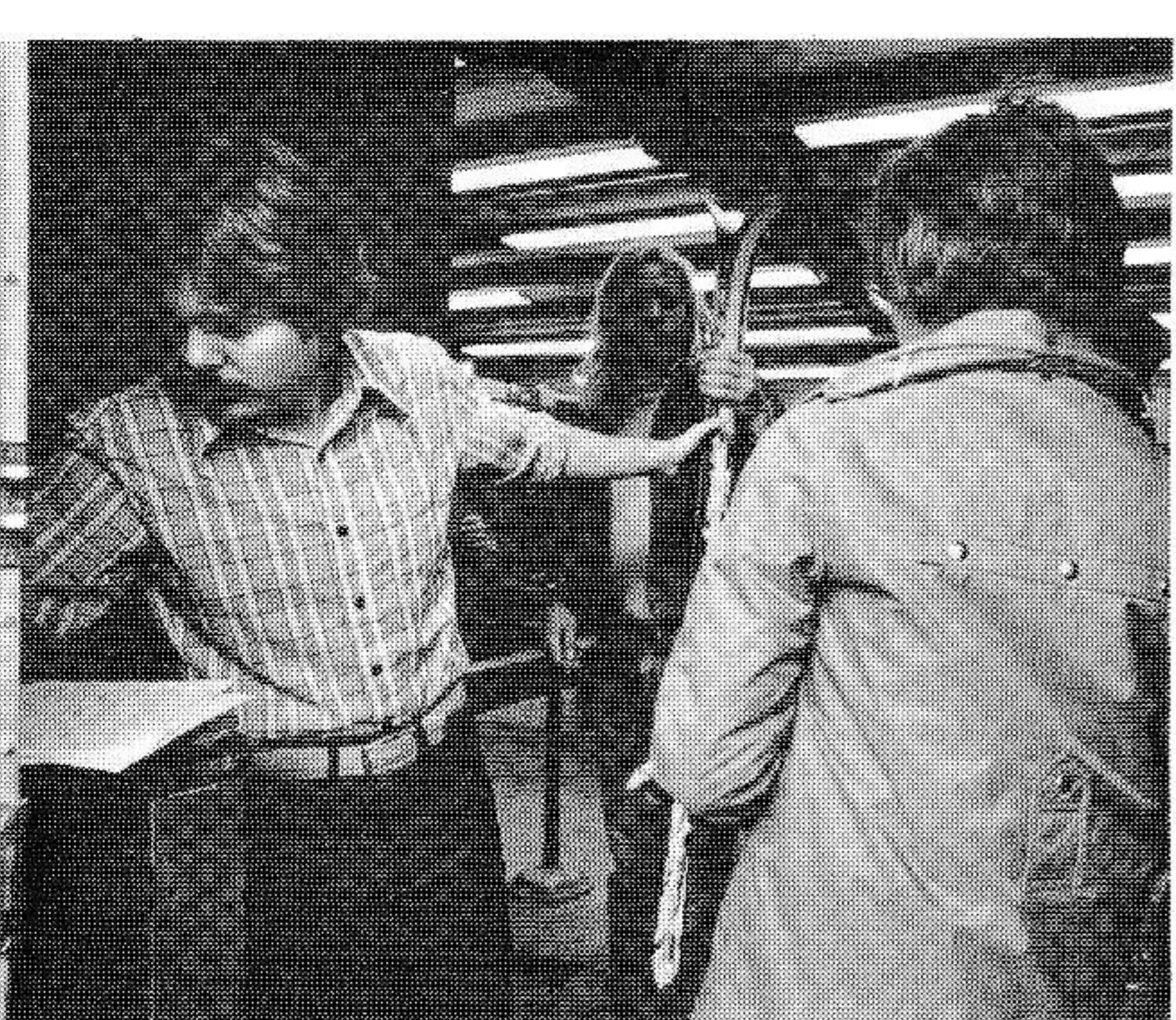
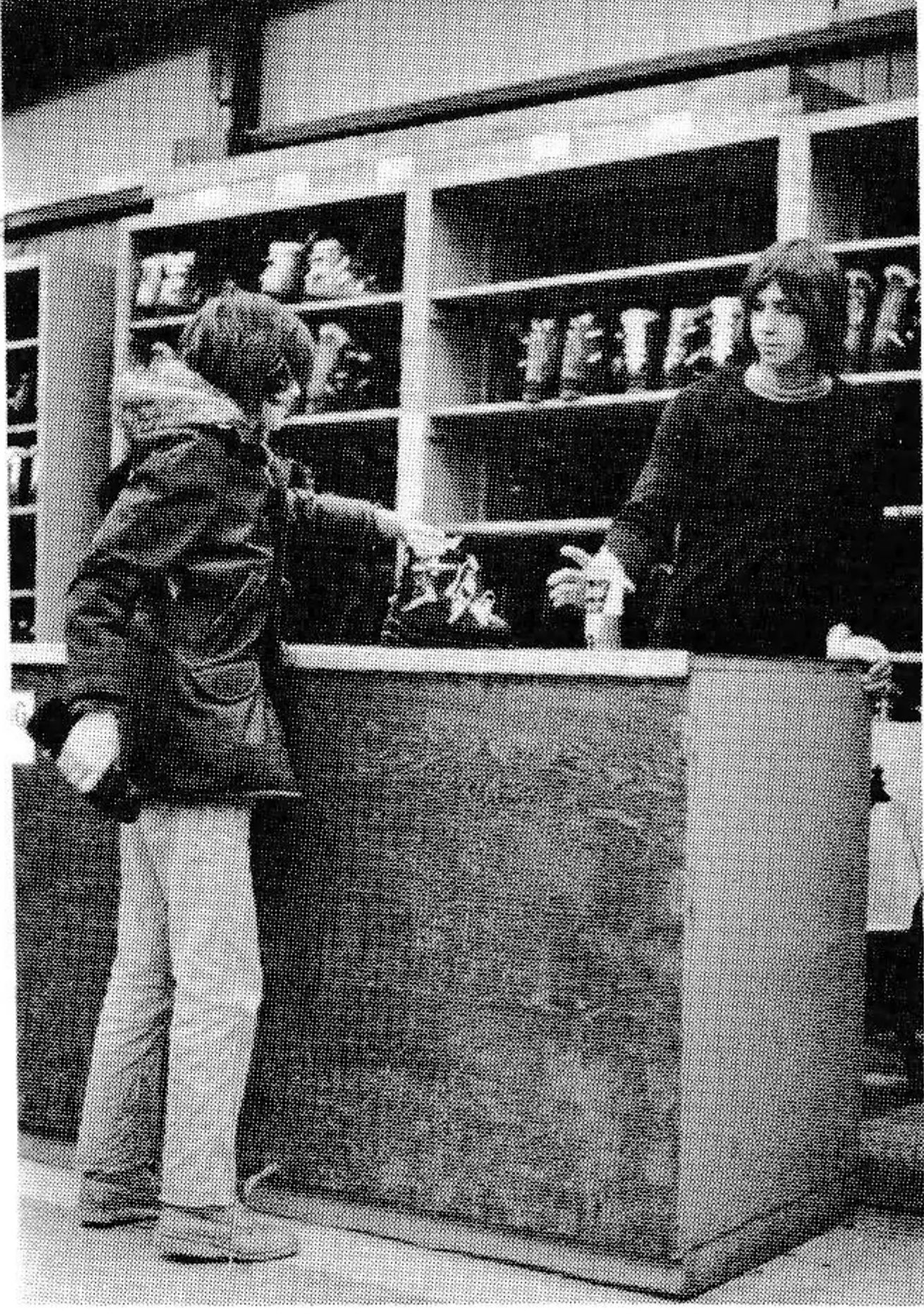
The check-out sheet is now used to check equipment in. Renters are asked name of their school and their own name. Checker then hands skis to another worker who puts them on a cart which, when filled, can be rolled to the ski racks to be hung up.
Renters return boots to the boot counter where the inside is sprayed with Lysol disinfectant. (At the height of the season sprayed equipment may be used as often as three times a day.)

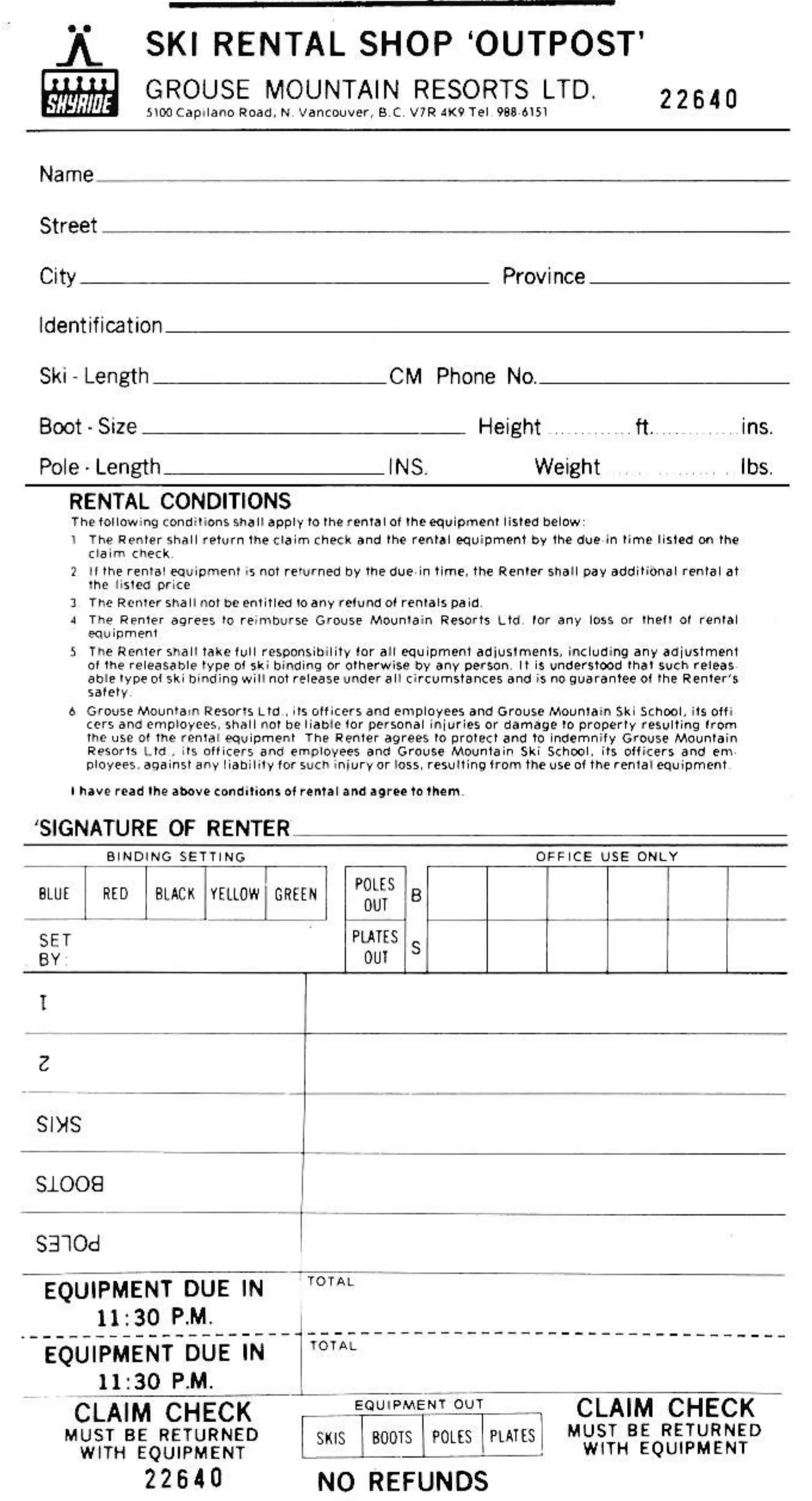
The key to the Outpost’s operation is a yellow card which is filled out by the renter. In addition to name and address, the customer provides identification, ski length, boot size, pole length, height and weight. With his signature under the shop’s disclaimer, the customer gives the card and his identification to a cashier. A special Photo ID machine then photographs both documents when the ustomer pays the rental fee. As the customer gets each piece of equipment, the clerk writes the code numbers on the card. The card is filed and the customer gets a claim check.

Advertisement

ParkPro

With school groups the cards can be filled out before the students arrive at the ski area. Many groups are pre-paid, so when the students arrive, the clerks use the cards to gather appropriate equipment and call each student’s name as it is ready. Pre-planning is even used to get boot sizes. A shop representative takes a shoe fitting device to the school before the season begins to get foot measurements.

The shop is fairly busy throughout the day so the work crews are on three shifts, working four days on with two days off. The graveyard shift cleans the shop, does maintenance work on skis and hot waxes bottoms, which is usually done to each ski at least once a week. Weekends, holidays and some evenings additional part-time people are hired to work as rental clerks.

The shop itself is an attractive, rustic, alpine-style building (formerly a discotheque), which is in the shape of a cross. The lower level is used for repairs, while the upper level with 3,400 feet of floor space is the rental department. Skis are at one end of the cross, boots at the opposite end and the two other ends are used for boot changing, cubby hole storage and coin lockers. The cashier is in the middle of the cross.

The shop management won’t name a figure for gross income, but say it is” . . . definitely profit-making.”
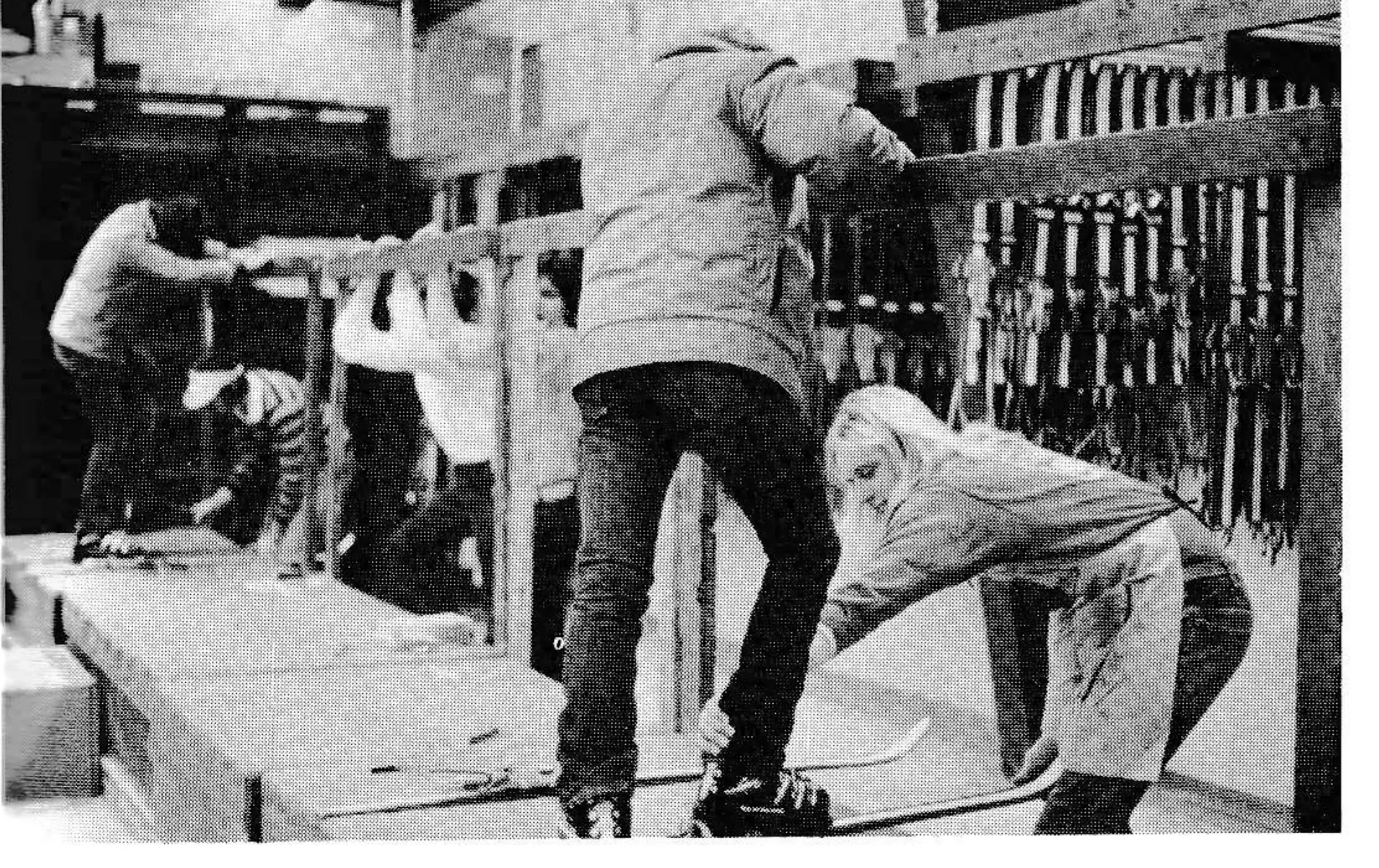
Ski staging area is a carpeted ramp running the full length of the ski storage rack. Spademan bindings are installed for large and small boots and skis are designated with a number one for size 6½ to 9½ and a number two for 8½ to 12½. Bindings are checked by having skier pull heel out. At this point the ski clerk fills out small ticket with the numbers.
Renters carry skis to the other end of the shop where they pass the pole counter and receive poles which are sized according to the color of the handle. Group renters sign a sheet on which the cashier fills in the ski and boot numbers, the pole color, and the amount paid. For individual renters the driver's license is left as a deposit.
Renters carry skis to the other end of the shop where they pass the pole counter and receive poles which are sized according to the color of the handle. Group renters sign a sheet on which the cashier fills in the ski and boot numbers, the pole color, and the amount paid. For individual renters the driver’s license is left as a deposit.

More From This Issue

Advertisement

MDMT - Card

Advertisement

ParkPro