



Robyn Scarton
Dogs have become a go-everywhere part of the family. Vacationing en famille no longer means just packing along the kids, but also the pooch. Increasingly, mountain resorts and hotels are addressing the dog wants and needs of an outdoor-loving clientele, and, in the process, are innovatively chiseling away at policies of conventional tourism.
Dogs can be an added source of income in a tightly competitive tourism market. With more resort venues welcoming dogs, dog owners bring dollars to winter vacations that otherwise would have gone to a boarding facility back home. Or worse, some families might not come at all if they can’t bring the dog.
Each season more nordic centers are designating a portion of their trail system for skiers with dogs. A Cross Country Ski Areas Association survey reported a 29 percent increase in dog trails at nordic centers across America.
“It’s a growing trend that has definite advantages,” says Chris Frado, president of the Cross Country Ski Areas Association (CCSAA). “Nordic resorts are attracting a new group of customers, primarily the backcountry enthusiast who for years has loved taking his dog along for a ski but has shied away from commercial areas. Overall, it’s helped the growth of the sport.”
According to the CCSAA, over 50 nordic areas in 20 states, including such popular destinations like Aspen, Lake Tahoe and Sun Valley, welcome dogs to their trails.
“I believe many other resorts would allow dogs if they were not compromised by private land ownership demands or county regulations,” adds Frado. “People should realize that not every nordic center can make it available.”
“We began the North Valley Trail System 10 years ago and decided then to allow skiing with dogs on over 30K,” says Mary Austin Crofts, executive director of the Blaine County Recreation District in Hailey, Idaho. “I believe we were one of the first in the country to allow such extensive use of groomed ski trails by dogs. From the beginning it has been wildly popular. It’s grown to where approximately 50 percent of our skiers do ski with their dogs.”
The Idaho resort area now offers more than 45 kilometers of groomed ski trails for dogs to pad over within the neighboring Galena Lodge/North Valley trails/Wood River trails systems. Season pass for a single adult is $70 if purchased before December 1st. A doggie pass is $15. The resort sold 3,725 passes this past season, 931 dog passes and recorded over 80,000 skier days.
“It took us several years to get people used to the idea,” says Shelly Preston, trails and special projects coordinator for the Blaine County Recreation District. “But we never lost business. We originally did not charge for dogs to be on the trail, but soon realized that their impact required extra grooming, patrol clean up, signing and a system for distributing bags to encourage people to clean up after their pets.”
Even the most pro-dog active resort operators recognize the challenges in allowing dogs on their property. Dogs can punch holes in the snow with their paws, chopping up groomed skate and stride surfaces. One animal bite or barking dog can land you in court. Dogs interfering with another skier trying to pass, dogs that do not slow down in congested areas, fighting and female dogs in heat are other risks.
Then there is the obvious problem of waste on the trail.
“The only problem we’ve encountered is educating people to clean up after their dog,” explains Valli Murnane who, with her husband Kevin, manages the Tahoe Cross Country Ski Area in Tahoe City, Calif. As a solution, the nordic center provides poop-scoop bags with each purchase of a $3 dog day pass.
“Brown klister is a problem. Our patrol spends about 25 percent of its time cleaning up dog waste,” says Preston. “We’ve installed ‘Pet Pick Ups’ stands placed at each trailhead and their use is increasing. We still get many full bags that are left at the trailhead—but are working on educating the trail users, one at a time, to either pack it out or flick it off the trail.”
In an effort to protect track, many nordic centers bar dogs on days when they can damage the surface due to poor weather conditions. Others, such as Royal Gorge atop Donner Summit, Calif., open only a portion of their trail system to dogs and their owners on weekend afternoons.
To leash or not to leash: Tahoe Cross Country is one of the few resorts in the Tahoe area that allows unleashed dogs on its trails, although owners must carry a leash and be prepared to use it. Many county leash laws apply on many trail systems. North Valley encourages dogs to be leashed at trailheads and when near roadways, but do not encourage dogs on leashes when skiing.
“Most of the dog problems we see stem from too many dogs meeting up on the trail and causing a blockade. Dogs on leashes tend to be more aggressive (or fearful), and I don’t care what any dog expert says about this: most of the dog fights I’ve seen involve a dog on a leash,” says Preston.
Others disagree.
“There is just too much potential for conflict,” says one Tahoe operator who doesn’t want to be identified. “If one child is bitten our insurance goes through the roof. Dogs and Skiers aren’t a safe mix.”

Robyn Scarton
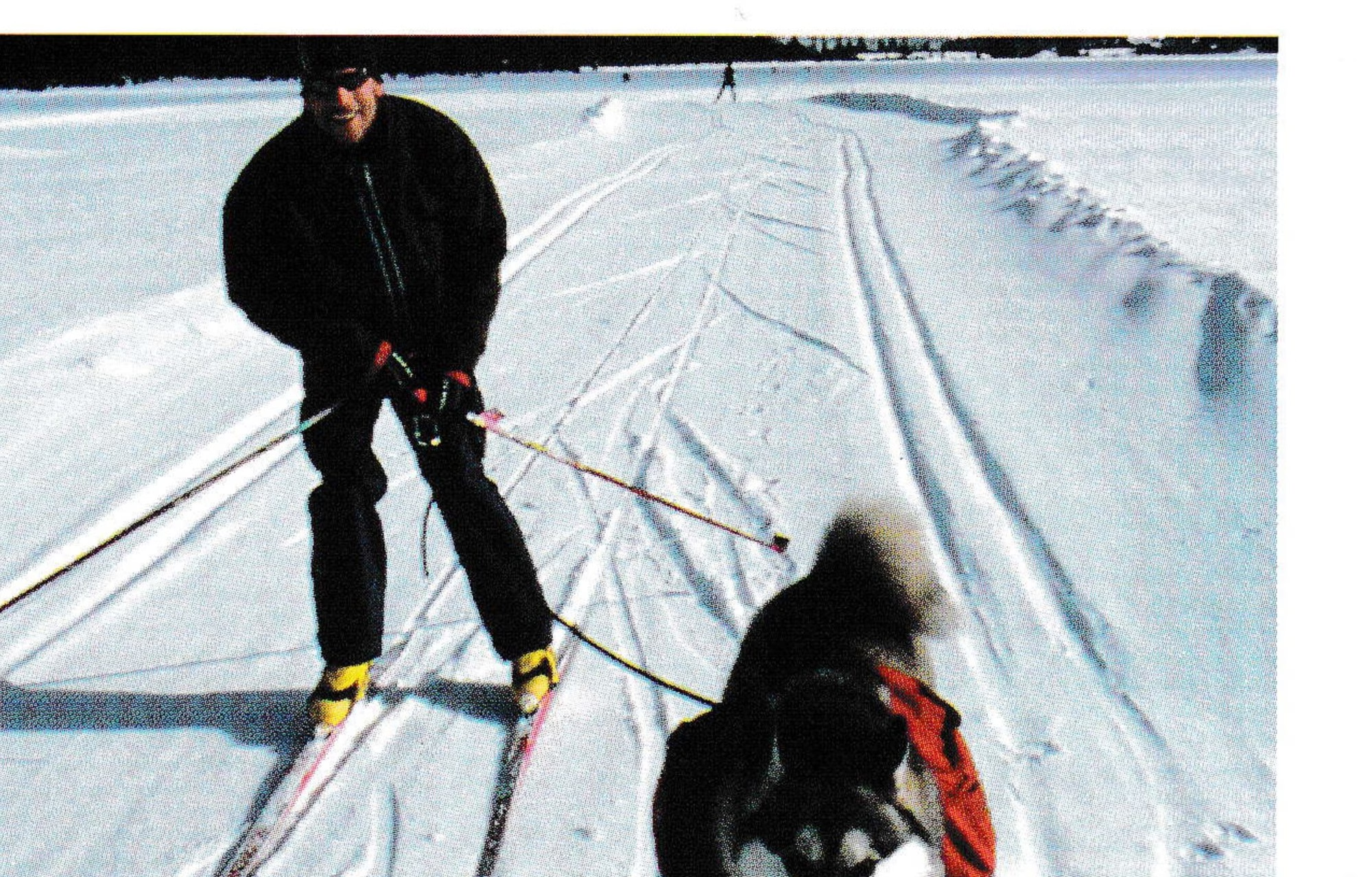
Not surprisingly, ski joring, the Norwegian sport in which a skier is hitched to a dog that pulls him over the snow, has gained popularity in the past few years.
“Ski joring is really the best way to ski with a dog, especially at cross country resorts,” says Debbie McMaster. “The dog steers clear of other dogs and skiers, there are no aggression problems, and dogs won’t chase wildlife.”
McMaster gives lessons by appointment at Tahoe Cross Country. She also sells ski joring equipment. For an initial investment of $100 the owner can purchase necessary equipment: a dog harness, belt and ski joring line with inner bungee cord to prevent sudden jerks.
“Typically, the dog should be 35 pounds and up,” says McMaster, who also teaches bike-joring during spring and summer months. “It’s great to have a dog who naturally likes to pull, but even if the dog doesn’t pull, she’ll learn to go in front and in line.”
Many lodging operators who once eschewed four-legged companions now pursue customers’ canines and are delighted in the results.

Robyn Scarton
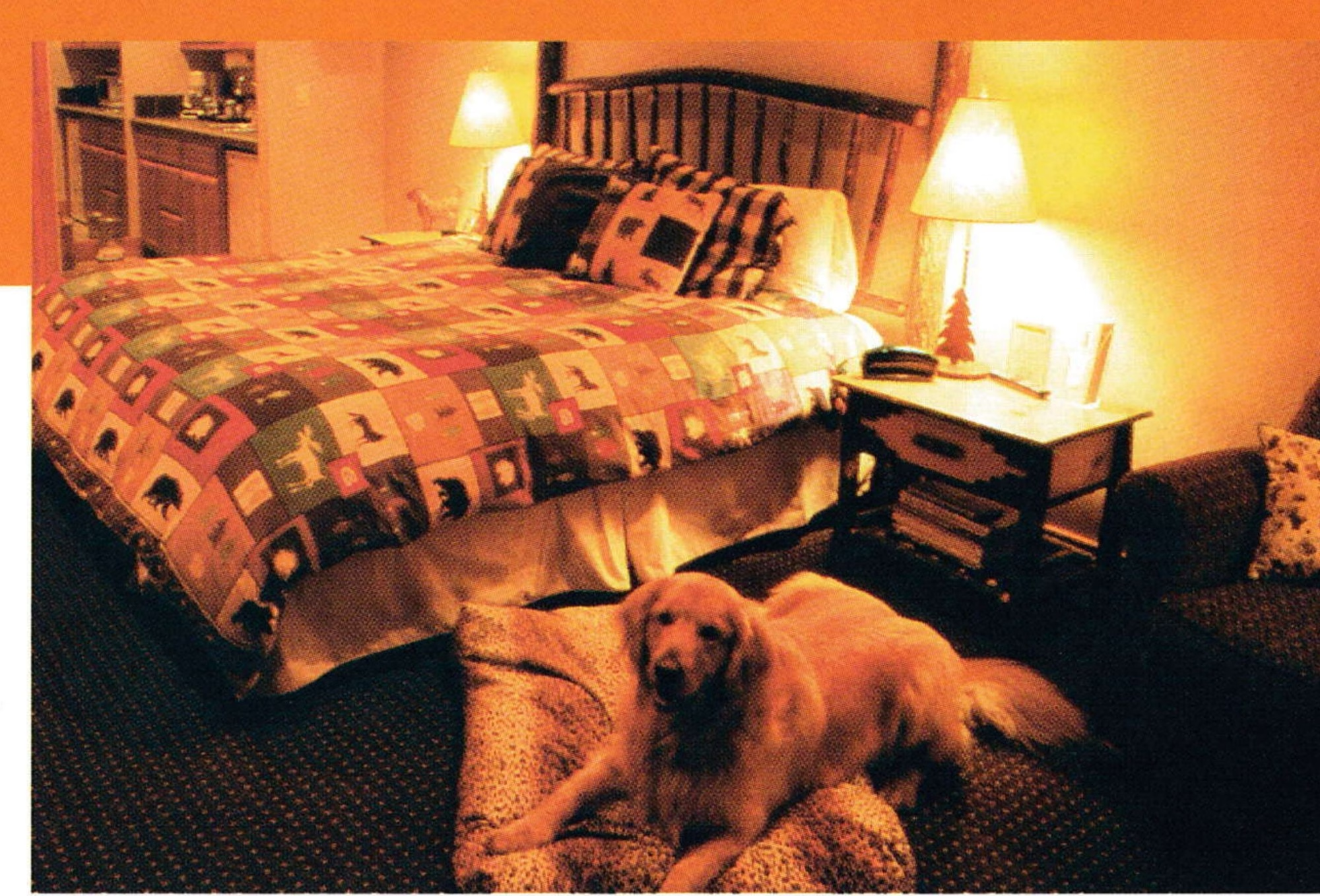
“Dog owners make for better guests. They are typically respectful of the surroundings,” explains Amanda Friedrichsen of Alpine Meadows’ Three Buck Inn near Lake Tahoe. “Our policy is that all dogs are welcome when accompanied by responsible humans.”
As the number of dog-loving lodgings increases around Lake Tahoe, none remains more welcoming than the Three Buck Inn. Pooches are welcomed with dog bed, water bowl, feed bowl, treats, toys, a furniture sheet and even a “doggie” video collection for entertainment.
“We don’t discriminate. Any size dog and multiple dogs are welcome,” says Amanda, whose husband Pete is also owner of the nearby popular, but no-dogs-allowed, River Ranch Lodge.
Dogs stay free at the rustic big-beamed lodge located a snowball’s toss from the Truckee River. HEPA air filters cleanse the air in rooms and the spacious mountain suites are kept immaculately clean by daily maid service. A year-round guide to the best hiking, biking, snowshoeing, restaurants and other activities to do with your dog can be found in every room, but patrons don’t have to go far from the lodging retreat to experience dog gone fun.
A hiking trail begins right from the door and travels for two miles toward Tahoe City along the Truckee River. The trail is away from roads, so it is a perfect hike for dogs to run off-leash and swim in the river. During winter months, snowshoes are provided free in rooms for exploring the snow-covered paths with the dog.
“We’ve had every type of four-legged friend from teacup rat terriers to Great Danes. Being dog owners ourselves we have an instant connection with our guests and are just as excited to meet them as their dog,” says Amanda. “We make few policies. We figure if you trust your dog, we trust the dog.”
Customer demand for their dog hasn’t gone unnoticed by larger properties at mountain resorts. For only $10 per day, behemoth casino Harrah’s Tahoe provides five heated kennels on-site. Owners must feed and care for the pet and reservations must be made beforehand.
“We can’t allow pets in the rooms, but this is a good alternative to leaving the dog at home,” says Harrah’s spokesperson John Packer. “There are great walking areas outside and the beach is just a 10 minute walk.”
“Overall, welcoming dogs to the resort has been a huge success,” says Tahoe Cross Country’s Murnane. “We have many visitors who come to Lake Tahoe specifically because of dog access. Dogs and people can safely share trails without conflict. It’s just up to owners and operators to use a little common sense. It makes a lot of sense to offer what customers want.”
More Doggie Info
- Dog friendly travel guide: www.dogfriendly.com
- Poop Station Supplies: Intelligent Products, Inc., 800-697-6084
- New England Sled Dog Club, R.R. #2 Box 262H, Lyme, NH 03768; 603-353-4601, [email protected], www.nesdc.org
- North American Skijor and Ski Pulk Association, PO Box 240573, Anchorage, AK 99524; 907-349-9663, [email protected], www.ptialaska.net/~skijor/join.html
- Alaska Skijoring and Pulk Association, PO Box 82843, Fairbanks, AK 99708; 907-479-0848, [email protected], www.sleddog.org/skijor
- DownEast Sled Dog Club, 141 New Road, Waterboro, ME 04087; 207-247-3026, [email protected], www.desdc.org
