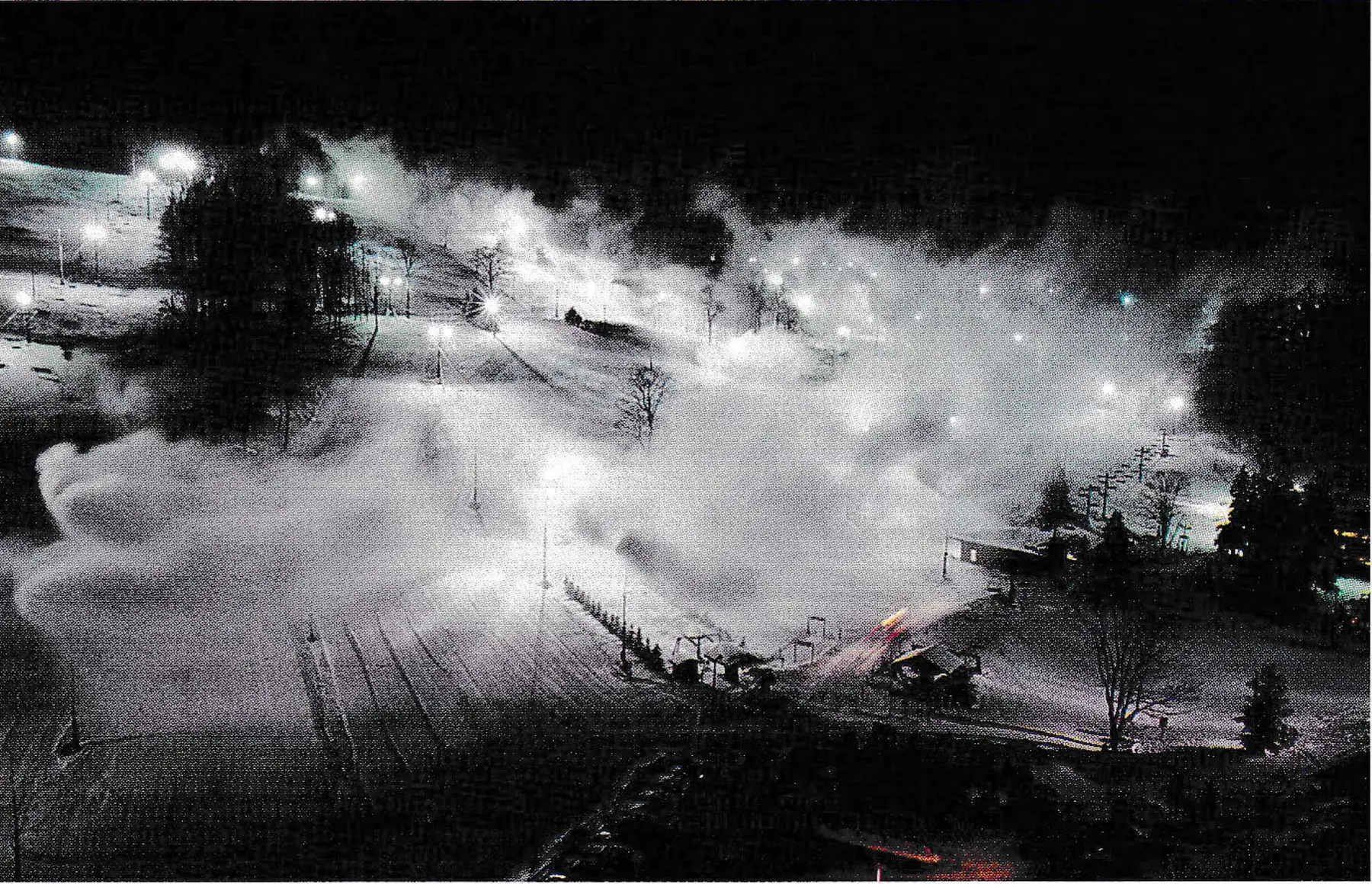

The veteran Pennsylvania area operator, president of the highly successful family operation of Seven Springs Resort, has been putting his system together for over 20 years, and while there is no dearth of snowmaking superlatives around — “world’s largest system,” “snow capital of the world” and the like — Dupre points to his 26,000 gallons-per-minute of measured flow as the largest in the industry, and is quite proud of the lean 26,000 cfm of air he uses for a neat 1-to-1 air/water ratio.
“It is a giant sleeper that our ski industry just doesn’t know much about,” says one snowmaking engineer familiar with the system. “It may look funny, but its productivity is awesome.”
Seven Springs converts about 500 million gallons of water into snow in an “average” season, and at a surprisingly low cost. “We spend under $2 per thousand gallons,” claims Dupre, “which is just a fraction of the $6 to $8 which are industry norms.’
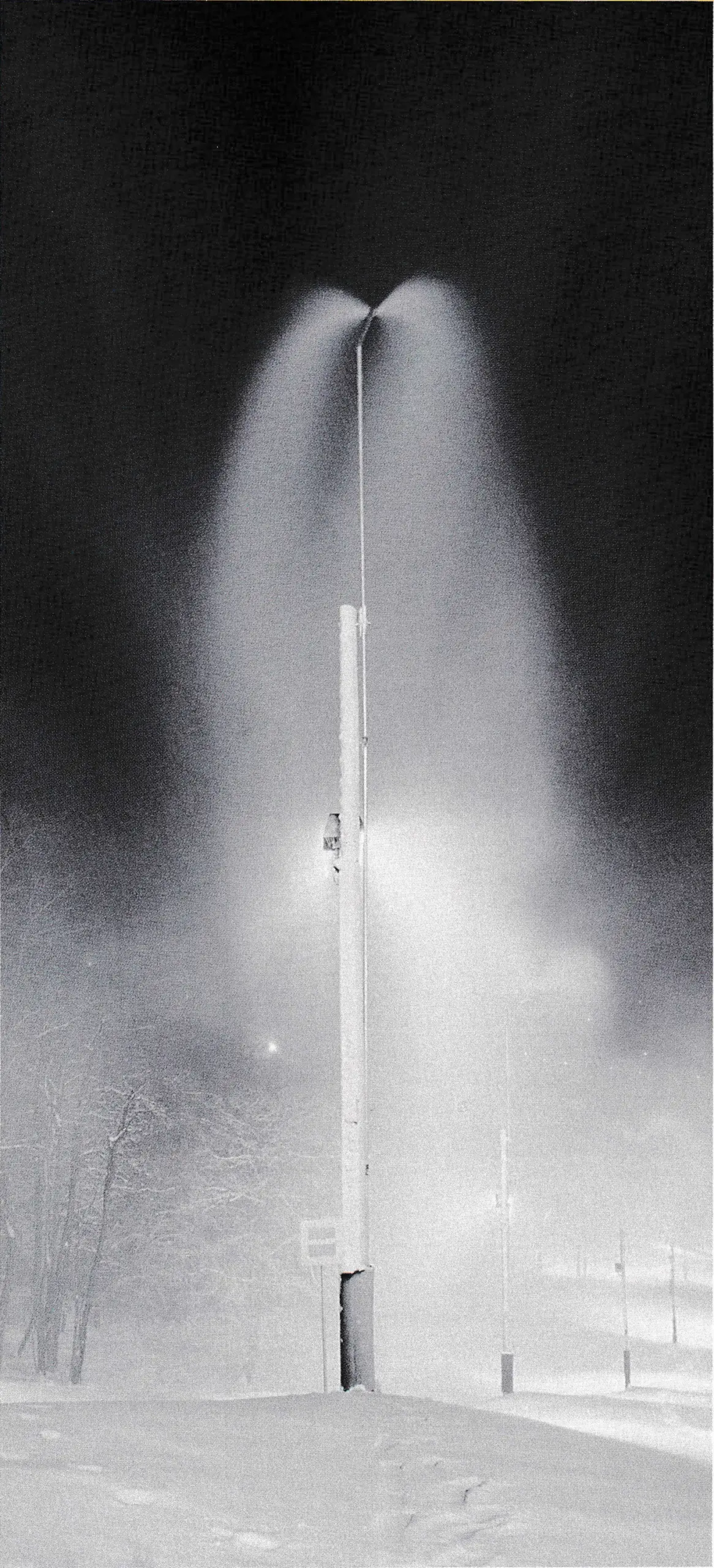
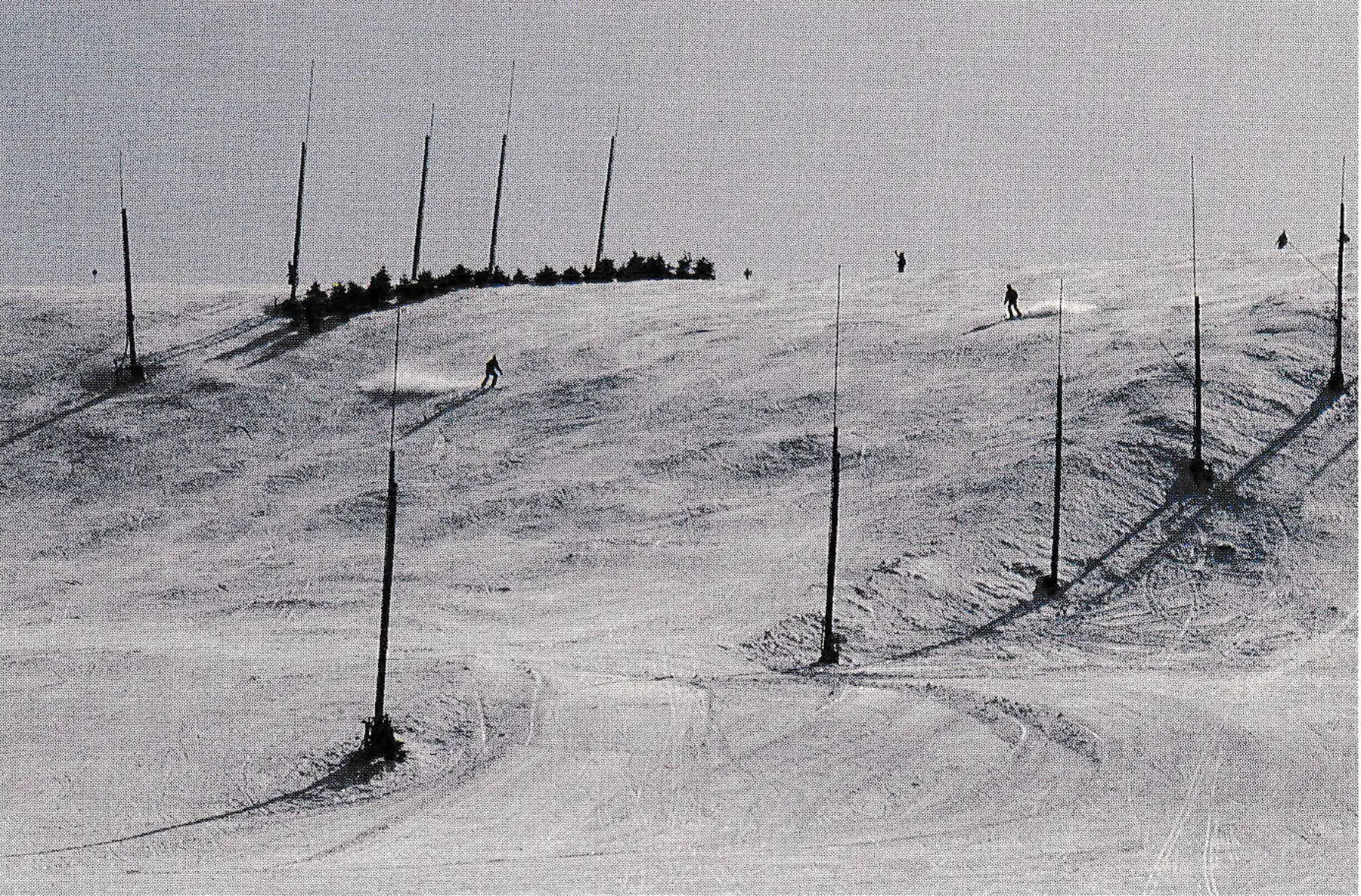
At the heart of the Seven Springs snowmaking system are the 817 towers. Most are 40-footers, giving lots of hang time; there are also a few ground guns — for instance, where lift riders might otherwise be snowed on.
Dupre, from behind a desk covered with horsepower calculations, explains that, “each tower needs about 10 to 12 horsepower to deliver the 50 cfm of air necessary to convert a minimum of 50 gpm of water into snow.”
Charles Santry says that even greater efficiencies would be possible with the HKD system if Seven Springs had the elevation to yield higher water pressures than the 300 psi they have.
“Where the vertical drop makes 400 or even 800 psi possible, the same amount of air will convert more water to snow. Testing at other areas in the northeast we have seen air/water ratios as efficient as .6 and .8 to 1,” said Santry.
The air arrives at the nozzle through one-inch diameter air tubes inside each water-filled aluminum tower, while the water is pumped and gravity-fed from a 22-acre, 100 million gallon, man-made summit pond named “Lake Tahoe.” The 26,000 gpm system is 14,000 pumped and 12,000 gravity-fed.
The conduit that delivers the air and water is the tower, and it’s a standard fit aluminum pipe. Because the air and water conduits are separate, there are no problems with “blow-back” or freezing air lines, according to Dupre.
Dupre has experimented with various configurations of multiple nozzles, including a “six-shooter.” In practice, the four-nozzle turned out to be the most consistent performer. The gun is an external mix one, the only one around and not unlike the old Tey in principle, so the nucleation takes place outside the gun. Another unusual feature of the system is the speed with which it can be up and running, since it is either on or off — open or closed — and no adjustment is required

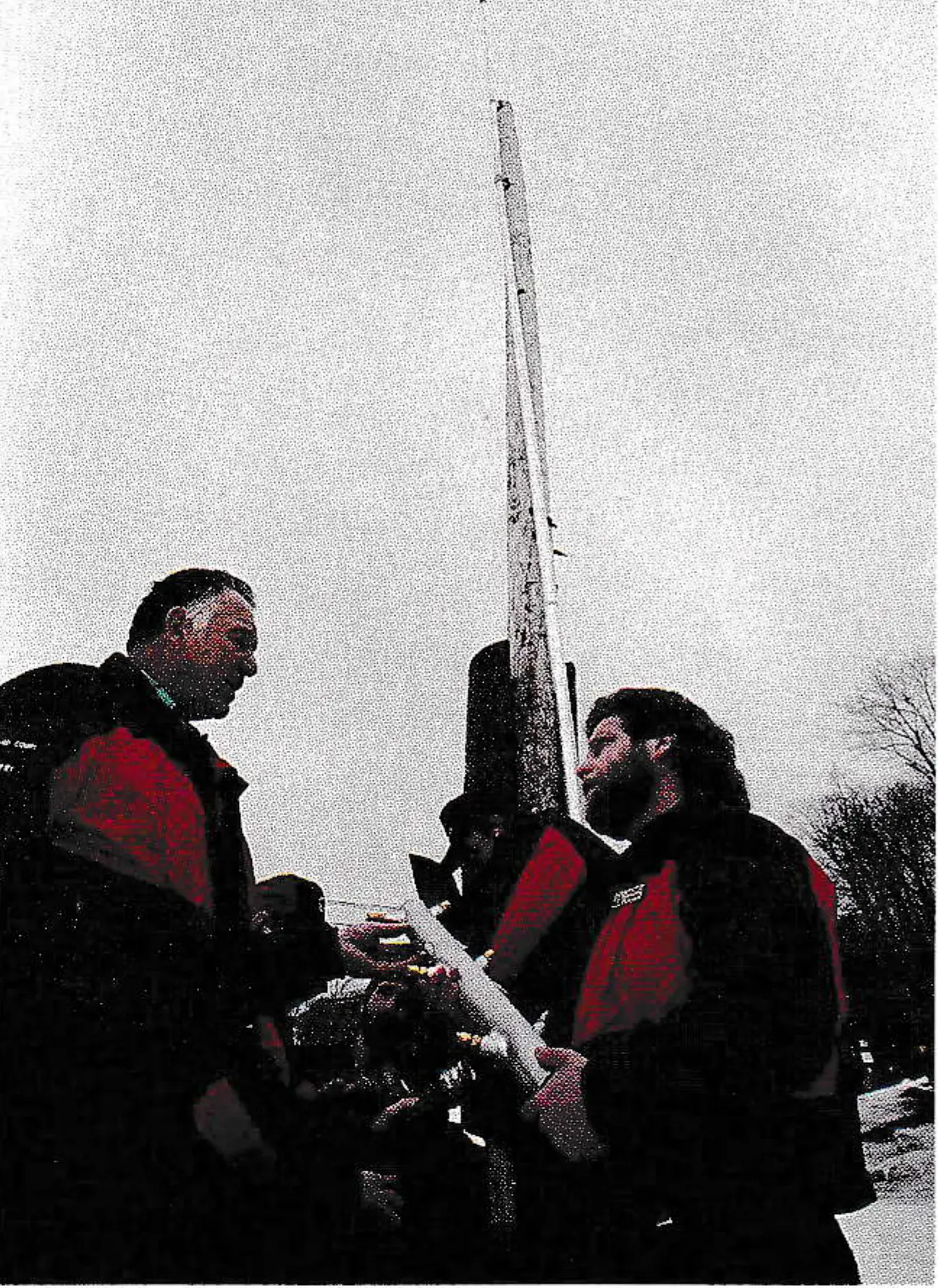
“On one trail at Seven Springs,” says Santry, “a single snowmaker turns on one valve to open 35 hydrants, or 2,000 gpm of capacity. Operating at full capacity, the area’s nine-person snowmaking crew operate 500 towers at once.”
There is more than labor saving here: equally important in climates where snowmaking temperature “windows” are precious, is the ability to take advantage of them promptly.
While the fixed nature of the towers does result in some mounding, Dupre insists that the amount of grooming that is needed is minor compared to the labor savings of permanently set towers.
What about the aesthetics of all those towers? Dupre concedes they might be considered “unsightly,” but he feels that most skiers just accept them as part of the scene, and don’t really think about them.
Furthermore, Santry explains, the HKD system being marketed uses 3-inch rather than 2-inch tubing, which has reduced the height of the wooden support poles from 35 feet to only 20 feet above the ground.
This past winter Santry had HKD demonstration towers at a number of ski areas in the Northeast and Canada. “Selling a new gun in this understandably skeptical industry is a very hands-on and long process,” he says.
Only time will tell if we will not, in the future, be able to see the forest for the towers.