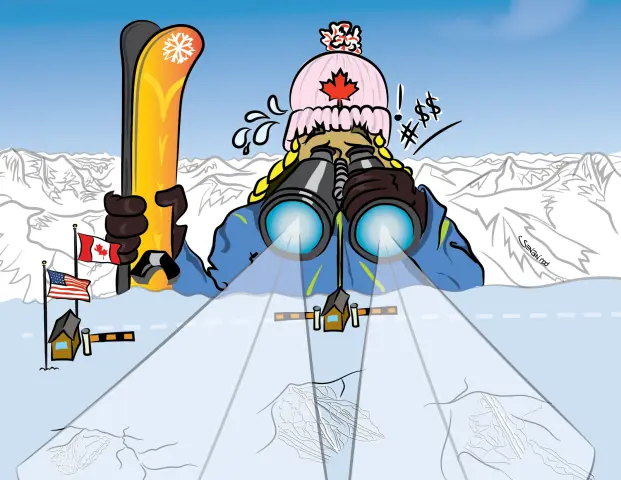

But in Southern California, you simply can’t chase the snowboarders away, let along ignore them. Early in the season, they account for over 60 percent of the business; over the Christmas holidays, they are 25 percent; and later in the season, they are 40 percent. It doesn’t take a rocket scientist to see that these figures represent big bucks.
But, the Alpine skiers clearly didn’t like the boarders and didn’t want to mix with them on the slopes and trails, so when they cried, “give ’em their own area” Bear Mountain’s management got the message. We had a run called Outlaw that was under-used, relatively isolated from the main skiing terrain and serviced by a chairlift. This would not only be limited to snowboard skiers, it would be custom-designed for them. An instant Outlaw Snowboard Park.
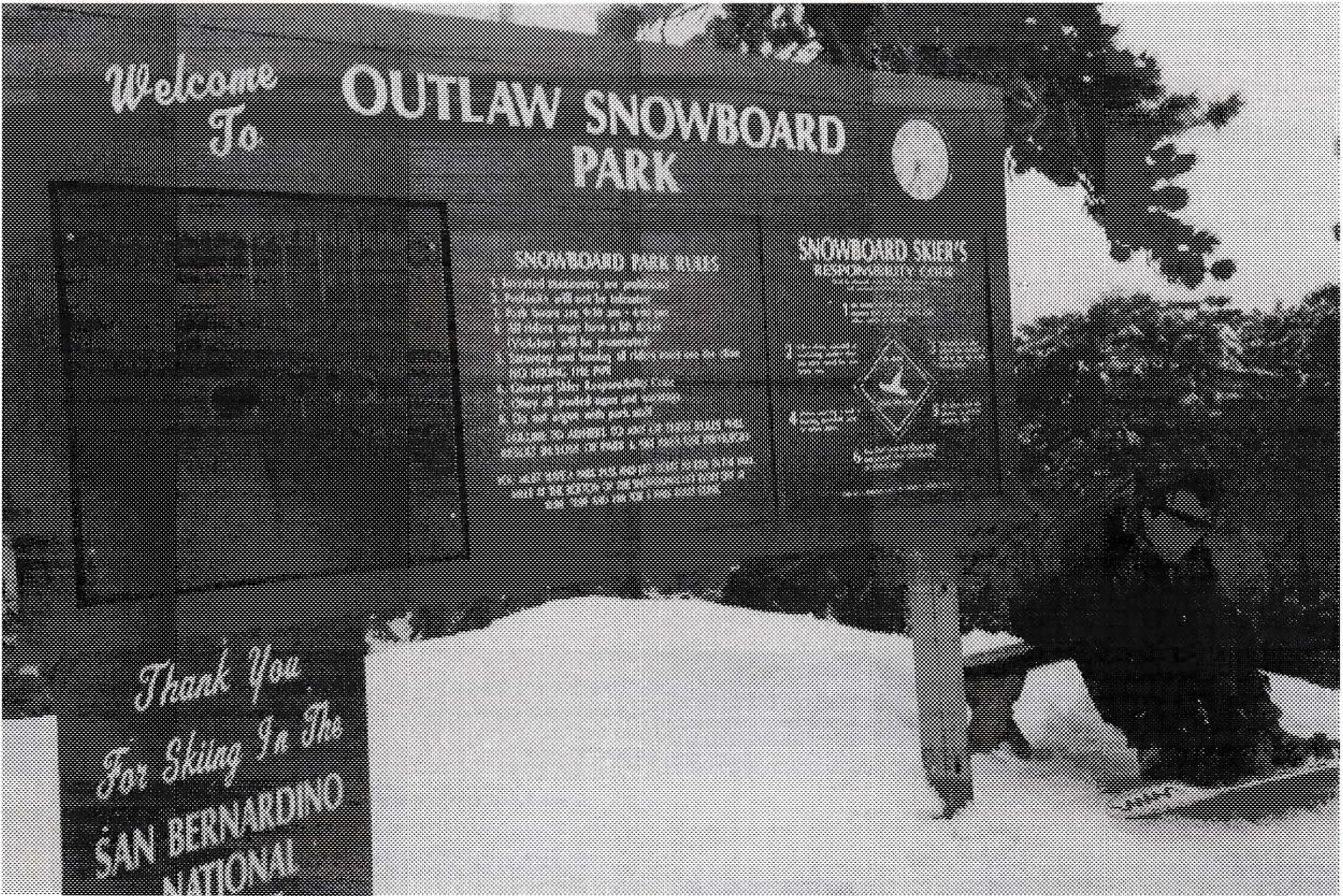
Bert Lamar, former world champion freestyle snowboarder and frequent visitor to Bear Mountain, saw the logic of the project. “If the mountain would dedicate a run to snowboard skiers only,” he said, “you could build a one-of-a-kind area that would be the biggest thing going.”
Last summer, our crews surveyed the Outlaw trail to be sure the topography was right for a snowboard amusement park. They also did some clearing of brush and trees and dozer- and shovel-work to prepare for later construction and shaping.
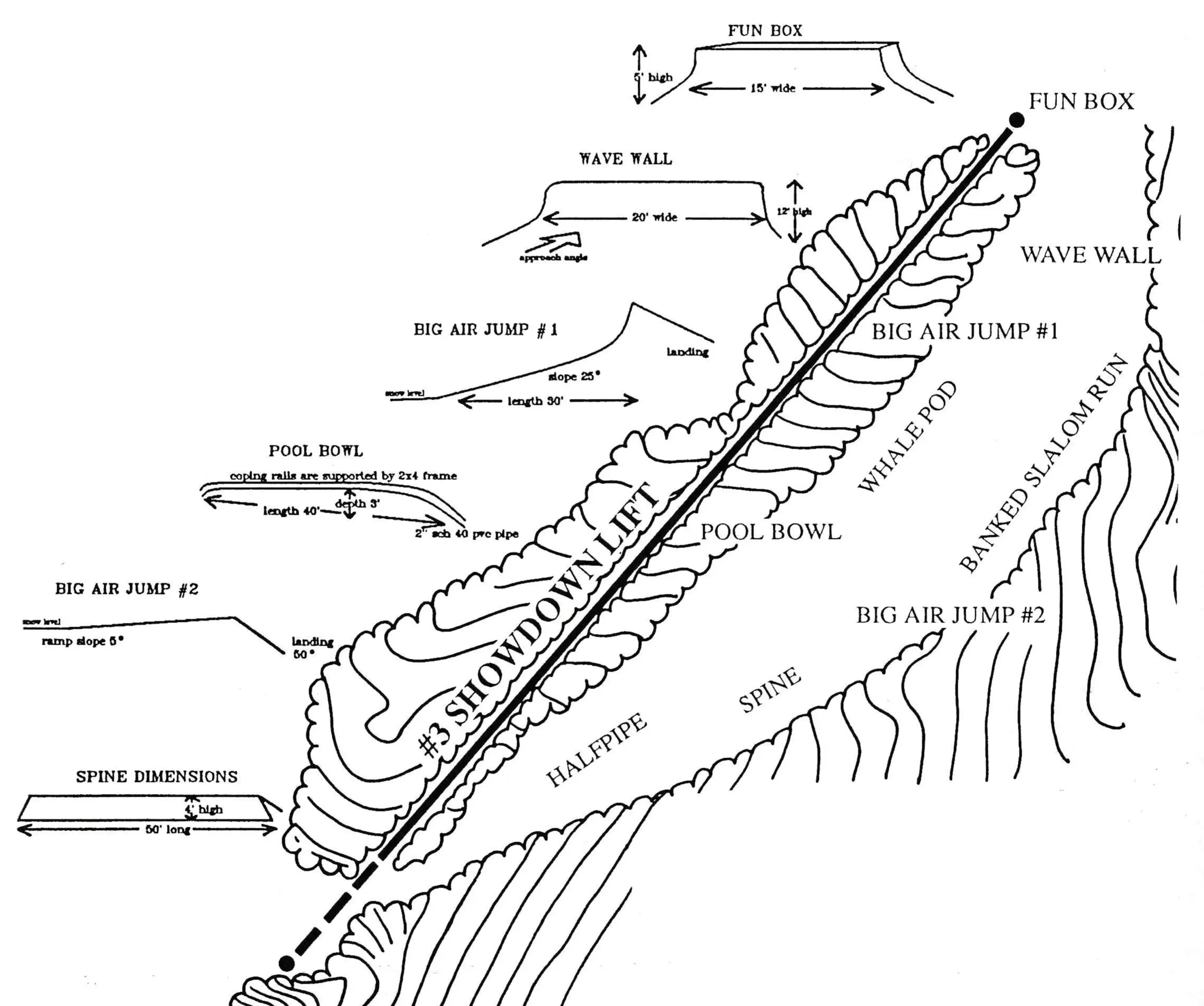
By early-January, a considerable amount of snow had been laid down by snowguns, and the crews went to the site with old loader tires, a cable spool and logs to be used as props to begin construction. The terrain to be used was a little more than six acres, 1,750 feet long by 250 feet wide.
The snowboarders had indicated what they might want to do in the Outlaw Snowboard Park — everything they were not allowed to do on the main mountain — so creating the final forms was not too difficult. A half-dozen pro riders also came with ideas for walls, bumps, rolls, dips and whales to make an exciting, interesting, challenging and irresistible playground for anyone riding a single plank.
Snowcats, excavators, shovels and rakes were used to sculpt, pile and cut. During this construction phase, there were plenty of onlookers with opinions — mostly sitting on boards waiting. We announced that the first day would be open only to those who had helped shovel and soon there were more shovelers than shovels.
The first day of operation, January 13, was not a disappointment. There were a series of quarter-pipes, a pool-shaped bowl of snow, spines of snow 50 feet long by four feet high, whales of snow 30 foot long by one to five feet high, four rails for sideways sliding, two jumps 10 and 15 feet high and a full-length halfpipe, plus a short mogul field and space for a slalom course.
One of the best features of the Park is that it can be changed daily by adding new whales, eliminating bumps or making jumps higher. This maintains a dynamic and challenging quality for the snowboarders. Even making changes, however, the Park requires minimal maintainance, less than the same terrain required when it was used by Alpine skiers. Only the halfpipe needs more maintenance and special attention prior to competitions and other events.
Over the winter, the question of how effective the Snowboard Park would be in keeping the riders off the main runs was answered. The boarders flocked to the Park, waited in line for rides in the halfpipe and created new tests of skill and courage. Music was added and the Park was declared “epic!” A half dozen special events, including a pro challenge, were held in the Park during the winter and the riders rated the site the best for competitions. Two of the events were on national television and brought lots of attention to the project.
The Park attracted most, but not all, of the snowboard traffic, which made the Alpine skiers happy, too. To further mollify them, a small building was set up in the base area near the repair shop to be a Snowboard Center. Here the boarders could hang out, get information about events and contests and even watch snowboard videos on a monitor. The repair shop got more business in repairs and accessory sales, and the boarders had a place to lodge away from the other skiers. When professional riders came to the area, we asked them (for the price of a ticket) to spend time at the information center talking with the kids, signing autographs and endorsing safe riding practices.
In a further effort to increase safety awareness, Bear Mountain requires every Park rider to have a pass, which is a kind of license to ride. They are sold for a dollar after a rider has passed a safety awareness test, but they can be revoked if the Skier’s Responsiblity Code is violated. In additition, boarders who have had their tickets pulled on the main mountain must attend a classroom session on safety and pass an attitude test, and then they are then issued a ticket good only in the Snowboard Park.
While “air” is allowed in the Park, inverted maneuvers are not allowed, nor is alcohol, drugs or “language.” Park monitors are on hand all day to enforce the Skier’s Responsiblity Code, check Park passes, lift tickets and watch for unseemly conduct.
This summer, crews will return to the Snowboard Park site to do extensive shaping of the forms out of earth. This should allow us to open the Park earlier and stay open later with minimal snowmaking and also reduce the maintenace.
The success of the Outlaw Snowboard Park has been better than we expected. Complaints about boarders are almost non-existant now and there have been practically no collisions between skiers and boarders. Furthermore, there were no snowboard accidents in the Park. In general, the Snowboard Park has happily managed and contained an impending conflict.