

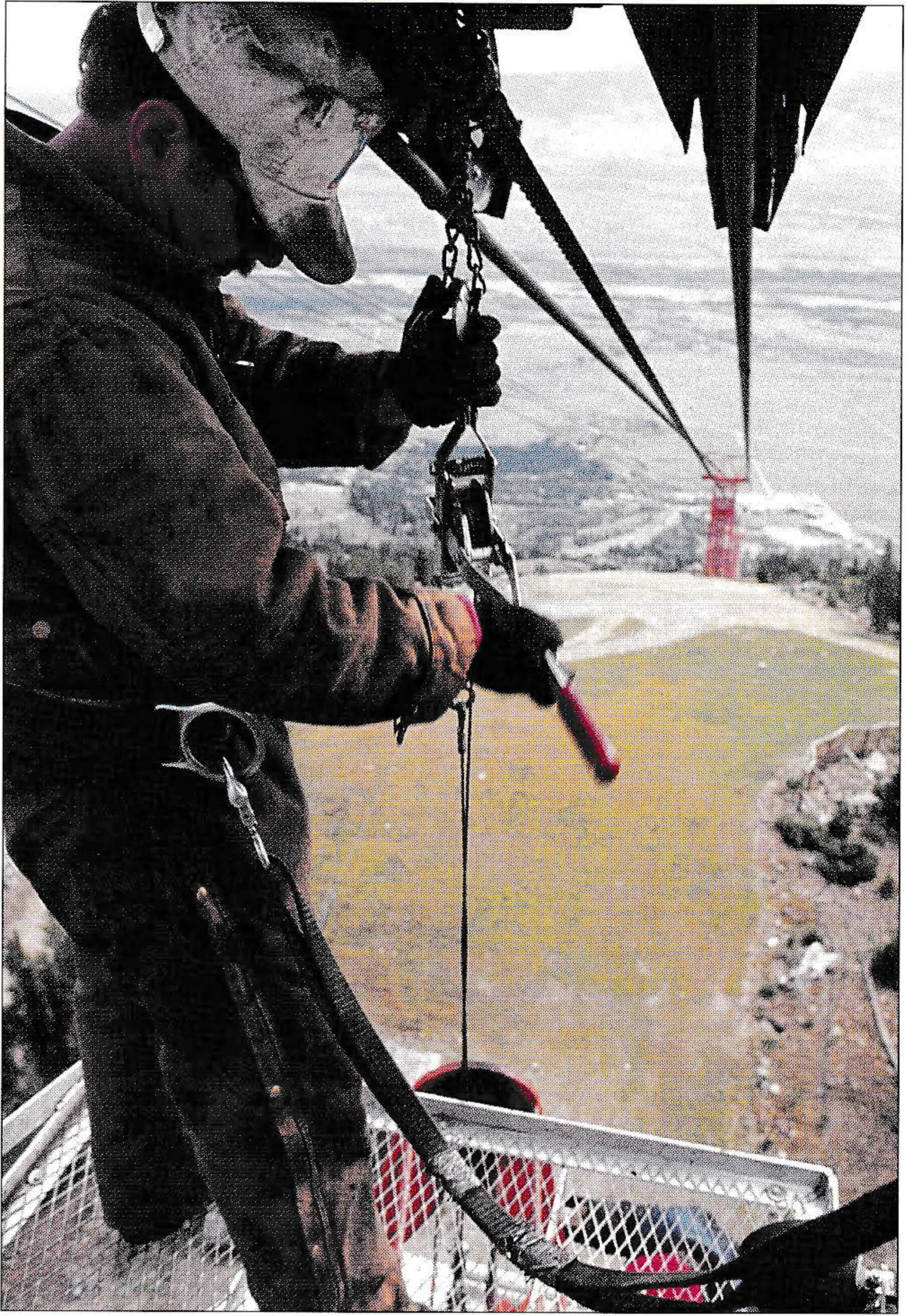
In its first 25 years of service, the tram, with one haulage rope replacement, had made 176,717 round trips to the mountain peak, traveling 424,120 miles in the process and carrying over six million people to the top. It had served to carry hundreds of tons of freight up and down, even including motors from the #4 Thunder chair lift, both up and down.
The tracks had not only done a helluva lot of work, but, as will be related, had suffered much. Then, in 1991, management wisely decided to slip and cut away 70-ft. lengths to take a close look at them – lengths extending from the counterweights, up and across the chain saddles that are pretty much inaccessible to the electromagnetic inspection that had been performed elsewhere.
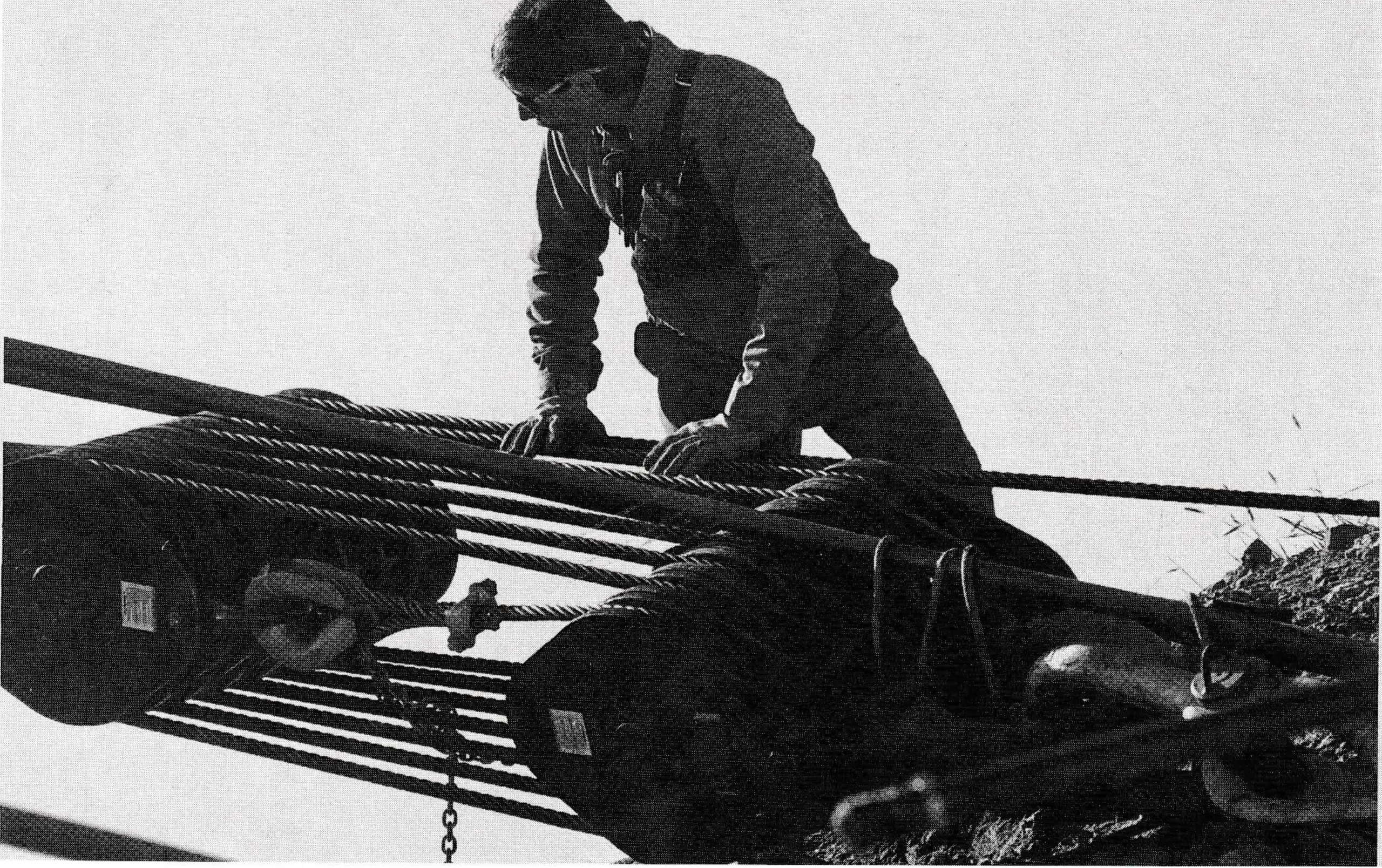
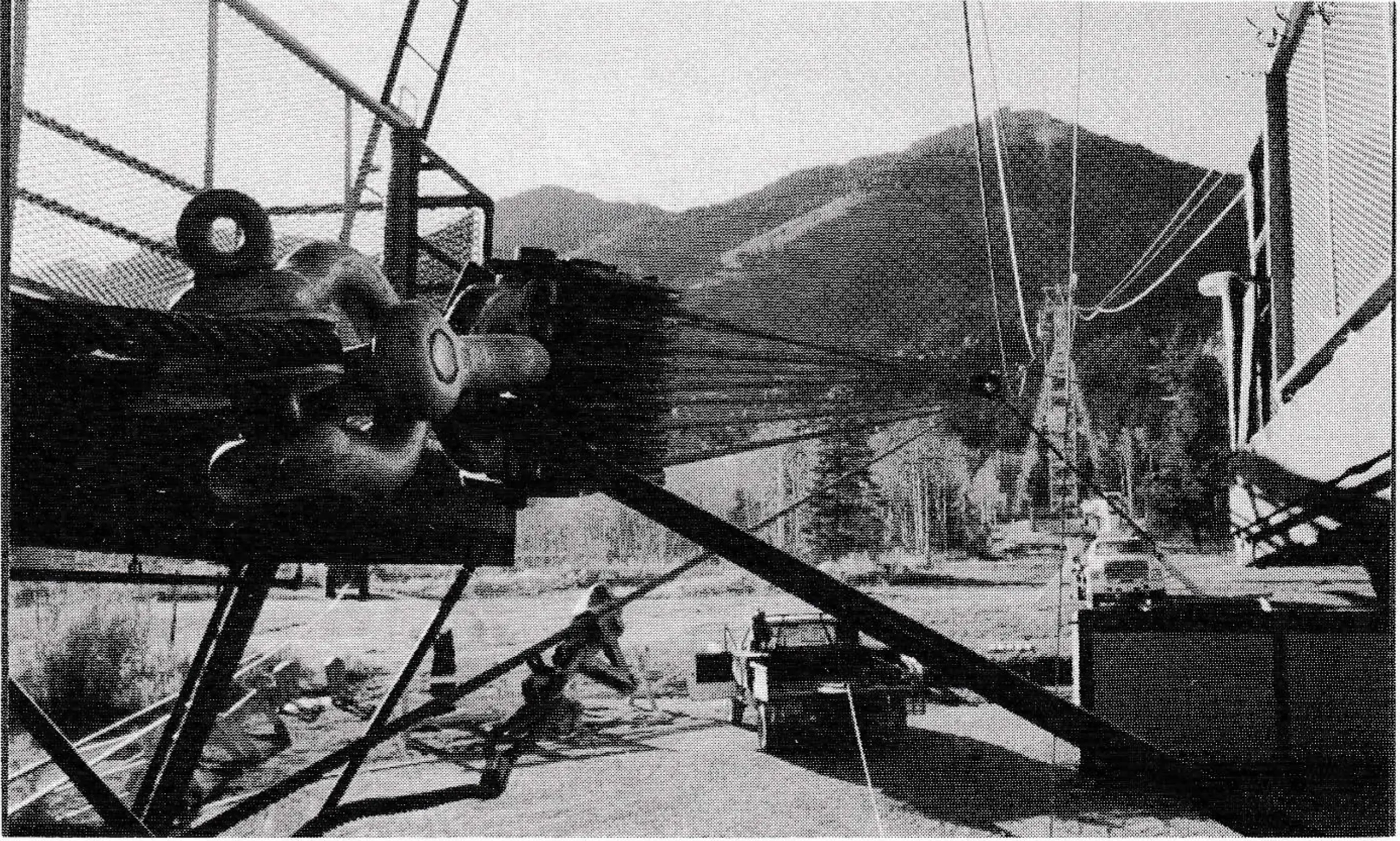
The Jackson tram is a double reversible built by Williamette in 1965, having 63-passenger cabin capacities; it is approximately 2-1/4 miles long, with a vertical rise of 4,100 feet. The track strands are the single full-lock, coil-type—their diameter just under 1-3/4 inches. Tracks are connected, in tandem, directly to the counterweight after they turn about 90 degrees to terminate at the counterweight across the chain saddle.
For many years, we in the U.S.A. have labored along with track ropes, not having much knowledge about them. We’ve known their basic characteristics, and have known that they are exceedingly strong, reluctant to bend and damn hard to handle. Unlike our European counterparts, the modes of failure were not well documented in their years of materials handling and certainly not in today’s sophisticated passenger trams. The simple reason is that with good documentation absent, the tracks remain in service for longer periods of time than the average man’s working years. Responsible mechanics with good amounts of hands-on experience are few and hard to find, but even so, memories fade. To this writer’s knowledge, it was not until Vail’s unfortunate accident in 1976 that we really began to get serious about track ropes.
So now, having had the opportunity and the good fortune to test and physically disassemble the most critical part of Jackson Hole’s tracks, we at least have a milestone which we are pleased to share with you.
My first encounter with Jackson’s tram was in 1965, when I happened to pass through on my way to Montana and stopped by to have a look.
The project of the day was stringing track ropes to the top of Rendezvous Peak. There were two huge reels in the parking area. One was mounted on a shaft. The reel was made of steel, painted blue and wore Fatzer’s name on its side. There were two men on top of the reel, one with a long heavy bar, the other holding a sledge hammer. The rope, profusely greased, had become loose on the spool, the wraps all out of place. The live end appeared from some place down deep in the loosened wraps.
Although it was cold, the men were sweated up and much at odds with this reel of rope. I very quickly decided that this was no place to extend unsolicited advice and mosied on toward Red Lodge. So you see, the track rope troubles began even before they left the shipping reel. The trouble could have been avoided had the reel brake been better managed.
Then, when the tram was put into service, it was seen that something in the lower terminal was out of line. There was a horizontal deflection in the track strand path just uphill of their first engagement of the roller chain saddles.
Before corrective action was taken, some .040 to .050 inches of the profile wires had been scraped and gaulded away! Out came the files to mitigate damage done, and bronze deflection shoes were added.
There was more trouble ahead for the tram when, in September 1969, an effort was made to improve the ski terrain under the tram. Jackson Hole’s famed mountain man, patroller Bob Sealander, was provided with enough dynamite to re-landscape the entire mountain.
Now, Bob loved dynamite! In his view, the more powder the better. Even the townspeople complained about the noise he made every time he shot a load. Bob packed ’er in under a large rock – two or three backpacks full– and shot ’er off. Guess he thought to shatter the rock, and that he did, but several pieces headed for the moon! They might have made it except for track #2. It was in the way. It took a couple of days to lift the strand back onto the #3 tower saddle and a few dozen high-speed files to smooth up the gouges and remove the stress risers. To this day small rock fragments can be found between the wires.
Later on in 1973, the then-tram manager, with the very best of intentions, decided to modify the chain saddle by replacing every other chain link pad with a different material. These are the cradles in which the tracks rest while making the transition towards the counterweights. The two materials differed in their ability to withstand compression and the pressure exerted through the tracks by the 107-ton counterweight is considerable. This, of course, would have the same approximate effect as reducing the radius of the transition by half.

It was then seen that the tracks had assumed a wavy or helical configuration and were certainly out of “sync” with respect to their longitudinal axis. Even the center line could have corkscrewed. This problem was corrected by returning to the original design.
During my association with Jackson Hole Tramway, we were ever concerned about the crackling, popping noises which were heard each time the counterweight moved. There were those who thought it emanated from broken balls in the chain saddle pins. They are ball bearinged. Other experts claimed it was the track ropes themselves; wires were moving about. We could only speculate as to the state of the lubrication of the ropes. On several occasions I had seen water escaping from between the z-shaped profile wires, and I theorized that moisture had entered the rope outside the terminal, followed the voids within and found its way out again in the chain saddle area.
In May 1983 Tracks 1 & 2, and in May 1985 Tracks 3 & 4, the roller chain bearings and the rollers themselves were changed to rollers of a larger diameter and the bearings replaced with larger, more capable bearings. The popping, crackling sounds then disappeared.
You see now that these track ropes have served under several managers. They have been cursed, nursed and been the subject of untold numbers of discussions. Advice has been solicited from every expert known to us. The ropes are, and since 1977 have been, inspected on a scheduled twice-a-year basis, both visually and electromagnetically; prior to that time we performed visual inspections. We were confident in the knowledge of what we had learned out in the open spans, but we needed to know more about the critical areas, ie., the lengths across the chain saddles.
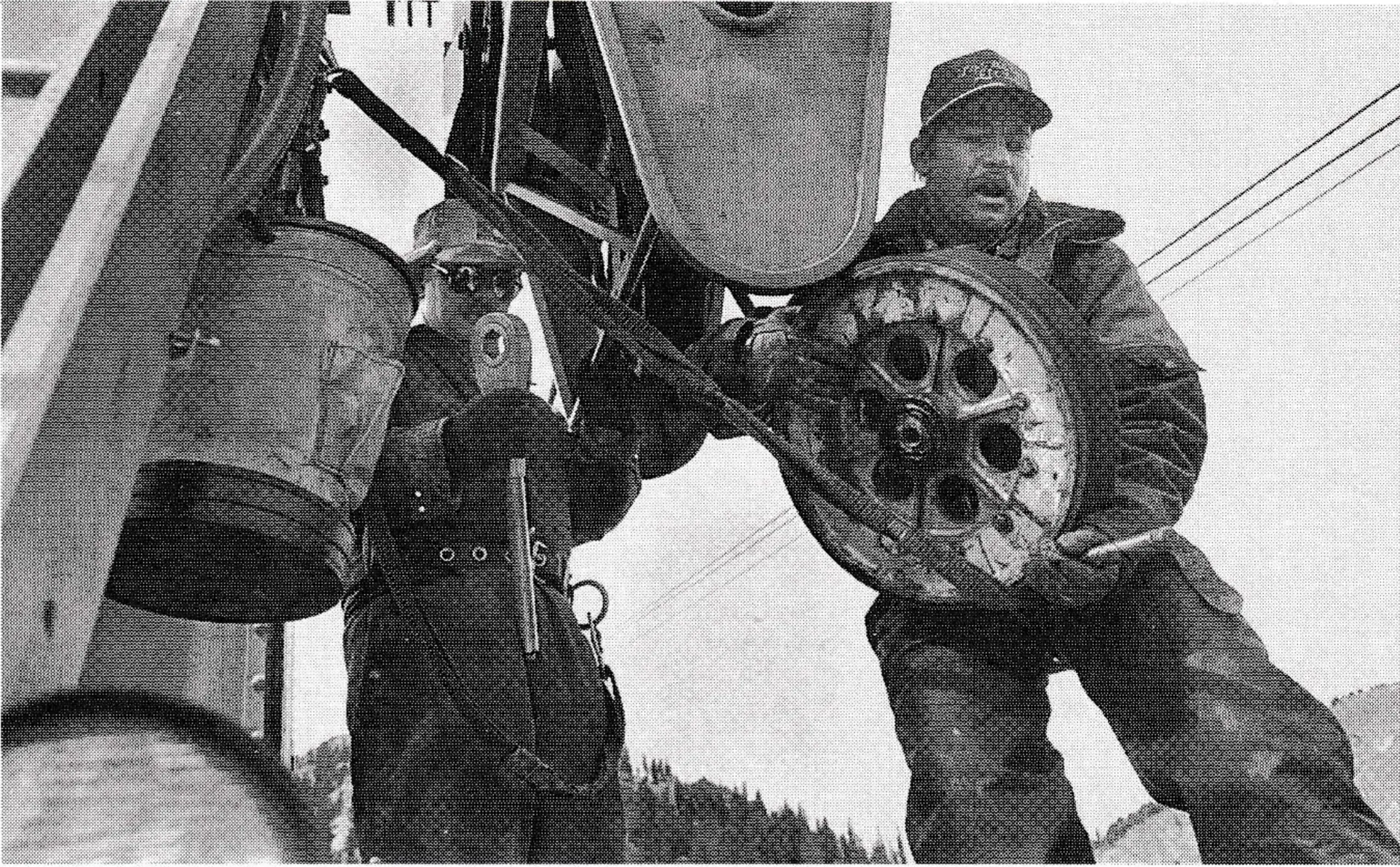
So now, with the 70-ft. cut-away sections in our hands, we tensioned them between two cats and proceeded to propel the magnetic sensing head by hand to obtain a clear-cut readout from the whole rope. We then removed the wires one-by-one from the profile layer. We then passed the magnet along the remaining wires of the rope. This operation was repeated, removing one layer of wires at a time, until only the seven-wire core remained. Single wires were wiped clean and each was visually inspected. Results:
- Track #1: At 48’ 9” from the counterweight socket, one broken z-wire was found. This break was well within the area that had been severely scuffed and scored when the tram was first open.
- Track #2: At 43’ 7” from the counterweight socket, one broken z-wire was found. In addition there was a z-wire with a longitudinal fracture along the webb of the z-section. This fracture was about eight inches in length.
- Other than some round wire “nicking” on the under side of the z-shaped wire, which is from .002” – .010” in depth, no other damage was present.
- All present were astonished to see the quantity and the quality of the manufacturer-supplied lubricant in place, still doing its job in good order.
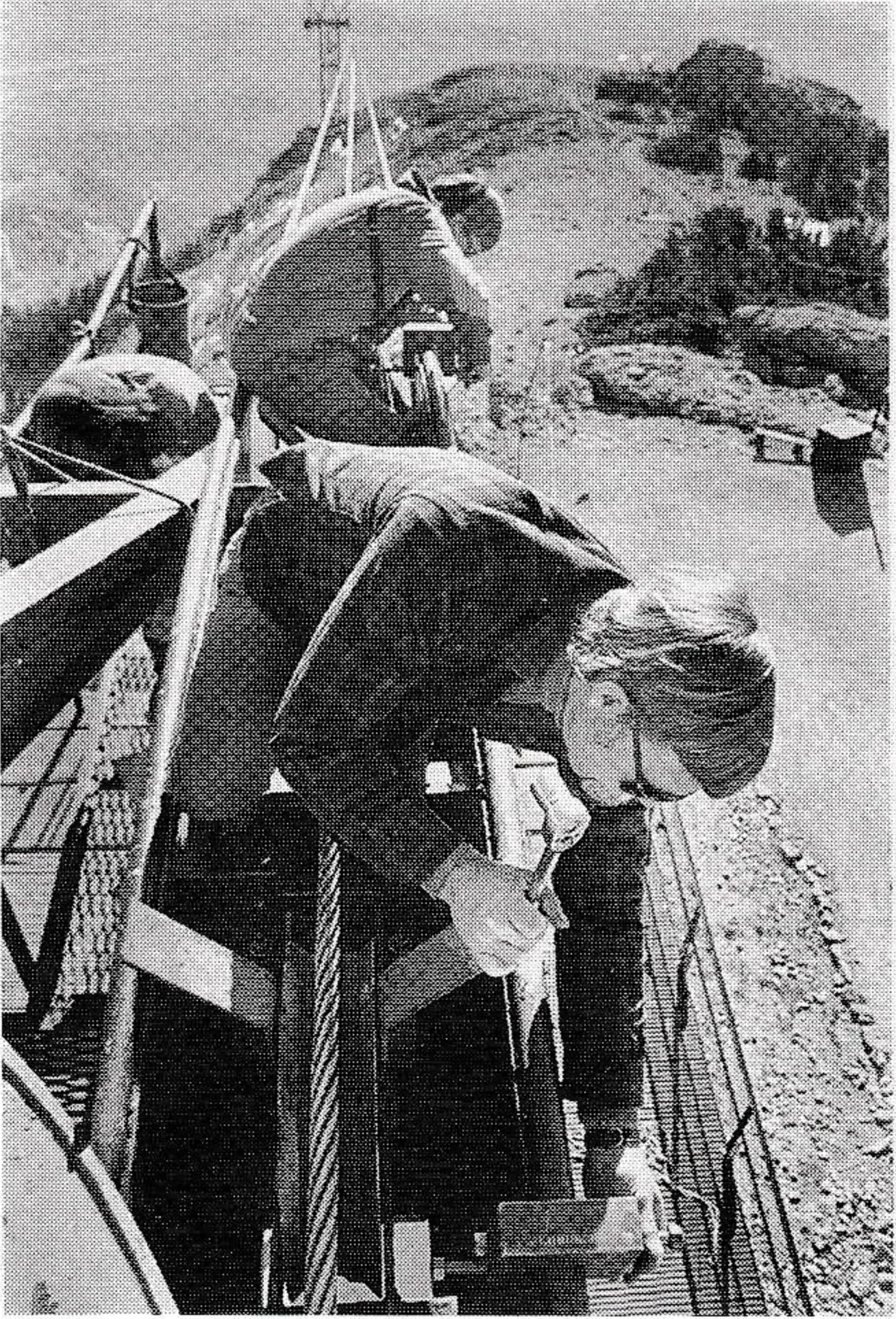
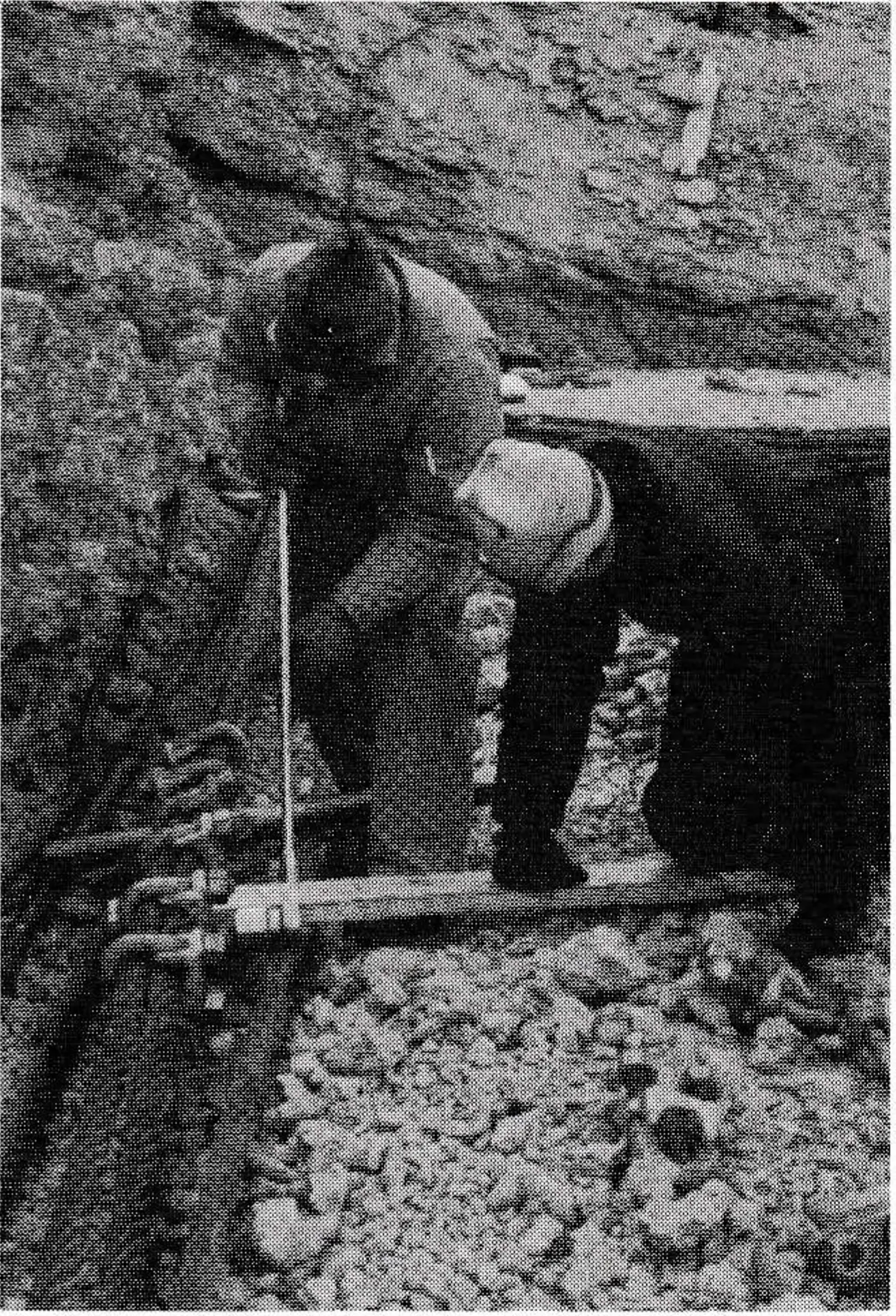
With these most encouraging findings, management made the decision to simply cut tracks #3 & 4 back far enough to accommodate the required re-socketing of the counterweight sockets and to leave the chain saddle areas untouched.
The procedure now will be to closely monitor those areas below and above the tower saddles where reverse bending will occur by reason of relocation of the bends. We truly hope that this high-quality rope will successfully withstand this additional abuse. Only time will tell.
In the meantime, though I most certainly do not encourage relaxation of continued vigilance nor condone complacency, perhaps the results presented here may ease some concerns users of track cables may have had. And I trust you, the reader, like myself, will be a little more comfortable in the presence of these amazing “steel tendons.”
A Personal Tribute
The author would like to congratulate Terry Zakotnik, Joe Bauer, Jim Woods and the whole Jackson Hole mountain maintenance crew for a job well done. Also gratitude to area management for their willingness to authorize the procedure. It was costly, but well worth the effort.
And in this context, our thanks and appreciation to Vail Associates for their “no holds barred” investigation following the gondola accident of 1976. In their determination to learn the truth as to why it happened and to prevent any repetition, untold man-hours were expended, and many, many thousands of dollars dug up to provide some provable facts about track ropes. Roger Lessman (then mountain manager), Fatzer Wire Ropes Ltd., the Swiss Federal Laboratories, Phil Gibson of Tension Member Technologies and many others, including the writer, did dig up some facts. It is sad that we must gain our best knowledge from the failures we endure, and feel doubly fortunate when outfits like Jackson Hole Ski Corp. move in on a potential before the accident happens. – R.W.D.