
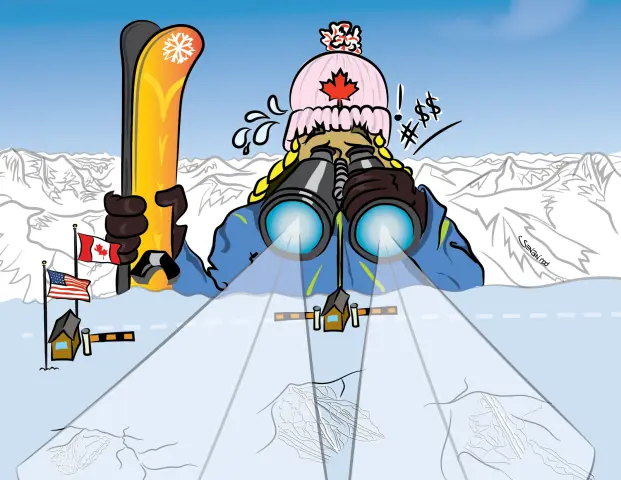

Such trails supposedly give the center a certain amount of status.
What they actually do is scare people off, leaving them with a bad impression of the touring center and of cross-country skiing. Instead of serving the public with trails that can be skied without fear or total physical exhaustion, centers with ambitious plans are giving them trails designed to test an expert skiers skills to the limit.
The words, “designed by (insert former racer/coach)” may look good in a brochure, but in reality most such trail design efforts prove to be a bust for skiers. Former coaches look at trail design from a competition point of view. They try to create challenging courses that will win the accolades of their racing compatriots. These course designers have failed to realize that 90 percent of the skiers visiting most touring centers are beginner or intermediate skiers. With cross-country accidents on the rise and the growing concerns over liability, it’s fool-hardy to put people in over their heads the moment they step on a trail system.
I hear complaints about difficult trails with fast corners and steep downhills, from “average” tourers, the people who pay most touring center’s bills. I was surprised recently, however, when I heard a veteran racer and coach complain about difficult trail systems laid out by a former national team coach. He said most trails with designer reputations were best suited for mountain goats on the uphill sections and for luge drivers on the downhill sections. He further commented that skiers may think hard is good, but if a trail is too hard it’s of no use to anyone.
There is a misconception among skiers and touring center operators that the bigger the name of the trail designer the better the trail. To my knowledge, there are no certified trail design experts in the United States and judging from the efforts of those who call themselves experts, they should be spending more time talking with average tourers before they design their trails.

A good cross-country ski trail should flow with the natural terrain. If terrain is too vertical, grading and cutting may be necessary to make it more rolling and less choppy.
Trails should take advantage of the scenic aspects of the region surrounding the touring center. The ski touring experience should not be a fast roller coaster ride through the woods, but a leisurely trip that takes the skier along a scenic route.
Care should be given to providing a variety of trail experiences. Most trails should be of the “highway” type: wide, well-marked and well-maintained. The second type of trail might be a narrow and well-marked, yet unmaintained and natural. This type appeals to the traditionalist and is skied-in by tourers rather than tracked by machinery. The third, and least important trail type, is the advanced or expert run. If you have an advanced trail or want to put one in, I’d suggest giving it an expert rating, but making it well within the ability level of most intermediate skiers.
Touring trails pay the rent and they should be designed for tourers not racers. Keep trails simple for profit and for safety.