


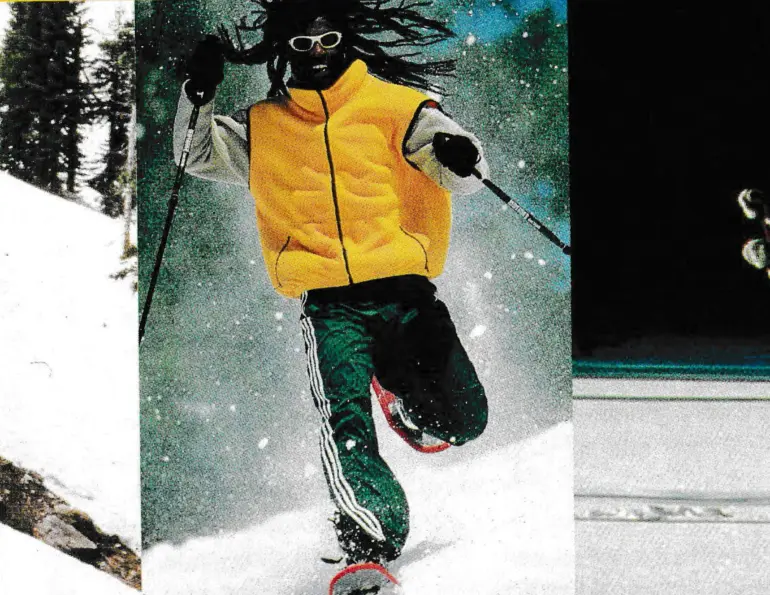
Guess what? Not everyone wants to go downhill skiing or snowboarding in the winter and smart ski resorts are expanding the options for such customers. They’re realizing that today’s consumers—including aging baby boomers—want to try all sorts of activities, especially fitness-oriented sports like snowshoeing and cross-country skiing that have a relatively low risk factor.
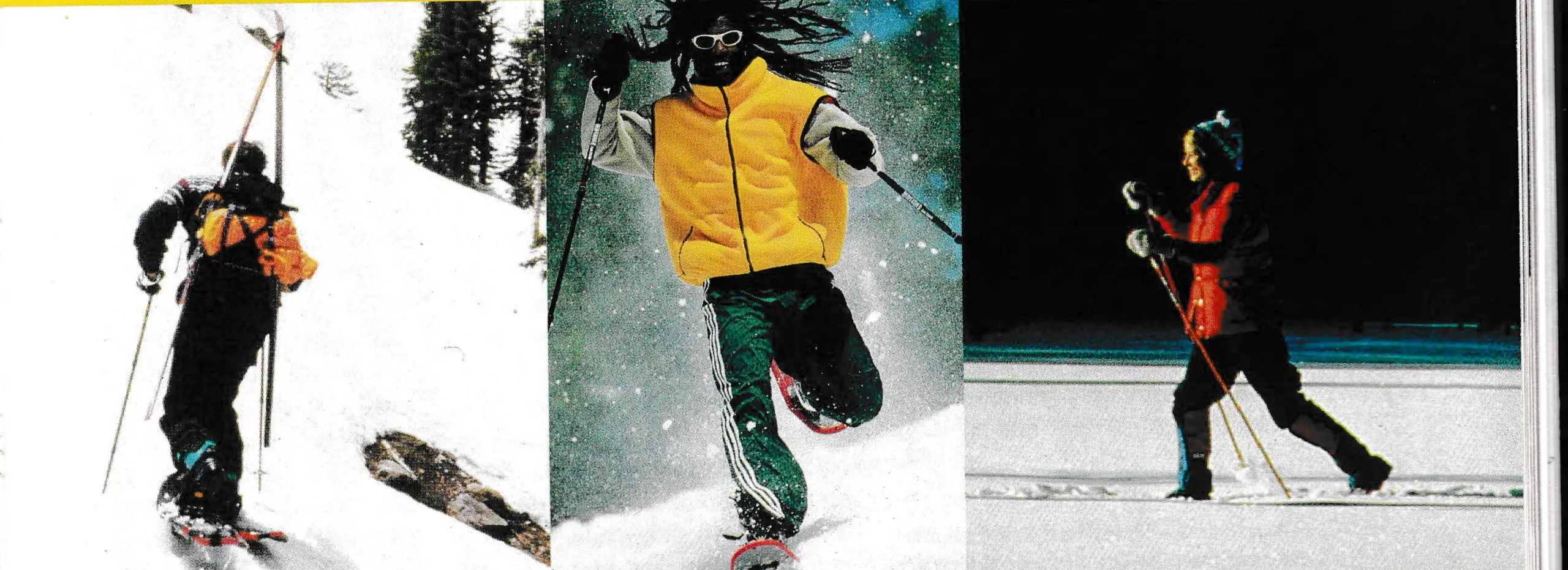
Photos courtesy of (l-r): Atlas Snowshoe Co., Redfeather Snowshoes and Trak
The trend to diversify into different activities is evident at Stratton, Vt., where the new Summit Adventure Center is turning into a new profit center for the resort. The site offers telemark gear, snowshoes and skiboards for rental whether someone’s looking for a one-hour try or an entire day of activity. This winter, the tiny mountaintop shack—strategically located next to a cappucino café—sold out of its snowshoe tours.
Smaller Nordic centers that once offered only cross-country are also reaching out to attract more participants. The Viking Nordic Center in Londonderry, Vt., which recently added the “Nordic” to reflect a broadened outlook, has seen snowshoeing increase its business.
“We began to charge $12.50 for a trail fee in addition to the $12 rental fee,” says manager Malcolm McNair, who added that snowshoeing has brought more people to the area. “We have trails so people can ski and snowshoe alongside each other,” he says, adding that it works well with groups of people who may have a member who doesn’t want to ski but is willing to try snowshoeing.
Equipment manufacturers are also taking note of the trend. “It’s bringing more people out in the winter,” says Gary Fleming, Salomon’s Nordic product manager. “Many people are more comfortable starting off with snowshoeing.”
“Anytime we can keep them interested in being outside, we’re all going to benefit,” agrees Steve Kvinlaug, Alpina’s vice president of sales.
With snowshoe units rivaling XC gear units—SIA estimates 170,000 to 200,000 pairs of snowshoes sold in winter 1996-97, compared to 233,000 pairs of XC skis—it’s easy to see why many resorts are anxious to add snowshoeing activities to their mix. The NSGA estimated one million snowshoers in 1996, compared to 640,000 in 1995. “Snowshoeing is experiencing tremendous growth because of heightened emphasis on physical fitness and family-oriented winter activities,” says Ed Kiniry, president of Tubbs Snowshoes.
Snowshoeing’s boom has also inspired snowshoe companies to work with ski resorts and touring centers to develop snowshoe trail systems and activities to ensure the category’s continued success. This growth has also spurred development of all sorts of gear for the sport, including snowshoe boots from Tecnica and Salomon, as well as K2’s Clicker Traverse that features a step-in binding and fits its snowboard boots.
Unlike alpine ski equipment, most cross-country ski manufacturers do not make specific gear for rental because the demand is too varied. Instead, companies will make recommendations about what to buy although most of their line is available for rental.
Similarly, snowshoe makers do not make snowshoes specifically for rental, but offer a range of models for all types of snowshoeing from active running gear to backcountry/climbing products to basic walking or touring shoes. If a resort is just starting out offering snowshoes for rental, manufacturers recommend choosing a lightweight, aluminum frame snowshoe in a one-size-fits-all configuration with the goal of carrying as few SKUs as possible.
Snowshoes
Atlas
Atlas, one of the category leaders, offers 16 models of snowshoes ranging from high-end backcountry gear to products for hiking and recreational snowshoeing. Atlas is committed to rental and offers a large variety of merchandising aids and signage, including a “Rentals Here” banner to help customers with rental programs and events, and the “Atlas Snowshoeing Handbook,” an in-depth guide to the sport, with 36 pages of diagrams and instructions on everything from how to get started to proper technique. The company also provides personnel to help resorts set up snowshoeing programs or stage events.
The Back-Country series, designed to withstand the demands of the backcountry, features two popular models that Atlas recommends for rental: the 1033 and the lighter weight, smaller 1022. Also check out the Dual Trac (weighs under three pounds) designed for the fitness-minded hiker. The Summit series is for more serious backcountry use and features the new Summit 33BD, which has been designed to allow the Black Diamond Sabertooth crampon to attach to it for extreme snowshoe pursuits. The hiking and recreational models feature a one-piece aluminum frame and decking of one-piece Nytex (strong, abrasion/cold resistant material). All models also have a patented dual cleat system that has a second cleat under the heel to stabilize the snowshoe on descents and traverses. The new Peak Series features the Peak 25, which has a quick-release harness with two buckles and a contoured footbed.
Redfeather
Redfeather provides snowshoe rental gear for the season at no cost if the resort stocks its retail shop exclusively with Redfeather. Company representatives will work closely with resorts to help set up a rental area and programs such as organized hikes, a children’s obstacle course or snowshoe play area. In addition, Redfeather offers training for personnel as well as a selection of signs, flags, banners, etc. Also available is Redfeather’s video: “Snowshoe 101.”
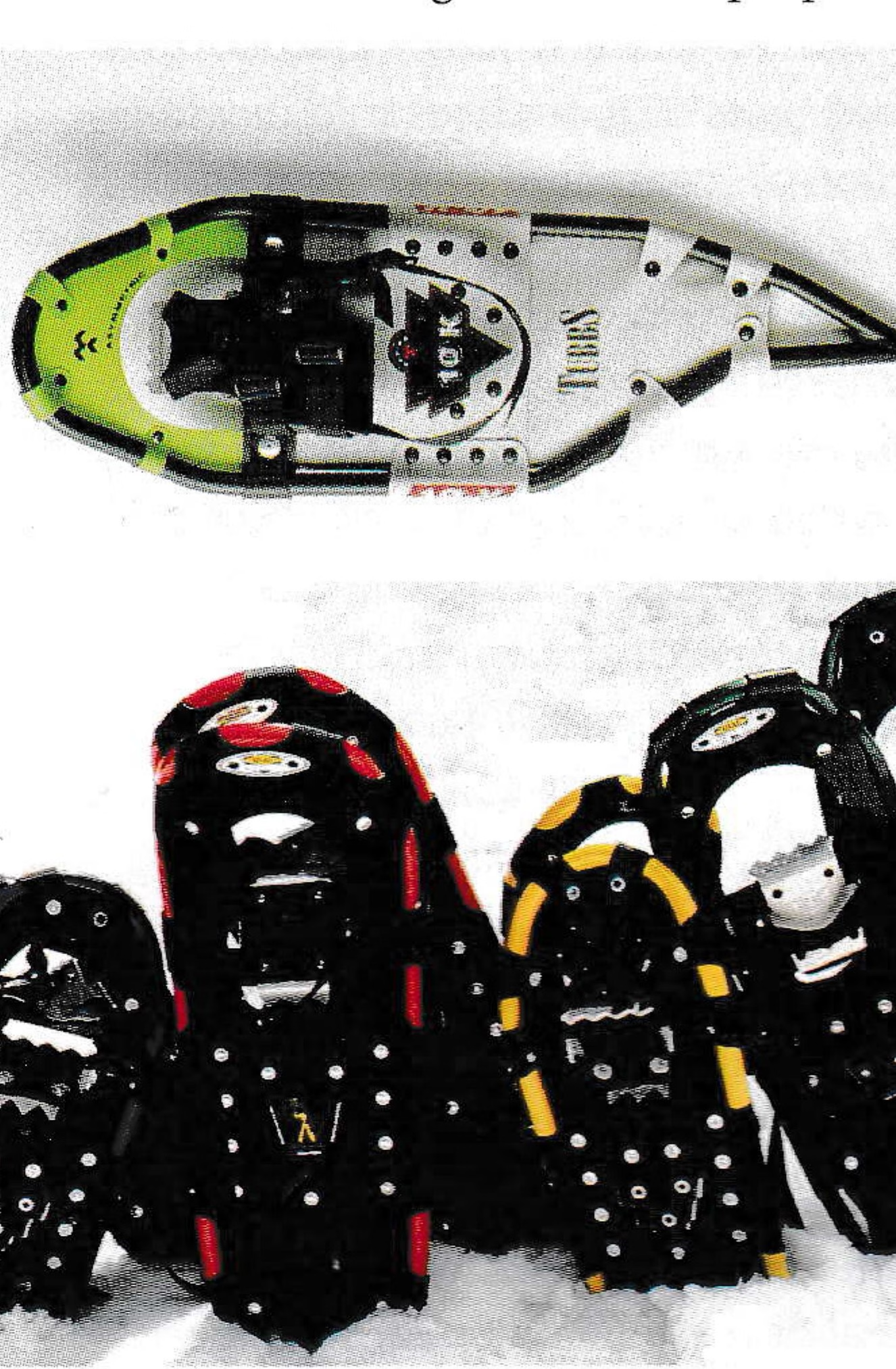
Redfeather offers 11 snowshoe models including one children’s shoe. The new backcountry Wilderness series features three models with Epic ratchet-buckle bindings to fit snowboard and backcountry boots. The Leadville high-tech series includes the original Redtail model for fitness walking or running and the Blackhawk for trailblazing in the backcountry. In the less-expensive Sport series, the Hawk features the Sport-Trak binding designed to be easy to get in and out of and the children’s Sparrowhawk for kids under 80 pounds.
Sherpa
Sherpa has nine models of snowshoes including one rental-specific shoe. The Sherpa Rental Snowshoe, with an aluminum frame and polyurethane-coated nylon deck, features the Surefit Binding which has flexible, large-lobed fingers with tough nylon webbing designed to distribute pressure evenly and eliminate pressure points. It also has Sherpa’s Trackrite self-aligning system that adjusts to the individual stance and tracks straight to allow for a natural striding motion. Dealer cost is $143, less 15 to 20 percent depending on quantity.
Tubbs
As the country’s oldest and largest snowshoe manufacturer, Tubbs offers 21 models covering fitness/running, recreation/sport and hiking/backpacking. Tubbs has created a number of Tubbs Snowshoe Centers at ski resorts and works with the American Hiking Society to stage activities to attract new participants. Its rental program features a seven percent discount off wholesale with one-year terms and a six-pair minimum order. Warranty is one year. All Tubbs snowshoe dealers with a rental program receive a free Tubbs Snowshoe Rental Center banner.
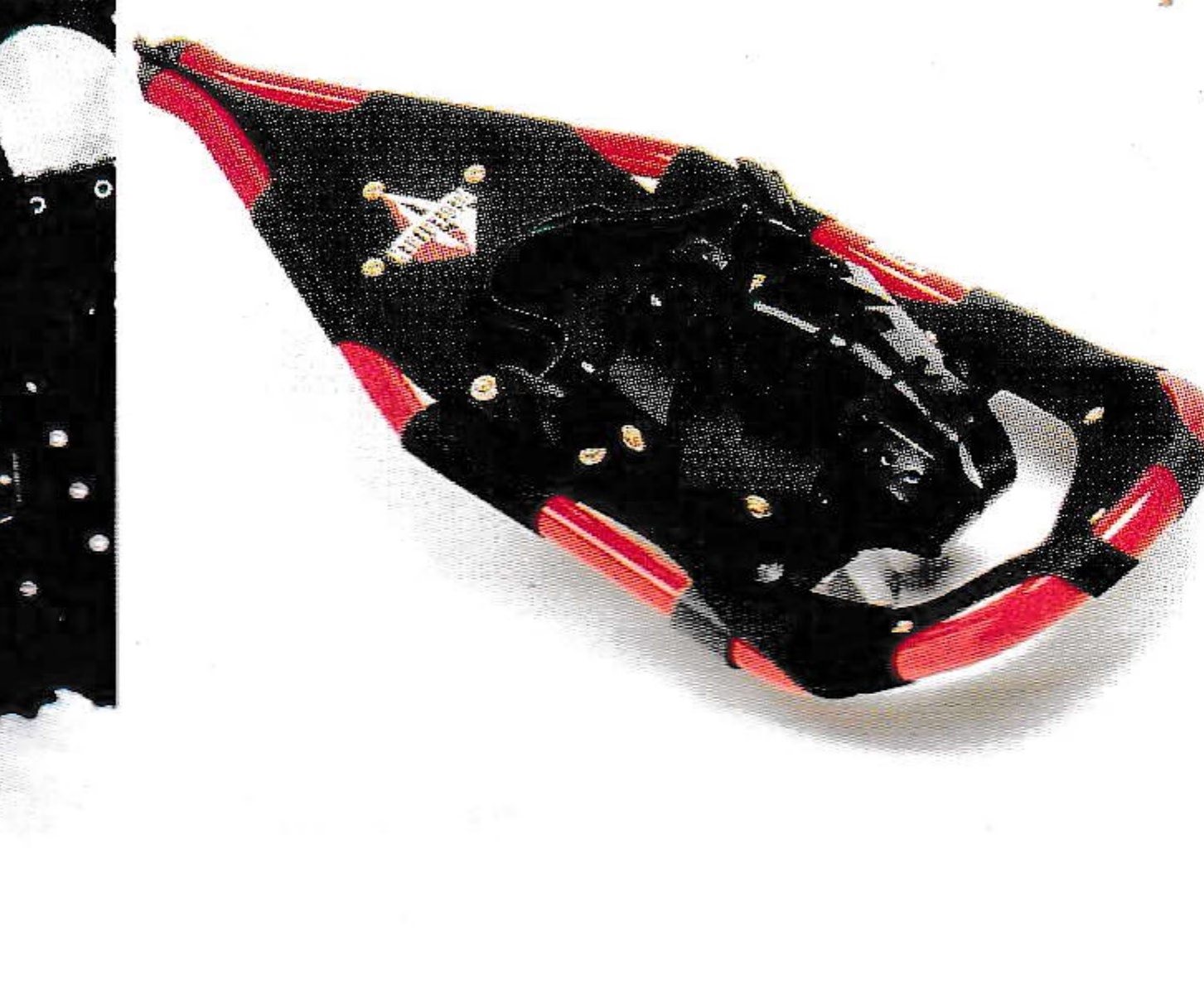
Tubbs recommends its Expedition, Couloir and Altitude series for rental. The top-end Expedition series, for mountaineering and backpacking use, features the RCS binding system (Rigid Control System), which has a fully-rotating toe cord to enable toe-in traction on steep climbs while reducing fatigue and discomfort due to snow build-up. The new Couloir series, for lightweight hiking and backpacking, has four models (including one specifically for women) featuring a round tail design to improve weight distribution for better stability and balance in adverse conditions. The Altitude series, for less-aggressive snowshoeing, accommodates a broad range of hiking and snowboard boot styles.
Yuba
Yuba offers an entry-level line of snowshoes called Borderline by Yuba, designed for packed or broken trail outings. The series includes two sizes for adults and the Rocky for children. The new Borderline 822 is a smaller shoe. For more performance-oriented snowshoeing, the new Summit series offers ratcheted buckles and an injection-molded adjustable binding. The Summit models also feature a new forefoot crampon and heel lift, designed to increase traction and minimize leg stress on climbs.
Cross Country
Alpina
Alpina, one of the largest suppliers of cross-country boots, also offers skis, poles and Rottefella NNN and 75-mm bindings. New for next season is a video, “Ready, Set, Go!,” to introduce first-time skiers to the basics of cross-country skiing. Alpina suggests showing the video while newcomers are in the touring center getting ready to go out and then follow-up by selling them a copy to take home. The video ($5 wholesale) covers everything from how to dress to proper skiing technique.
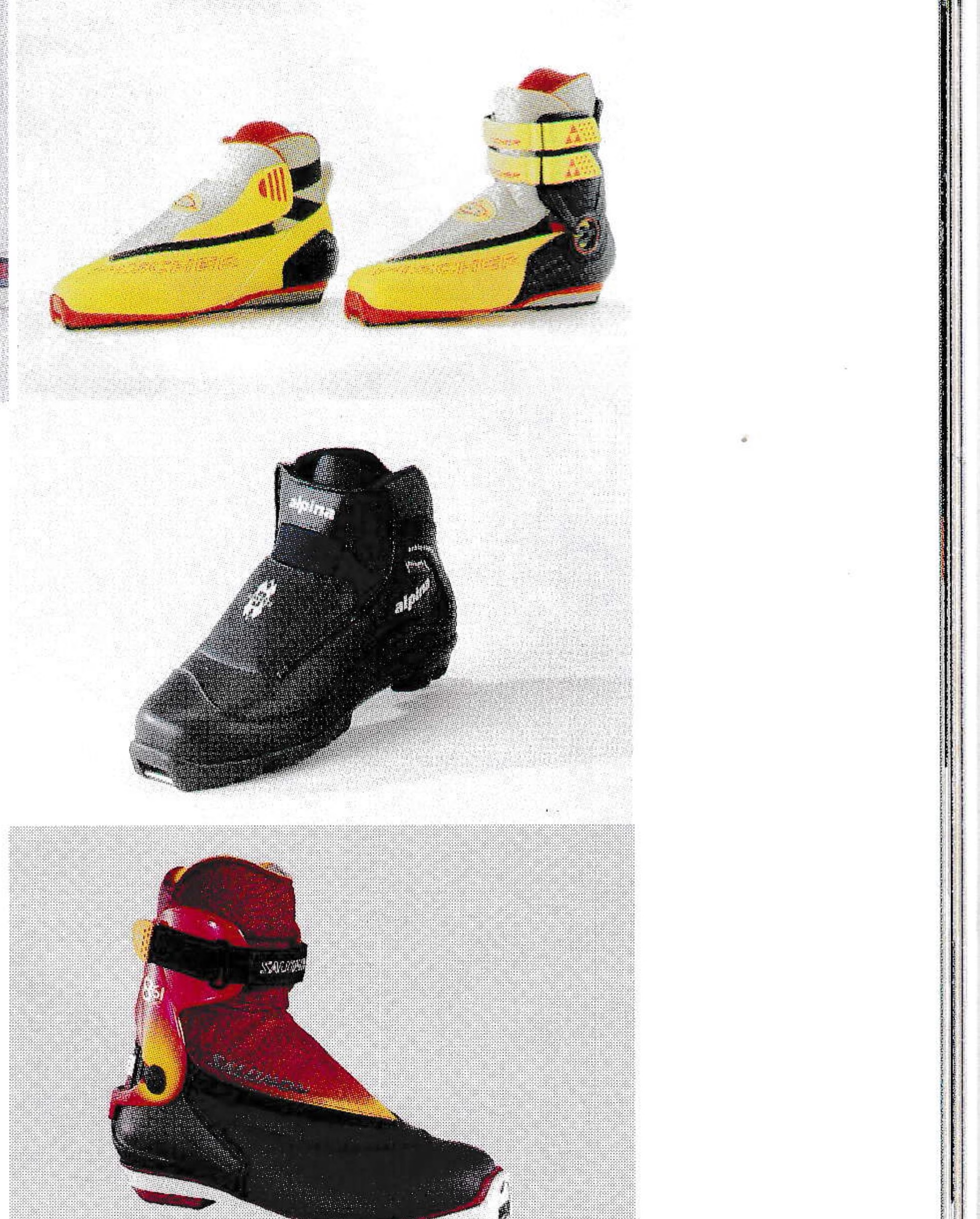
Alpina offers 37 different models of cross-country boots covering racing, telemark, performance and touring. Also available is a full range of skis, bindings and poles. For rental, Alpina recommends the NNN 108 with Thinsulate lining and the new NNN III touring sole. It features a speed lacing design and a tongue cover with a Velcro closure to keep moisture and snow out. The over-the-ankle design has extra support and durability for more control. In skis, Alpina recommends the Access (65-55-60 mm), a short and wide ski made for easy cruising available in sizes covering children to adults. Also, the Renegade (68-60-65 mm) for more aggressive off-track exploring. Both are waxable skis with edges and have ABS tops and sidewalls for greater durability.
Atomic
Atomic recently began distribution of Meindl Nordic boots so it could offer full packages of XC gear. The company has a large variety of skis from metal-edged to race/performance available for rental. The rental terms are 25 percent off wholesale and April 1999 dating.
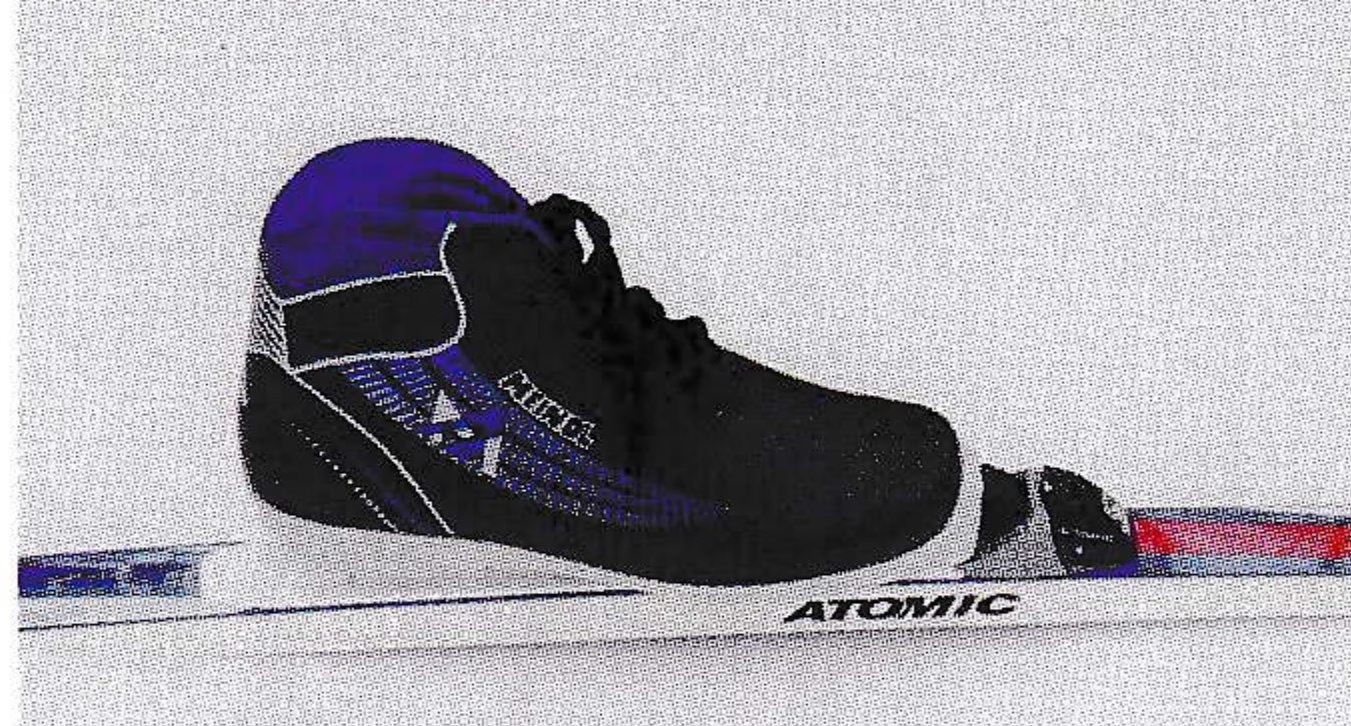
In skis, Atomic recommends: the Tour 52, a classic touring model for less trained beginners; the Trekker, a lighter weight, high-performance, all-around touring model; the Cross Cap, a sport touring model for more advanced skiers; and the Vasa Skate, a race/skate ski for aerobic-minded skiers. For 1998-99, Atomic will offer three touring and two backcountry boots. The Meindl Zermatt is an over-the-ankle polyurethane model with the SNS Profil binding system. Also noteworthy, the Meindl BC 1, a full-grain leather boot with Gore-Tex, and the Meindl BC 2, without the Gore-Tex. Both fit Salomon’s SNS BC binding.
Erik
Erik Sports offers full packages for cross-country rental purposes. Skis include: the Explorer (66-60-66), a waxless, wide-cut ski in 180 and 197 cm, designed for off-track exploring; the Tracker (50 mm parallel), a waxless ski in 180 to 215 cm lengths designed for recreational in-track skiing and the Tour (60-55-58), in waxless or waxable versions, which features a wider sidecut for on- or off-track. Boots include the Alpha NNN-2 touring boot with a synthetic upper and Thinsulate lining; the Fjord NNN-2 with a synthetic upper and fleece lining; and the Nordic 75-mm with a leather/synthetic upper and velour lining. Also available are fiberglass poles and Rottefella’s NNN models (NNN-BC Auto, NNN-2 Touring Auto, NNN-2 Touring Wide) as well as the Master 75-mm binding.
Fischer
As the world’s largest supplier of cross-country skis, Fischer has a wide range of programs and promotional materials available to assist resorts and retailers interested in rental programs.
For adventurous ski tourers who like tracked and untracked terrain, Fischer recommends the new wider cut, waxless Vista Crown (59-50-54 mm), in 167, 177, 187 cm. For skiers who want a wider ski in a longer length, the waxless Country Crown (60-53-57 mm) is available. Both skis feature Fischer’s air-channel core construction resulting in a strong, lightweight ski. For the fitness minded, the SL Fibre Crown (52-47-50 mm), in 175 to 215 cm, and the SL Control Crown (51-46-50 mm), a mid-length in 167, 177, 187 cm, are available. Both feature power edges for more durability.

Fischer boots are designed to work with Salomon’s SNS system. Although several models are available for rental purposes from racing to touring, Fischer highlights the BC Touring SNS BC sole for backcountry skiing—a leather, over-the-ankle model with a sole that features a no-slip tread for surefooted walking without skis, and the SL Sport boot, a lightweight over-the-ankle model with the AVS (ankle vario support) system featuring a shaped plastic piece to stabilize the ankle joint.
Fischer also pushes its high-performance skate and racing products and, as part of its rental deal, rental outfits are encouraged to buy Performance RCS skis for aerobic or racing in skate or classic versions. Fischer recommends setting up a demo program and offering incentives to encourage skiers to upgrade their equipment. “It’s what people are excited about and where the sales are,” says Peter Ashley, Fischer’s cross-country manager, who says people can’t find gear at their local specialty shops anymore.
Rossignol
Rossignol offers over 60 different cross-country ski products including skis, boots, bindings, poles and snowshoes. The Rossignol Demo Center program is available for touring centers that choose to go exclusive with the brand. The benefits include deeper discounts, extended dating (two-year dating and two-year warranty), a free demo center sign as well as other signage and merchandising aids, a free listing in Rossignol’s consumer brochures and ads, free booth space at consumer ski shows and various co-op advertising incentives. Rossignol will also provide demo center uniforms for bigger purchasers.
Rossignol offers racing, touring, backcountry, telemark and junior skis. For rental, the company recommends: the Carbon Course Skating (45-43-43 mm), a racing ski with a cap construction; the Tempo Classic AR (51-47-49 mm), an in- or out-of-track touring ski in 170 to 190 cm; the Tempo BC AR (59-54-57 mm), an all-around touring model well suited to beginners because of its added stability; the ITS-BC (59-54-57 mm), an in-track model in traditional lengths; and the new X-Tour (51-47-47 mm), a performance, full-cap construction ski with a black, multi-sintered base. In boots, the all-around Combi R, an over-the-ankle style, features a bi-density sole and a soft, yet supportive upper cuff. It has an NNN II sole and a quick-lace system. The X1 rental is a waterproof, price-point boot for the NNN II system. Also available are Rooster aluminum poles and plastic snowshoes for adults and children.
Salomon
Salomon is one of the biggest Nordic suppliers, claiming that 60 percent of the binding market uses its SNS step-in system. Salomon offers three rental-specific boot models that are almost identical to the in-line products but come with more sizing options. The boots are also treated with Durafresh, reported to make the insole maintain a better odor. There are sizing tags so the shop can identify products easier and the boots are made of a tougher nylon with more reinforcement in key wear-out zones.
Specific models include: the 861, a combination skating/racing shoe that features a removable cuff; the 661, designed for all-around touring and featuring a heat-molded internal counter for stability, support and comfort; and the 361, also for touring, a less expensive over-the-ankle model. Salomon offers the SNS Profil Automatic binding system for adults and juniors and has incentive programs to encourage touring centers to move up to systems, especially in the junior market. “When kids get on 75-mm, they fall on their rear ends and don’t have a good time, and we lose them until they’re 30,” explains Fleming. For junior gear, Salomon offers two-year terms at a one-year price.
Trak/Karhu
Trak, Inc., offers a full selection of Nordic equipment, including Karhu and Trak skis, Trak boots and Rottefella NNN system and 75-mm bindings. Terms are one year with a minimum $1,500 order. All of the adult ski and boot models are available for demo purposes at 15 percent off the wholesale price with a maximum of 10 pairs per store and 60-day terms.
Trak offers 30 models of Trak and Karhu skis including six specific models for children. For backcountry, Karhu has three telemark skis and six backcountry skis. The Catamount (85-70-80 mm) has a moderate sidecut with a soft flex for skiers who want to get into telemarking. Among the more popular Trak models for rental are the waxless Nova (59-52-57 mm) featuring a moderate width that fits in prepared track but is wide enough to handle ungroomed terrain and the waxless Rendezvous (65-55-60 mm), geared to entry-level skiers looking for a short, wide design with easy turning capabilities. The Bushwacker (85-70-80 mm), one of the first short, wide skis with go-anywhere versatility, features new graphics for next season. There are also three children’s skis available, all shipped premounted with bindings.
Trak has a wide selection of touring, backcountry and telemark boots available. Recommended backcountry models are: the Express, a leather telemark boot with Trak’s exclusive Vibram Outback sole; the Access, a 75-mm backcountry touring boot with a waterproof upper and stretch spandex collar; the Cyber, a leather NNN BC boot recommended for use with the short/wide skis; and the Contour, a price-point NNN BC boot. Touring boots include: the Vista, a new NNN II model with a waterproof upper and stretch spandex collar and the Ascent, an entry-level, price-point touring boot for NNN II bindings.
Atlas Snowshoe Center at Vail
When Atlas got into the snowshoe business a few years ago, the company’s management didn’t realize that eventually they’d become an integral part of the ski resort business.
“We want to bring this activity to the masses,” says Perry Klebahn, president of Atlas Snowshoe Co., who adds that the company is willing to “devote some money to get more people to snowshoe.”
To that end, Atlas approached Vail three years ago to develop a snowshoe-specific area at the resort. For Vail, it was an experimental endeavor and, although the resort devoted time and space to the project, they didn’t spend much money on advertising or marketing the concept.
Even so, things turned out better than expected. In winter 1996-97, 6,000 vacationers tried snowshoeing, paying $12 for a snowshoe trail pass and $13 for a full-day rental. Figures have not been compiled for winter 1997-98, but huge increases are expected—especially if the lesson business is any indication. In private lessons (at $415 for a whole day), snowshoeing now accounts for 55 percent and cross country is 45 percent of the traffic going through Vail’s Golden Peak site.
“That’s a huge shift,” says Jean Naumann, manager of Vail’s cross-country department. “Cross-country is really flat. Growth is in snowshoeing and telemarking.”
This past season, Atlas helped the Nordic center’s marketing efforts by providing co-op dollars to produce a snowshoe brochure and distribute it through shops Atlas supplies in non-resort areas. Posters publicizing events and signage also helped to get the word out.
Although Vail has offered snowshoeing for years, the wooden snowshoes it had for rent, along with the lack of snowshoe-specific trails, didn’t do much to interest people in trying the activity. Now there’s a special trail map that outlines 35 kilometers of groomed and backcountry trails, with details on distance and difficulty. Guided tours and special events also generate interest, promoting snowshoeing as scenic, safe and fun.
“Our snowshoe business is now as big as our cross-country business,” says Naumann. “One of the reasons this is such a successful program is because snowshoeing is such a low-skill sport.”
Since Atlas became involved, the Beaver Creek rental fleet has increased from 35 pairs to 85 pairs. And, on a busy day, they’ll do about 100 rentals with customers waiting for returned snowshoes. The snowshoe-specific activities have helped business as well: moonlight tours and all-day gourmet lunch tours ($73) are popular and 1,000 people signed up for the Snowshoe Shuffle, a race held to benefit breast cancer awareness.
Atlas has partnered with several other resorts since joining the Vail/Beaver Creek operation, including Sun Valley, Stratton, Tremblant, Whistler/Blackcomb and Grouse. “One to three percent of their skier days could be snowshoe days in the first two to three years,” predicts Klebahn. —I.D.

