


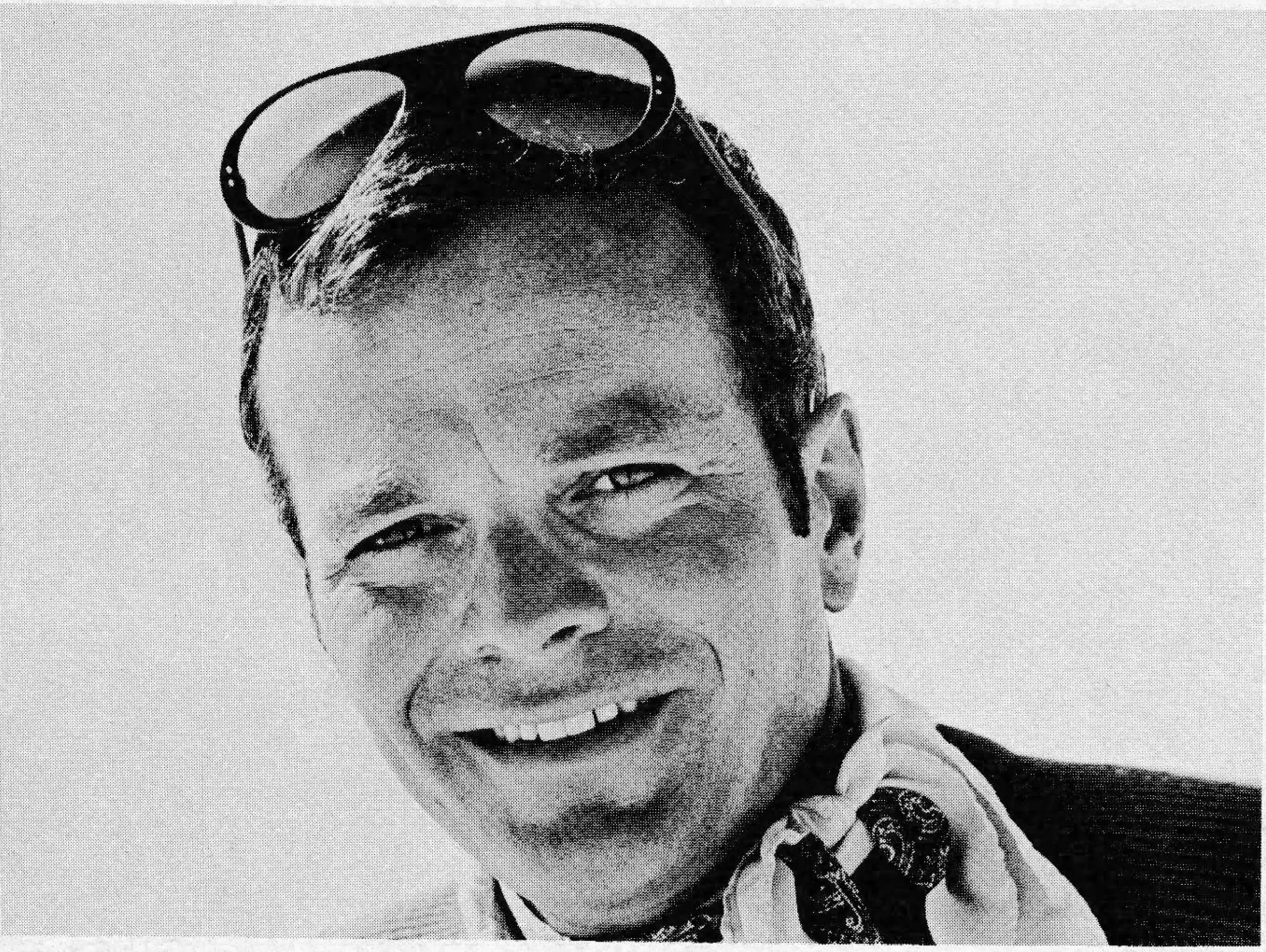
Jerry Muth is a teacher. His classroom is 7,800 Colorado acres, his students are any age and number in the hundreds of thousands. Graduates? Plenty, and they keep coming back for more. The 34-year-old director of Vail’s ski school has in just four years—the first two under Roger Staub—sparked a learn-to-ski program that’s the envy of most and one of the biggest money-makers of all.
This year the Muth method takes on a different look—GLM. “There are many types of GLM, and they all work to one degree or another,” says Muth. On the eve of embarking on a new form of graduated ski length instruction, Vail will be basing its system on the proposed “international technique,” set up in May by representatives of France, Germany, Italy, Switzerland and the U.S.
Vail’s ski school put one toe into GLM waters last year, offering its own version of GLM to anyone who requested it.
“We deliberately kept it low key to let GLM sell itself,” says Muth. “I thought we would have trouble selling the instructors, but that wasn’t so. They say that it was quicker, easier and more fun to learn this way. And many customers switched to GLM during the ski weeks because they saw these classes moving faster.”
This year, however, the international system will be used throughout the ski school for children and adults, on short or long skis. Students start with the snowplow for gliding and breaking and move quickly to basic christies (the so-called Schwups turns introduced by Stefan Kruchenhauser three years ago), and from there to parallel christies. Muth feels that this approach can best be taught starting with 150 cm. skis and moving up to 170, 180, 190 cm and longer skis.
“The little lady from Houston who is 42 years old and skis two weeks a year is better off remaining on 170 cm skis,” he says.
To accommodate the expected business, Vail Associates bought 250 pairs of K2 rental skis, specially designed for the area’s GLM program. The big question is, will this be enough? For while Muth doesn’t see GLM attracting more people to ski schools, he is sure that it cuts the drop-out rate. “Skiing just isn’t as discouraging and hard as it used to be,” he says.
Even with his enthusiasm for GLM today, Muth admits that he was a reluctant convert. “The system was held back 10 years because it was oversold with ridiculous claims about learning to ski like an expert in a day, he says. “When people stopped being emotional about it, then it began to catch on.”
Muth, a self-controlled, self-contained businessman, is probably the last man in the state of Colorado to get excited about a new ski technique. His rapid progress in learning to ski and then in the teaching of skiing attests to his cool, analytic approach.
Raised in Phoenix, he didn’t try the sport until he entered the University of Colorado in 1954. He soon became good enough to be hired locally by Eskimo Ski Tours to teach children on weekends. This experience convinced him that he wanted to live in the mountains, so after graduation and two years with the Marines in the Far East, Muth took an instructor’s job at Arapahoe Basin, Colo. He was a fully certified instructor by the end of his first year.
A year later Muth became administrative director of the ski school at Arapahoe, held that job for three years and then moved to Vail as assistant director under Roger Staub. Two years ago, in keeping with skiing’s celebrity trend, Staub moved into a full-time marketing position as director of skiing and Muth became ski school director.
This year Muth is taking on an additional administrative task in supervising the four mountain restaurants at Vail. Though he can now devote only half his time to the ski school, he is still responsible for its planning and results. To help, he has two full-time assistants who attend to the day-to-day operations. Bob Gagne handles administrative matters and Horst Abramham oversees teaching and technical details.
“You have to keep people moving along or an organization gets stale,” says Muth. “We try to move good people into the management of the company and keep them around.”
Last summer the two-and-a-half full-time ski school directors planned budgets, personnel policies, promotion, wrote new technical and teaching manuals and worked up a five-year expansion program for the ski school. Muth says, “It’s hard for outsiders to understand how busy we are in the summer, simply because during the crush of winter business there’s no time to work on such heady projects as long-range planning.”
A logical question is why does a self-propelling operation like Vail’s ski school need a five-year plan? One answer is found in the growth over the past four seasons. In 1967-68, more than 29,000 paid $220,000 for ski lessons at Vail. Last season, the number of students had increased to 68,000 and receipts shot up to $710,000. The goal for 1975-76: gross sales of $1,500,000.
Part of this increase is due to the normal growth in Vail’s business, which, measured in lift-ticket sales, is expected to increase 15 per cent in four years. But Muth measures his revenues against this and forecasts an increase in ski school business of 20 per cent.
Along with this, ski school profits, on a percentage basis, are steadily moving ahead of revenues because Vail’s growing class volume has meant increasing economies of scale. But Muth is careful to add that these economies do not come at the expense of his instructors, purportedly the highest paid in the industry.
The ski school staff fluctuates from 90 to 100 during most of the season and expands to 170 during the peak period through the Christmas period. Of these, 60 are “contract instructors,” men and women with exceptional qualifications and experience who have a guaranteed salary and who receive the plum assignments. They make close to $1,000 a month, while a few make as much as $8,000 over the five month season.
The other 40 or so full-time instructors are selected from 200 to 300 applicants who are invited to a four-day tryout clinic early in the season.
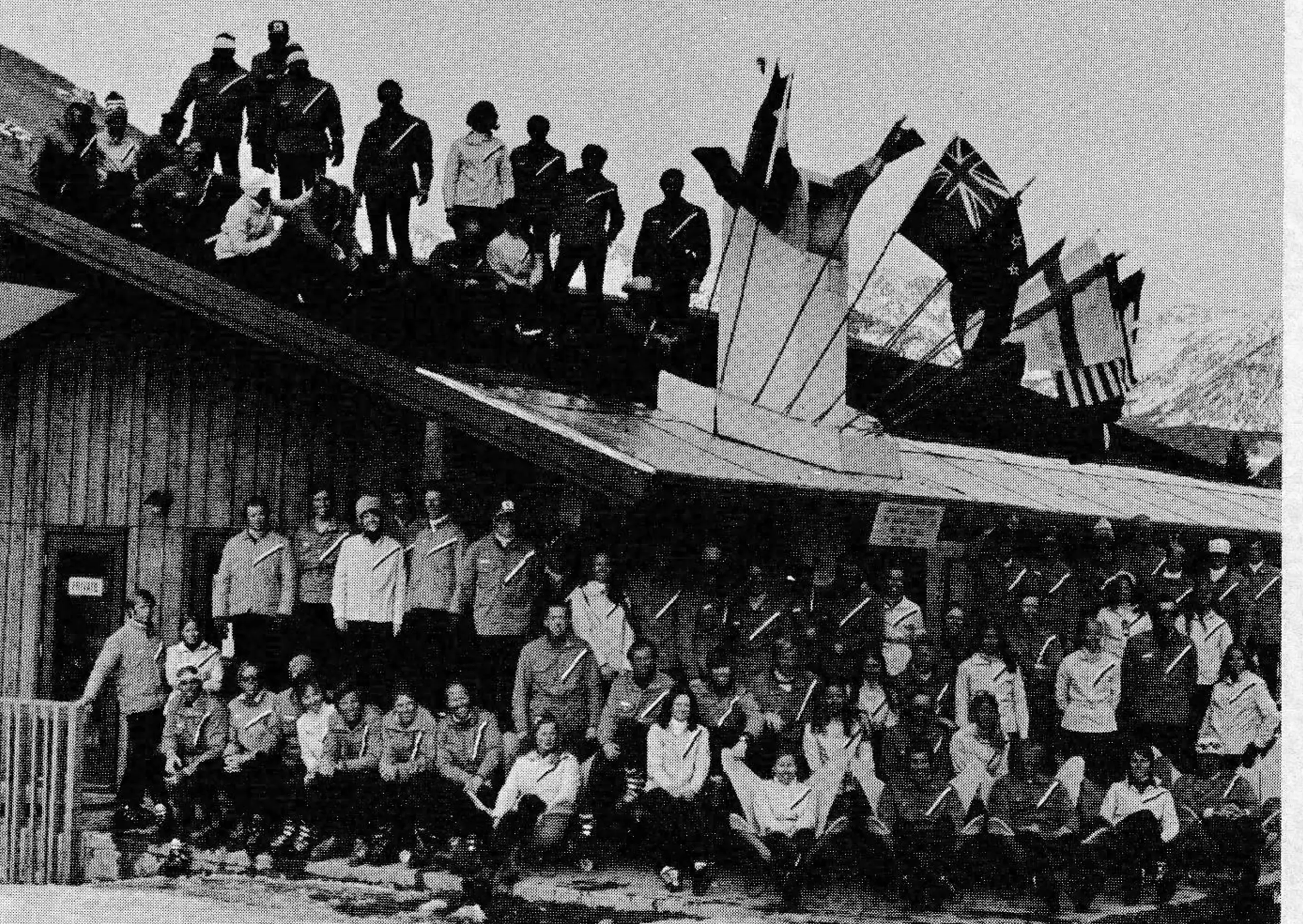
Part-time instructors usually hold jobs in the village until they are needed in the ski school.

The base wage for all instructors is $11 to $30 a day, determined not by seniority as at most ski areas, but by a performance evaluation rating done twice a season. The 10 supervisors in the ski school rate each of the instructors on 22 criteria (including technical knowledge, promptness, private-lesson requests, self-improvement and initiative). After discarding the high and low scores, the ratings are averaged and the salaries set. This system has been in operation for only one year at Vail and Muth is not yet entirely satisfied with it. He feels it may be too subjective and says his instructors are working with him in determining how the scoring should be done.
Aside from the base wage, instructors are paid per lesson ticket: $1 per ticket for contract instructors and 50¢ per ticket for noncontract instructors. For private lessons, most of which go to the contract instructors, the fee is divided in half with a portion of the instructor’s share going into a “bonus pot.” For a single lesson at $15, for instance, the instructor gets $6.50 and $1 goes to the bonus pot. At the end of the season the pot, which amounted to $20,000 last year, is divided among the contract instructors.
Health insurance, of which the corporation pays half the premiums, is also available. A parka, spring jacket and warm-up pants are supplied and sweaters are available at cost, but instructors must supply their own ski pants. Instructors also receive 50 per cent off on meals at the area’s restaurants.
With all these benefits, it seems unlikely that Vail would have problems in keeping its ski instructors. But it does. Vail’s ski school, like most other big ski schools, regards personnel turnover as its biggest headache.
“Being a ski instructor is a great job,” says Muth, “but it’s damn hard work physically being out in the cold, the sun, the wind every day, all winter. It’s fatiguing. I question whether a person can stay with it as a career.”
Housing is also a problem. It’s expensive and scarce. Vail Associates has embarked on a four-year building project to provide apartments for employees, but the apartments are not complete and with the proportion of married instructors on the increase (presently about 25 per cent) the problem is compounded.
Summer work is scarce, but again, the company has plans to lure more summer tourism that should provide more employment. A number of Vail’s ski instructors have college degrees and many are master craftsmen, which would qualify most for some kind of summer employment. Says Muth: “Like most people attracted to ski school or ski patrol work, they are cultural dropouts—independent spirits, adventuresome, not too concerned with security. A lot come for the reasons I did—to seek a nice life in the mountains rather than look for money and security.”
Even with the turnover problem, Vail is in the fortunate position of being known as a prestige place to work. Muth says he receives thousands of applications each year, but he still must take about 30 per cent of his instructors from foreign countries. There is, he says, a serious shortage of U.S.-trained instructors with the experience, discipline and know-how to qualify for Vail. Among the ski schools in this continent turning out top level teachers, Muth lists Aspen, Mt. Snow and Mt. Tremblant.
About 20 per cent of the Vail instructors are women, but Muth notes that there are more good women applicants than he can accept. Customer resentment over women on the staff? “A lot of people resist having a girl teach them,” Muth explains. “She has to spend the first morning of class overcoming prejudice. Sometimes men, knowing their instructor will be a woman, want to change class even before the class begins.”
Even with tough hiring policies, Vail’s instructors train and polish their ski performance all season long, before and after classes. Instructors also rotate each week in order to teach different levels. The better technicians usually stay with the top-level classes, but occasionally Muth will send even racing teachers down to a beginners’ class.
Vail’s class size averaged 6.8 students last year, but Muth wants to get that to an even seven this season. He says classes that start with eight or nine people at the beginning of the week work down to a smaller size through attrition. In part, this results from the ticket sales structure. Last year, ski school tickets ran $9 for a full day, $24 for three days and $42 for six days; this season, depending on the outcome of the Nixon Administration’s price-wage freeze, tickets are $10 for a full day, $25 for three days and $35 for five days.
Vail’s biggest ticket bargain, according to Muth, is the all-day lesson rate at $90 for any number of people. more and more families and groups buy an instructor to use simultaneously or to divide between morning and afternoon sessions.
During 1970-71, ski school revenue—about 18 per cent of Vail’s mountain operation—broke down as follows: 45 per cent from class lessons, 45 per cent from private lessons and 10 per cent from “other” (including ski rental, races and ski touring). With GLM growing, races on two days of the week, free-style skiing contests and an increase in ski touring, Muth feels the “other” category may grow into a more significant source of income. He sees ski touring, for instance, growing with little outside help. With two full-time and three part-time instructors last year, he plans to hire even more instructors this season, get a rental operation going next year and eventually have huts on the mountain for overnight touring trips.
It’s all right there in black and white in Muth’s five-year plan, along with such other goals as additional nurseries, videotape teaching aids, a training film, a reduction in the already low accident rate by making instructors more alert to accident situations and, most important, more of the finest ski lessons available anywhere.
“We plan to have the best instructor corps in the world,” Muth says, “to take the best care of our customers.”