


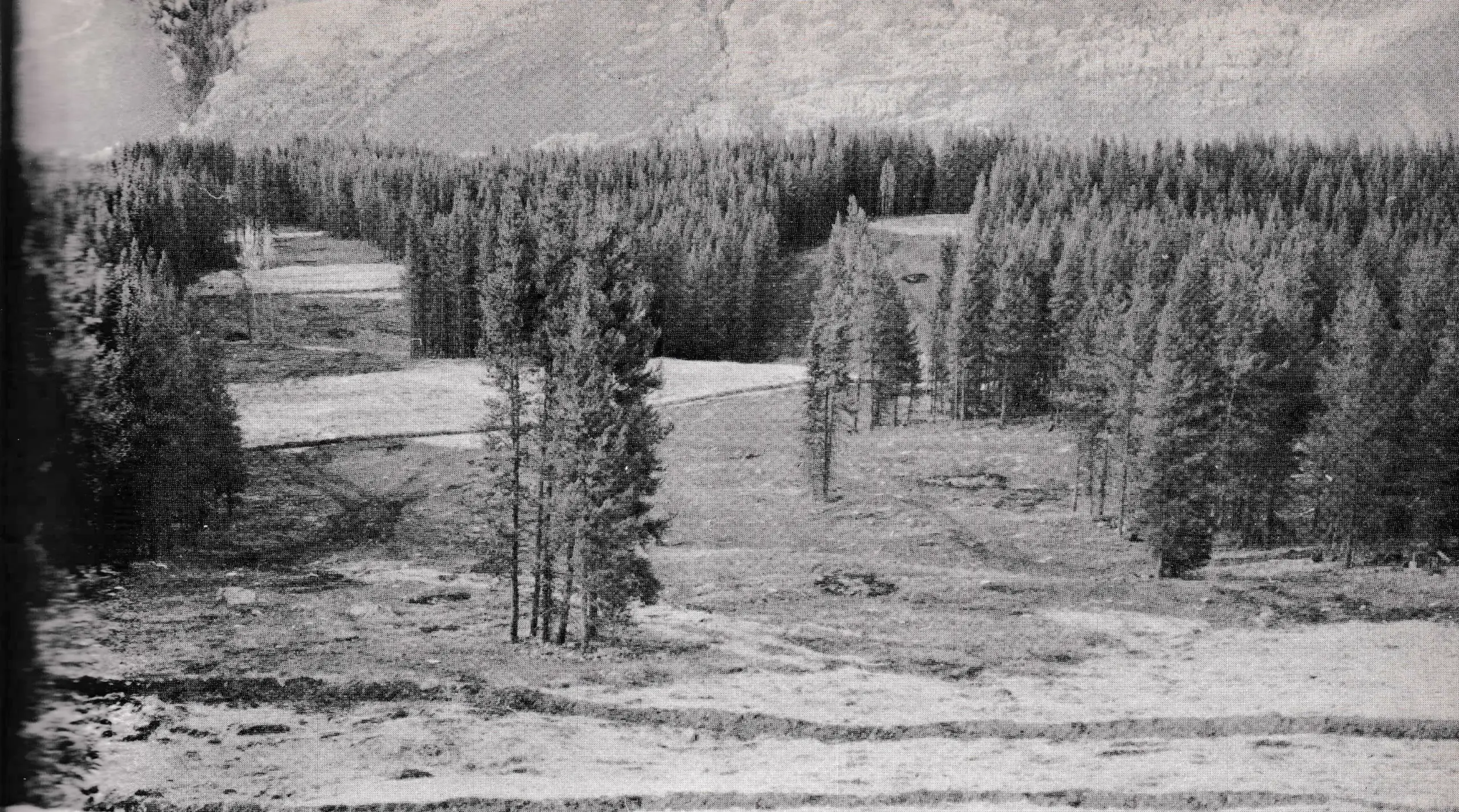
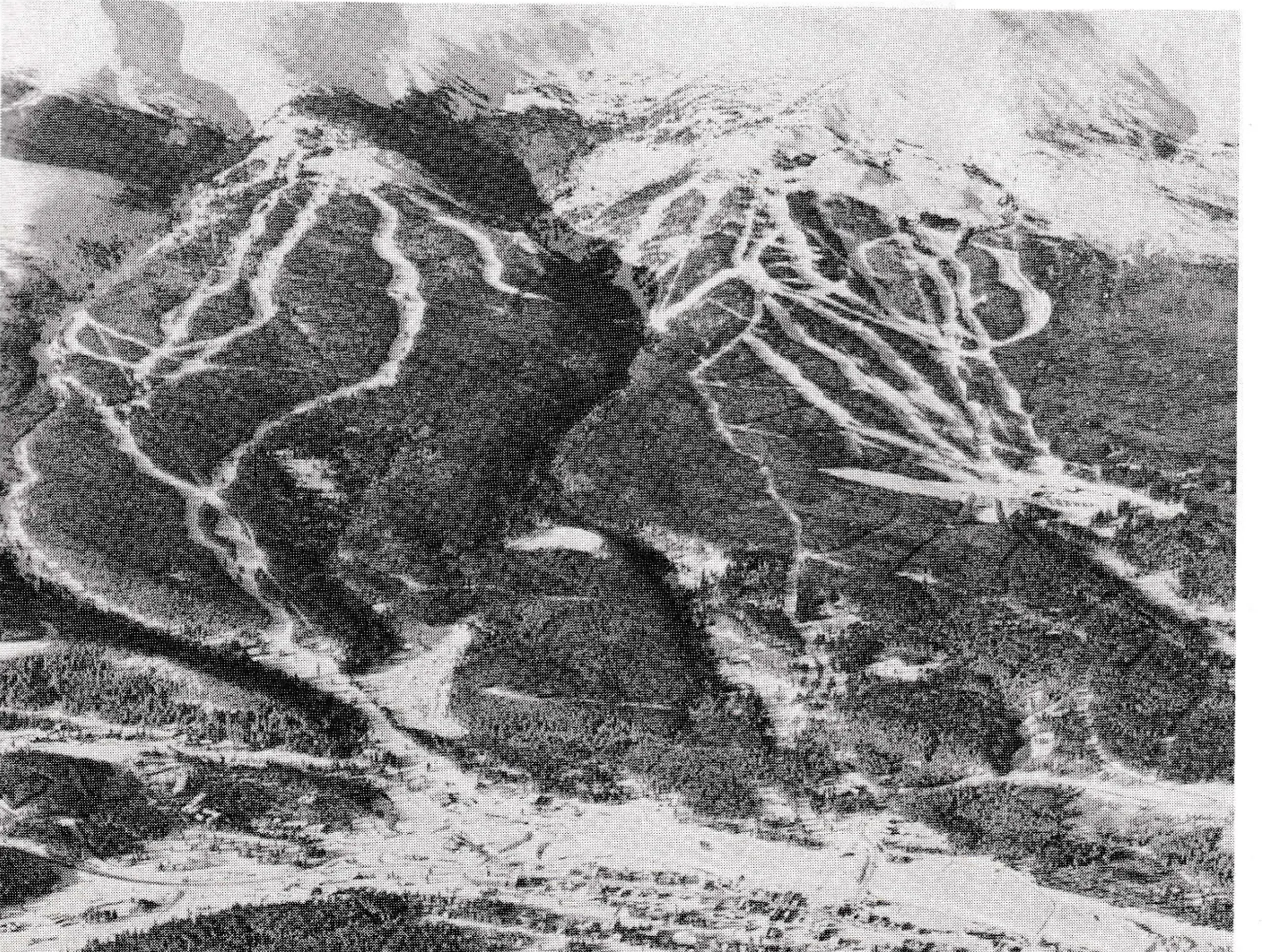
Development plans for a winter sports area should have provisions for managing the uncut forest remaining between the cleared trails. The initial planning for trail layout of a ski area requires careful integration of the ski trail clearing with the needs of the particular forest type. These needs include avoidance of wind-throw problems and insect and fire hazard build-up because of improper thinning or clearing practices. Ski are developers should maintain close contact with the responsible forester, during planning for ski trails and construction, to insure that a healthy, manageable forest is left between cleared areas.
The trees between cleared trails are important in managing the recreation use at ski areas. These trees can be used, with good landscape design, to soften the effect of the lift and ski trail clearing and to provide visual quality at highly improved sites such as lift terminals, mountain restaurants and subdivisions.
Forested areas diminish wind effects and reduce radiation exposure of the snow surface, both of which reduce skiing quality. In addition, trees provide skiers with depth perception on overcast days and a feeling of a forested environment. The forested areas have subsidiary values of providing wildlife habitat and sanctuaries, watershed protection and wood fiber production.
Ski slopes are usually good tree growing sites because north facing slopes, with their better snow conditions, also provide a better climate for the growth of trees. Coniferous trees, in particular, prefer north facing slopes where there is less intense radiation and better soil moisture conditions.
In addition, conifers are more tolerant of shade and better able to survive and grow under a dense vegetative canopy than are other forms of vegetation such as aspen, grasses, and shrubs.
Aspen, in addition to being less tolerant of shade than coniferous trees, reproduces mainly by sprouting from roots. This characteristic makes it possible for aspen to rapidly reforest cleared areas.
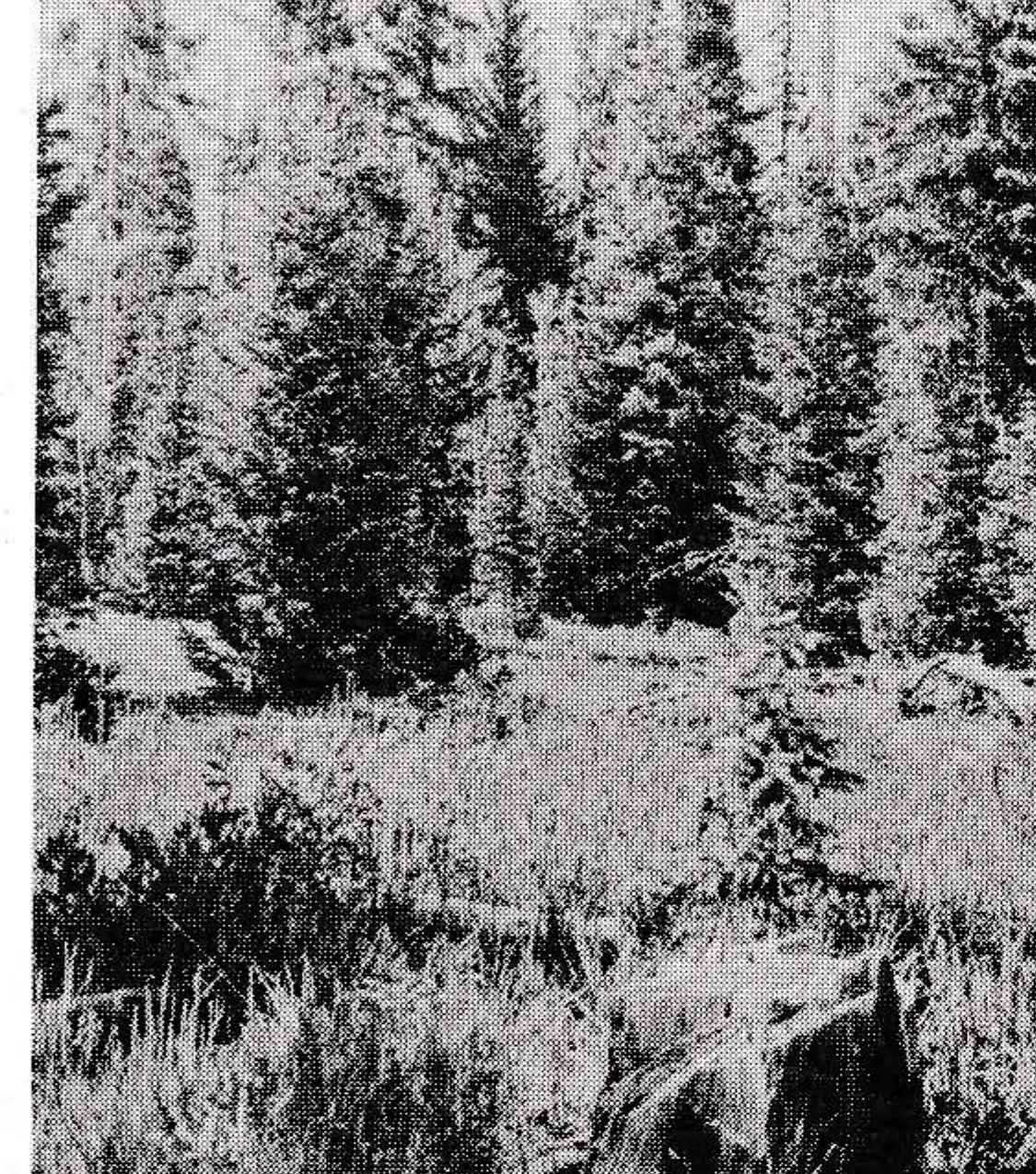
The forest management objective at ski areas in the spruce-fir and lodgepole forests should usually be to develop an uneven-age condition in the tree cover. New trees should continually replace the older trees as they deteriorate and are removed.
The planned cutting of trees to reach an uneven-age condition involves (1) selection of the less vigorous, high-hazard trees or groups of trees and (2) their removal from the site to a processing plant, if roads are available, or some other technique, such as cable logging, is feasible. Careful consideration must be given not only to the method used in cutting the trees selected for removal, but also to the removal of the cut material.
Selection cutting, which is the annual or periodic removal of trees, will ordinarily be used. This method causes the least impact on the forest while maintaining a forested environment. Selection cutting can be applied to either individual trees or small groups of trees, depending upon the characteristics of the original tree cover. Individual tree selection may be prescribed when the dead and dying trees are scattered throughout the stand, whereas group selection may be prescribed when small groups or clusters of trees are dead or dying.
Trees become more susceptible to insect attacks and disease as they become older. The periodic removal of the older trees provides an opportunity for new tree seedlings to become established and reduces the competition for space and nutrients. In this way, a continuous forest cover can be maintained.
In areas where the tree cover is interspersed with small natural openings, the timbered strips connecting these openings can be manicured by removing all down material and hazardous trees, thus breaking up the continuous ski run effect and provide a glading opportunity.
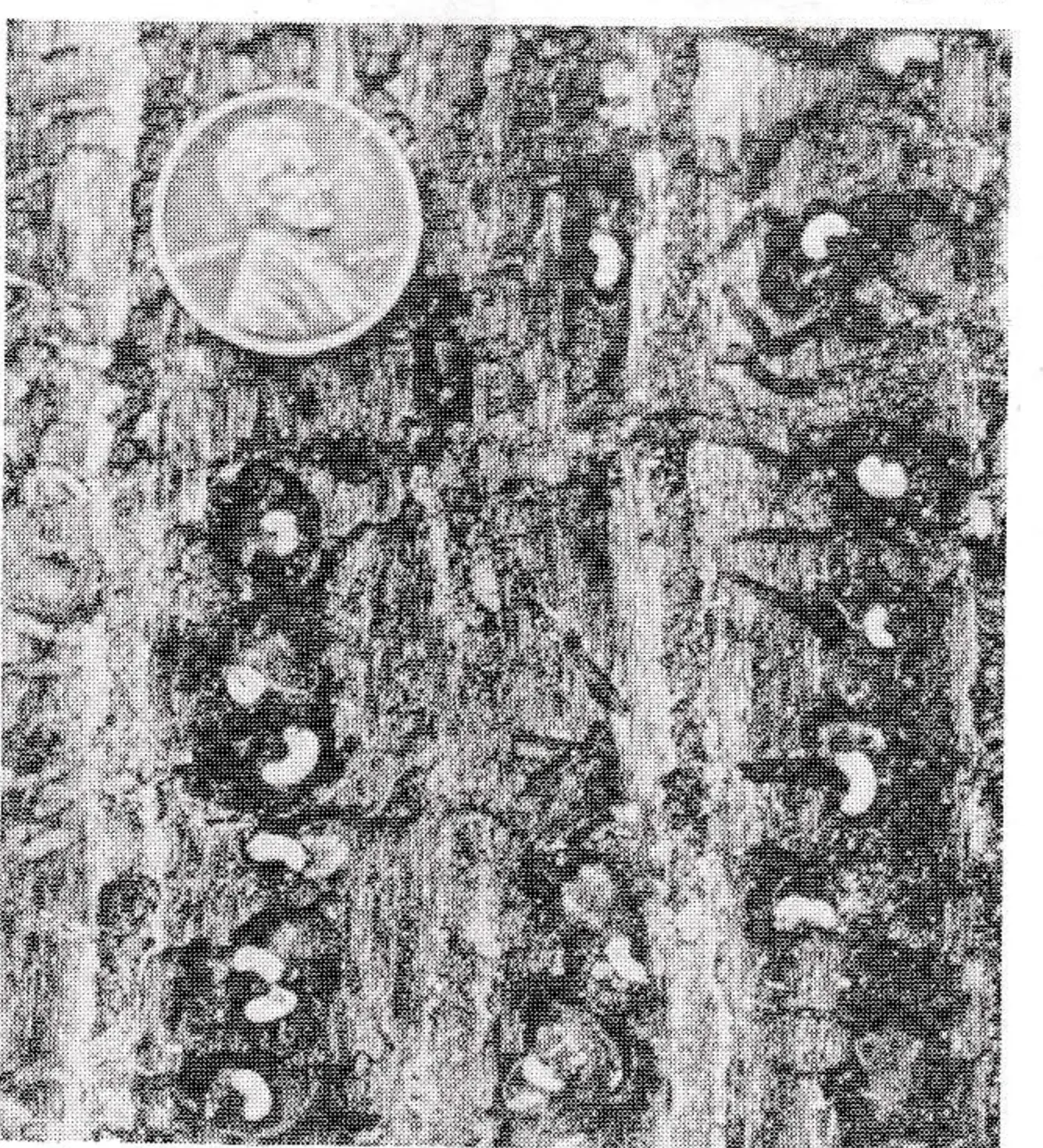
Engelmann spruce is very susceptible to the spruce beetle, and this insect is a primary killer of spruce trees in the Rocky Mountains. Douglas fir and pine trees are also susceptible to bark beetles which are very similar in appearance to the spruce beetle. Removal or treatment of felled and wind-thrown trees within two years is of particular importance in spruce forests because they provide a breeding ground for bark beetles.
When the felled trees cannot reasonably be removed from the site, provisions should be made to prevent them from becoming breeding places for insects. Control of beetle populations can be accomplished by turning felled trees to the sun, removing bark to dry the sapwood or spraying them with approved insecticides. Generally, the larger trees provide the most suitable insect host material, but material down to 8″ in diameter may also become infested.
Spruce-fir stands, in particular, should be checked annually for blow-down trees and possible bark beetle populations.

Spruce bud worm, tip moth and other moth larva and leaf miners attack the foliage or shoots of coniferous trees and may cause widespread defoliation. These insects seldom require treatment and infestations usually subside naturally. Chemical controls for most of these pests are available if the situation becomes serious.
When problems with insects are anticipated, the District Ranger should be consulted if the area is on National Forest land. Operators of private land areas can get technical forestry assistance from the state forester. Addresses of state forestry offices are available from the sources shown at the end of this article.
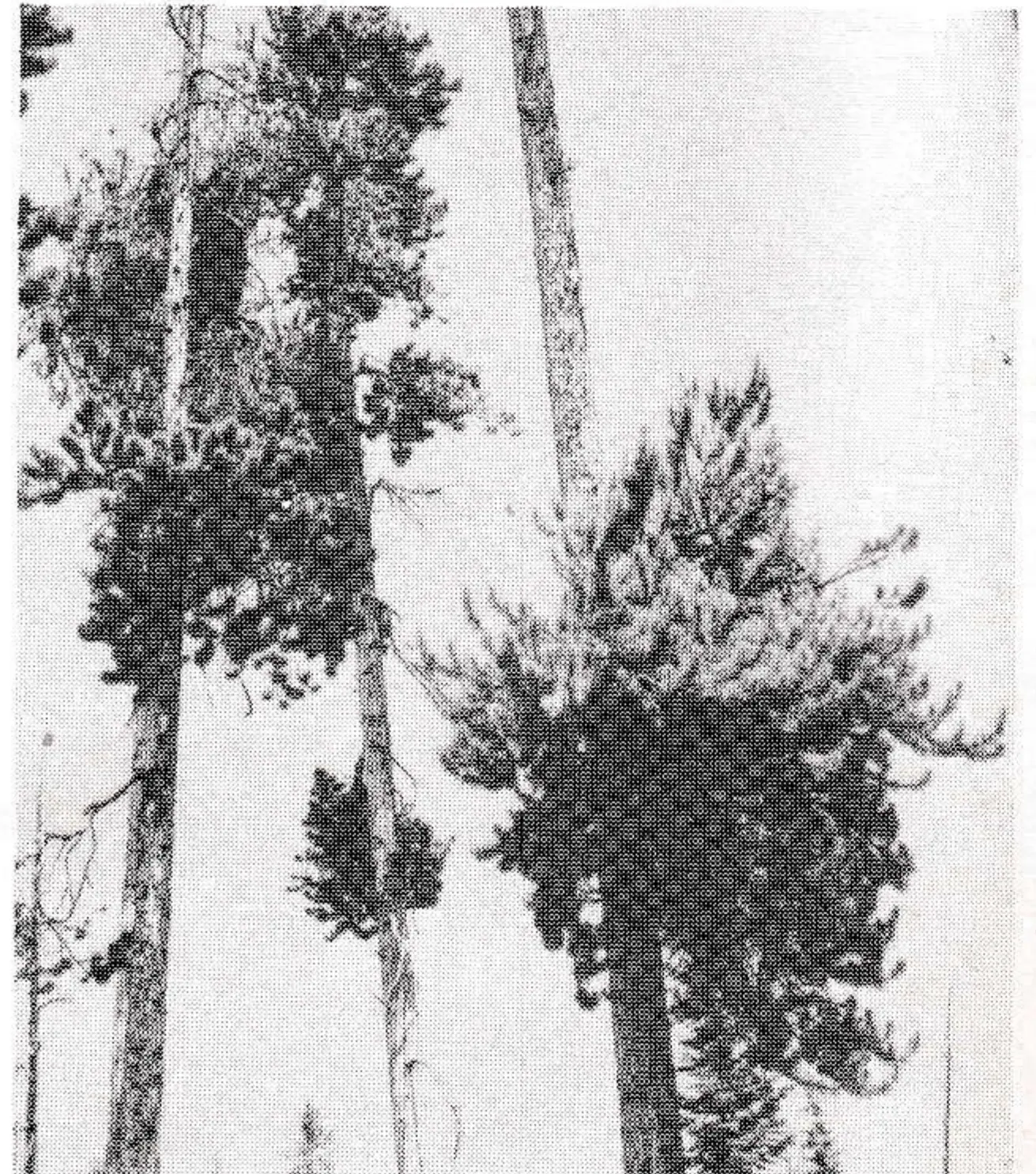
Lodgepole pine is susceptible to dwarf mistletoe, a parasitic plant that weakens the tree and can kill it. Mistletoe appears as a small, yellow-green shoot, protruding from branch swellings. This infection often causes the development of coarse “brooms” on the tree. Mistletoe-infected trees adjacent to developed areas should be removed when top killing becomes noticeable or when limbs throughout the tree have heavy mistletow infections. Pruning mistletoe infected branches will extend tree life and increase tree vigor.
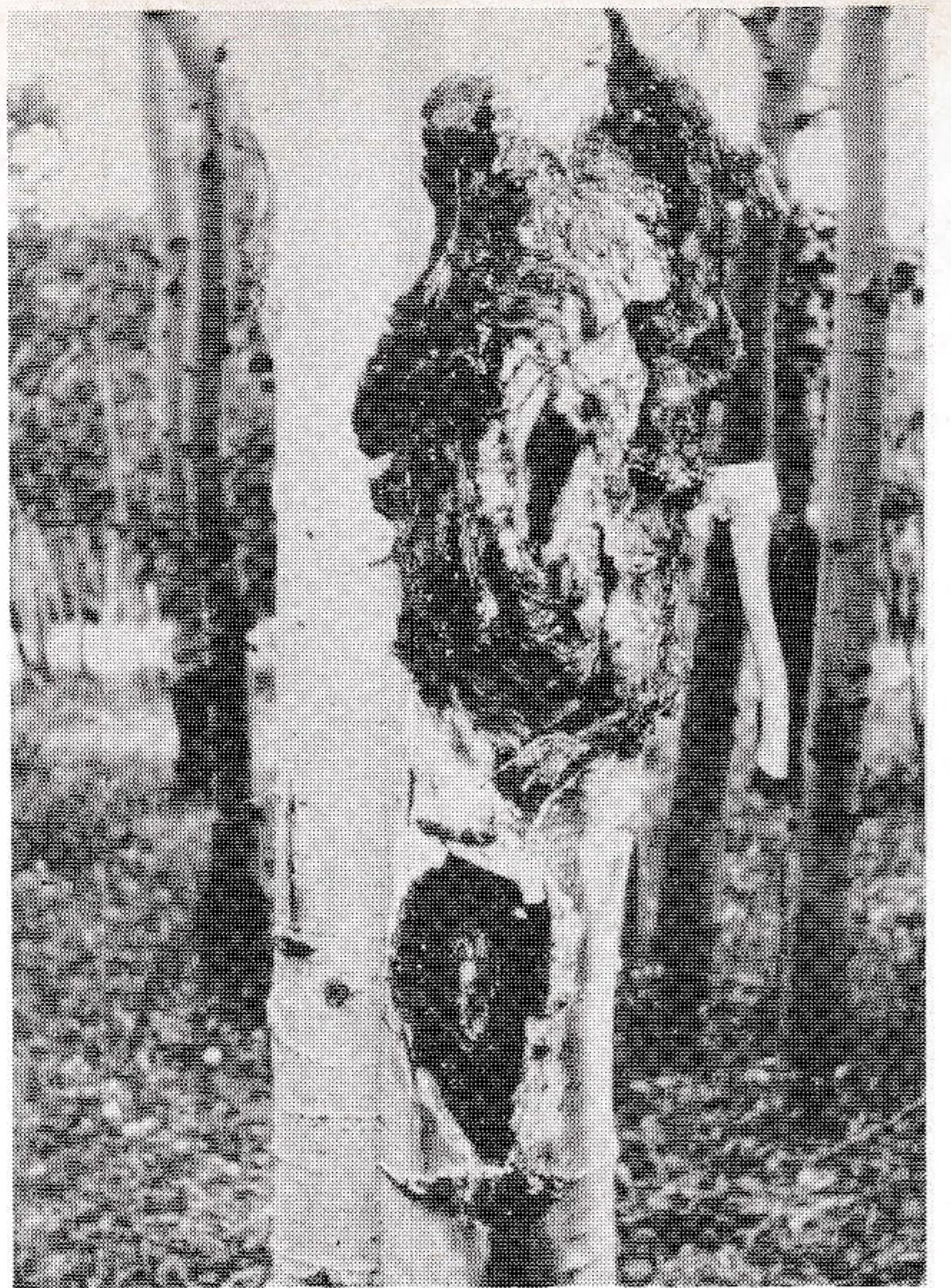
Subalpine fir is usually a minor part of the spruce and lodgepole forests, but its dense foliage often makes individual trees or groups highly valuable in specific situations. Subalpine fir is generally shorter-lived than spruce or lodgepole and it is more susceptible to various decay organisms. This is also true of aspen. Low vigor, high-hazard trees of all four species can usually be identified by their outer characteristics, including cankers on the trunk, spotty foliage and general debilitated appearance.
Interior rot can be tested with an increment borer. This tool removes a ¼” core from the tree that can be examined for rot and growth rate. Information on suppliers is available from state and federal foresters.
Aspen trees are attacked by a wide variety of insects and diseases. Among these are the tent caterpillar, an insect that can cause severe defoliation, but seldom requires treating; ink spot fungus, which attacks the leaves but usually does not kill the tree; and several canker-forming fungi that attack the trunk of the tree. Aspen cankers are often started by damage to the tree bark. Diseased trees are more susceptible to wind-throw and breakage, and should be removed when adjacent to buildings, lifts and ski trails.
Maintaining the trees in a healthy, vigorous growing condition is the best prevention against insect and disease attacks. Care exercised during the construction phases can prevent damage to trees and their root systems and minimize the problems related to insects and diseases.
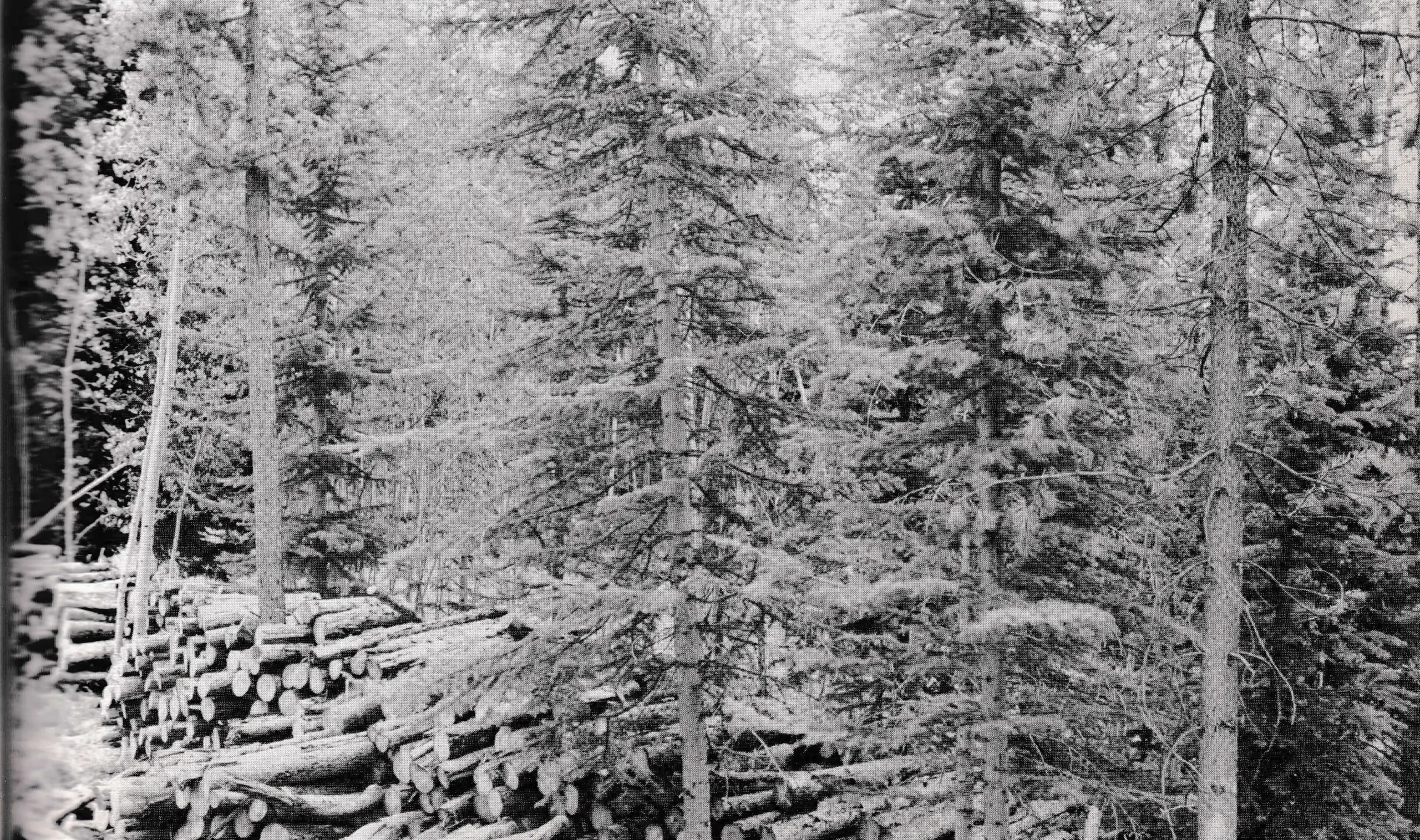
Residual trees can best be protected from fire through complete removal or disposal of cut trees and slash, by installing adequate fire breaks around flammable fuels, including buildings, and providing sufficient fire equipment to control small fires. Trees stacked in short lengths along ski trails are both a fire hazard to the adjoining trees and a bredding place for insects. If this wood is to be used as firewood, it should be removed within two years or disposed of by some other means.
Good forest management practices at highly developed recreation sites present many challenges to the area operator and land manager. There may be some resistance to removal of trees and correction of insect and disease problems in timbered areas left between cleared trials because of economics and esthetic concerns. However, the major long-term benefits to the area from a healthy, uneven-age forest in these sites justifies the cost of achieving it.
Addresses of State and Private Forestry Offices, Forest Service, USDA.
- Northeastern Area State and Private Forestry, 6816 Market St., Upper Darby, Penn. 19082. 215-352-5800.
- Southeastern Area State and Private Forestry, 1720 Peachtree Road, NW., Atlanta, Georgia 30309. 404-526-3734.
- Northern Region, Federal Bldg., Missoula, Montana 59801. 406-549-3651.
- Rocky Mountain Region, Bldg. 85, Denver Federal Center, Denver, Colorado 80225. 303-234-4321.
- Southwestern Region, 517 Gold Ave. SW., Albuquerque, N.M. 87101. 505-843-2446.
- Intermountain Region, 324 25th St., Ogden, Utah 84401. 801-399-6241.
- California Region, 630 Sansome St., San Francisco, Calif. 94111. 415-556-4815.
- Pacific Northwest Region, 319 SW Pine St., Portland, Oregon 97208. 503-221-3625.
- Alaska Region, Federal Bldg., Juneau, Alaska 99801. 907-568-7259.
The authors are with the Rocky Mountain Region of the Forest Service. Cahill is an Entomologist, McAninch a Forester and Miller in Recreation Administration