

H.C. Caldwell, of California Products, on “Do snow and tennis mix?”
From North Carolina to Maine, in the high Sierras and the Rockies, ski areas are providing tennis facilities for their skiers and an ever-increasing number of non-skiers who just happen to play tennis. No longer do non-skiing friends of skiers (who came along for the weekend) just sit around the lodge; they’re playing tennis with friends or lodge-arranged partners or sharpening their skills with the area tennis pro.
Among those areas already enjoying the benefits of tennis are: Aspen, Colo.; Bear Valley, Calif.; Lake Tahoe, Nev.; Snowmass, Colo.; Sugar Mountain, N.C.; Peek ‘n Peak, N.Y.; Sugarbush, Vt.; Evergreen Valley, Me. — and many others are being planned.
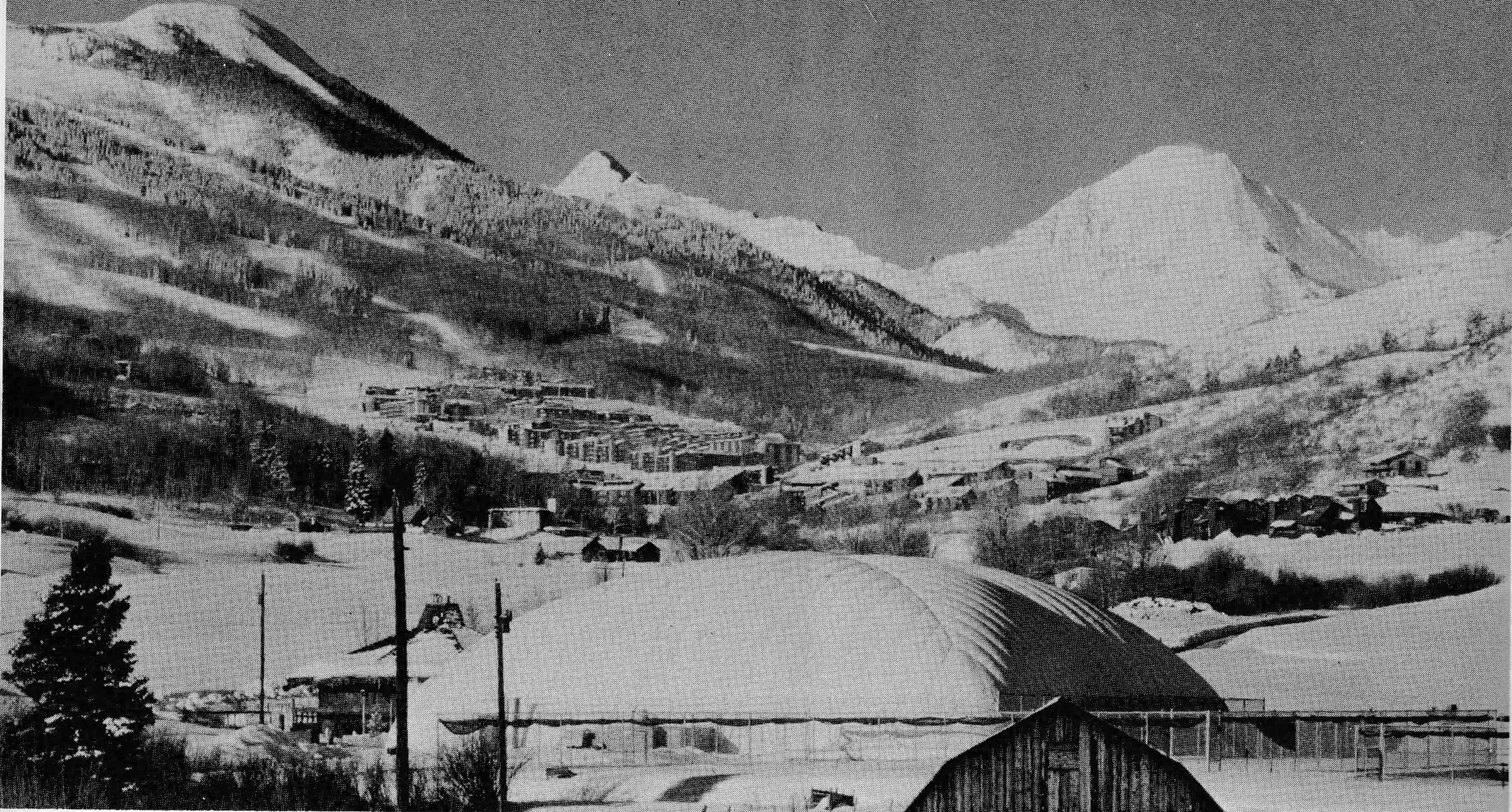
In many cases, it may be relatively easy for ski areas to provide winter tennis. Those areas who have applied the “year-round resort” concept are sure to have tennis courts already constructed. In this case, the erection of an inflatable, all-weather air structure over two or three courts is not a difficult task. The cost of these structures ranges from $28,500 for a single court structure to $101,000 for a six court structure. These air structures may be taken down for the summer season and stored — ready for raising again when the snow starts to fly.
Some areas are contemplating more permanent structures such as steel buildings for year round indoor tennis. Costs increase considerably here. To erect and equip a four-court building, costs can range from $350,000 to $450,000 depending on the degree of style and interior appointments. Buildings of this nature generally require 400 to 500 playing members annually to support them on a continuing basis, consequently are not ideally suited for most ski areas.
The air inflated structure or “bubble”, is the most efficient and economical method to join the ever growing ranks of “Tenniski” areas, especially if courts are already in existence. If not, the average cost of installing an all-weather tennis court with an acrylic surface ranges around $10,000 to $12,000, including fence, nets, post and lines. Cushioned surfaces are more expensive. As most air structure manufacturers offer complete packages (building, heating and ventilation systems and lights), a single court unit can be installed at a cost of $38,000 to $40,000; two courts – $60,000; three courts – $90,000.
Operating costs fluctuate depending on the area, but electricity is the major expense as it is the major power source for all systems in an air structure. Manpower is nominal, requiring only one or two people to care for the courts and run schedules. Insurance and other fixed costs are generally brought into the total area operation.
Revenue generated by tennis can become an important contributor to overall area operation. Most tennis operations charge annual membership fees plus court rental fees. In the case of ski areas, with their transient clientele, membership fees would not apply unless there are seasonal apartments or condominiums which would provide a source of seasonal memberships. Court rental on an hourly scale should be the basis of any tennis operation. From there, training clinics may be offered, tennis parties, tennis weekends, Tennis and Ski week or weekend packages, — the list can be as long as your imagination.
These programs can be expanded to summer operation of youth clinics, tennis camps, adult tennis weeks and just plain tennis vacations in the mountains.

Additional information on tennis court construction, air structures, metal buildings, etc., can be obtained from the U.S. Tennis Court and Track Builders Association, 1201 Waukegan Road, Glenview, Illinois 60025. Information on tennis club operation may be gained from the Indoor Tennis Association, 8 South Michigan Avenue, Chicago, Illinois 60603, and the U.S.L.T.A. Educational Service, 71 University Place, Princeton, New Jersey. And, don’t forget, you’ll need a sign for the entry to your tennis area, “No skis, boots or poles allowed; Tennis shoes only”.
Platform Tennis—a staff report
There is a lesson to be learned from Business Week Letter of December 17, 1973, which told subscribers about the investment opportunities in setting up platform tennis facilities. The report says, “Platform tennis courts near cities or suburbs are expected to pick up some business from skiers who can’t make it out to the distant resorts.”
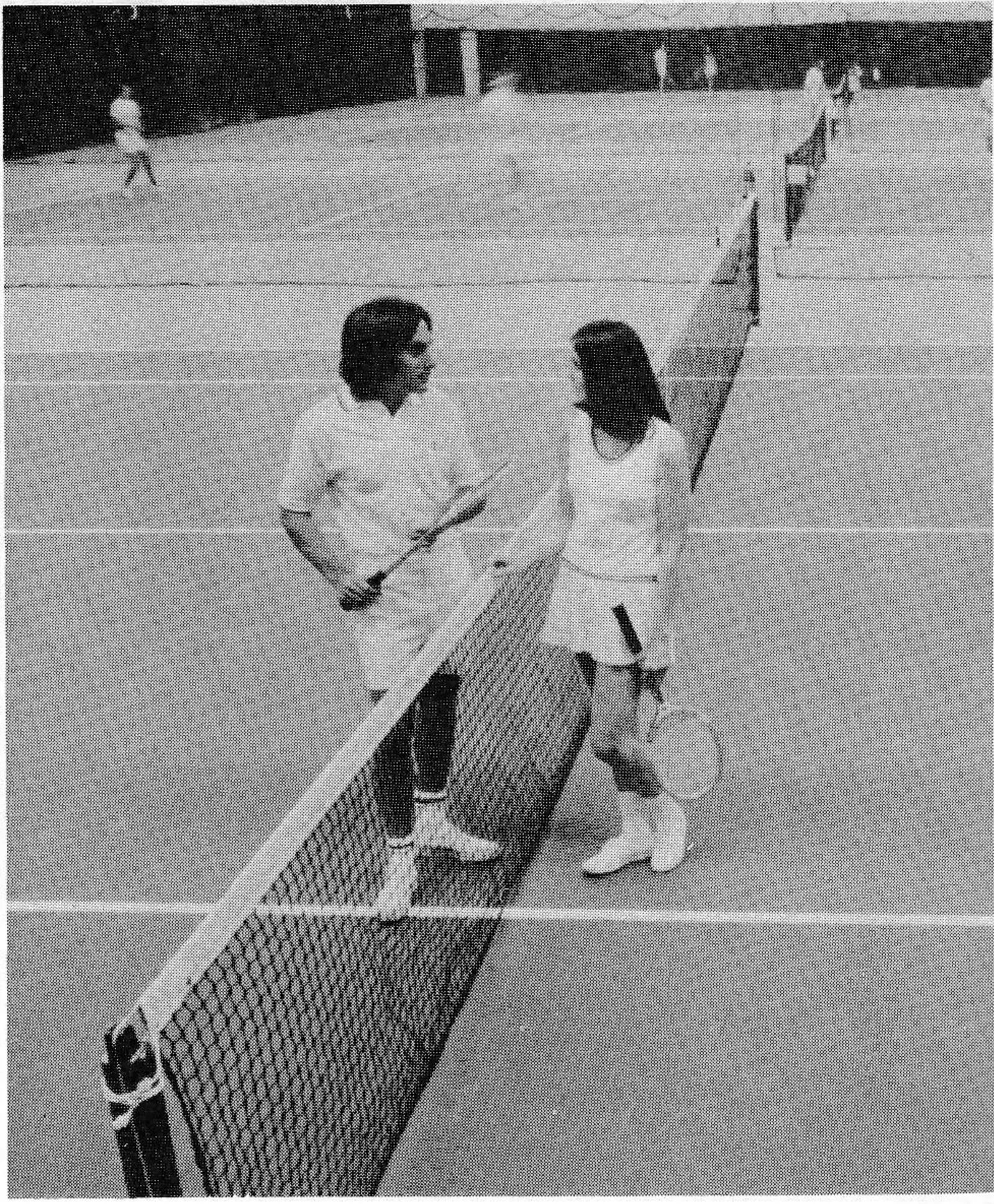
The game of platform tennis, or “paddle” as it is often called, was invented in 1928 by two New York suburbanites who were looking for a pleasant outdoor non-summer activity. The heartland of the sport remains eastern suburbia and exurbia, though each year sees it spread further afield.
For ski areas, the lesson is obvious: if you can’t lick ’em, join ’em and put in platform tennis courts. A very high percentage of players are also skiers (and their demographics would be virtually identical) and this correlation can be made to work for the area. In family decision-making, the availability of paddle tennis at one ski resort and not at another can determine the choice of where to take a ski vacation, or even where to build a vacation home.
But these are just hypotheses. Last winter, however,