


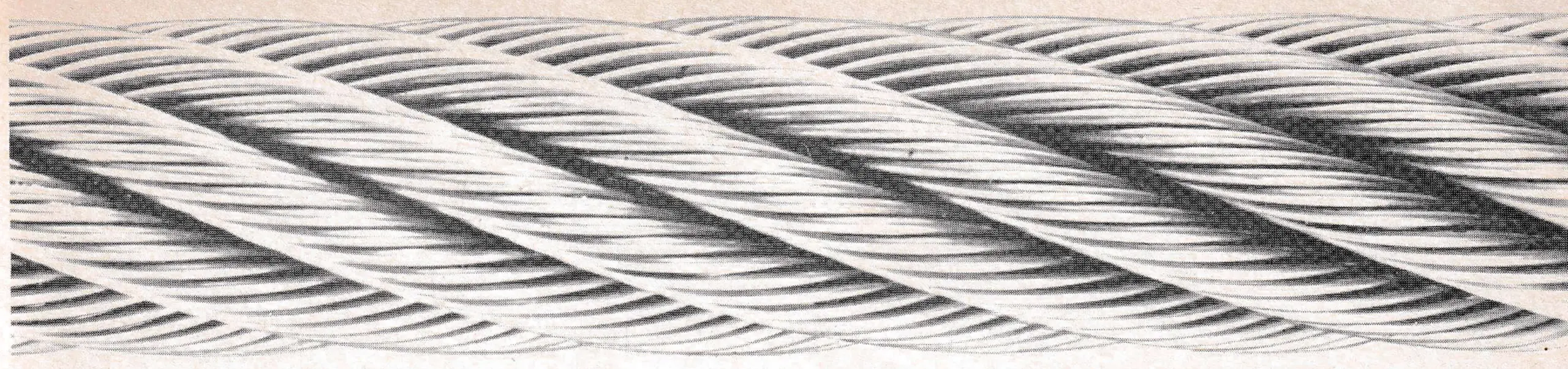
A detailed Wire Rope Inspection shall be made upon a recommendation by the general inspection (see 3.4.1) or immediately after any accident affecting the possible integrity of the wire rope. The inspection shall be made by a qualified wire rope inspector, and a written report of the inspection shall be filed with the owner. A copy of this inspection shall be included in the wire rope log (see 3.5.2).
ANSI-B77.1-1976, Sect. 3.4.2
Each year, normally in the fall or early winter, tramways are descended upon by lift inspectors acceptable to the authority having jurisdiction, and by insurance inspectors. Also annually, the general inspector, or the insurance inspector covering ski areas, will make a recommendation to the ski area owner as to whether a wire rope inspection is required. This generally involves the haul rope and counterweight ropes for aerial conveyances, and track ropes for bicable or reversible tramways.
The general lift inspector must be willing to reject a haul rope or counterweight rope when it fails to meet the requirements listed in the ANSI code, or if any other defects are found. But any inspector should be sure of his rejection procedures, and if unsure on the rejection, should seek a second qualified opinion.
In a very recent two-week period, the writer rejected two counterweight ropes. One appeared to have been struck by lightning, and showed evidence of melting on the broken wire ends. This type of heat damage caused by electricity is one of the code’s specific rejectables. The other had been scraped very badly—apparently by a rock caught in the counterweight sheave, blown through the counterweight shack by a snow blower.
However, it is in the area of the actual wire rope inspection that I feel there are problems. Currently, there are two main procedures: 1) Electromagnetic inspection; and 2) Visual inspection. The former is recommended on an annual basis for larger rope systems, such as track rope and haul ropes for gondolas and reversible tramways.
A periodic, good, thorough visual inspection of a wire rope—recommended for all ropes—will sometimes take an inspector a full day. Such an inspection will generally include all of the following items, which in turn will be in the report to the area:
- List of broken wires and their locations;
- Amount of crown wear, if any;
- Diameter of the rope, usually taken at every tenth chair, including the minimum, maximum and average diameters;
- Any evidence of corrosion or nicking on the rope;
- Measurements of the lay length of the rope, also at every tenth chair;
- Thorough examination of the splice, including minimum and maximum diameters, evidence of any wires broken in the splice and any evidence of slippage;
- Any evidence of interstrand nicking;
- Any other evidence of damage that may have occurred to the rope by significant use;
- Evidence of lubrication—whether it is dry;
- Core condition.
Over the past several years, it has become extremely difficult for areas to get a good wire rope inspection because wire rope inspectors are becoming less willing to perform the details of the inspections, and less willing to sign their names on the dotted line to certify the rope’s safe condition. The insurance industry as a whole has had some effect on this unwillingness on the part of the certified wire rope experts.

Also, several areas have indicated in the past several years that they are no longer able to get inspections by the manufacturer of the wire rope. More specifically, they will not inspect ropes of competing manufacturers as they are simply not allowed to do so by company policy.
In my opinion, there is also a problem when a ski area retains a certified wire rope inspector at the request of the general inspector, and then receives from the inspector a simple letter—along with a bill—stating that the wire rope is okay to use for one more year. In some cases we have rejected this type of wire rope inspection as we do not know if the inspector made any attempt to check any of the items as listed in the ANSI code under replacement or repair of wire rope. (The code, under Section 3.3.2.1, very specifically lists 10 items under which wire ropes shall be rejected.)
It is especially disconcerting when evidence shows the wire rope inspector has not even bothered to measure the diameter or lay length of the rope involved. In this type of inspection everyone is cheated: the authority having jurisdiction, the insurance company and, most specifically, the area itself.
One partial solution lies with the area itself. It is my opinion that the area operator should know more about his area’s wire rope than any other person—including the general inspector and/or the wire rope inspector. To this end, the area should have a systematic program of making its own annual wire rope inspection and of recording the appropriate data.
With this information on hand at the time of the general inspection, a decision can be made as to whether to call in a wire rope inspector to review any problems that may have occurred to the rope. If no problems are found over a period of several years a wire rope inspector may not be called in as long as the area has been conducting the proper inspections. If, however, a problem has been encountered, a certified wire rope inspector with a good performance record can be retained to advise the area.
Inspections, of necessity, will always be a part of a ski area’s life; but, like charity, they can begin at home!