
In the Fall issue of SAM, we presented some thoughts on the inspection of wire rope by Howard Anderson, Engineering Coordinator of the Western Area Ski Insurance Program (WASIP). In the article, Howard expressed his opinion that, “The area operator should know more about his area’s wire rope than any other person, including the general inspector and/or the wire rope inspector. To this end, the area should have a systematic program of making its own annual wire rope inspection, and of recording the appropriate data.”
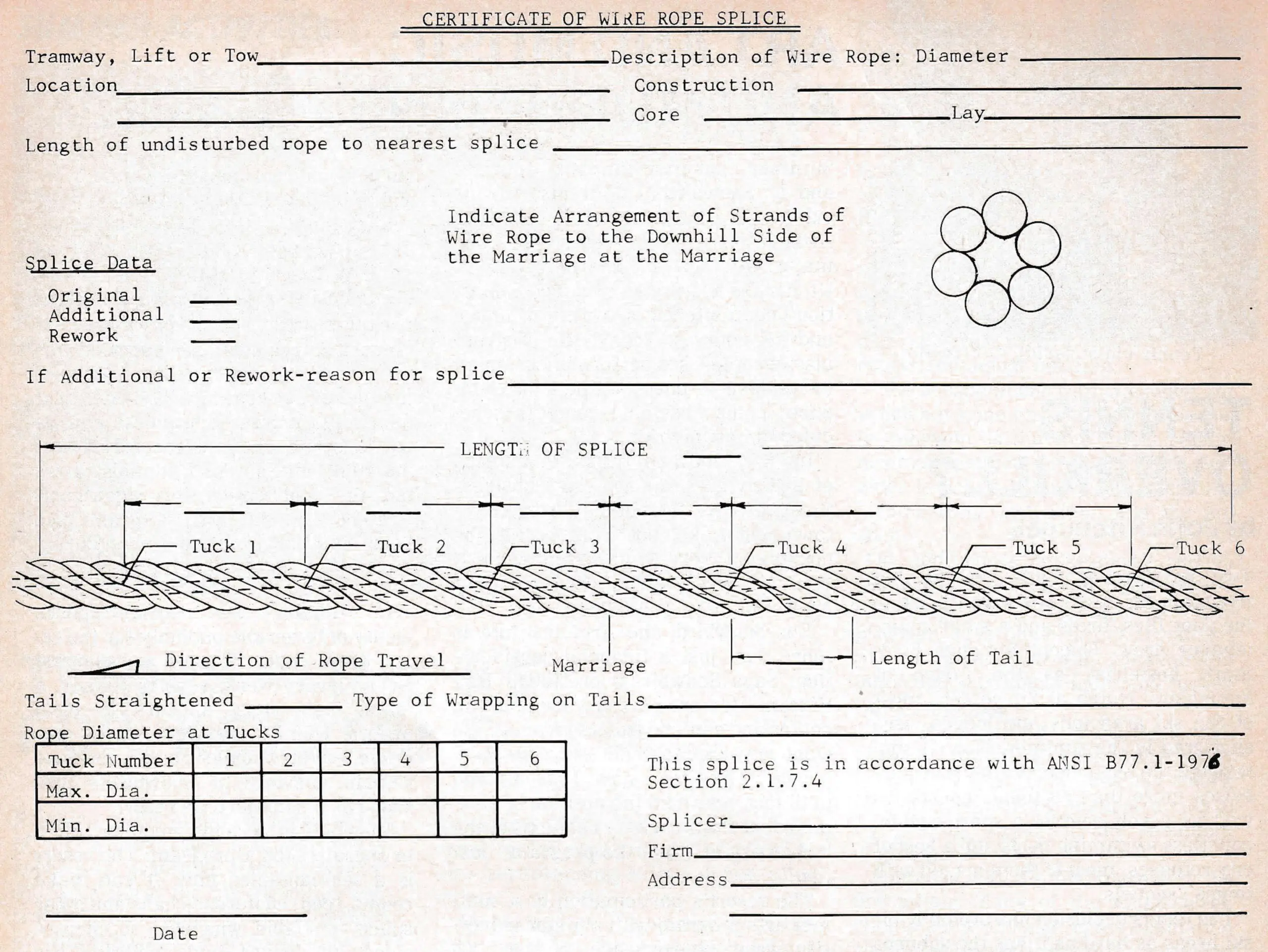
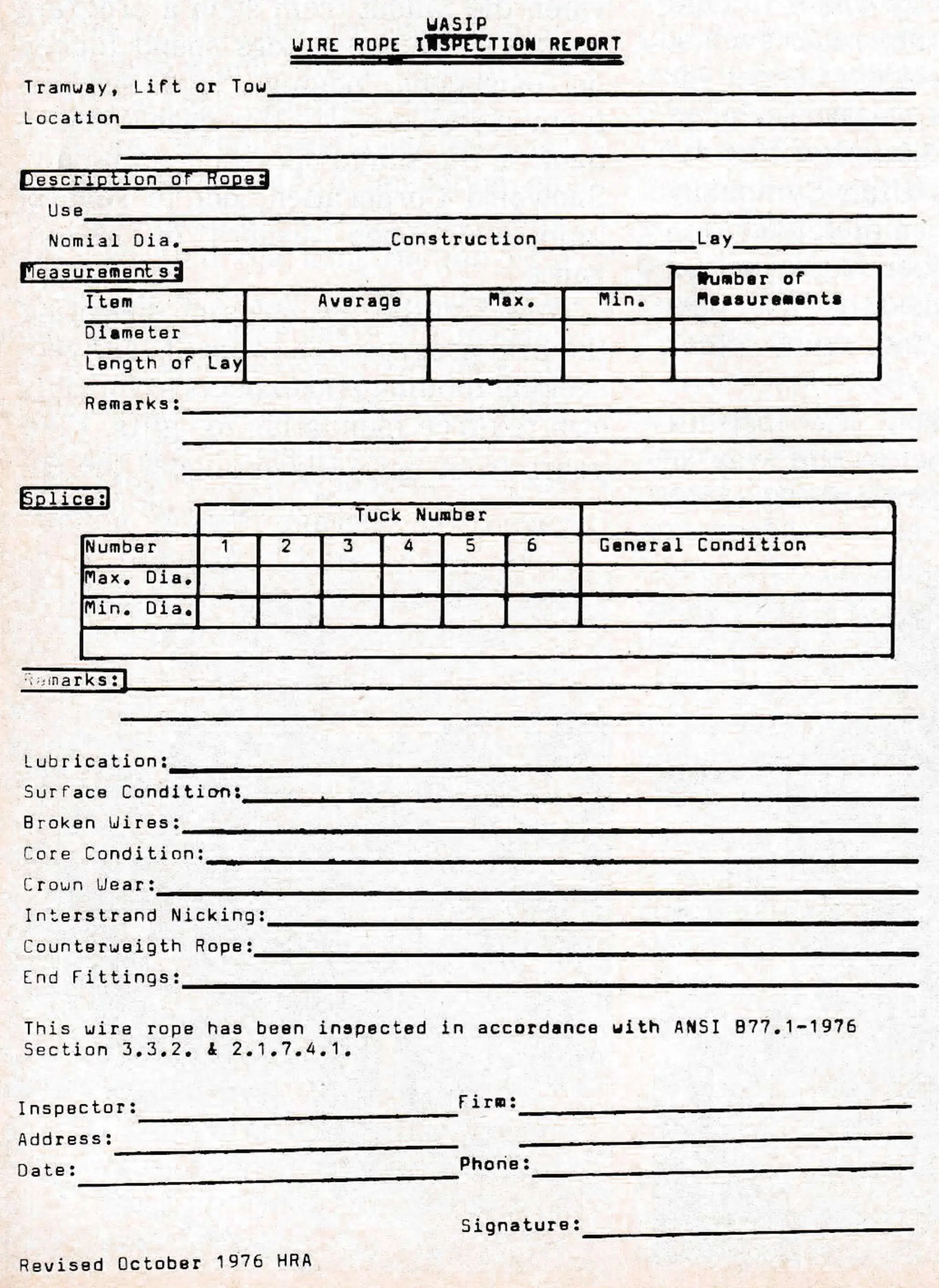
SAM received a number of requests for more details on what sort of form might be used. In response, we illustrate a couple of forms used by WASIP which can readily be adapted to individual ski area use.
Any form should be prepared with an eye to the items in the ANSI Code that can cause rejection. These include: 1) any evidence of heat damage caused by contact with electrical wires or natural electrical charges; 2) abrasion, scrubbing or peening causing loss of more than 1/3 of the original diameter of the outside wires; 3) evidence of rope deterioration from corrosion; 4) severe kinking, severe crushing or other damage resulting in damage to the rope structure; 5) reduction from nominal diameter to a diameter less than shown in Table 4 of the code; 6) evidence of pitting from corrosion or development of any broken wires in the vicinity of attached fittings; 7) any significant increase in the lay length; 8) any significant increase in the overall stretch after original construction stretch has been removed; 9) the condition of the splice or deterioration of the splice or slippage.