


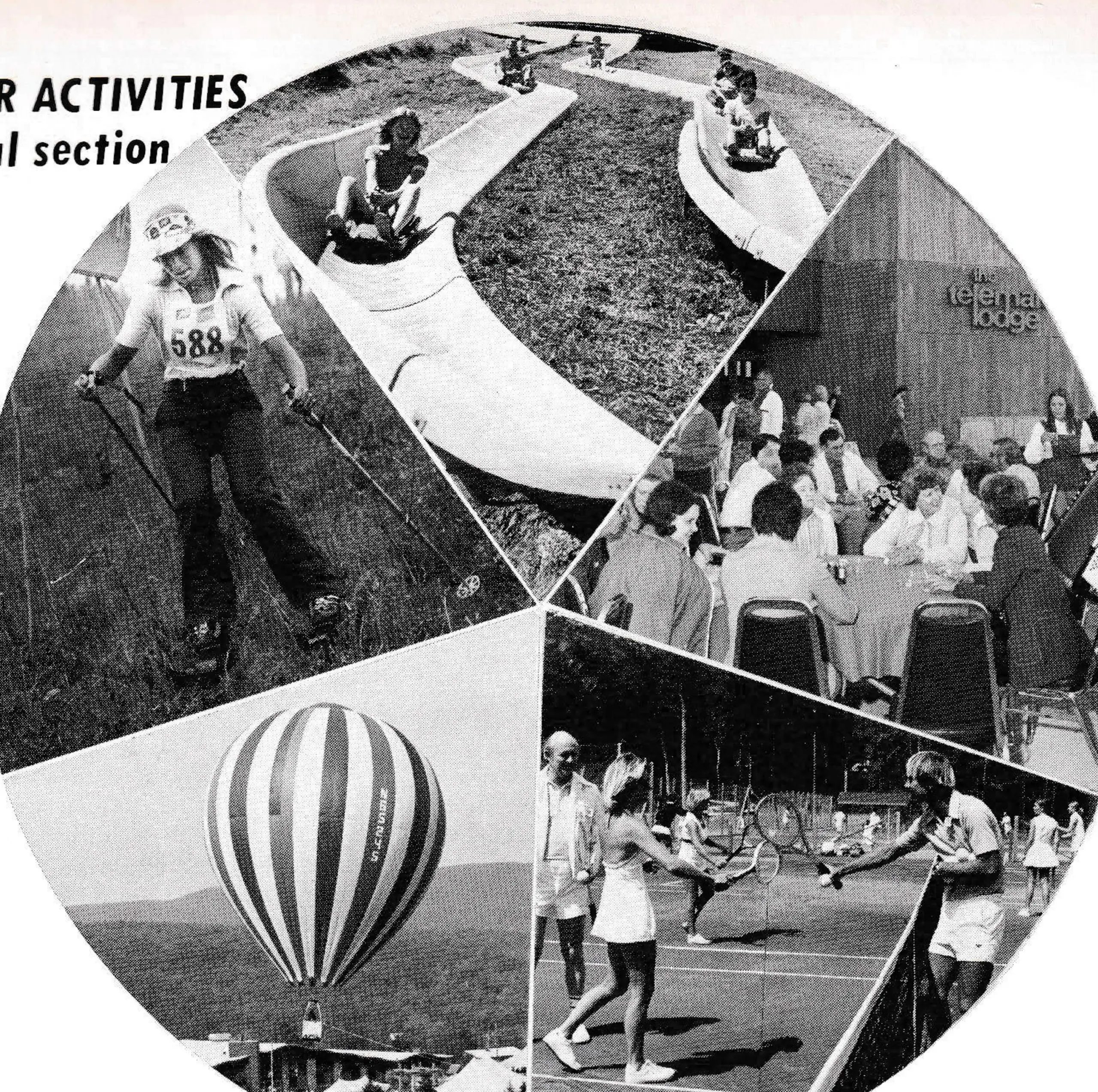
Why should anyone go to a ski area in the summer? After all, the countryside abounds in attractions, and cities are packed with activities. Ski area managers have been wrestling with the summer profit problem since the invention of the rope tow. Yet, through hiking, scenic chairlift rides, gourmet restaurants, hang gliding schools, cheerleader conventions all the way to Frisbee tournaments, no one has made it. Until now.
The uniqueness of a ski area is its mountain — even if it’s a hummock or a pseudo-hill — and this is what it has to sell to the summer visitor. Specifically it’s the “up and down-ness” plus the visual impact of the mountain that attracts tourists, says Jim Westfall, marketing and recreational land development consultant. To succeed in the summer, he says, a ski area attraction must involve the mountain.
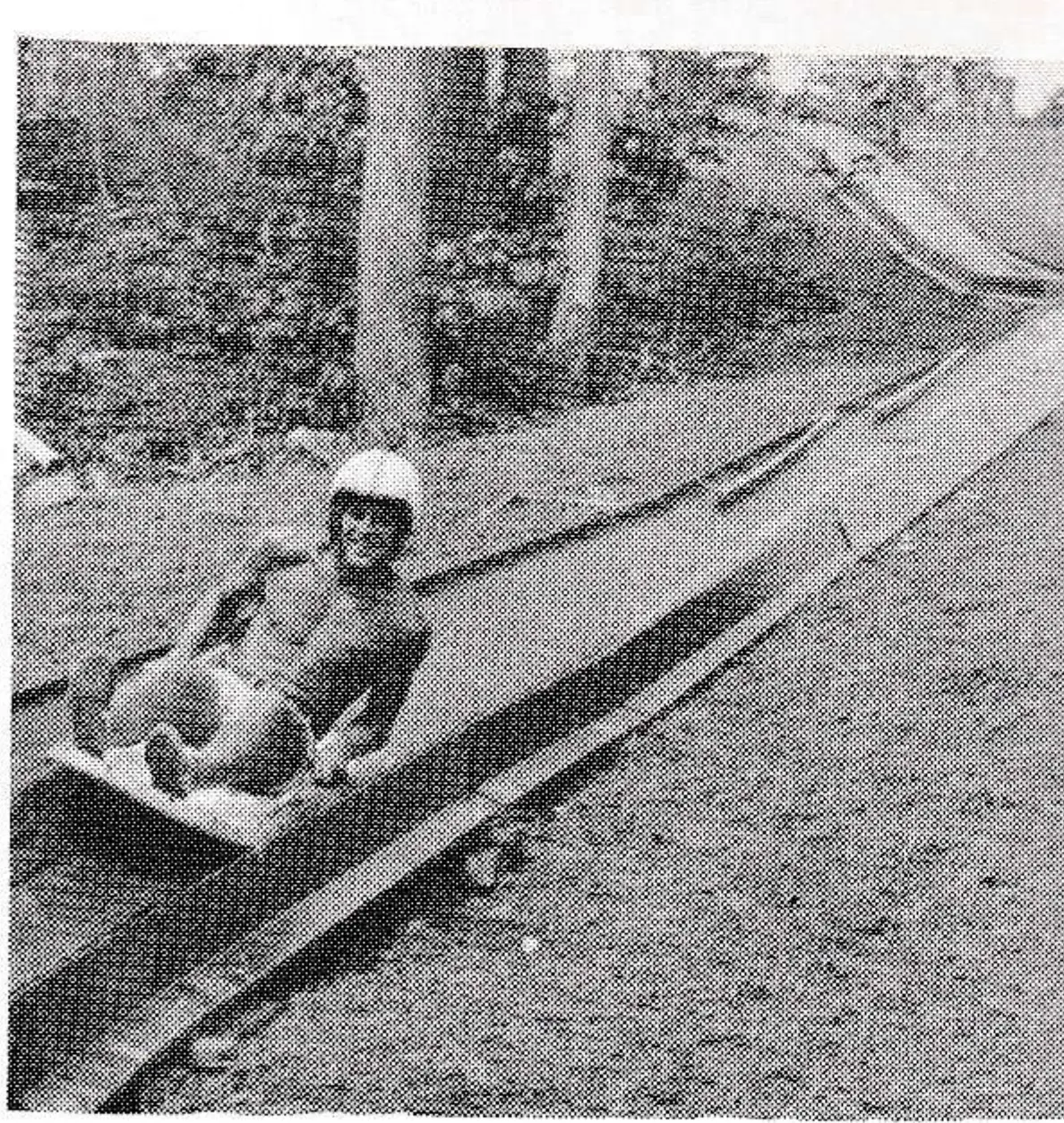
The classic example of Westfall’s theory is the Alpine Slide, which has had them waiting in line for as much as two hours at ski resorts in the East. With a two month gross of over $300,000 and a net before taxes and payment on principal that may be as high as 75 per cent of the gross, the cost of Slides — $500,000 to $600,000 — will be paid off long before the novelty has worn off.
(Whereas the market segment served until now by the competing Red Rumbler slide is different — smaller hills, shorter rides, more modest charge-per-ride — the principle is the same.)
Another example of Westfall’s recipe for summer success is Beech Mountain, N.C., where the “Land of Oz” attracts an affluent family clientele. Customers take the gondola up to the theme park and experience something that is exciting and different even for adults. Although Beech has been in bankruptcy proceedings, the fault does not lie with this summer operation, which has been profitable. “The theme park is something different,’ says Westfall,” and it utilizes the up and down aspect of the area, keeping the mountain in the forefront.”
The uniqueness and the advantages of using a mountain to attract summer visitors is then given. But why is it that some mountain-using activities are not successful and some non-mountain-using attractions are apparently successful? The answer to this question, depends largely on how you define success.
One definition of success is to continually aim to reduce operating costs on a year-round basis. A couple of ingenious devices for skiing on grassy slopes have been tried and are still being promoted at ski areas. One Midwestern operator describes his fling with grass skiing as “moderately successful, but damn hard on the grass.” He said you need other entertainment to support it and heavy promotion to keep it moving, and still grass skiing still does not appeal to the average skier. “It’s a gimmick,” he says.
Synthetic snow, artifical skiing surfaces and plastic ski rugs have been tried by various ski areas with varying success. About five acres of the Monsanto AstroTurf Ski Surface was installed this past summer at the Gatlinburg, Tenn., ski area at a cost of between $750,000 and $800,000. According to the area manager, Claud Anders, as many as 300 skiers a day tried the new surface, rented skis and took instruction, using one chairlift. The package price was $8 for two hours and $2 per hour after that. Most users came on impulse, were beginners and some returned for another try. The major advantage of the artificial ski surface, however, is to assure winter skiing — particularly for club groups booked in advance — and for school programs that run through the winter.
Why can’t the summer ski business be more like the winter ski business? Anybody who has been involved with a ski area from Thanksgiving to Easter knows that skiers have an inscrutable affliction that makes them stop skiing around the end of March — just as the weather is most enticing and the snow most managable. Westfall says that summer skiing activities have the same components as winter skiing activities — a learning process and athletic requirements — which preclude them from the regular skier market. The interest of the dedicated skier is subliminal by July.
So, the inclusion of summer ski activities is probably not going to create profit centers, and their success must be measured in terms of their contribution to summer cash flow. Do they help keep the cash registers in the gift shop and restaurant ringing?

What about conventions, educational programs and festivals? Aside from the fact that city governments and developers have specifically-designed centers spreading over several blocks, augmented by permanent, high-key urban attractions, ski areas are less than convenient to get to for these kinds of gatherings. True, the assets for conferences are already there and the only cost is to fix up for the summer trade and to market the facilities. “The ski business is competing in a much larger market,” says Westfall. “The areas must sell for less and give more, meaning the profit is not too great.”
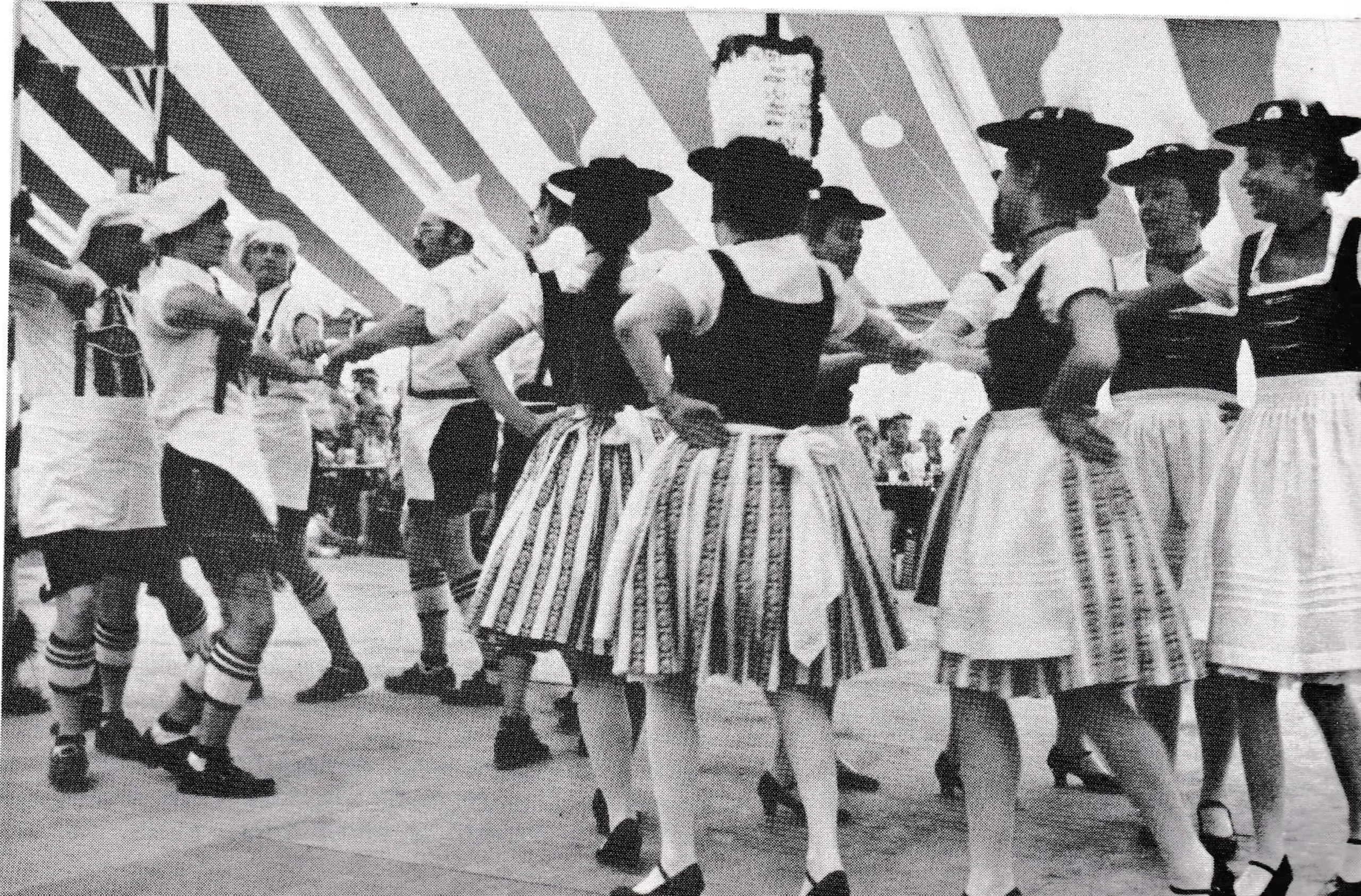
Hunter Mountain, N.Y., held a German Alps Festival which over 12 days attracted 225,000 people to the area. According to Paul Pepe, marketing manager for the area and for the festival, which is run by an independent producer, the event could bring as much as $10 million to the county economy.
Most of the festival is operated out of fifty-five tents in the area parking lot, but visitors use the cafeteria and bar in the base lodge and also ride the chairlift to the summit restaurant. Most of the acitivity is eating and drinking (30,000 gallons of beer, 200,000 portions of Saurkraut, almost 20 miles of wurst) with a $2.50 fee for entrance and $1 for parking. The area runs the parking and takes a percentage of the gross profit. Pepe admits the profit is not tremendous, but says the event is unquestionably worthwhile. Each year the area makes improvements for the festival, such as increased paved parking, a new access road and lights in the parking lot, which would not be made for the winter business alone. “More important,” says Pepe, “we get fantastic exposure in the press and we introduce thousands of new poeple to Hunter.”
While the tennis growth curve may be flattening out, it is an appealing activity for ski areas because of the athletic requirements and spill-over to winter business. Furthermore, some ski areas are realizing high profits from tennis camps (see “Tennis-Key for Keystone”), while others are wondering what they are going to do with all that artillery and no war going on.
Westfall points out that tennis facilities can be built anywhere and those that are successful at ski areas are usually in the midst of large permanent population centers — people would be there whether or not there was a tennis court. Furthermore, he stresses that even in an ideal situation with abundant human potential, a ski area must have a good tennis program that it can promote and market to get customers.
Any summer activity, if it is to be remotely successful, depends on volume, and that is a function of traffic and accessibility. In the winter, a skier may drive seven hours to a remote area with the specific goal of skiing at that area. Its very remoteness may be an attraction in that it may mean smaller crowds. In the summer, however, the business is more likely to come from recreating families who are in a well-travelled tourist region that offers a wide diversity of attractions, plenty of overnight accommodations and choice of restaurants. If a ski area is not located in this type of existing summer pattern, it might do well to not even consider investing in extensive summer attractions.
Ultimately the secret is to generate the highest profits by utilizing the mountain assets most efficiently, according to Westfall. “After you involve the people with the mountain — both physically and visually — after you capture them,” he says, ” you can provide them with other activities and other profit centers.” For instance, with an Alpine Slide, which he sees as a forerunner of what is to come, you give people a number while they wait for a turn and then have them use another ride.
But hold . . . the saturation curve for the Slide is probably three to five years. Wisdom has it that you should be on the move long before it peaks.