


Are you taking your ski lift counterweight for granted? That innocuous looking block of concrete dangling precariously from a tension sheave mounting frame is a vital component in your lift system. When functioning as intended, it assures the proper operation of your tramway or lift; when its operation is impeded or negated, a costly and often dangerous condition may arise.
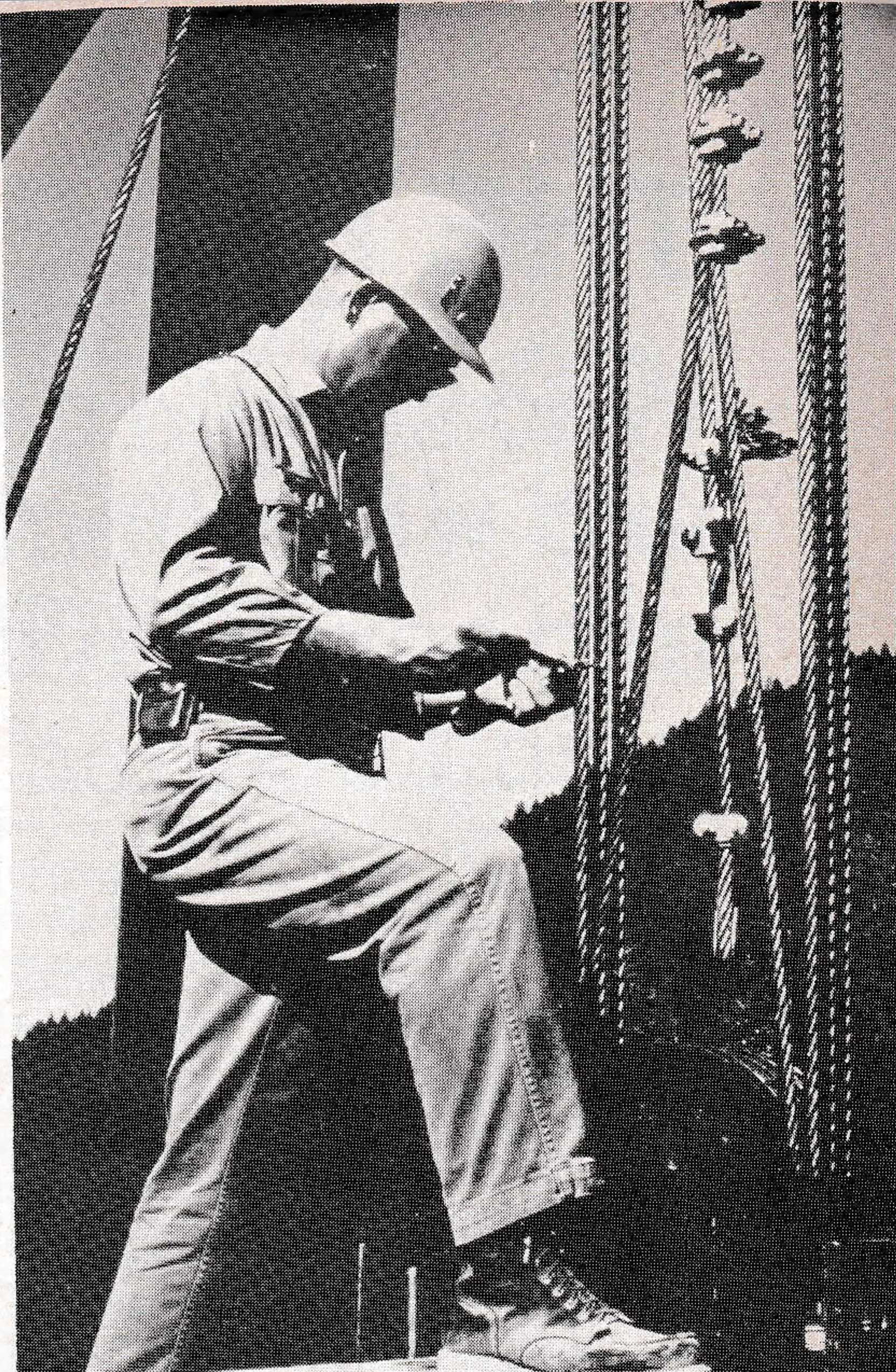
Aerial passenger tramway codes and standards (ANSI B77.1-1977 2.2.9.1) require that haul rope and track cable tension be regulated by a counterweight or other suitable device. The provision facilitates the design and assures proper operation by introducing and maintaining a known tension at a particular point in the system under all loading and operating conditions. Without this provision, the design becomes indeterminate and the operation may introduce excessively high or low tensions with potentially costly and dangerous consequences: overloaded bull wheel and line sheave bearings, excessively high line sheave pressures with rapid liner wear and the potential for cable lift-off at lightly loaded support towers, unduly low tension with the possibility of pulling away at depression sheaves, excessive cable deflection at carrier attachment points, and excessive oscillation of the haul rope.
Workhorse and Safety Device
The freely suspended counterweight block performs its function continuously under the influence of gravity alone. It requires only that the system of ropes, sheaves, and structural members connecting the block to the haul rope or track cable be as near frictionless as possible. If friction is introduced, it adds to or detracts from the magnitude of tension being introduced to the system by the block’s dead weight.
Counterweight movement compensates for operational changes of tension which would otherwise occur by load variation, temperature change, elastic stretch, and the dynamic effects of acceleration and braking. It accommodates the gradual elongation of a new wire rope as construction stretch takes place.
In addition to performing its function of tension regulator, the counterweight system serves as an added safety device. Movement beyond that associated with normal operation raises or lowers the block to contact limit switches which stop the lift operation. Proper setting of the limit switches can closely monitor the operation and detect even slight anomalies.

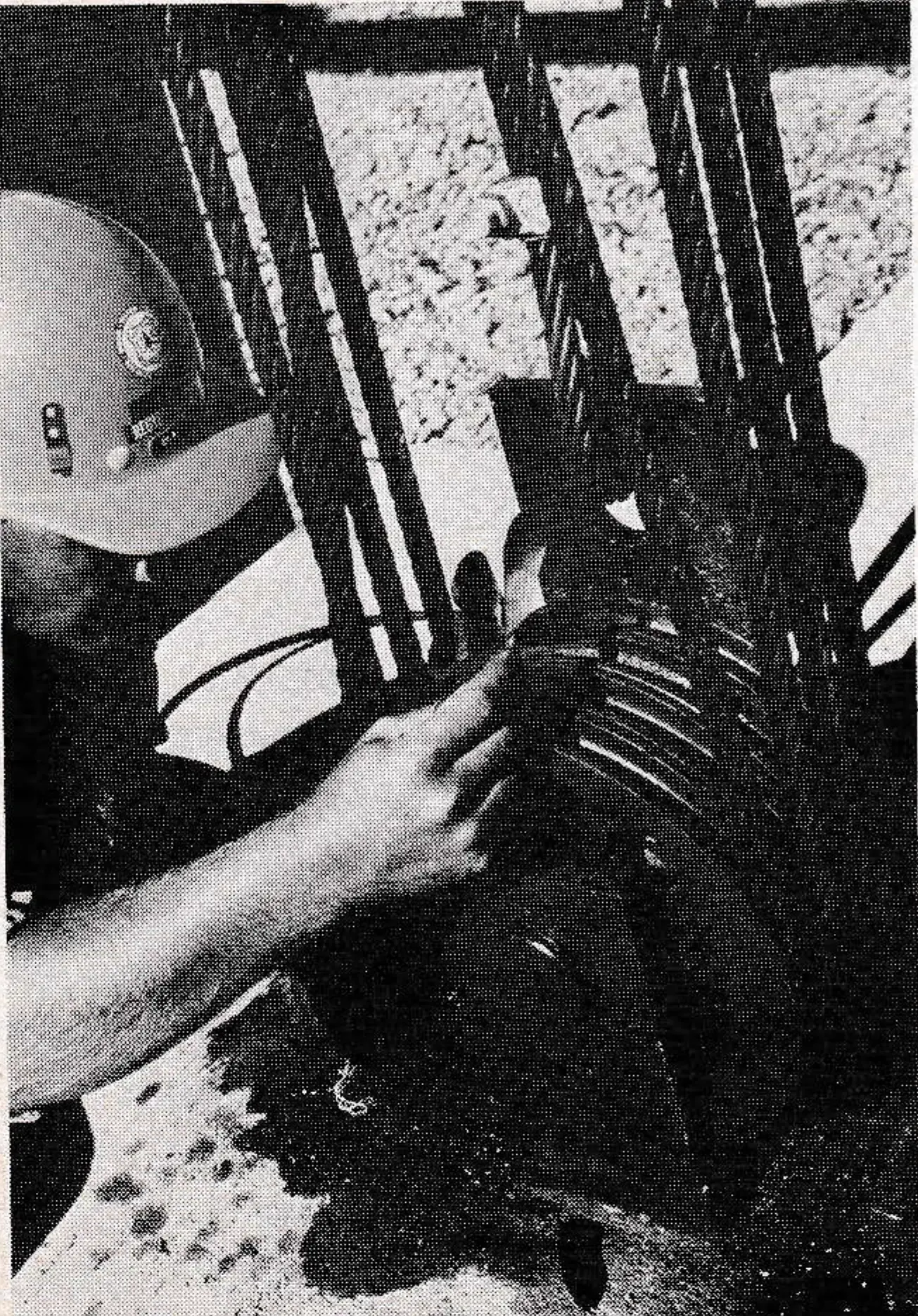
Checking the Counterweight System
The importance of the counterweight system is recognized to the extent that a daily pre-operational inspection and entry in the operational log are required by most codes and standards (ANSI B77.1-1977 3.2.4.2 and 3.5.1). Maintenance of the counterweight system is equally important and, again, record-keeping is required. The counterweight rope must receive the same attention as the haul rope or track cable. Counterweight sheaves and tension carriage wheels must be maintained so that bearings and rolling surfaces are near frictionless. Proper alignment and the absence of any binding in counterweight block guides, sheaves, or bull wheel carriage are essential. Regular maintenance should include the forced movement of counterweight and carriage on installations where this movement is very small. A repeated full rotation of sheaves facilitates their lubrication. Systems incorporating multiple sheaves and rope reeving to adjust the counterweight and carriage relationship warrant particular attention.
Virtually every tramway and lift will have a visible counterweight and carriage movement under the extremes of operating conditions. When no movement can be detected, the condition must be investigated and remedied. When movement is disproportional to that expected for a particular installation, the situation is equally critical; a qualified tramway design engineer can calculate the theoretical movement very closely. When necessary, the friction in a counterweight system can be measured by use of a fraction force and dynamometer.
A properly operating counterweight system is essential to lift life and lift operational safety. A minimum of operating attention and maintenance will assure the functioning of this most important lift component. Watch your counterweight and it will watch your lift operation.
Ed. Note: A companion article will appear in an early issue on the new substitutes for the “freely suspended counterweight block.”