


Those 30 years have now elapsed, and SAM invited four distinguished ski world figures to revisit the brave thinking of 1966 in the light of what actually happened and what might happen in the next 30 years.
We start with an adaptation of the original article, which was built around three projects: 1) The eagerly awaited development of Mineral King, in the Sierras of California. After bitter controversy, it was killed by environmental opposition led by the Sierra Club; 2) The Janss Corporation’s plans for Snowmass-at-Aspen, hard on the heels of its ongoing rebuild of Sun Valley; and 3) Walt Schoenknecht’s plans for Mt. Snow, Vt., where he had already astonished the ski world with the flamboyance of the huge, erupting, 300-foot fountain, the purple aura of his Japanese pool under ultraviolet and the goldfish tanks in the baselodge windows.
—The Editors
On August 31, 1966, the day chosen by the Forest Service to open the bids for Mineral King, the small USFS office in Porterville, Calif., was besieged. The day began when Walt Disney and a party of 10 touched down at the airport in a private plane to be greeted by flag-waving children. Next a group headed by Robert Brandt, accompanied by his actress-wife Janet Leigh, arrived with a 55-foot trailer full of contour maps and models of facilities they planned for Mineral King. Four other bidders, newspapermen and television cameras, consultants and advisors jammed into the overtaxed Forest Service offices. Disney’s group proposed a $12 million initial investment with eventual expansion that would run the total to $40 million.
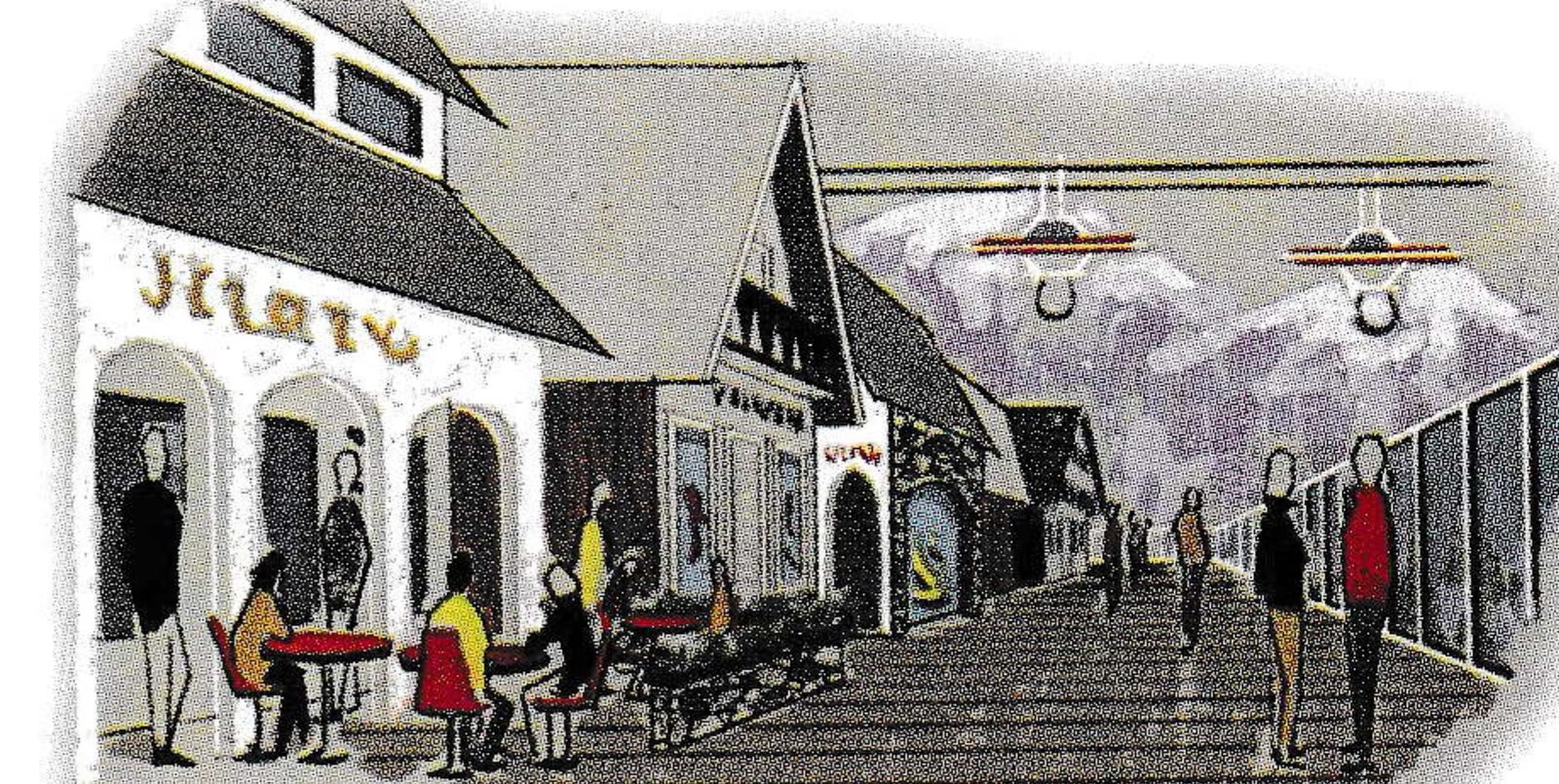
Disney is talking of starting with 14 lifts. The terrain includes a half dozen or more separate bowls. He envisions a huge underground parking area to conceal unsightly shipping operations. Above ground would be “American alpine” lodges…pitched roofs, hefty wooden beams, broad overhangs.
[Another] who is implementing plans for a giant new ski resort of the future is Bill Janss…The true Janss conception of the future will be reflected in eight small integrated alpine communities dotted around 10,000 acres of a brand new area, Snowmass to be developed near Aspen. Snowmass-at-Aspen will eventually be able to handle 17,000 skiers with more than a dozen lifts. Each of the villages will be constructed according to the developer’s plan, assuring integrated planning and the high quality of taste that has come to be associated with Janss’ name. There will be no automobile traffic through the village except by restricted drives or into underground parking areas. Lodges will average 25 rooms each. Eventually each village will contain 800 to 1,600 guest beds, plus shops and restaurants. Plans for summer recreation—golf courses, lakes, riding—are a keystone of the Janss project. The ski resort of the future must stand or fall on its ability to function as a year-round vacation center.
Meanwhile, back in the East, Walt Schoenknecht is working to raise some $10 million to bring his area (Mt Snow, Vt.) into line with his idea of the bravura new ski world. He feels that “new era” resorts will be “clusters,” smaller areas concentrated about one large magnificent one. “Ten million is needed now,” says Walt, ” and $85 million to finish the entire picture.”
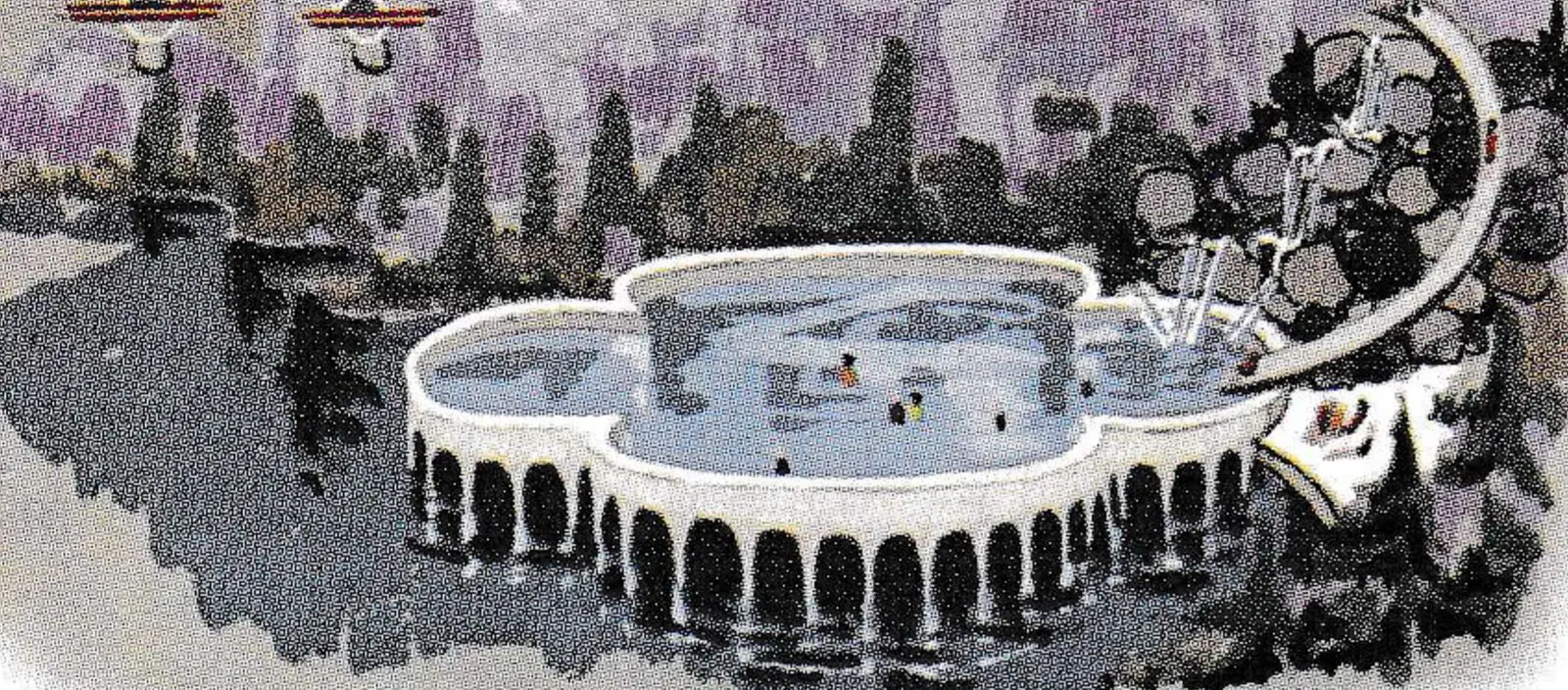
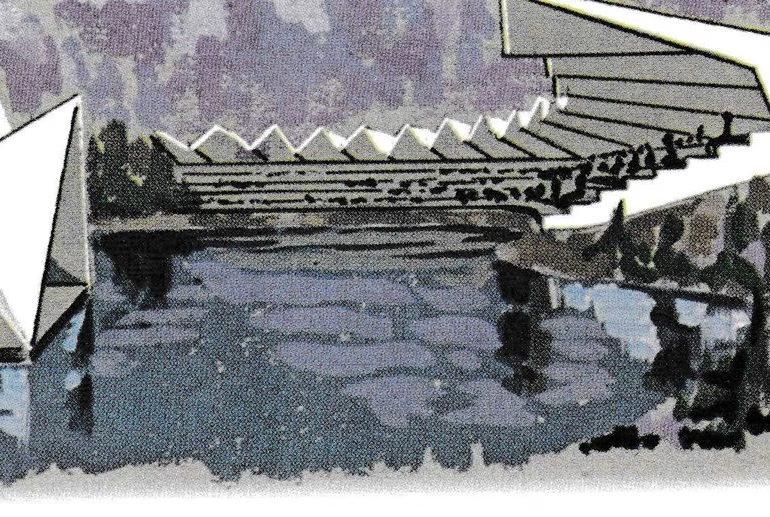
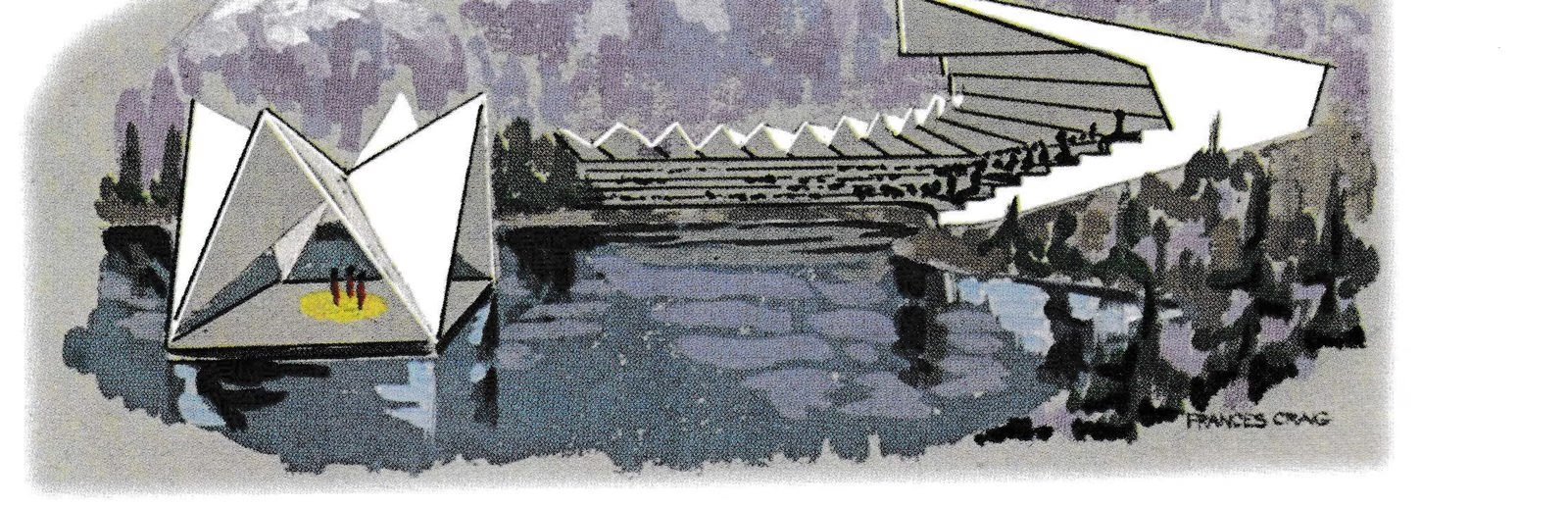
Schoenknecht’s new Mt. Snow in central Vermont is to be a complex of six integrated, but separate areas consisting of 21 double chairlifts, six gondolas and six aerial trams. There will be lifts going around the valley bottoms, lifts going into the different villages and trams from peak to peak. A person will be able to choose between an active, bustling center, or a club-like secluded village. Schoenknecht’s projects run the gamut from a cliff hanging village to a slalom amphitheater, to a shopping center and a man-made lake with floating concert and musical stage. Also an airport and a natural history museum.
Schoenknecht predicts that groups of people will get together and build half-million dollar base lodges for their own private use. (“It would take 500 people only $1,000 each to raise a half-million.”) This would be the ski club of the future: a private club able to make use of 10,000 acres of terrain and lifts which it could not afford to build itself. In addition, Schoenknecht foresees the day when there will be a General Motors of the ski industry, with thousands owning shares in it.
Schoenknecht, Disney, Janss: they are among the harbingers of a different era of skiing, and probably a different way of speaking about it, too. “Newski-speak” must be invented for the descriptions of these wonders-to-come.
Following are the comments, insights and hopes of four prominent ski industry figures in response to the 1966 article in Ski Magazine excerpted above.
From a Veteran Journalist
As an exercise in envisioning the future, the 1966 Ski article—done under my editorship—was incomplete and graphically insipid. Perhaps we did it under the influence of too many martinis, which were the liquid lunches of choice in New York publishing circles at the time. In any event, I have no clear recollection of how we came to focus on Disney who would never build a ski resort, Schoenknecht who would go bankrupt, and Janss who bought a resort designed in 1936, not 1966.
Still, their visions were worthy, and my disappointment is not the slenderness of the article we produced, but that we are still dreaming the dreams of 30 years ago and that we still operate an industry insufficiently capitalized to realize them. The idea of clusters of small-scale, humanistic alpine villages scattered about the mountains is superb, of course. So is the notion of car-free resorts and pollution-free gondola transportation. But we mostly find them in Europe, not here.
Mineral King fell victim to the forces of environmental preservation, accurately foreshadowing the future mantra: Expand existing resorts, don’t build new ones. Subsequently, Disney never found one it liked well enough to buy.
Schoenknecht’s financial failure eventually led to the sale of Mt. Snow to S-K-I, ironically fulfilling his prediction that ski areas might one day be owned by large public corporations. Bill Janss was aware that “the way to make a small fortune in the ski business is to start with a large one,” and so backed out of Snowmass. Fortunately, Bill had enough left to expand Sun Valley and build on Averell Harriman’s vision of 30 years earlier.
If I were to publish an article today about what the future will bring by the year 2026, I would at least know enough not to predict charming, small alpine villages linked by aerial cableways. In forecasting, it is important to distinguish between one’s wishes and real possibility.
John Fry
Founding Editor, Snow Country
Landscape and Resort Designer
Reading through a 30-year-old article on ski resorts of the future left me with the same unsettling questions that I used to have when, as a teenager I walked with my family through the vaguely sterile technology-driven “home of the future” at Disneyland: Will it—can it—really develop like that? Will people really like living in it? With the considerable benefit of hindsight, those grand visions for mountain resorts that were touted as “harbingers of a different era of skiing” 30 years ago, today seem effusively optimistic, but rudely insensitive. With the possible exception of Snowmass, they represented the imposition of theme park development patterns largely unrelated to their existing sites. They proposed mega-facilities with a “can-do” disregard for financial realities. And they seemed blithely ignorant of ecological constraints, aesthetic opportunities or the dynamics of human interaction.
What strikes me most vividly about the article is how much has changed since 1966—most of it, I think, for the better. Today, it’s common wisdom that a resort can’t survive financially on skiing alone. Every resort operator today understands that a broad mix of recreational activities, cultural events, and commercial services is necessary to meet the needs of an increasingly diverse year-round visitor market.
Today, too, the state of ecological understanding in mountain environments has progressed immeasurably. Environmental regulations and development review procedures that hardly existed 30 years ago have become a primary factor in resort development decisions. Virtually all ski resorts today understand that their future depends on their wise response to issues of environmental protection and impact mitigation. Most also understand that the natural environment is their most potent attraction and sensitivity to it their most effective design tool.

From my vantage point as a resort planner perhaps the most significant change affecting resort design is the birth and growth of resort communities. Today, because resorts are located in attractive places where people want to live, we have had to develop a far better understanding of how we can help to form and strengthen the sense of community. In this effort, civic facilities, animated public spaces, real neighborhoods and alternate modes of transportation all play a stronger role than ever before. We have also been obliged to consider the different needs of full-time residents, particularly families, for housing, education and recreation. Overall, it seems that, for social as well as financial reasons, we are rediscovering the appeal of (and strong desire for) human scale. Personally, I think these are all hopeful trends.
Sherry Dorward
Eldon Beck Associates, Inc
Ski Area Planner
OK, I accept the challenge of reviewing the January 1966 Ski Magazine article, commenting upon which elements of those visions were prescient and which have failed to pass the test of time and finally presenting my vision of 2026.
California
In January of 2026, Mr. I. B. Nimby, paralegal from the Sierra Club will file an injunction against a cableway connection between Mammoth Mountain and June Mountain ski areas, even though the Environmental Impact Statement, which commenced in 1966, has definitively proven that the aerial cableway will reduce pollution, carbon dioxide loading, ozone depletion, energy consumption and, most importantly, vehicular traffic. Mr. Nimby states that a new theory from the UCAL, Berkeley, suggests that clothing worn by “sliders” may in fact be latent receptor sites for mutant DNA from outer space and hence more study is needed. Meanwhile, the length of strip malls in Mammoth Lakes has reached over 20 miles.
Snowmass, Colorado
Bill Janss’ visions for Snowmass (and Sun Valley) have largely been realized. What will be new in January 2026 is that Aspen Mountain (Ajax) will be interconnected by cableways with Aspen Highlands. An APM (Automated People Mover) will connect downtown Aspen with the airport at Sardy Field with an ITS (Intermodal Transfer Station) at the base of the Buttermilk-Tiehack Mountain Resort. Snowmass and Tiehack will be one large “Slide Area” and a 22,000-foot high-speed and high-capacity cableway will extend from Highway 82 with a 16 minute ride to the top of Burnt Mountain. Travel time for a slider staying at the Little Nell Hotel to the top of Burnt Mountain will be in the order of 20 minutes.
Mt. Snow, Vermont
While many of Walt Schoenknecht’s visions have merit, I believe that the “Disneylands” will be built in Florida and California and not in mountain resorts. I further disagree that resorts will have “cluster villages” spread hither, zither and yon. Due to economies of infrastructure and the need to reduce traffic, density will be concentrated rather than dispersed. My experience suggests that the ideal village has between 6,000 and 10,000 beds within a quarter mile of the cableways, 100 percent underground parking and 100 percent public beds, which will produce 3,500 to 6,000 sliders per day. Since most of the biggest and best mountain resorts are on, or require sizable public land, I doubt that the private club concept will be a significant factor. Rather, people will continue to congregate by economic class and age, as determined by the price of a two-star hotel versus a five-star hotel, sit-down mountain-top dining to fast food outlet, etc.
Paul E. Matthews
Ecosign
Mountain Resort Planners, Ltd.
Terminology
Slider—Objects will still accelerate at 32 ft/sec2 (nb. gravity will remain a constant). The methods of skiing, boarding, sledding or riding down a slippery slope will congeal into the one word “slider.”
Mountain Resort—will replace ski area, although USFS signs will still probably say Winter Sports Recreation Area.
Cableways—will replace tows, chairlifts, gondolas trams, etc.
Architect/Land Planner
The forecasts from 1966 all shared an unabashed, enthusiastic vision for the future—multiple village clusters, floating concert stages and underground parking. By coincidence, 1966 was the year I graduated from West Point with a similarly unchecked optimism. Since that time, ski resorts and enthusiastic graduates have been tempered by the constraints of the 80s…ROI, P&Z and EIS. In short, the realities of finance, politics and the environment have joined, if not overpowered, esprit, vision and daring in the planning of ski resorts.
As we move toward 2026, the very name “Ski Resort” is being replaced by “Destination Resort Community.” New development must face an intimidating series of constraints and their associated scrutiny. At the same time, the qualities represented by visionaries like Bill Janss and Walt Schoenknecht have ever-increasing importance.
Resorts have become a refuge and contrast from urban life, whether for short term or permanent stays. As such, the resorts of the future have the opportunity to offer something different from what will be found in our ever-expanding urban areas. A balance with nature, a zest for regional identity and the offering of places for less guarded social interaction may emerge as the real attributes of our new resorts.
While all their tangible goals were not met, the 1966 visionaries gave us the heritage of enthusiastic spirit and fun. One can only hope those attributes will be rekindled as we move forward in the planning and design of new resorts.
Jack Zehren
Zehren and Associates
Avon, Colo.

