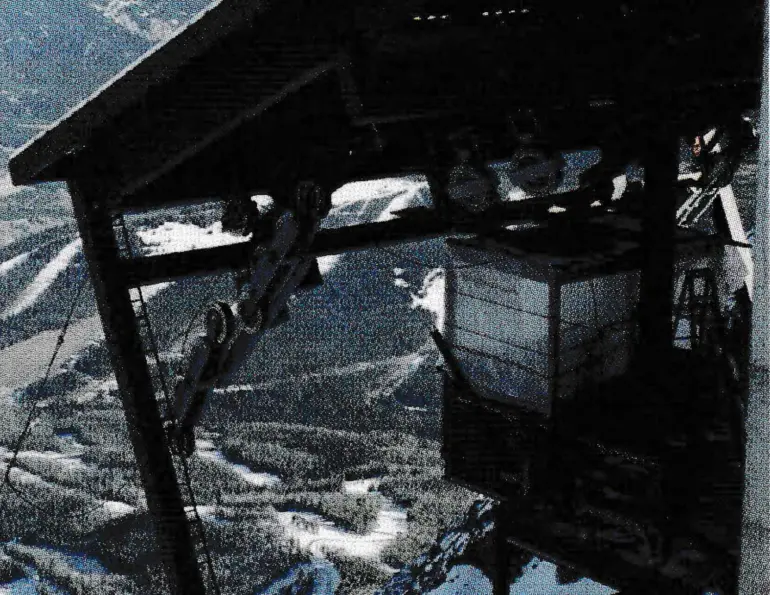
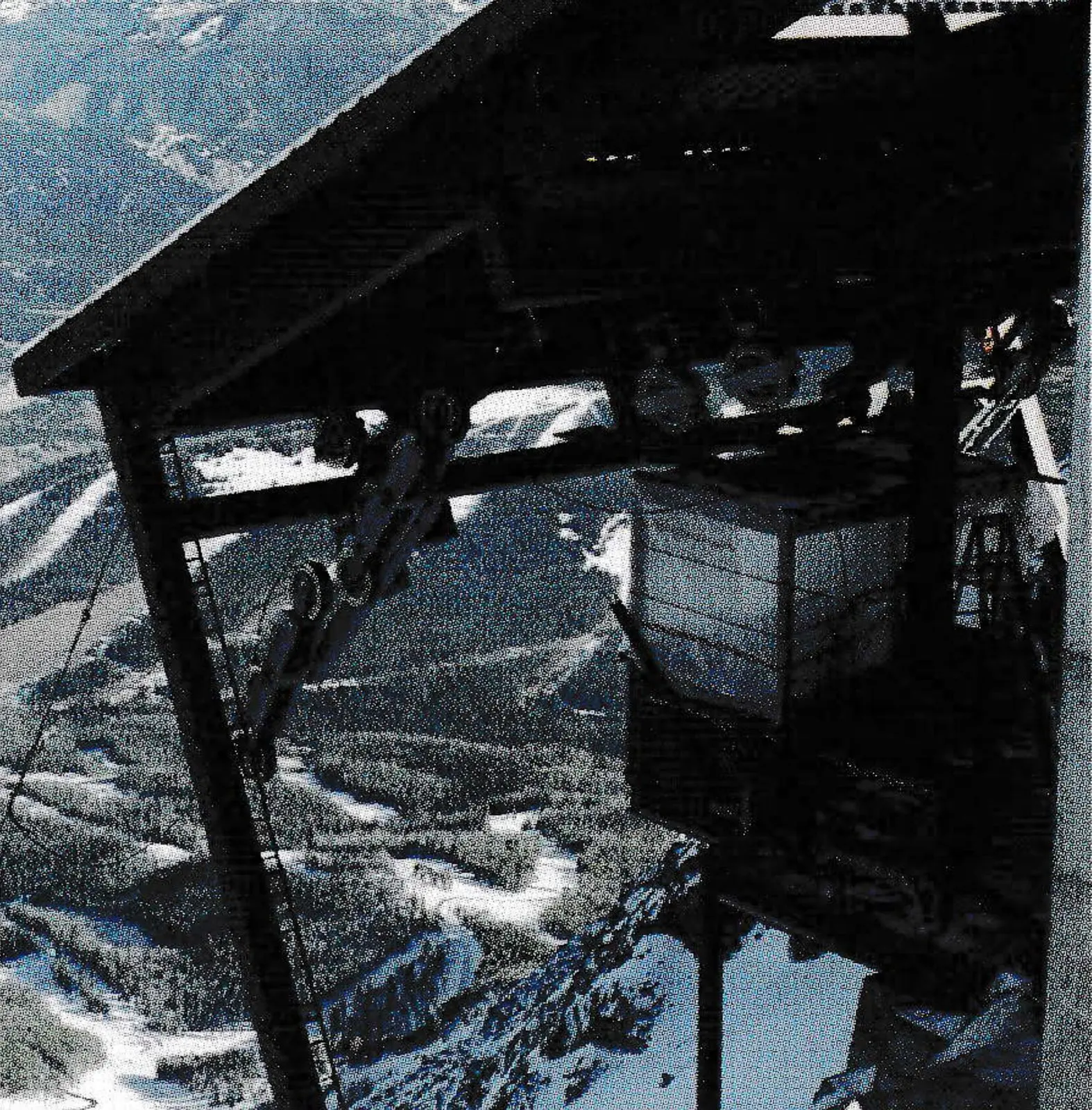
Until now, the 2,300 acres of skiing at Big Sky Resort has been developed on the chest, midriff and lower body of Lone Peak, as well as on the adjacent Andesite Mountain. But always there has been the dream of skiing from the top—skiing the head and shoulders of this magnificent peak. Land acquisition in recent years had set the stage, and now, with the successful installation of a Doppelmayr-design jigback monocable gondola system, the dream has become a reality.
Photos courtesy of Big Sky
But it did not become a reality until the engineers could overcome some incredibly tricky design challenges. The installation also reflects a bold investment in advanced/expert terrain—its validity soon to be tested.
Photos courtesy of Big Sky
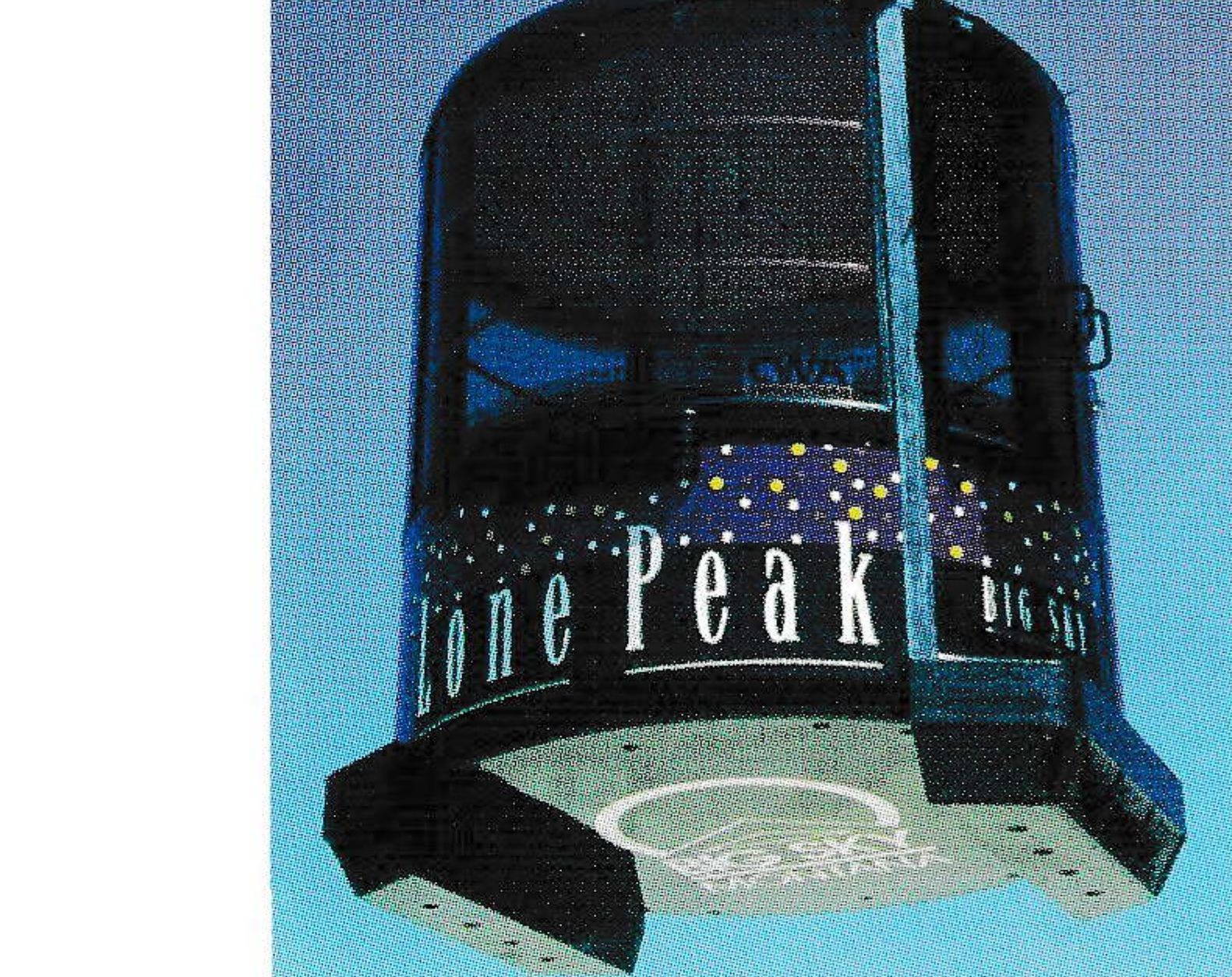
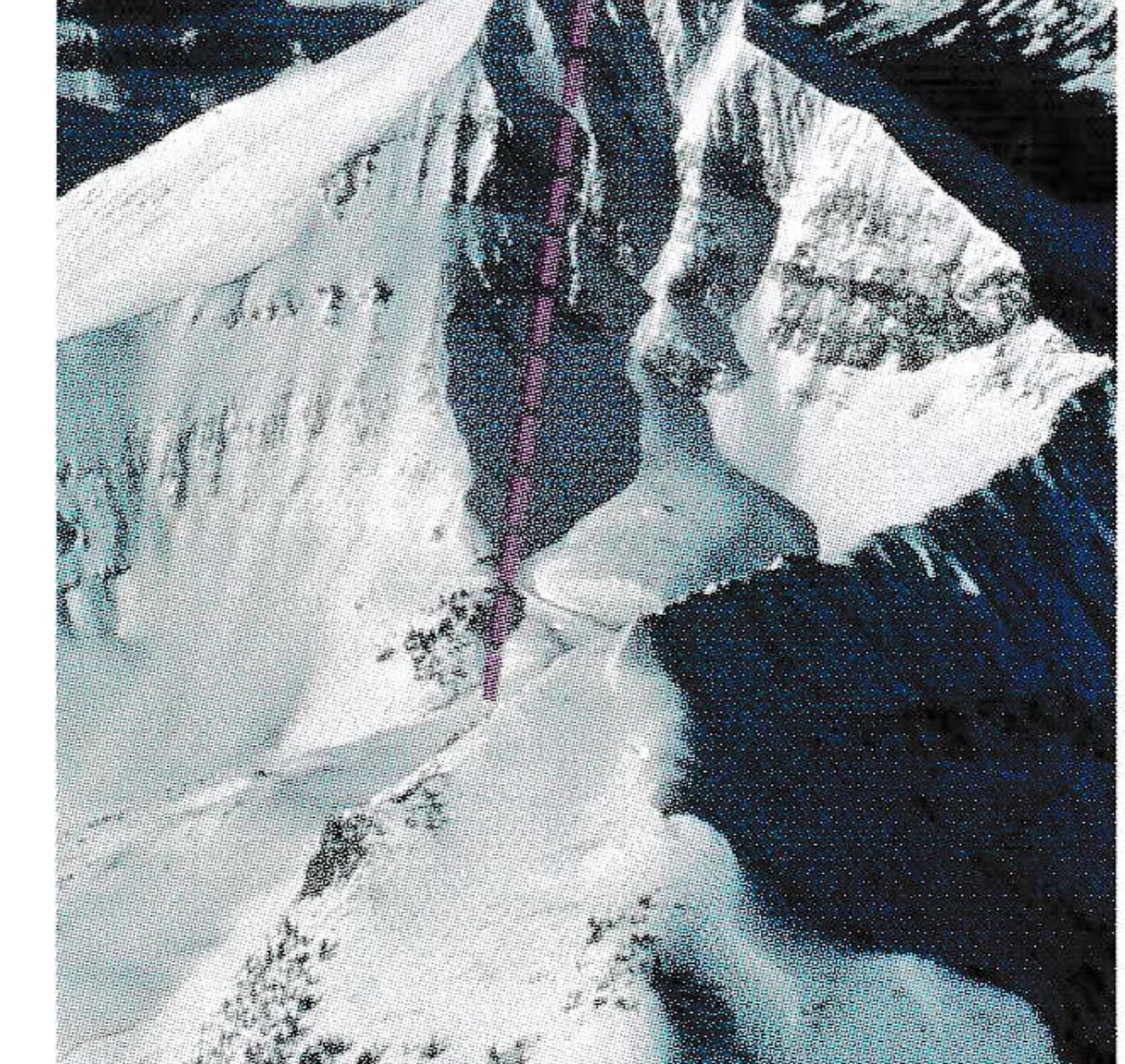
Doppelmayr had engineered the system for a single monocable span of 2,800 feet using reversible 15-passenger cars to deliver a capacity of 200/hour. The engineering difficulties focused critically on designing a rescue system for emergency evacuation, given the 45 to 60 degree terrain under the line profile.
Oswald Graber, Doppelmayr’s project engineer, settled on a system that utilizes 3/4-inch rescue rope to move a manned rescue carriage on the main haul rope to the rescue location. The cabin is attached to the rescue carriage and detached from the haul rope. This effectively converts the 1-3/4-inch haul rope to a track rope.
Photos courtesy of Big Sky
The first major construction hurdle faced by the Matrix project managers was that the top terminal is not accessible by vehicles and all construction activities would have to be done by helicopter. Helicopter types and availability were determined, and resulting lifting capacities were inputted to the appropriate system designers. By matching the computed load requirements to the lifting capacity of the aircraft being used daily, a Lama helicopter from Pacific Western Helicopters, it was determined that between 2,800 and 3,100 trips would be needed from parking lot to Lone Mountain’s summit!
By May 21, tools and equipment had arrived on site and the first lift of heavy machinery began. This included an airtrack drill rig, a 7,500-lb. Takeuchi loader and an 8,000-lb. Takeuchi excavator. To stay within the 5,000-lb. maximum lift capacity for the Vertol helicopter supplied by Columbia Helicopters, all the equipment had to be torn apart and reassembled on the summit.
By early June, excavation began for the bottom terminal. The original design had called for constructing the terminal into a 20-degree backslope and burying it—a slam-dunk project. The only problem was there was solid ice three feet below the rock surface. This required the application of the sort of arctic foundation engineering common in Alaska, which in turn meant redesign and relocation of the terminal.
The first step in the ice engineering process was to determine the distribution of the ice mass under the new flatter terminal site chosen. Core drilling revealed a mantle of loose rock between 6 and 17 feet thick, all of which was lying on a rock/ice matrix to approximately 65 feet, at which point the presence of rock slowly diminished to where there was a solid ice core below 80 feet. The proper geologic term for this phenomenon is an ice-cored rock glacier.
Like their solid ice cousins, rock glaciers also move downhill under the influence of gravity, although at a slower rate. Analysis revealed an estimated movement of the terminal of 6 to 8 inches per year. It was determined that, thanks to flow directions and design features, the terminals are likely to stay in approximate alignment and that the amount of annual movement is fairly close to the long-term rate of rope stretch. With any luck, these two factors will balance out and the system will never need to be respliced.
One of the principal concerns in building on ice is the potential for the structure to introduce unwanted heat to the subsurface, which could cause melting and create voids, resulting in uneven settling of the structure. With this in mind, core drilling was done, the results of which were sent to Arctic Foundations in Alaska, together with climate data. Based on this, they designed a system of passive thermal probes and insulation for the subsurface below the terminal.
In what is a sort of a heat transfer process, the probes are essentially enclosed radiators that transfer heat to cooling fins where the gas in the tubes condenses into a liquid and falls back under the building, taking with it the cold of winter. The system is inactive whenever the ambient air temperature is above the ground temperature. The result is to supercool the subsurface during the winter. Insulation just under the building keeps the ground from thawing during the summer.

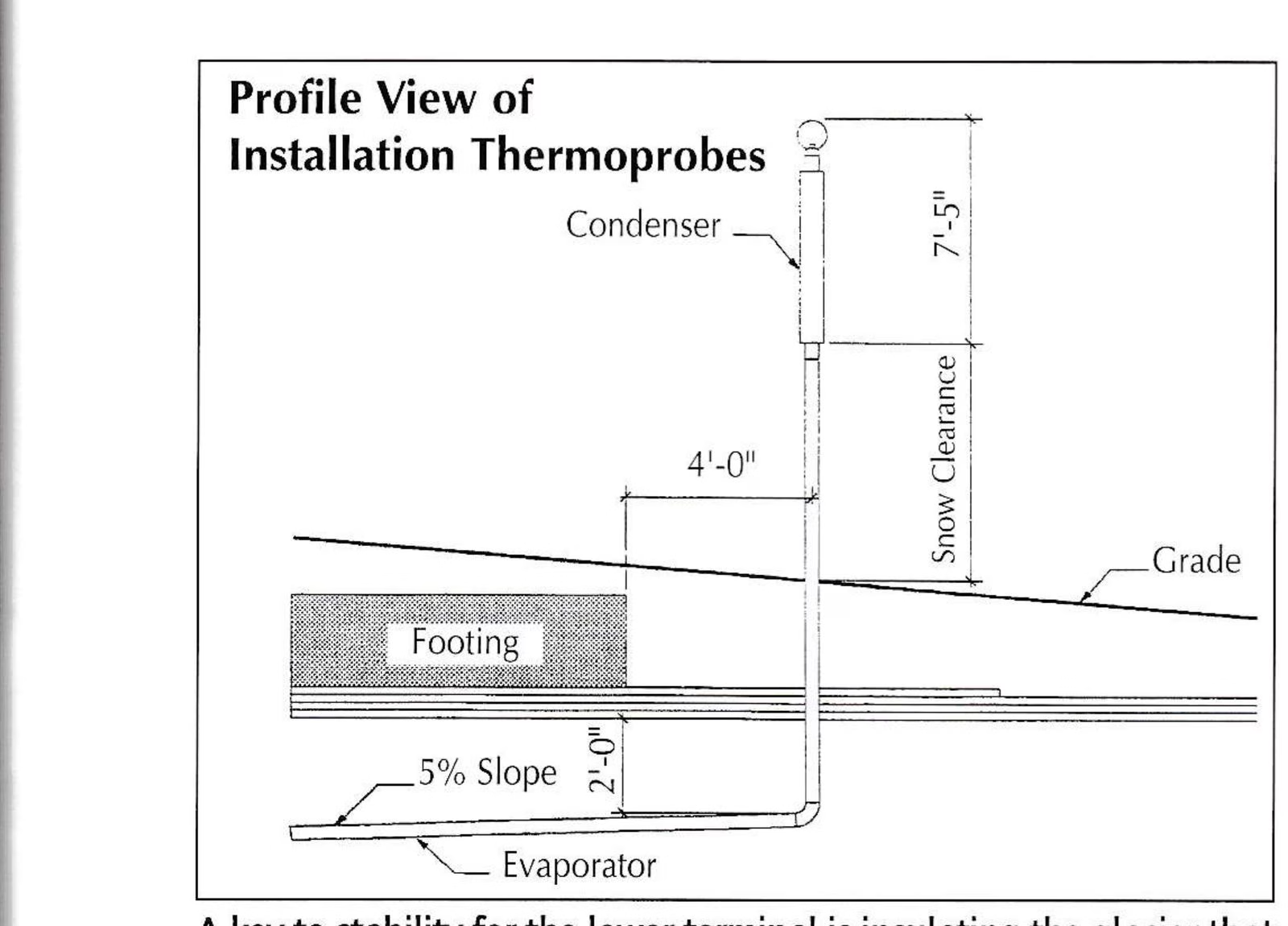
After careful consideration of all options, it was decided to install pipes under the terminal for future thermal probes and to insulate with eight inches of rigid foam. The terminal was built on a heavily reinforced two-foot-thick slab of concrete to accommodate the potential for void spaces forming.
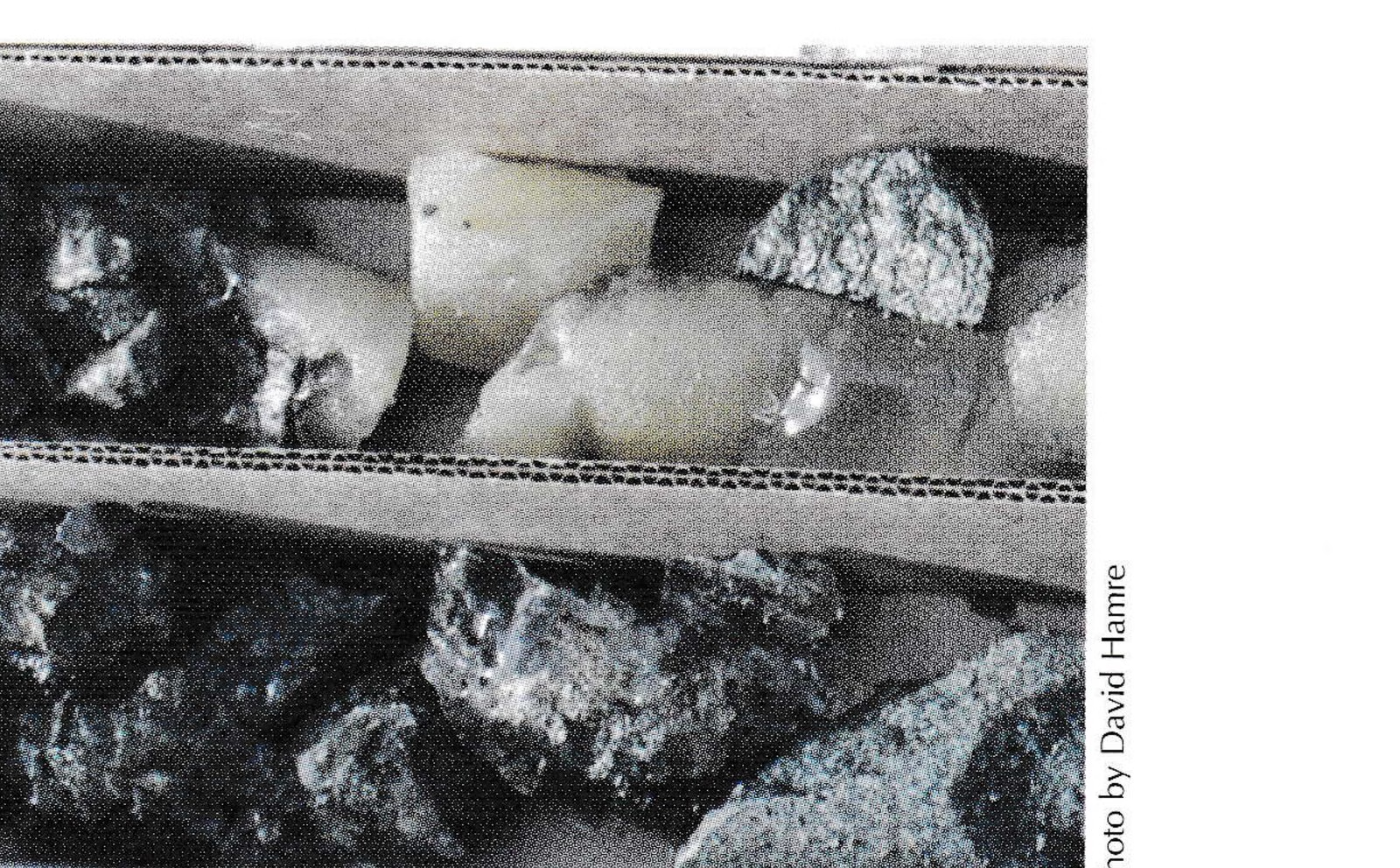
Photo by David Hamre
Movement of the terminal will be carefully monitored and the surface condition observed. If settlement is noted, the thermal probes can be retrofitted at a future date. There is a reasonable chance that the expensive thermoprobe installation will never be required, thanks to the relatively thick mantle of rock between the terminal and permanent ice.
“With the exception of the evacuation system, the lift itself was quite simple,” said John Kircher, general manager of Big Sky. “The project quickly centered on the construction of very complex terminal buildings—even without the glacier.
“The rock glacier is a fascinating geological occurrence in these latitudes, just south of full ice glaciers. It is much more extensive than we previosuly thought and, while it is moving slowly, it opened our checkbooks with amazing speed!”
Big Sky’s investment in the Lone Peak Tram, which opens up at least 1,200 acres of advanced and expert terrain, is operationally a bold investment in the media-driven realm of extreme skiing. And in the realm of design and construction for these operations, the project crossed new and exciting frontiers.
Now comes the real testing of these bold concepts—with the skiing public.
Lone Peak Tram Timetable
Design/build constructors, Matrix Construction, were introduced to the project in September 1994 by Alfred Fruewirth, of Doppelmayr USA. Once Doppelmayr’s tramway design was complete, Rick Jewett, of Jewett Engineering and Bruce Montgomery, of Buehler and Buehler, were contracted to design the terminal structures. This took most of the winter, with preliminary plans issued in April in time for construction bids.
In early May, 1995, Matrix was awarded the construction contract and started construction later that month. The top terminal was completed by late September. The last of 1,100 yards of concrete was poured at the base in mid-November. At press time, the load test was to occur December 19 in time for the Christmas rush.
| Item | Specification |
|---|---|
| Model | 2x1x15-MCFJ |
| Slope length | 2768.6 ft. |
| Vertical rise | 1438.7 |
| Lift speed | 1181 FPM |
| Lift capacity | 200 PPH |
| Haul rope | 1-3/4 in. (6×36 WS) |
| Drive | 250 HPDC regen. |
| Line gauge | 18.04 ft. |
| Rope tension | 98,882 lbs (hydraulic) |
| Design | Single span design |