


The necessity for year-round cash flow has led ski areas to develop a steady, if sometimes low-yield, business hosting corporate events and conferences during the summer and fall, utilizing otherwise empty lodges and meeting facilities. But many ski areas fail to realize the potential of corporate sales during the snow season.
Corporate checkbooks are often opened to pay for a wide range of activities including meetings and conferences, as well as company retreats, team building exercises and rewards programs targeted at both top employees and loyal customers. But ski areas seldom seem to be the first choice of corporate decision makers.
According to John Adams of Universal Tickets, a Boston-based company that sells vouchers for lift tickets or rounds of golf to corporations ranging from Verizon to Visa, close to 70 percent of all major league sports tickets are ultimately paid for by companies and passed on to the end user as a perk, prize or reward. But less than one percent of ski lift tickets are paid for with corporate funds.
A handful of ski areas are starting to focus on this market, especially those within easy access of major economic centers. For example, this past January, Wachusett, Mass., an hour outside Boston, opened a new wing with seven corporate hospitality mountain suites. Conceptually, the suites are modeled on stadium sky boxes, but physically they more closely resemble a luxury condo living room: six range in size from 400 to 450 square feet, the seventh is close to 1,000. The suites are available for lease by companies for the entire season for $50,000 or for $350 per day. During the past truncated season, two suites were rented by a local pharmaceutical company and a local supermarket chain. According to Marketing Director Tom Meyers, these suites were used most days. “Ideally, next season we would keep a mix of seasonal and daily leases, but in reality if we had seven companies eager to take up seasonal leases we would sign them,” he said. “But as this is unlikely, our plan for next season is to offer bundled packages of six or twelve sessions to give corporate users increased flexibility.”
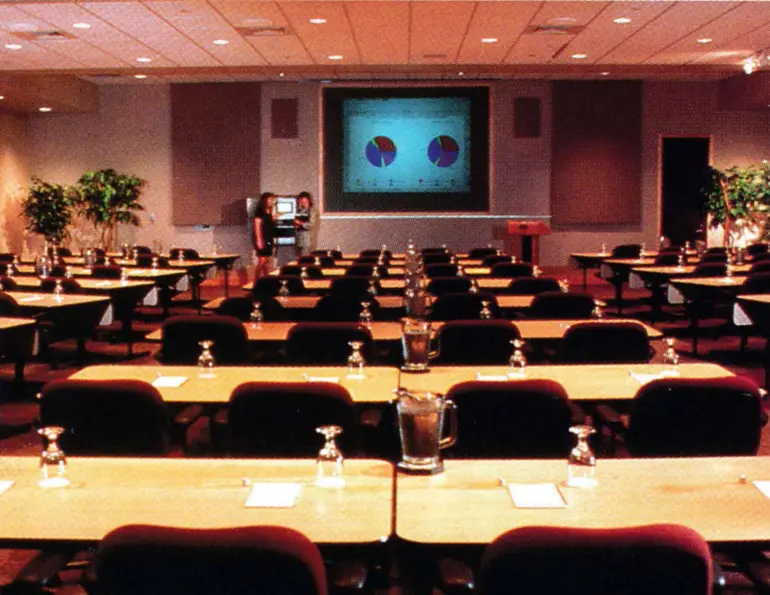
Other ski areas are finding a winter market for conference facilities originally intended for warm-season use. “Conferences are a key component to our year-round success,” says Rex O’Connor, senior corporate sales manager at Crystal Mountain, Mich. “Yes, our October room nights are more than January. Sure it’s a lower yield, but we all know during summer and fall just making enough revenue to break even is essential.”
Grand Rapids is Crystal’s biggest local metro market and the ski area has one of the few accredited conference facilities in the Upper Peninsula. But because things are pretty quiet midweek during the winter season, the area is seeing increased interest from groups simply looking for a cheap conference venue. O’Connor mentions a sharp increase in government groups looking for a deal and a place to meet.
“They usually don’t even ski, but are definitely interested in our rates that might be discounted as much as 30 percent midweek,” he says. “But we are also aggressive about getting corporate groups that want the whole experience. For example, with pharmaceutical companies, money is no object. Glaxo Smith Kline have done a couple of programs. This season they even brought a group of 40- or 50-plus families over President’s Day weekend. We told them they would have to pay full rates and they didn’t even try and negotiate. Some skied, others didn’t but in total the 80-plus people in the group contributed about $37,000.”
Crystal is now starting to attract mid-season groups from Chicago and Detroit. This past winter, O’Connor estimates corporate and incentive groups brought in roughly $500,000 of additional revenue. Of this, 300 room nights were accounted for by Crown Marketing, a Florida-based mortgage broker that was offering an extra night stay at Crystal to anyone securing a home mortgage through their company.
This type of single-day ticket may well offer the best short-term prospect for developing corporate-paid skiing. Like Crystal, ski areas from Mountain High, Calif., to Taos, N.M., work with supermarket chains, gas stations and others to offer ski tickets as a frequent-shoppers-style reward, often based around some sort of two-for-one program. Other typical users of this small-scale immediate reward are auto dealers offering lift tickets in exchange for test drives.
While areas have the option of setting up a deal directly with a local corporation, there seems little downside in also enrolling with a promotion agency such as Universal Tickets.
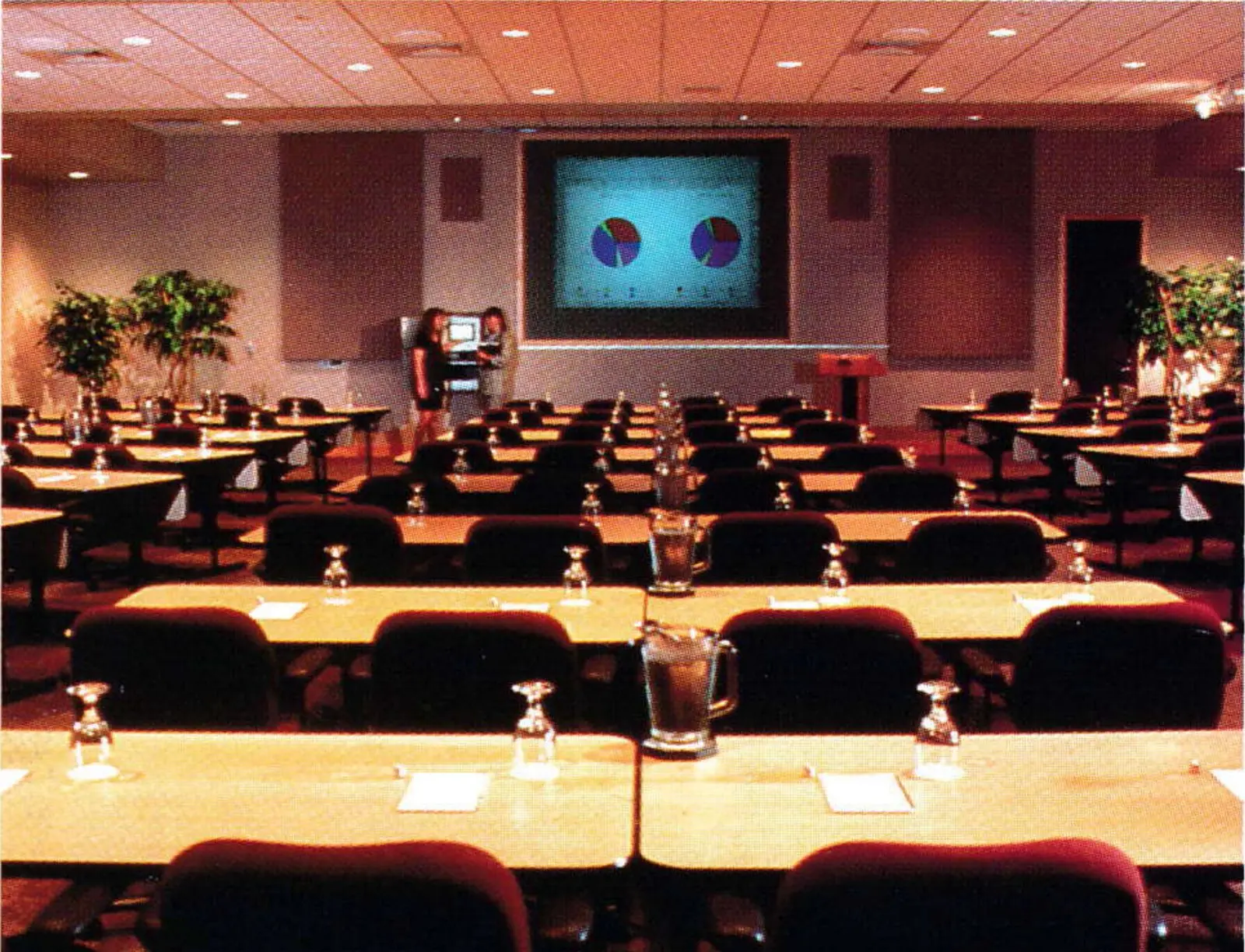
Photo courtesy of Crystal Mountain
“We guarantee resorts to repay them the full price of a lift ticket,” says Adams. “Then we offer our corporate clients coupons exchangeable at ticket windows. Our clients either pay $60 for every ticket and we keep the difference or they give out the coupons and we bill the client 20 percent on top of the amount that we pay back to ski areas. Either way, the ski area gets full price while we do the selling for them.”
Many of the coupons, which can have corporate logos added, are in fact distributed by incentive and promotions houses that offer tickets as part of a long list of gifts designed to motivate employees or customers. These gifts go all the way up to luxury travel rewards, often given to top corporate performers, with the concept that travel acts as a motivator that other types of rewards can’t match.
But because incentive travel tends to be booked around accommodations and typically involves fairly small groups, many ski areas leave pushing the incentive travel to their hotels. For example, during the winter, incentive groups contribute 500 to 1,000 room nights at the Silver Tree in Snowmass, Colo. This is 10 to 15 percent of the property’s total group business, which in turn is about 50 percent of the total number of room nights.

“Most of the incentive groups come through traditional incentive travel houses such as Carlson or McGettigan. We do very little direct business with corporations and not much through SkiTOPS operators,” says Silver Tree’s sales director, Les Pedersen. “The houses are bidding against each other to put together the best package for their clients, sometimes bidding against each other for the same business. We are an element of that package. Each group is custom planned. We do first and last night entertainments, but after that the incentive company will go to a destination management company to deal with everything from lift tickets to sleigh rides.
“We work hard to get repeat business, but as novelty is a premium with this sort of travel, we wouldn’t expect to see the same corporate group more than once every six or seven years. But pharmaceutical companies are clearly the best market. Some groups might like cruises or Las Vegas, but doctors like to ski and pharmaceutical companies have big budgets for making doctors happy.
Pedersen points out that although his property may be the main direct beneficiary, the ski areas also gain repeat business as group members return privately, as well as from additional lessons and rental equipment sold. He also points out it easy to underestimate the significant incremental spending by individuals who know someone else is picking up the tab for their vacation.
Tina Jones, proposal development officer for McGettigan, says ski incentive travel is still a far cry from being a developed commodity.
“Most clients still want sun, sea and sand,” she says. “Other strikes against skiing are that it is perceived as expensive, and at the key times there will be a lack of available accommodation. Even if space were available, we do groups at peak times, so we would want group pricing when we are least likely to get it.”
On the other hand, she adds that ski travel has a number of advantages. One is that it is still a relative novelty in the incentive market. Another is that as most people will be skiing or learning to ski there is no need for major itinerary planning during the day.
“Our biggest problem is lack of information coming from the resort properties,” says Jones. “Much of our business is date-sensitive. Once we know about hot dates, this information is immediately spread internally to all our account executives. A lot of it is about communication and we haven’t built up that many strong relationships with winter resort properties.”
Ted Curtin of Rocky Mountain Tours is one of the few ski tour operators focusing on incentive travel. “One of the things that will help ski incentive travel develop is the pricing structure,” he says. “Incentive travel is about creating something memorable. This means a weekend is not long enough. And one thing about skiing is a six-day package is only slightly more expensive than three days. Hopefully, this will make more corporations look at skiing as a viable and not overly-expensive incentive option.”
Skiing as a corporate incentive has the potential to be a very valuable revenue stream and resorts of all sizes and locations can benefit. Destination resorts make good getaway incentives for employees while day areas can offer a nearby option for corporate customers as well as employees.
