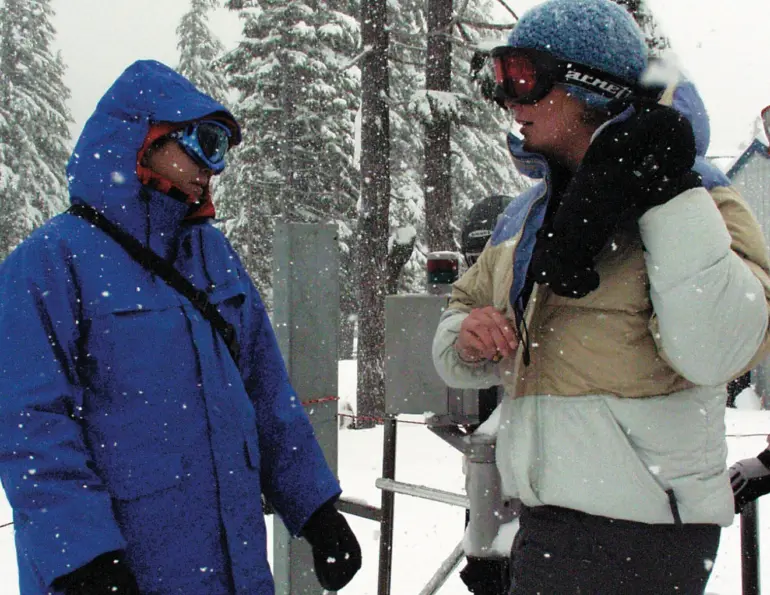
For many years, Mt. Bachelor Human Resources Director Pat Gerhart had considered hiring employees from other countries. “We had Americans who came to Bachelor from other ski areas, managers too, who asked why we didn’t do it,” she said. “And I had been approached by numerous agencies in South American countries over the years, agencies who find jobs for people (from other countries) here.” So, when a representative from San Francisco-based Intrax Inc. visited the mountain, Gerhart decided to work with the company.
Certainly, she understood the potential benefits: good work ethic, an international feel on the mountain, and a diverse workforce. So last summer, she agreed to hire 18 employees from Brazil and Argentina through Intrax to work at the central Oregon resort last winter.
It cost Mt. Bachelor nothing to work with Intrax. The employees who were eventually hired shouldered the cost, paying agencies in Brazil and Argentina that worked with Intrax about $900 to find them a job in the United States.
But Gerhart discovered that hiring and integrating international workers is far more involved and challenging than she ever imagined, and perhaps more trouble than the effort was worth.
On the Plus Side . . .
Still, the foreign workers largely lived up to her expectations about productivity and cultural diversity. And while she encountered several unexpected difficulties, there were many pleasant surprises, too.
Though they weren’t hired specifically for their culinary skills, some of the international employees spiced up menus with native dishes and charmed restaurant goers as servers. At Scapolos, a restaurant located in the lodge at the top of the Pine Marten lift, two Argentinean employees brought international flavor to the menu, cooking the specials during some of the busier long weekends. On Martin Luther King Day they made about 130 empanadas, fried or baked dough pockets filled with meat or vegetables. “They were very popular,” said 23-year-old Argentinean Pilar Pano, 23, of Buenos Aires. “We sold out of them by 1 p.m.” They also served up Milanesas, slices of beef cooked with eggs and breadcrumbs, and tortas, ham and cheese pies.
The Brazilians and Argentineans added diversity to more than the food. While at work, American employees soon began to question them about their home countries and life there. Having the foreigners on the job made work more fun for the American employees.
“It’s been fun for me to work with them,” said 36-year-old Bend resident Darin Lyons, who cooks at the West Village Base Lodge. “We can joke around with them, teach them slang. Sometimes they don’t get the jokes but they’re some of the happiest people I’ve ever worked with.”
While the language barrier was occasionally limiting, he said it had an unexpected and positive outcome. “It pulls us together a little more,” he said. “We work better as a team. You can’t just yell something out and turn around and expect it to be done. You have to take into account that they might not understand you, which means you take the time to bring it down to a more personal level. It changes your relationship with someone, makes it better.”
That was a typical reaction. Karen Shaeffer, 62, works as a team leader in lodge services doing mostly janitorial work. She said she’s enjoyed watching her American employees take on a new role helping train and teach the international employees.
“They’re so friendly, everyone just wants to help them and show them a good time,” she said.
Gerhart said she was impressed by the way the international employees stuck out the cold, despite frostbite and frozen fingers, often setting an example for their American counterparts. “Most of the managers, even the ones who were reluctant to work with them, came back and told me that they’ve turned out to be their best employees.”
Lift manager Tom Lomax was also impressed. “The work ethic that this group showed puts American kids in their same age group to shame,” he said. “They were here on time and they were here every day they were scheduled. They showed a really high commitment level to their work.”
The Rest of the Story
Still, there were problems. Many of these stemmed from the fact that the employees came from temperate and tropical climates and weren’t prepared for winter—they had no prior experience with cold weather. And some of the problems stemmed from inadequate communications.
They arrived in early- to mid-December and lived at a hostel in Bend located walking distance from a parking lot where they took the employee bus up to the mountain. Intrax’s area representative worked with Mt. Bachelor to set up the housing arrangement.
Gerhart quickly became aware of how much education would be necessary for the new workers. Renata Motta of Rio de Janeiro was the first of 15 Brazilians to arrive in Bend. Her first day of work as a lift attendant at Mt. Bachelor, she showed up at Gerhart’s office wearing tennis shoes and six pairs of cotton socks. Gerhart loaned Motta, 23, her boots and took her to the ski shop where she bought Motta a pair of gloves and a hat.
“I was scared to death,” she said, shaking her head slightly at the memory. “I couldn’t afford to buy them all clothes if they needed them.”
Education about winter is one area in which Gerhart felt that Intrax could have been more effective. “We don’t give them a detailed packing list,” said Geoff Watson, vice president of marketing for Intrax. “But they sign a placement confirmation form in which they’re accepting a certain position based on the requirements and job description.”
Intrax made an effort to alert the foreign employees about the rigors of the job. “Warm winter boots, a hat, ski jacket and gloves are necessities,” reads one section of the placement confirmation form provided by Intrax for a food and beverage worker at Mt. Bachelor.
Problem was, that advice was lacking in detail and impact. Few of the foreign employees arrived with even the basic essentials such as boots, gloves and hats.
Intrax and Bachelor underestimated the foreigners’ incomprehension of winter. “They said be prepared, but we didn’t know what it meant to be prepared,” said Nina Dubois, 20, of Rio de Janeiro. “Now I go to the mountain with two sets of thermals, two pairs of wool pants. They say it’s going to be cold, but you don’t know how cold. You don’t know what that word means, how much the cold can hurt.”

Looking back on it, Gerhart said she wished she been more specific in her direct communication with them, which often took place over e-mail. “I’d focus less on welcoming them than on reiterating the things I thought they were getting through Intrax, making sure they were really prepared,” she said.
Language Barriers
Lack of language skills posed another problem. Some arrived speaking almost fluent English. Others could barely say “hello.” According to Intrax president John Wilhelm, the students are interviewed to ensure they have adequate English skills to do the job they’ve signed up for. But Gerhart said she had to find different jobs for two employees who couldn’t speak English well enough to have front line, customer service jobs.
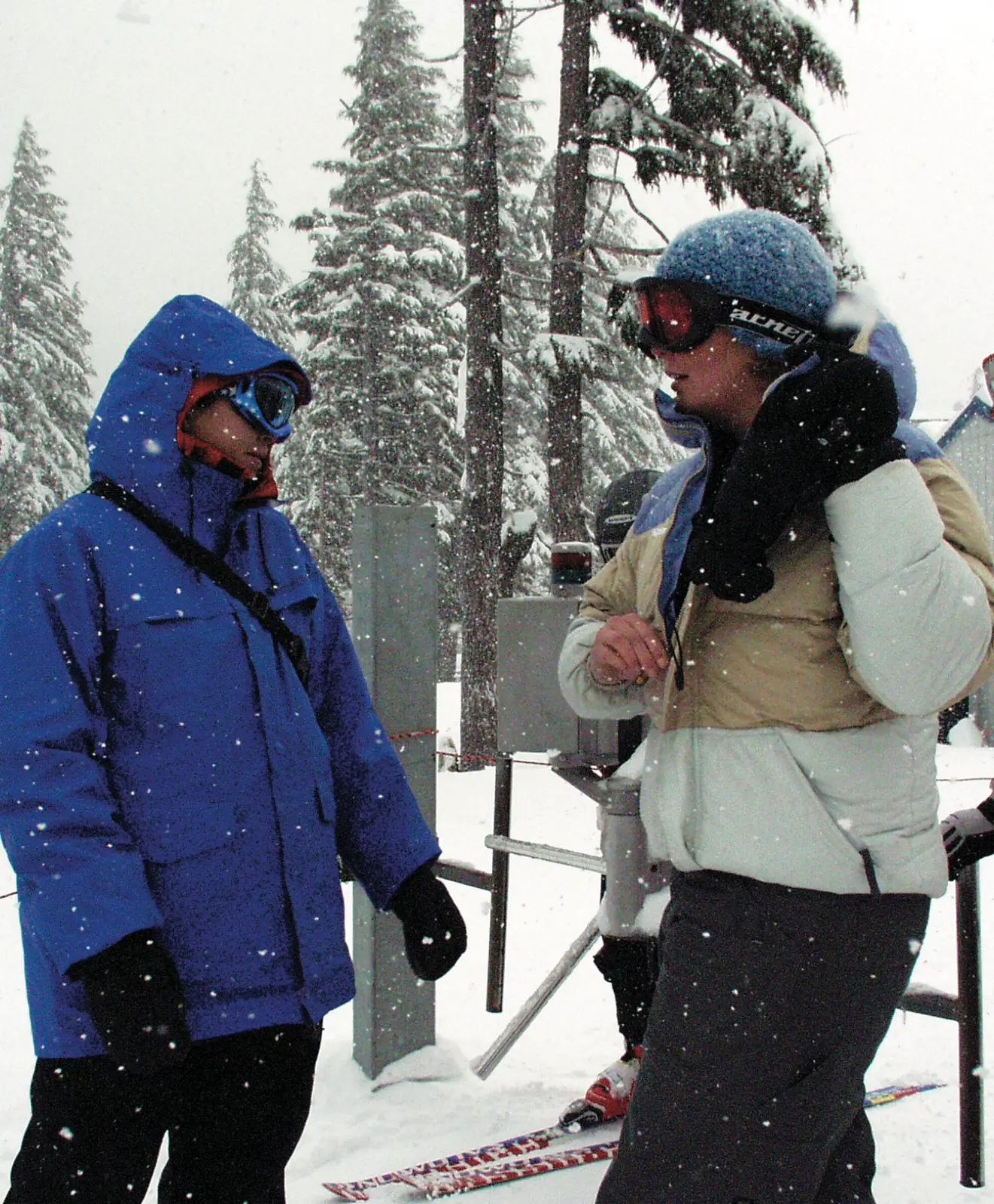
Clodovirges Junior, 23, of Sao Paulo, Brazil, was one of the international employees who changed positions. “I only study English six months in Brazil,” he said slowly. “First I was lift attendant but I don’t speak a lot of English so they change me to lodge services.”
Another employee was slotted to work as a cashier in one of the lodges. “He didn’t know our food so he couldn’t pick out the dishes on the keyboard,” Gerhart said. “So we put him in the kitchen where he could get familiar with the food and still work on his English.”
The language barrier also made training more difficult. The international employees arrived right before Christmas and were thrown into work with little chance to hone their English skills. Plus managers didn’t have extra time to work with them. “When you’re training someone and you don’t have 100 percent understanding, it’s much more difficult,” said Lomax.
Gerhart hadn’t realized the managers who would be working with the international employees might need a little special training themselves. Some resented the extra time and effort they had to spend to get the international employees up to speed. Others were happy to have them, acting as friends and confidantes as much as bosses.
Motta said her direct supervisor not only helped her on the job but became an essential source of support. “He handled everything,” she said. “He listened to us, to our problems. He helps the time go faster, stopped by to see if we’re OK because he knows we’re freezing our butts off. He tried to make the weather funny. And he understands. With him, if we need to cry, that’s OK.” But Motta said some other managers had little patience with the unique problems the foreigners faced on the job, from the unfamiliar cold to homesickness.
“They needed a lot of handholding,” Gerhart said. “And with a lot of managers who they had problems with, those managers didn’t have to do that with their other [American] employees.”
Another big problem came after Christmas. With below average snowfall and rain as often as snow, business was slower than usual and managers at Mt. Bachelor cut employee hours. The international employees had a contract and while it didn’t specifically guarantee a 40-hour week, they came to Mt. Bachelor with that expectation.
As their hours dwindled, they went to Gerhart asking for more hours, and a few called Intrax. But Watson pointed out that in the placement confirmation form it said employees could expect about 30 hours a week, but that no minimum number of hours was guaranteed. The form also stated that “work is dependent on snowfall.” Motta found a job at McDonald’s and the rest of the students pushed Gerhart to find more work for them on the mountain.
Oregon had the highest unemployment rate in the country for most of 2002 and with the unemployment rate still high, Gerhart was faced with giving hours that could go to her American employees to the international workers.
“It wasn’t a great year to do it [hire foreign workers] but we were already committed,” she said. “I thought a lot about whether I was favoring this particular group, but we made a commitment to them in August, where we’d hired the other employees in November.”
The Lessons Learned
If they do hire international employees again, Gerhart and Lomax say they’d do things a little differently. “I’d take more time with my managers and train them,” Gerhart said. Lomax would like to see each international employee paired up with an American working the same job who could act as a mentor.
Still, Gerhart said the agency could have done more. And she certainly knows to ask more questions. “I’d ask about the language, how they test their English,” she said. “I’d also ask more about the support system once they’re here. It was obvious to me that they had everything in place for getting them here,.” Gerhart said she’d also want to talk to employees who had already been through the program, not just ski area administrators.
Despite the many positives, Gerhart said she’s not continuing the program next year. As the main support person for the international employees, she was often the first person they went to with problems, work related as well as personal.
“Although I felt we were very clear about what we had to offer, that didn’t get relayed,” she said. “Ultimately it really took its toll on me.”