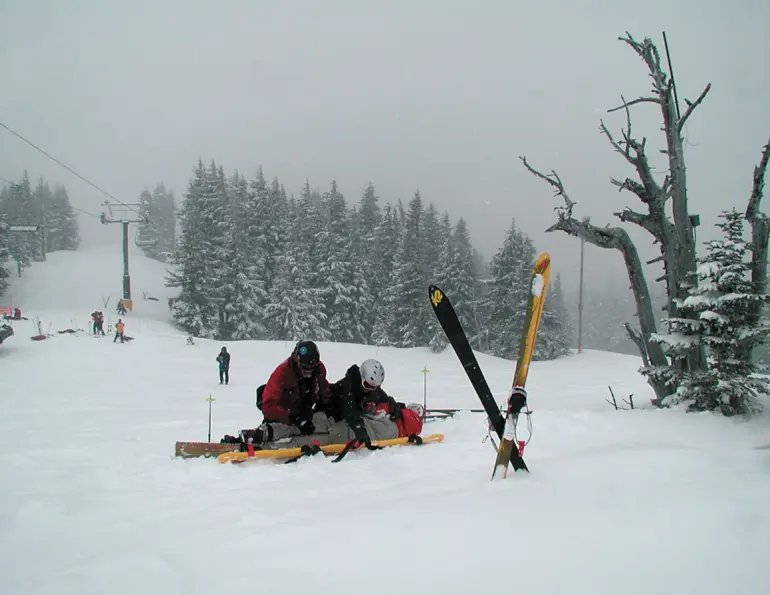
It’s a Wednesday and it’s snowing so the crowds are light, but there are enough people on the slopes to make the bean counters smile. Suddenly, the radio crackles and you hear, “Lift Four is down, mass casualties suspected.” Your first thought is, “Can we handle this?”
Timberline Ski Area in Oregon has no intention of waiting until it is too late to find out. Every few years the area organizes a mass casualty incident drill to see just where potential problems lie and how to fix them, so that any real emergency can be dealt with quickly and efficiently and with minimal loss.
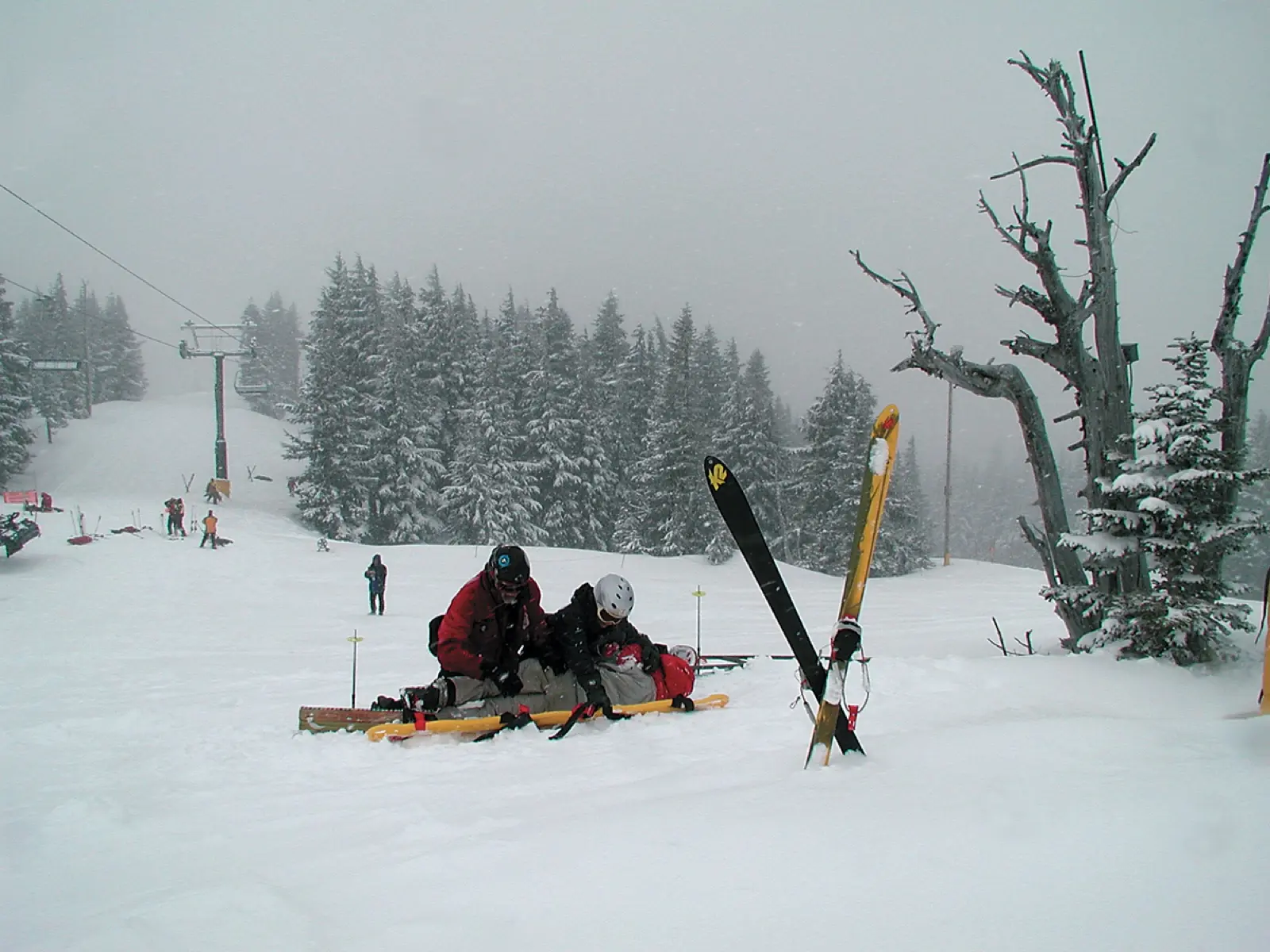
“But it’s not enough to gather the staff and run through a scenario,” says Steve Kruse, Timberline’s director of mountain operations. “We run through the drill from start to finish using every available agency, including the Timberline Pro Patrol, our own volunteer patrol, Hoodland Volunteer Fire Department, the Forest service, the County Sheriff and Life Flight. We get everyone involved.”
For the drill that took place this past spring at Timberline, the area recruited other participants as well. Local high school students and Cub Scouts, swathed in ketchup, played the role of victims. The planners assigned them an injury and placed them up and down the slope under the lift. Even Mother Nature got into the act, providing sideways-blowing snow to further test the response teams’ mettle.
The Making of a Disaster
The scenario: a tree fell on a full-capacity lift, catapulting skiers and snowboarders through the air. And, as if that problem weren’t big enough, no one can find any managers.
“The reason behind that is to train our staff to step up and have the capability to become an incident commander,” says Kruse. The chosen staff in this drill was Carl Knotts, lift maintenance supervisor. From the first radio call until the entire scene was cleared and the press satisfied, Knotts never stepped foot outside the patrol center. “It’s important to have that one person in charge who can coordinate the myriad agencies, in-house personnel, deal with the press and so on,” says Kruse.
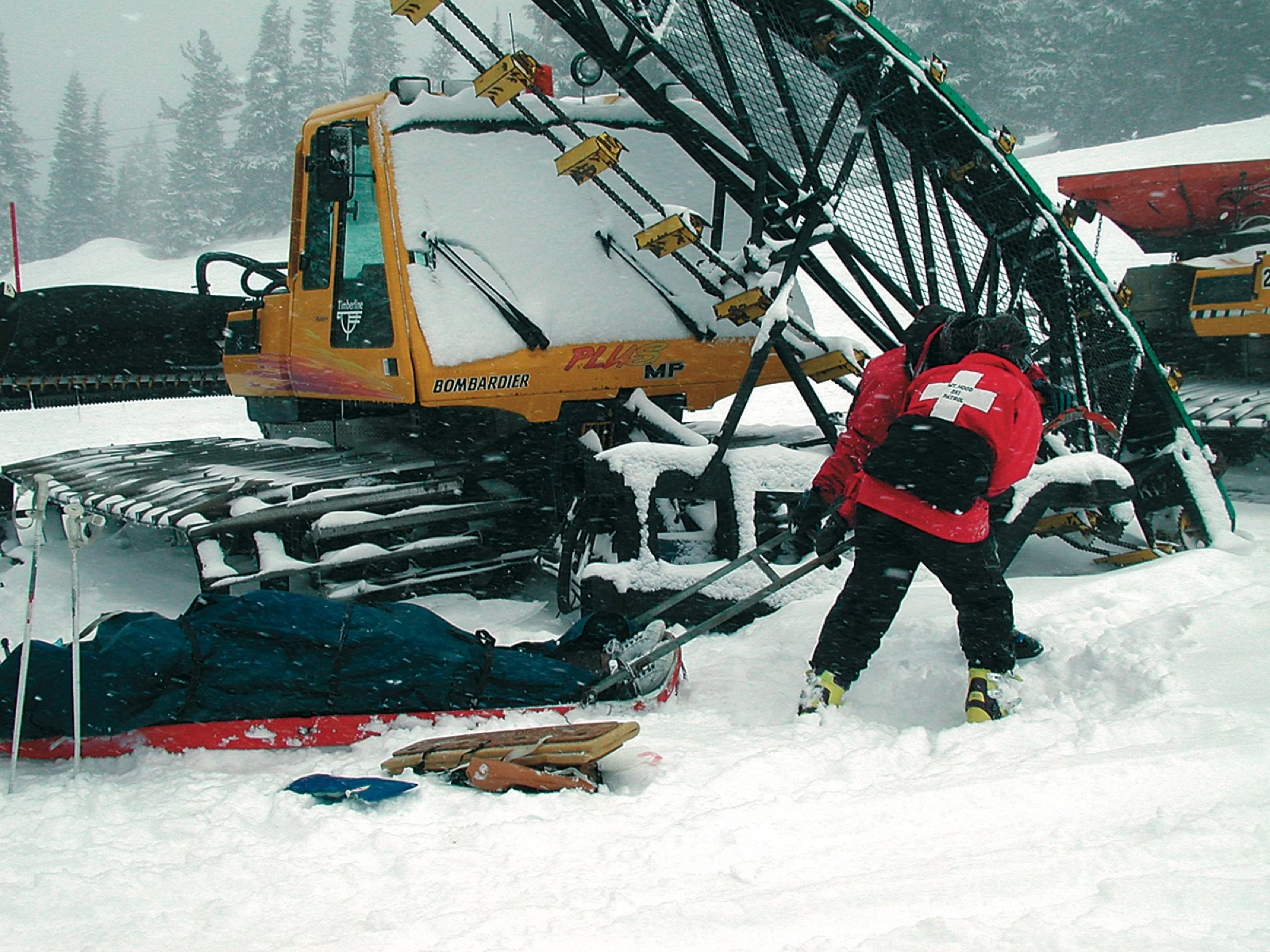
Eric Einspruch, the Mt. Hood Ski Patroller who organized the drill, added, “Really, any emergency at a ski area relies on good communication to be handled efficiently. That’s what this is about—to see if we can communicate fluidly to get people off the hill in a timely manner—ultimately, to save lives.”
So, how did Timberline do? Not bad, considering the conditions. It took an hour and a half to clear 43 people off of the hill, get them to the triage area and either release them or send them to the hospital.

The Lessons Learned
At the debriefing later that afternoon, everyone gathered to exchange ideas and information, while the thoroughly chilled high school volunteers downed some warm soup for their troubles (and received a free pass to come back to the area).
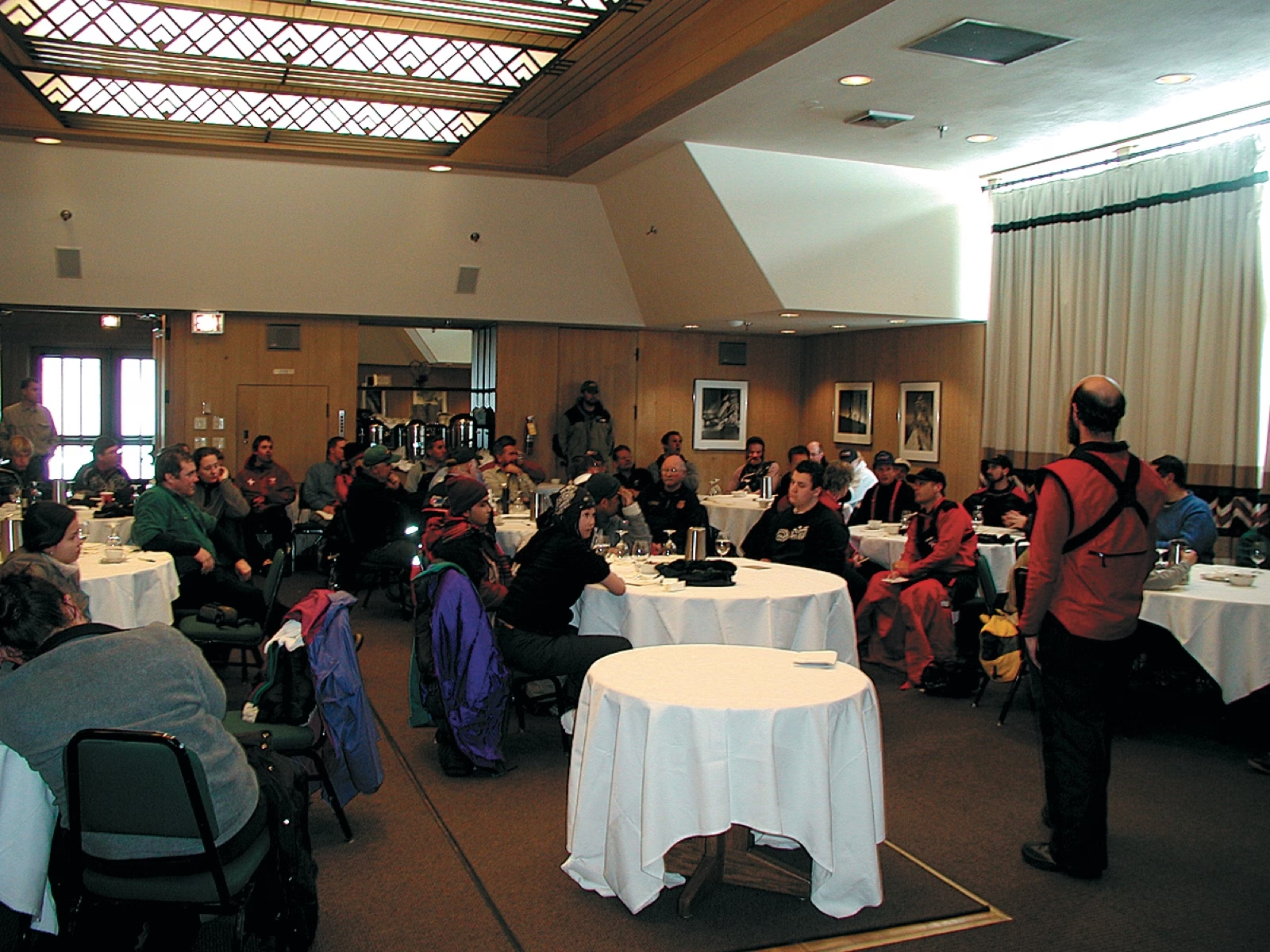
Here is a summary of problem areas and ideas other resorts can learn from:
- Finding victims—because of the blowing snow, victims were quickly being buried, making it hard for rescuers to find them. Additionally, the colored wrist bands that first responders typically use to indicate the nature of the injury were virtually useless in the harsh weather. (Black indicates dead, red indicates an injury that could go black, yellow indicates a less severe injury and green indicates that the person is OK.) One idea to come out of the debriefing was for patrollers to have colored flags instead of wristbands. That way, victims can be easily marked and identified as to severity of injury in even the worst conditions.
- American Medical Response (AMR)—The AMRs in this drill were put at the base operations area to handle incoming wounded. This, they pointed out, was not necessarily the best use of their skills. The AMRs suggested that because of their ability to administer on-the-spot pain control, IVs, etc., and because they are prepared to go out on the hill, they should be part of the on-hill team.
The AMRs also suggested that the Timberline patrol come up with a better system for bringing in the wounded. Often, the injured were quickly dropped off, so that the patroller could get back out on the hill. The problem? The patrollers didn’t wait around long enough to relay the victim’s vitals to the AMR team, which then had to redo them, wasting what could be precious time.
- Pick-Up—In this case, the base operations area and ambulance pick-up point was located at the top of the run in a maintenance garage. Many of the participants wondered how much time could have been saved by locating the pick-up spot downhill. Another idea was to group the victims in the triage area by color, with the same flags used on the hill, making it easy for outside responders to quickly identify and treat people.
- Communications: Enough can’t be said about the importance of this topic when it comes to an emergency situation. During the course of the drill, because of two different radio systems, the incident command center could not communicate with the on-hill personnel. (As with other shortcomings, this is a problem that is best found out during a drill.)
And making sure that everyone is at least aware of the basic procedures is a must. During the drill, an over-eager patroller grabbed the incident command pack from the patrol room along with the on-hill pack. Precious time was wasted getting it back.
In the end, Timberline was very pleased with the drill and the performance of all involved. “If everything were perfect, I would be scared,” says Kruse. “You can be as prepared as possible, but there are so many variables that running these drills with different scenarios each time can be a real eye-opener. And, more important, some great ideas come out of each one and things get smoother and smoother.”