


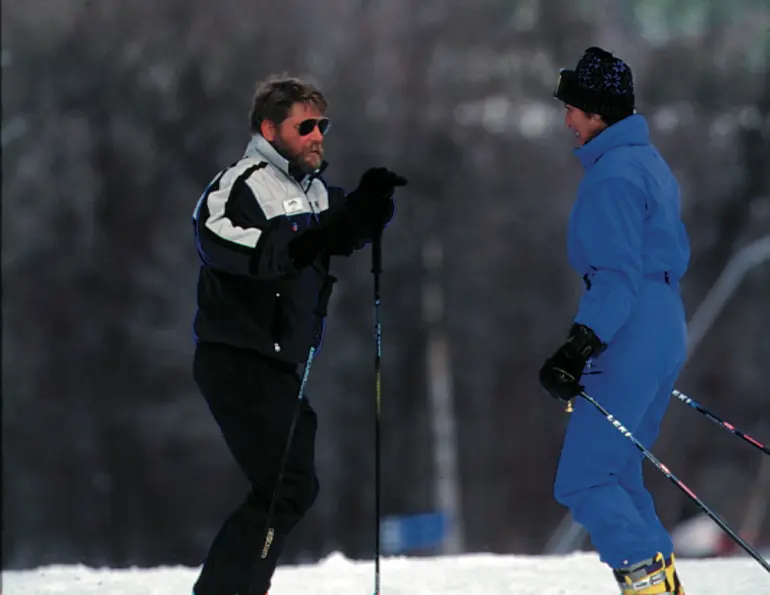
What does it take for the Growth Initiative to be successful? The ski and snowboard school and the rental shop play a big role, obviously. Short-ski, shaped-ski, direct-parallel and accelerated snowboard programs can all speed the learning process. But areas that have success in converting beginners say it takes the full and continuing support of top management for the entire conversion and retention effort.
That’s because the success of the first-time experience depends on more than just the quality of the lesson, assuming the beginner takes one, or the fit and performance of the rental gear. To convert first-timers to long-time participants, it is essential to welcome new skiers and riders to the resort, to make them feel part of the club. The desk clerks, ticket sellers, parking attendants, slope groomers, lift maintenance—all can tip the scale one way or the other. And all of these personnel take their cues from top management.
The Wachusett Way
At Wachusett Mountain, Massachusetts, “serving beginners is what we do,” said VP of operations Carolyn Stimpson. Being close to a large beginner market has kept management focused. “We need buy-in from one end of the resort to the other,” she said, adding that the priority has to start with top management.
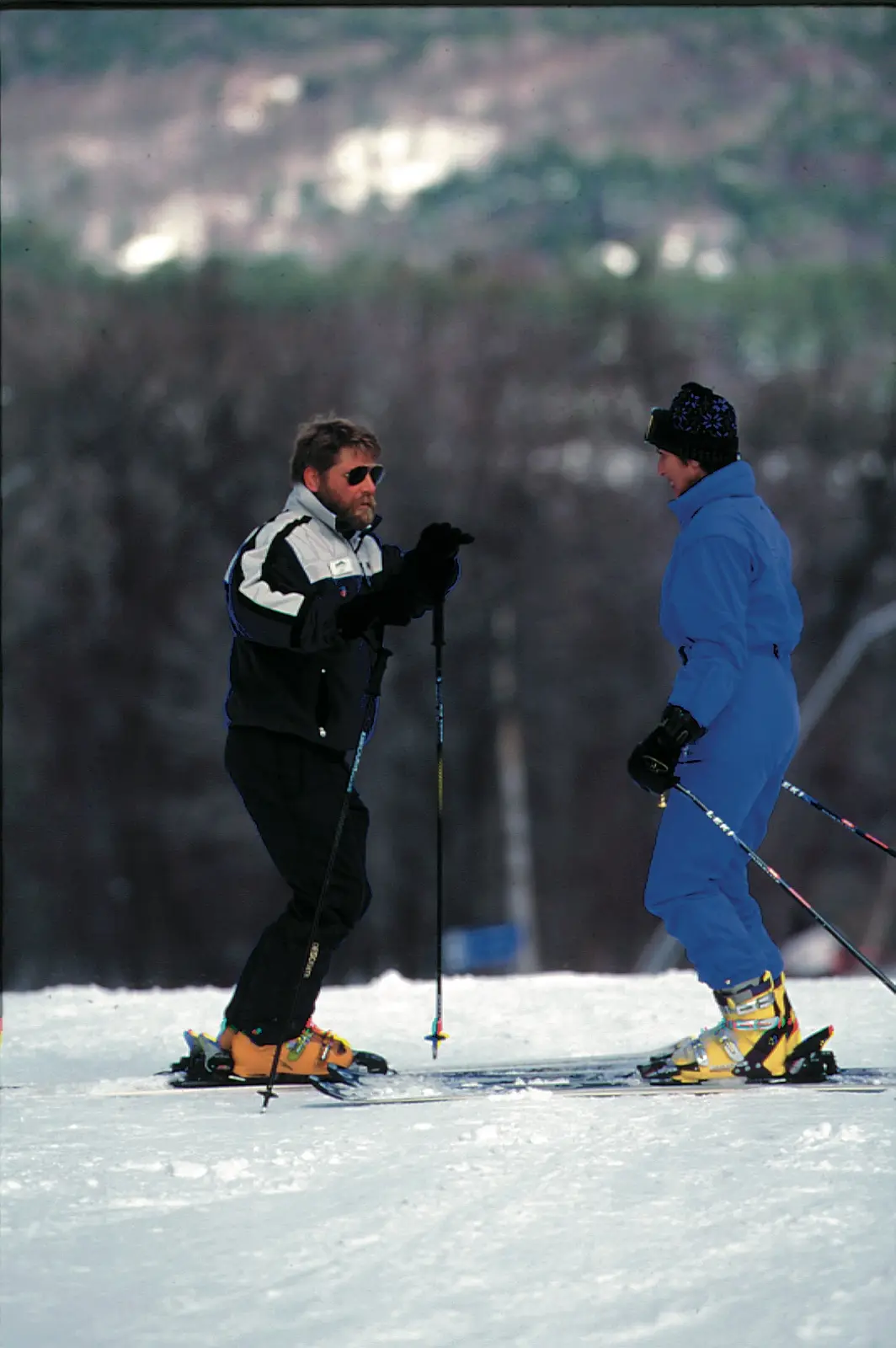
Photo by Bruce McDonald
In particular, Wachusett has found that getting first-timers to take a lesson, and especially to sign up for two or three days, increases the retention rate. “What amazed me in San Diego [at the 2003 NSAA convention] was that the ‘tell about it’ programs were the most successful,” Stimpson said. “The key is getting the word out.” So Wachusett management encourages employees to be alert for opportunities to tell beginners about the various learn-to-ski or –ride programs.
This is especially the mission of ski school director Bruce McDonald. Since he’s also the area’s senior VP of sales, he’s in a position to coordinate the efforts of several departments to get the word out.
McDonald’s number-one goal is to get the first-timer to come back for a second time. The area includes the multi-day beginner package details in just about all its marketing and promotional materials, but the effort doesn’t stop there. McDonald also enlists staff throughout the resort to tell the story to guests once they arrive at the area as well.
With his instructors, McDonald relies on incentives to drive this goal. Each instructor has a business card, and is encouraged to hand these out at the end of the first lesson. If the guest turns in the business card when they sign up for the second day, the instructor gets a $5 credit to use in the cafeteria, ski shop, bar, anywhere there’s a cash register. Credits can also be used to purchase gear at the beginning of the season.
For beginners, the two-day package is a steal. The first day costs $60; the second is just $30—and it includes a $30 discount lift ticket card, which makes future visits less expensive.
To encourage instructors to tell guests about the package, McDonald posts the incentive offer in the ski school room—along with a weekly report that tracks sales by each instructor, to generate friendly competition in the ranks. “You need to get the buzz going to build excitement,” he said. That’s because many ski instructors are not used to, or comfortable with, the role of salesperson. Even with repeated reminders, less than half actively take part.
The sales job isn’t hard. McDonald asked his top salesman, how do you do it? “He said, ‘I just tell them about the deal, and ask them to come back if they had a good time,’” McDonald said. Beginners are primed to come back, they just need a little push.
And that push need not come only from an instructor. McDonald also urges sales clerks to remind first-timers of the benefits of the two-day package. He has tried offering the $5 incentive to the sales clerks, and even added a “buddy system” (in which non-clerks, such as groomers and snowmakers, shared in any sales incentives their clerk buddy earned), but found that was not as successful as intended. The important point is, he constantly looks for new and better ways to get the word out.
Growth Business
Hunter Mountain is all about beginners. The area’s high-profile Learning Center has been well publicized, but “that’s just the gateway to the terrain,” said Hunter president Russ Coloton. It is just one piece, the most visible symbol, of the area’s devotion to first-timers.
The Learning Center grew from three factors. First, Hunter’s beginner business has grown steadily. “We outgrew our existing facilities,” Coloton said. Second, the area owners believed that Hunter had to provide the facilities and terrain if the business was to continue to grow. And third, an SE Group analysis in 1995 declared that Hunter’s learning terrain was perhaps the best in the country. (For a look at how other areas can make their own terrain perfect, see “Success by Design,” page 44.)
Coloton challenges his staff to improve the beginner experience in every possible way. “Everyone here is fully behind the Growth Model,” he said. Coloton makes sure that everyone in the organization recognizes the importance of beginners and feels that they have a direct role to play in developing beginners into longtime skiing and riding customers. In designing the Learning Center, for example, he brought in every manager who would have ownership of it—ski and snowboard school, rental shop, food and beverage and day care. All helped shape the design.
Hunter has also changed its teaching system. It has embraced learning skis, and it has adopted rolling start times for beginner lessons: instead of having lineup at, say, 10:15, classes are formed as beginners exit the rental shop. “It’s really great customer service,” he said.
Coloton said that changing the ski school and rental departments was aided by the fact that these were concessions until the early to mid ’90s. “We came into it with a fresh eye—we could look at new things, like lessons on demand. We had no history to hinder us from thinking outside the norm.”
When the area assumed responsibility for the ski school, it also changed the compensation system for instructors. “Instructors were working six days a week, but only getting 22 hours,” he said. “We decided to guarantee our full-timers a seven-hour day so that we could provide a livable wage.”
Like Wachusett, Hunter provides incentives to instructors whose students come back for a second lesson, or for buying lesson packages. Instructors give students a progress card at the end of the lesson; this provides time with the guest at the end of the lesson, which encourages the instructor to point out what the guest would learn in the next lesson, and that the next lesson comes with a “significant discount.”
Never Stop Learning
If ski school methods and approaches have changed, snowboard instruction has changed even more. It’s not possible to focus on beginner programs for, say, a season, then move on to other priorities. Top management has to be constantly aware of the changing nature of skiing and riding and to keep abreast of those changes.
At Jackson Hole, snowboard school director Mikey Franco pushes to keep the program on the cutting edge. Jackson has a Burton Method Center for kids and uses all the props. That includes a trampoline for practicing aerial awareness and balance and using snowdecks in the introduction to snowboarding.
It’s not always easy to reconcile these changes with Jackson’s aggressive approach to risk management. Teaching riders to get air, and using sliding tools that have no bindings, are enough to make any risk manager wary.
Tom Spangler, general manager of Jackson Hole, had to make the decision on these programs. Given the potential for serious danger on the mountain’s numerous and extreme cliffs, Jackson has historically been very careful about managing risk. Yet Jackson, an old-fashioned skier’s place, where shaped skis have gained acceptance only in the past few years, is at the forefront of teaching terrain park tricks via the snowboard school.
Partly, it results from Franco’s prodding. “Kids see jumps in the terrain park and pipe on TV, and that’s what they want to do. They want to learn to jump even before they make their first turn,” said Franco. So the school gives them a taste for it, and helps them develop the balance skills they need.

But it wouldn’t be happening if Spangler didn’t approve it. Fortunately, he’s well aware of how fast the snowboard market changes. Spangler began riding several years ago, to keep up with his son (a former ski racer turned rider) and to understand what snowboarding was all about. And he still rides at least once a week.
“My experience has a big impact,” he said. “People see me on a board, and that helps bridge the gap. They know my opinion is valid. And it makes it easier to make judgments.
“The world of snowboarding is constantly changing, from competitions to instruction,” he said. “It’s an exciting world. It’s good, it stimulates the thought process.”
Still the idea of teaching riders to get air “makes any general manager nervous,” he admitted. But the use of the trampoline to instill the necessary balance is a safer way for riders to get air than to learn on their own in the park. “You don’t want [kids] to just get air in the park,” he said. “You want [them] to get a feel for balance.”
Spangler considers the use of the trampoline a small step, in keeping with Jackson’s go-slow approach to risk. The same concept applies to snowdecks: they are allowed on the lower mountain only. But because Spangler rode a snowdeck and went through the learning progression, he understands the value. And so he found a way to make their use possible—at least in the snowboard school.
Would Franco like to push change faster? Perhaps. But both he and Spangler understand the need for consensus. “There are multiple ideas out there; evolution keeps rolling along,” said Spangler. “Checks and balances are necessary. How do you involve the terrain park in your instruction? It’s limited, but there’s always discussions about it—lots of conversations, to make sure everyone’s involved and listening.
“In instruction, we’ll continue to find ways to introduce beginners better, develop new learning tools, and so on.”
The Rental Role
The rental shop, as much as the ski school experience, can be the defining (and negative) factor in the first-time experience. The rental contribution starts with “what do you buy for rental equipment?” said retail services director Dave Hunter of Northstar-at-Tahoe.
“You have to focus on what works for beginners,” Hunter said. “That’s not necessarily the lowest-cost item—that’s not what beginners need.” Northstar recently bought Dynastar Agyl rental skis after testing, with input from parent company Booth Creek. The Agyl suits the easy-turning needs of beginners and the more advanced needs of intermediate skiers. “The Agyls are a bit more money, but they are worth it,” he said.
For the future, Northstar (along with other Booth Creek resorts) is investigating the possibility of adding soft boots to the rental stock. Again, soft boots are far from the cheapest—but if they help beginners become regular customers, they are well worth the cost.
Dave Hunter’s attention to beginners goes far beyond getting them the right gear. His goal is complete customer service. He recognizes how foreign the ski area can be—not just the rental shop, the whole resort. “This year’s focus is how to identify the first-timers in the rental shop, without making them feel like geeks,” he said. The point: these people need help and assistance with everything from putting on their boots to finding the ski school meeting place. Everything at the resort is foreign to them. “Everybody has to know how to talk to beginners, in the rental shop and throughout the resort,” he said.
That’s clearly a corporate goal. Northstar goes the extra mile to help make beginners comfortable. The rental shop is one of the few to stock clothing rentals. There’s also a special line at the gondola for beginners and ski school, which takes skiers and riders from the entry point to the main base area. Banners point the way to the ski school and other key parts of the base area; on busy days, hosts escort beginners directly. The shop writes the first-time renters’ names on their skis, so they can find them more easily. Dave Hunter is considering the use of different color rental forms, or otherwise identifying first-timers on the form. On busy days, there’s a separate rental shop for beginners.
Both Hunter and ski school director Dave Alonzo agree that none of this would happen without the support of top management, both at Northstar and at parent company Booth Creek.
“We get tremendous support from the GM and the CFO and Booth Creek,” said Alonzo. “All are for this. They are willing to put their money where their mouth is, and they continue to support new initiatives.”
These initiatives include creating “smart terrain” that helps teach proper technique automatically. There’s a rental shop at the base of the learning terrain, to make equipment adjustments for beginners as needed. As at Hunter Mountain, Northstar has adopted rolling start times for beginner classes, and provides monetary incentives to top instructors to teach beginners. The length of the lesson is now two and a half hours, up from an hour and forty-five minutes. The area also offers beginners who didn’t quite get it during their first lesson to come back again—at no charge.
“All these changes take commitment from management from a labor standpoint,” Alonzo added. “But we have to do this to grow our business. Creating new skiers and riders is essential.”
Sounds like everyone at Northstar is singing from the same hymnal.

