


The idea got its start last June in the Swiss Alps, where area personnel from around the world had gathered to exchange information and receive instruction on building halfpipes and terrain parks. Josh Chauvet, youth action sports administrator for Mammoth Mountain, Calif., attended the two-day meeting and on his return asked Dennis McGiboney, Pisten Bully’s sales manager, “Why not do the same thing stateside?” Mammoth would host the event, providing staff and training; Pisten Bully would be the sponsor. An agenda was formulated and a guest list developed.
So it was that 31 participants, representing 24 ski areas from all over the U.S. and Canada, assembled early one mid-November morning in Reno for the bus ride down to Mammoth.
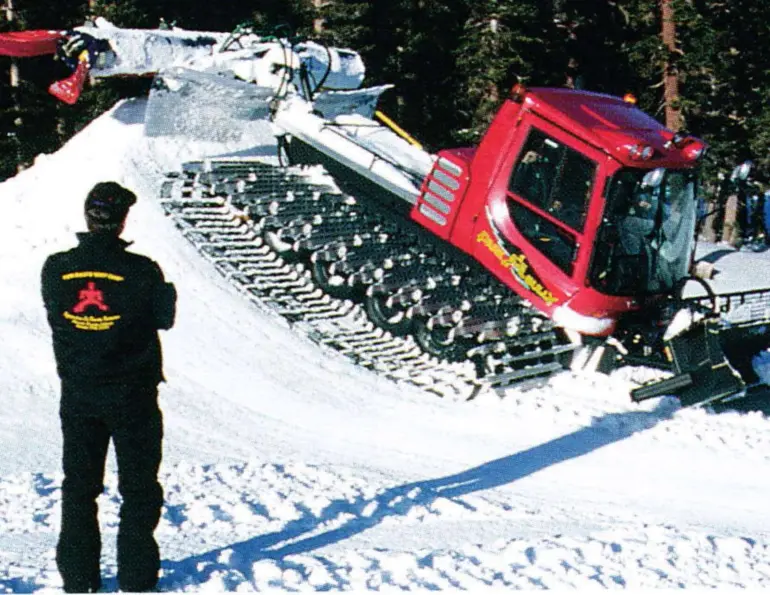
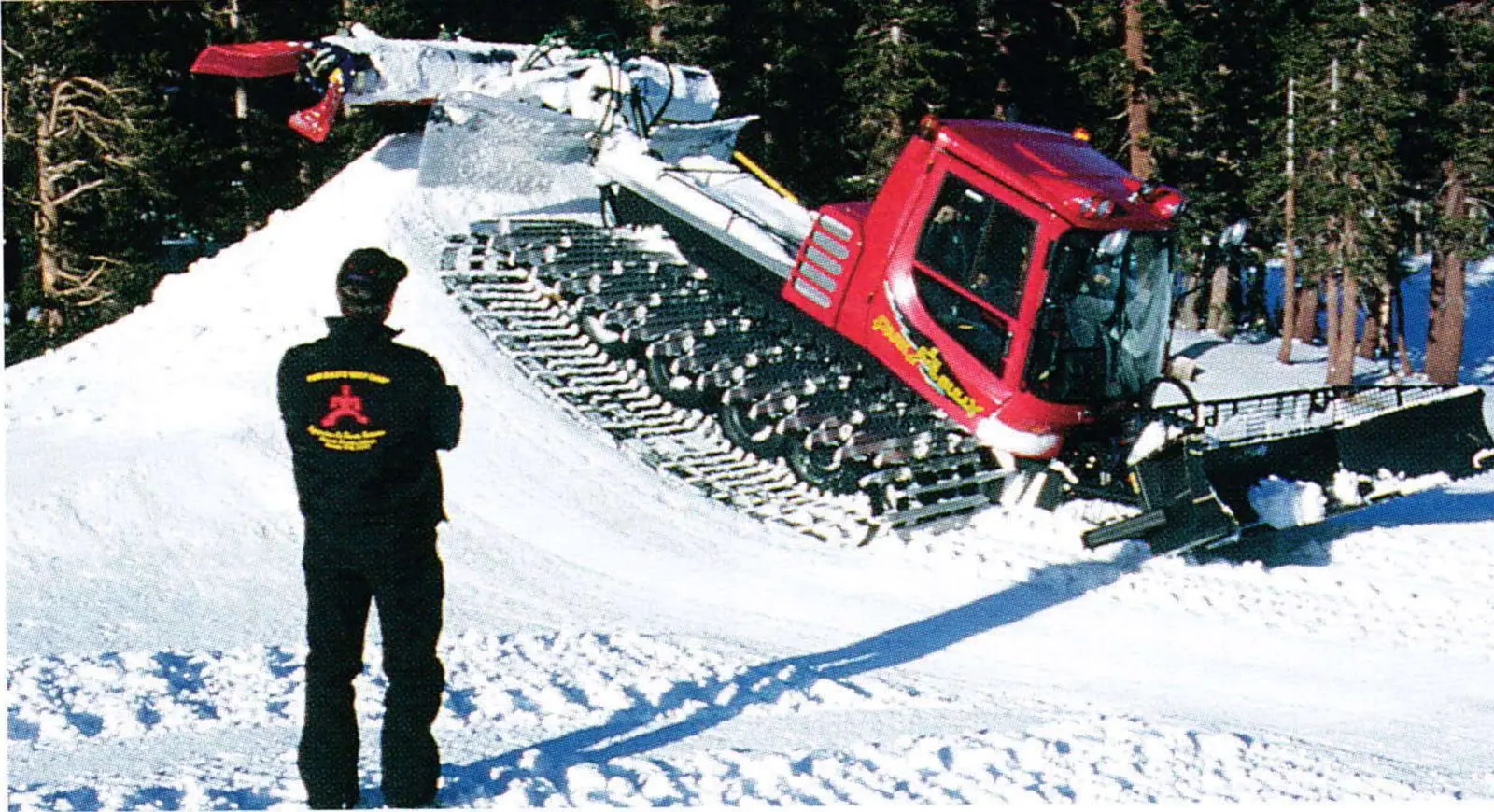
After a short tour of Mammoth’s vehicle maintenance shop, the group divided into three teams. The first team worked on snow. Their goal was to build a terrain park from scratch using three Park Bullys—grooming vehicles with extended range of motion for both front blade and rear tiller, enabling the formation of terrain park features—with the finished product ready for use.
The second team was involved in roughing out a halfpipe using a new halfpipe-forming tool. On hand for this class was Reto Sporrer, an independent consultant for terrain park construction who is also the technical supervisor for the Swiss Snowboard Association and a certified snowboard instructor.
The third team met in a conference room for open discussions. Chauvet and his staff touched on the various aspects of design, construction and daily maintenance as well as on issues of safety and staffing for their “Unbound” terrain park system. Other subjects covered were risk management and marketing and promotion, including a “how-to” on soliciting outside sponsors.
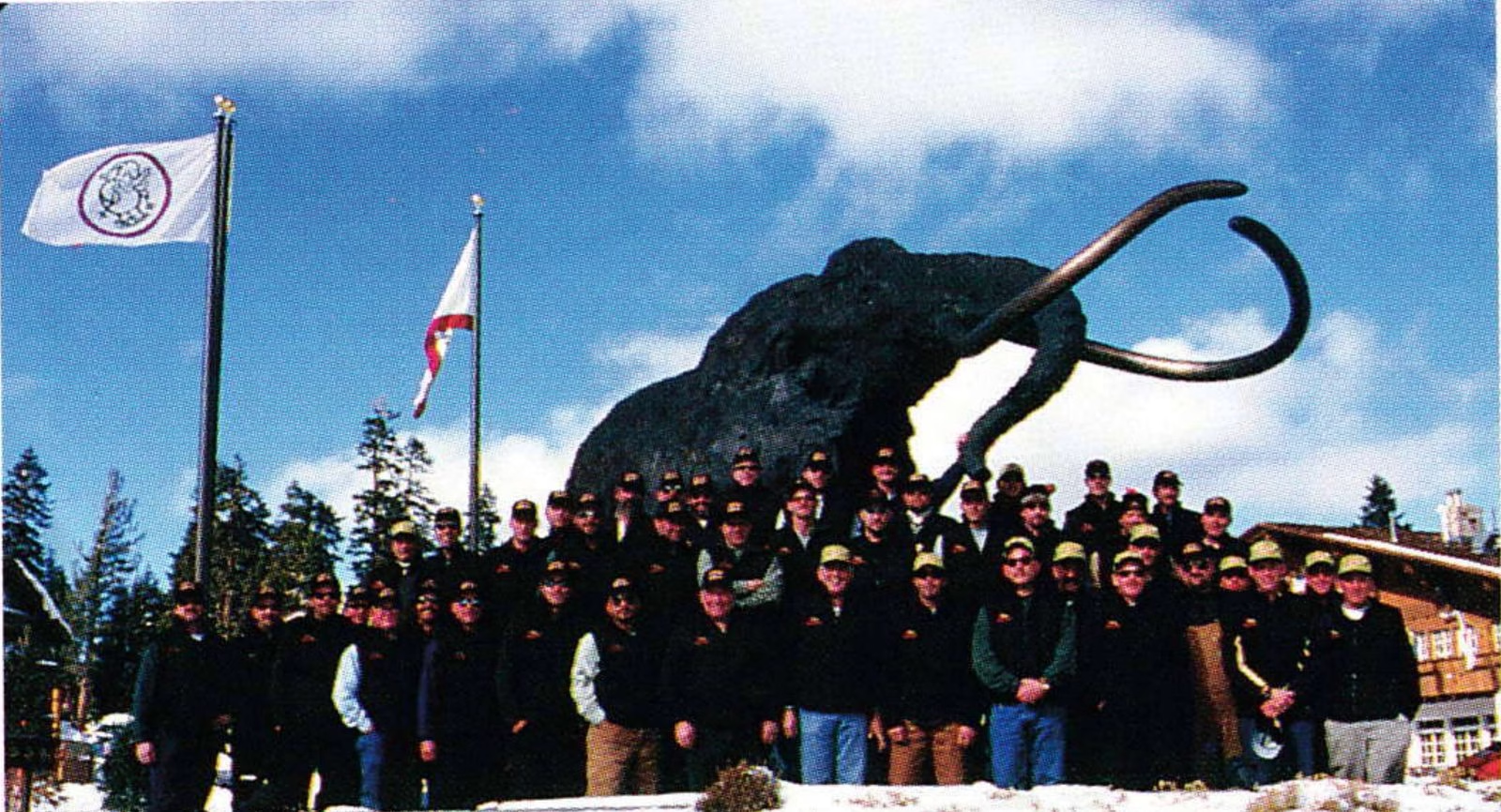
Photo by Brad Peatross
The teams rotated throughout the two-day program, giving each two sessions on snow and one in the classroom.
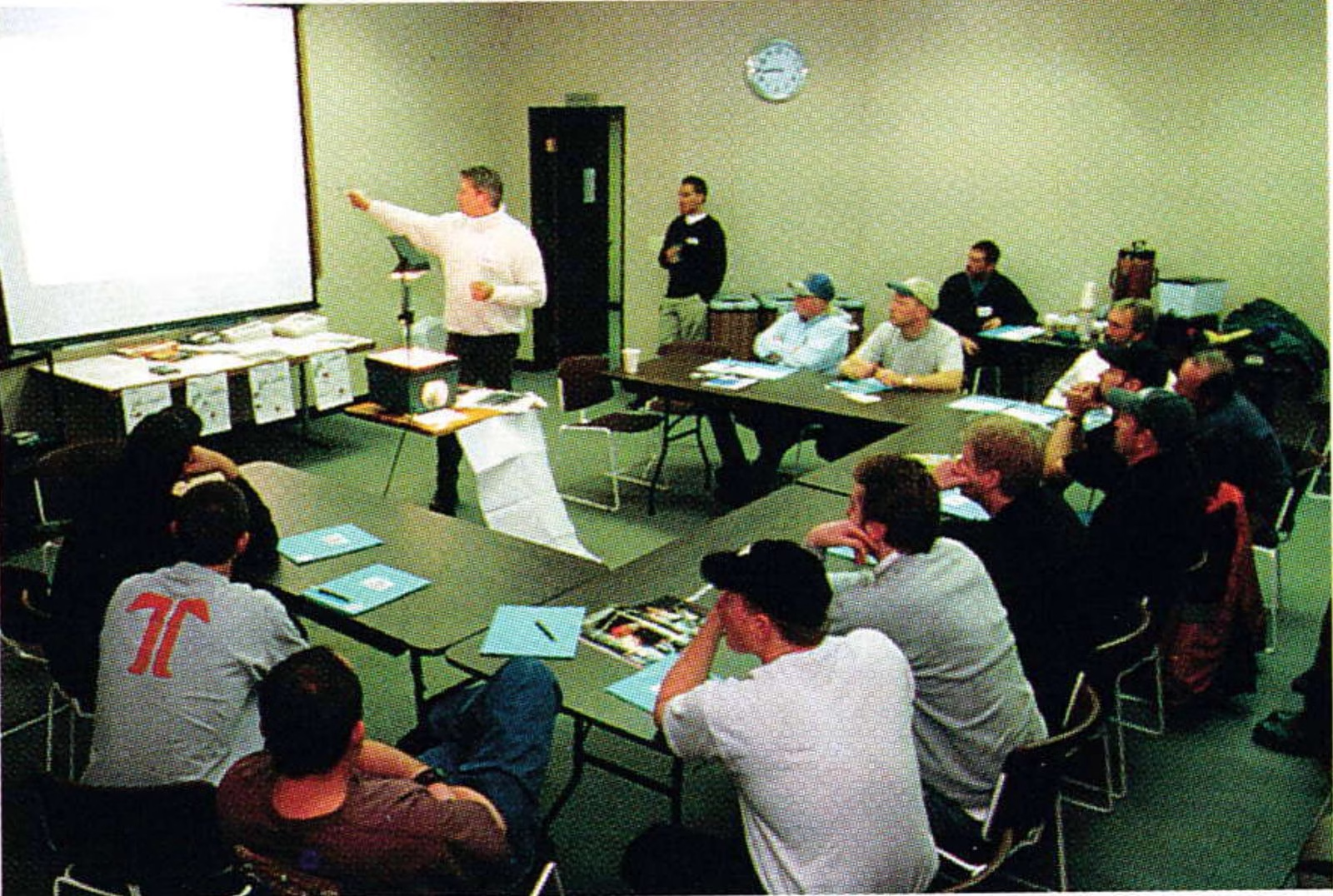
Photo by Brad Peatross
It is likely that the most valuable concept the symposium participants walked away with was that in order to have a successful park program, commitment by the individual area is key, starting with top management—that if an area wants results, it can’t be afraid to put in the resources. As put by Craig Brewer, director for slope engineering at Bogus Basin, “To do a halfpipe or a terrain park, the ski area must make a complete and full commitment to the project.”

