


The ski schools at Aspen are shooting for a 90 percent return rate, a dramatic contrast to the 15 percent industry average. Of course, a destination resort is likely to do better in this than a day-trip ski area that pulls in first-timers with inexpensive local promotions. Still, while not 90 percent—yet—Aspen exceeds many other destination resorts.
The high return rate is largely due to Aspen’s beginner-novice instruction track—equivalent to Levels 1 to 4 (although Aspen shies away from those PSIA levels)—called Beginner’s Magic. It is headquartered at Buttermilk, Aspen’s prime teaching area, and also offered at Snowmass.
Like any well-built structure, the Aspen approach has four cornerstones. First, the ski schools of Aspen have elevated their instructors into “ski pros,” comparable in stature to tennis and golf pros. Second, they put what they call “top shelf pros” in the beginner program and pay them a higher rate to work in that arena. Third, the pro and the new skier are together from the beginning, even before first-timers leave the rental shop. Finally, and more elusively, Aspen has tweaked the skiing vocabulary, rethought the philosophy of learning to ski and incorporated some interdisciplinary skills to help newcomers become successful with those first turns.
The purpose of these shifts, some subtle and some less so, is to turn first-timers into skiers—people with a passion for snow and mountains, who view skiing as a lifestyle and not merely a fleeting diversion. The ski schools of Aspen market learning to ski as more than a half-day lesson and boast impressive return figures. According to ski school head Rich Burkley, of the roughly 4,200 people who took Beginner’s Magic during the 1999-2000 season, “fewer than five needed more than three days [to ski the greens] even people who are not athletic and not in shape.” Here’s some of the nitty-gritty:
Turning Instructors into Pros
The ski schools of Aspen have banished the standard concept of instructor and student roles in the learn-to-ski process. “We want to create skiers, not ‘teach skiing,’” says Burkley. “It becomes a lifestyle, not just teaching a skill.” Beginner’s Magic, he says, “is based on the unique relationship between highly experienced pros and clients.” Classes average four people and students may be moved from group to group according to need and pace, not to keep class size at some magic number.
Beginner’s Magic is a pampering, nurturing three- to six-day program leading to the ability to ski specific kinds of terrain. The progression is smooth and seamless. When people are happy skiing in the first half-day, they’ll stick with it enthusiastically and receptively. After three days, they can expect to ski adequately on green terrain and to make parallel turns on all blue runs after six days, which is what Aspen describes as being a “true skier.”
Aspen pros are encouraged to think in terms of coaching instead of teaching. In a protocol called “1st Timers in the 3rd Millennium,” the schools of Aspen quote from Maggie Loring’s draft of the 2001 PSIA Manual, which says that “there is a sense that there is no teacher and no learner, just the sport. All barriers to learning are conquered, all the power resides in the student, and learning becomes play.”
Traditionalists might find all this to be a tad too much, but one gets the sense that the ski schools of Aspen really buy into this 21st-century approach—and their numbers indicate that it works.
Pros don’t merely meet their new class members at stake number one stuck outside in the snow, but greet them at the rental shop and are involved in helping them gear up. Rental operations start new skiers with quality four-buckle boots and, at Buttermilk, wedges, generic footbeds and binding alignment plates are available for those who need them. The rental operation offers the best available boots, not the worst, and invests time in proper boot fit and alignment. Skis are lightweight 123- and 133-cm Elan and Rossignol models designed for adult beginners. In addition, beginners who like their rental gear may buy it. Aspen views this as a service, but it could also be seen as a profit center that additionally helps keep rental inventory from becoming stale or overused.
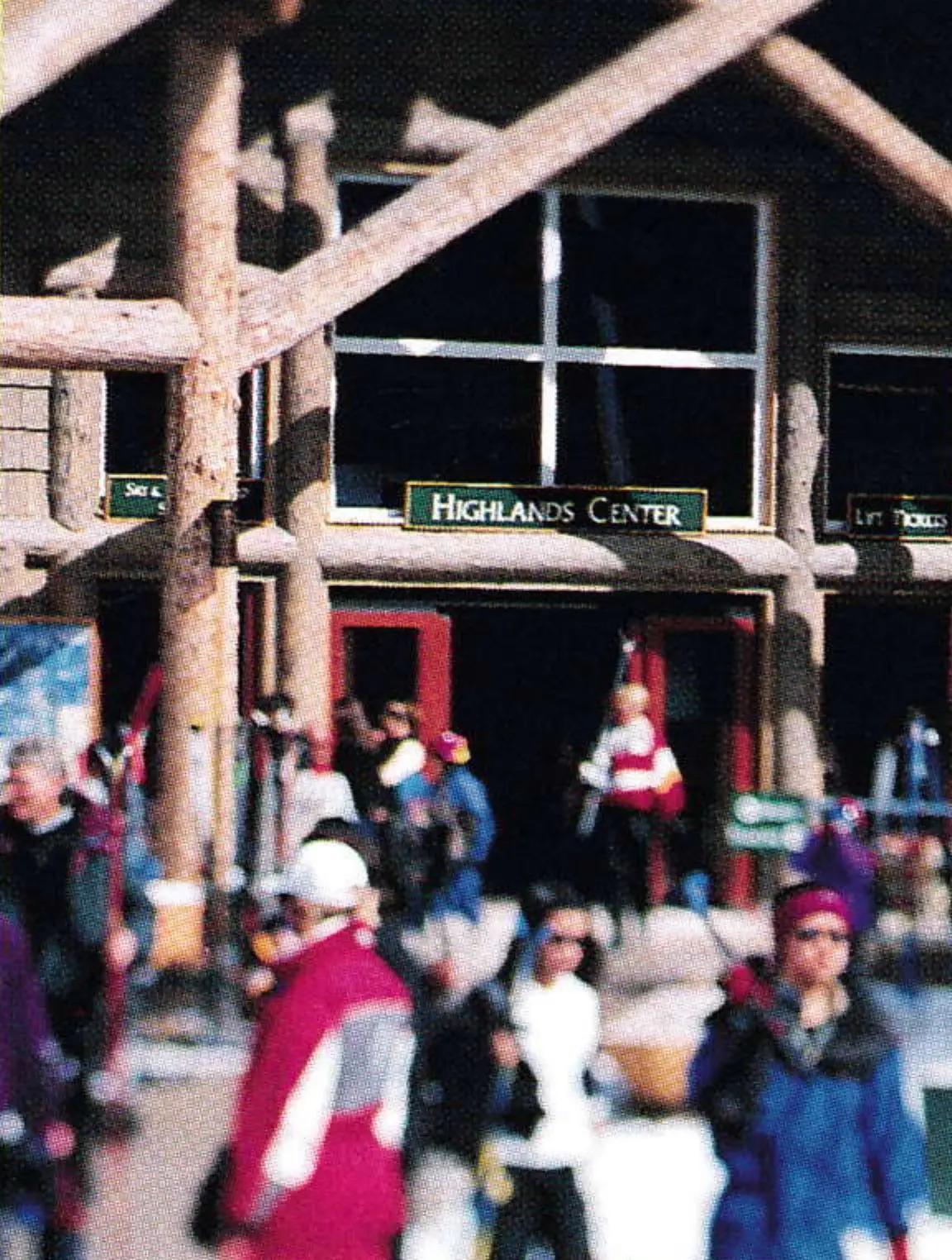
Photo by Hal Williams
Because of the interdisciplinary nature of Beginner’s Magic (more about that below), pros weave new techniques into the first days on snow. Of course, they are also trained in the latest developments in equipment, technique and teaching skills appropriate for beginners.

Going New Age
Beginner’s Magic draws on some of Aspen’s considerable resources in terms of 21st-century thinking in helping people learn new skills and make meaningful changes in their lives. For instance, a local New Age guru named Tom Crum has developed “Journey to the Center,” which features aspects of martial arts training to help people calm their fears and perform at their highest level. The journey helps beginners overcome fears of skiing, sliding, falling, whatever. Physically, people learn how to move from the center and transfer their energy “from a relaxed, poised position” and apply their strength most efficiently to making turns. Crum-trained coaches work with first-timers for 30 minutes to an hour, indoors or out, before they ski.
Integrating mind/body/spirit aspects to “manipulate the ‘internal’ environment creates the maximum peak performance possible for each student,” according to the ski school’s guidelines. The off-slope introduction helps people practice centering, balance, power and security principles in the turns they will make. They learn to “shift awareness to the present moment” to approach their peak performance zone and thereby progress quickly.
But Beginner’s Magic is more than spirituality and semantics. To help give beginners the physical sense of skiing in comfort, there is a ski deck at Buttermilk. First-timers, using a harness, can get the feel of sliding without falling. Former freestyle champ John Clendenin has developed a successful ski deck progression, which dovetails with Beginner’s Magic. By mastering, or at least getting the sense of the mechanical movement, “proper habits are pre-ingrained,” he says.
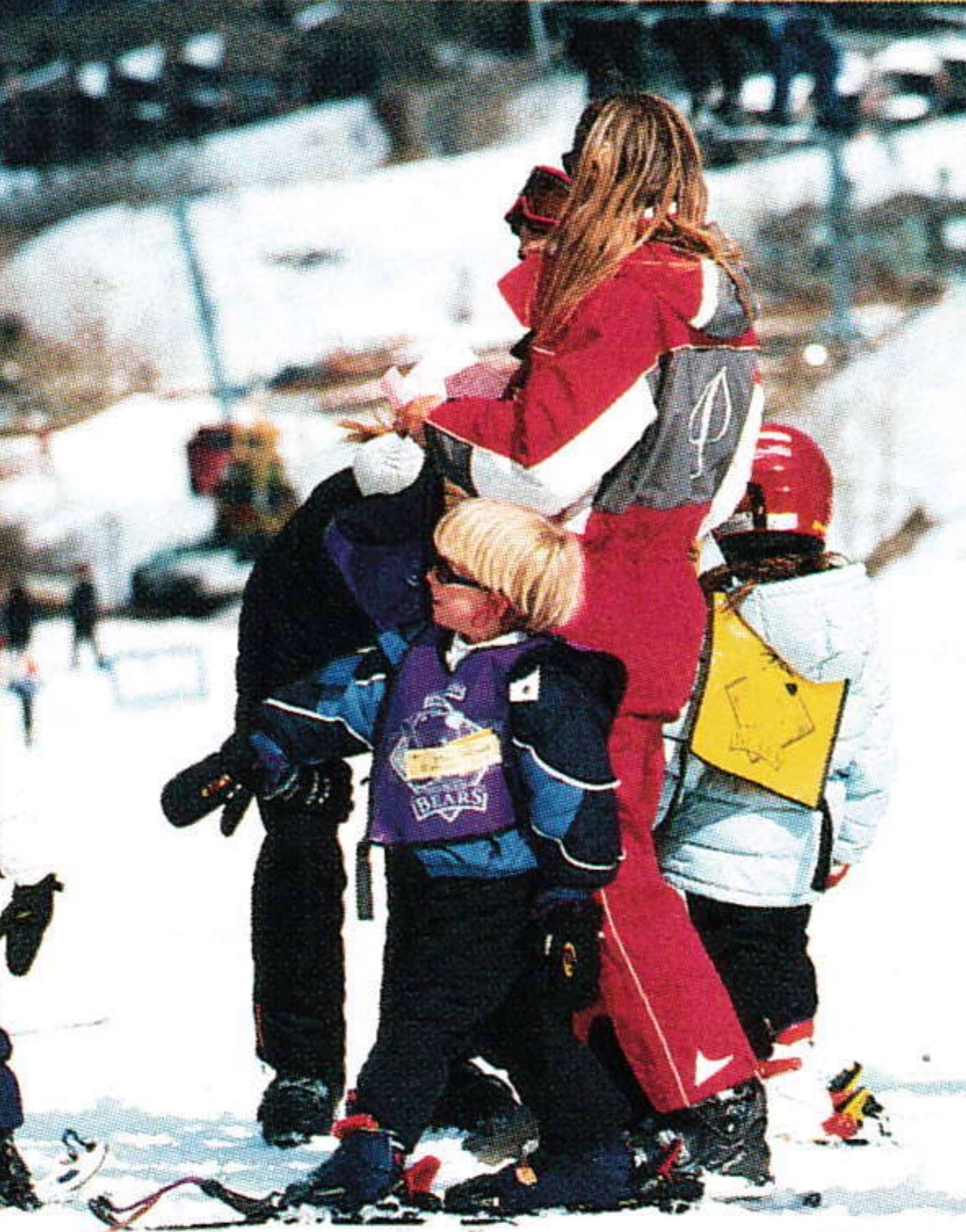
Photo by Biege Jones
Looking further at Beginner’s Magic from the traditional ski school angle, it uses a direct-to-parallel approach and as many miles as a beginner’s legs can handle. “The wedge is not a fundamental movement pattern,” Burkley says. “People who start making skidded turns in an open stance progress very quickly.”
Everything is geared to getting new skiers to ski top to bottom comfortably using a parallel turn on green terrain within three days and top-to-bottom on blue runs at all four Aspen areas using “a reliable parallel turn” in six. Attaining these levels is guaranteed, with free instruction until they can do so, but Aspen’s internal directives caution that “they are not required to accomplish any of these feats if they do not wish to.”
Under the Aspen approach, learning to ski is not just about turning. Introducing the skiing lifestyle kicks in from the beginning. “Pros don’t stand around, lecturing or drawing diagrams of turns in the snow with their pole tips,” says Burkley. “Learning how to skid a turn on a beginner slope is not a life. We help people put in mileage [to build skills]. Everything is geared to translating skills into the lifestyle. We think of our pros as ‘renaissance pros.’ Talking is done on the chair and it includes history, geology, food, wine, geography, whatever. We want to help people discover the excitement of skiing , A to Z, not just focus narrowly on the sport.”
Photo by Peter McBride
Beginner’s Magic graduates, who already think of themselves as skiers, are encouraged to use their pro as a resource. Knowing their clients are worldly and well-traveled, the ski school even encourages them to seek advice on other places they might consider skiing. E-mails from past clients are welcomed—and answered. Many Aspen instructors participate in an informal exchange with their opposites at other resorts, so that they can speak authoritatively on places beyond the Roaring Fork Valley. “We are not Aspen-centric,” says Burkley. “We focus on retention and want people to continue in the sport. We’ll pit ourselves against any other resort. I’d argue that when they go someplace else, they’ll still view Aspen as number one.”
Such an integrated hands-on approach does not come cheap, but Aspen ski school clients typically do not have ordinary financial constraints. This year, Beginner’s Magic is $249 for the three-day program, with unlimited extensions at $89 a day. A one-day option, though not encouraged, is available at $99. Rates include lifts and rental equipment. Come to think of it, it’s not too high a price to pay for a lifestyle.

