

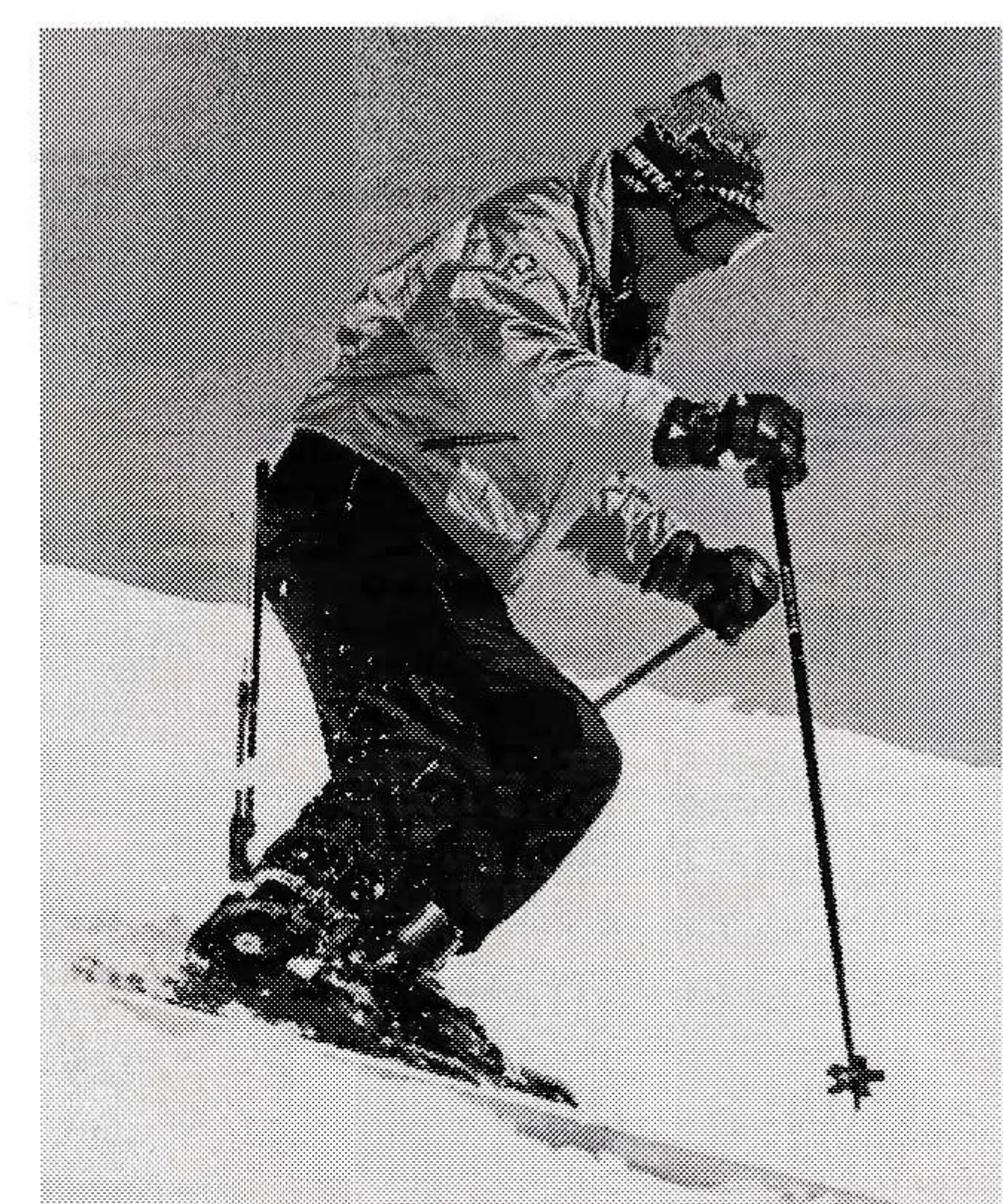
The CADS USA harness system is a rod and pulley contraption designed to reduce stress on skiers’ thigh muscles. Skiers who wear it can ski longer each day, and ideally, may extend their skiing careers. The result could be more skiers, and more money for ski resorts and peripheral businesses.
But inventor Walter Dandy is finding that marketing the unusual device could prove more difficult than inventing it.
“The question is ‘How do you get people to try it?’” said Dandy, 41, a Harvard history graduate and Vail resident.
Dandy stops short of defining a target market, although CADS appear to be most suited to older skiers and those with chronic knee problems. The system acts as an exoskeletal muscle, taking stress off joints that become sore and allowing quadriceps to function longer without burning.
CADS stands for Constant-force Articulated Dynamics Struts, and the device’s mechanics are as difficult to comprehend as the acronym. Two rods protruding from implants in the skiers’ boots extend to the lower buttocks. A harness is secured around the skier’s thighs, with two nylon cables running through holes in the pants and extending into notches on the top of the rods.
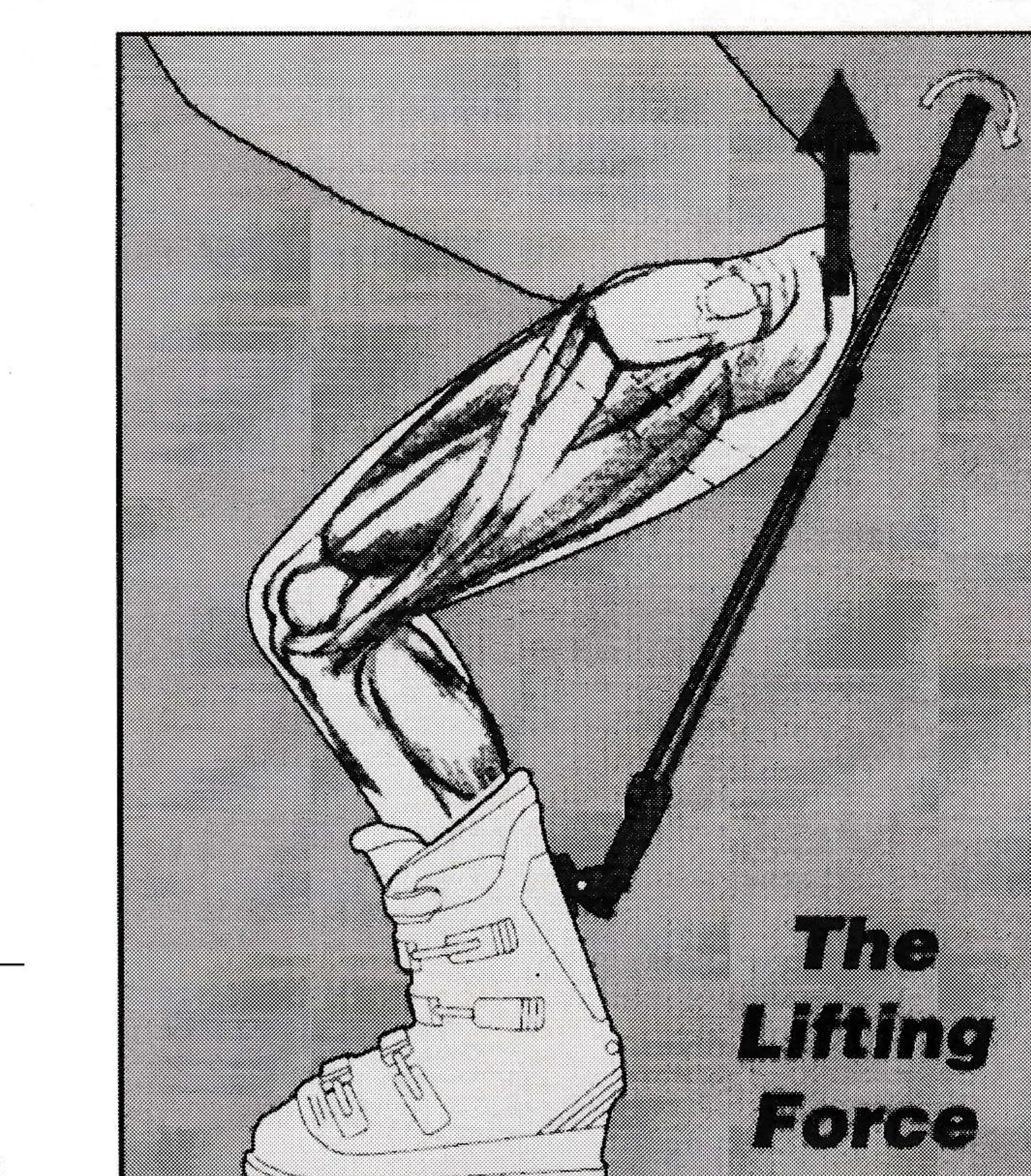
This produces a pulley system that lifts the torso as the skier bends at the knees, taking stress off thigh muscles and knee joints.
“You’re not firing the quads nearly as much,” said Dandy, who built the first CADS system after becoming sore on a ski vacation in Heavenly Valley. “Therefore, you’re not pulling the tibia up into the femur and you’re not mashing the patella into the joint.”
But that is easier said than understood. Dandy has found that skiers are intimidated by the system, which looks awkward on the slopes and downright goofy in the lift lines.
In its limited exposure to the medical community, CADS has been warmly received. New York neurosurgeon John M. Emery III said he is confident the device can also help relieve back pain among skiers.
“The things that tend to give you back pain are things that make muscles work harder than they’re supposed to,” Emery said, “CADS allow you to relax and keep your back the way you’re supposed to, … I’ve already started recommending it to patients of mine.”
The average age of skiers appears to be rising, so if CADS keep people in the sport longer, the ski industry may see cash benefits. Charles Goeldner, a ski industry analyst at the University of Colorado, said his studies show that 52.6 percent of Colorado skiers were over the age of 35 in the 1988-89 season, compared to 31.1 percent in the 1977-78 season. According to the Denver Research Institute, only 15 percent of skiers were over 35 in 1967.
“If a device like this helps people spend a little more time on the slopes, they’re going to feel like they get more value from it, and they’re going to purchase it,” Goeldner said.

CADS, which first hit the retail shelves in Vail in 1991, are now available in ski shops at Vail, Beaver Creek, and Copper Mountain in Colorado; at Alta in Utah and in Lech, Austria. They retail for $299, and for $89 more, CADS users can purchase ski poles with built-in terminals for the metal rods. The rods pop out when the skier presses buttons on the top of the poles — a la James Bond.
Fitting the CADS system to skiers takes some time, and impatient skiers may find the process tedious. Once on the slopes, some skiers find the system difficult to master at first.
Vail ski school instructors began testing CADS last winter, and although they have found it beneficial to some people, they are not yet recommending it to everyone.
“Primarily, we look at it as a good solution for individuals who are having difficulty with their joints, their knees, hips — any kind of muscular issue,” said Chris Ryman, director of the Vail/Beaver Creek ski school. “I don’t see it as the rage of the future for people who don’t need them.”
Others do, however. Dandy has collected a book of customer letters which encourage International Ski Federation officials to recognize CADS as acceptable racing equipment. The device appears to help skiers carve sharper turns because of a downward pressure it exerts on the skis. Ryman acknowledges that CADS seem to stabilize skis in inconsistent conditions.
Dandy hopes to have ski school instructors throughout the world using CADS soon. That, he said, would help eliminate the initial negative reaction from people who don’t understand the contraption.
“The thought is if this thing can be understood and accepted, it can make the sport and industry better,” Dandy said. “For recreational skiing, the big difference between a 50-year-old skier and a 70-year-old skier is quad strength, and this makes up for that decline.”
But if skiers do not warm up to CADS’ physical appearance, the device may be doomed to a modest market of individuals who were in enough pain to try something new.
Dandy remains optimistic. At the USIA Trade Show at Orlando in June, the device was more than a curiosity, and he got an opportunity to bend the ears of a lot of industry executives. “It turns out the area owners are thinking about the aging population,” Dandy says. “One day soon, we’re all going to wake up to see a bigger, richer, inter-generational market with fewer injuries and lower workman’s comp costs. When we do, I hope somebody remembers the role of year-one CADS resorts.”