Park City
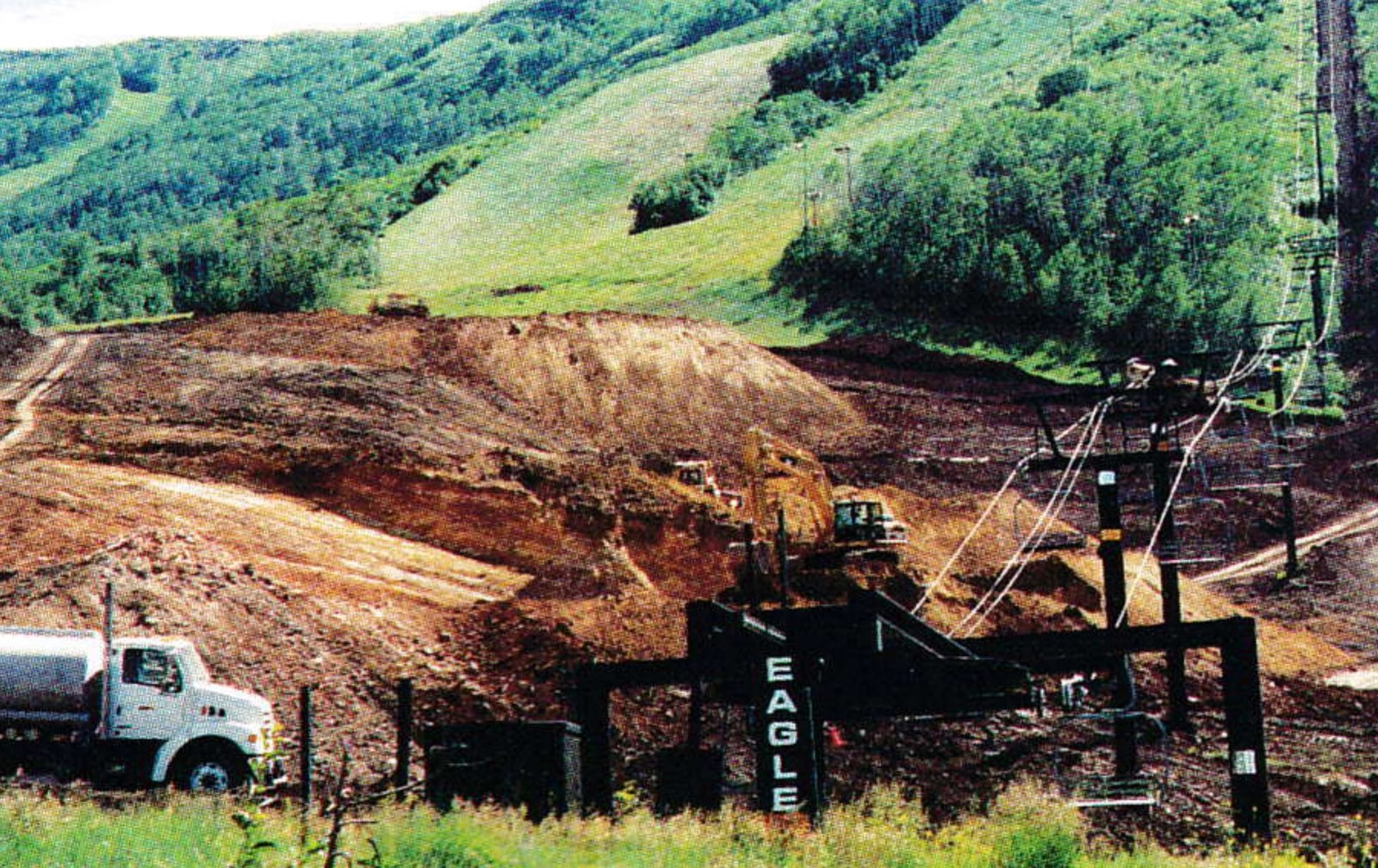
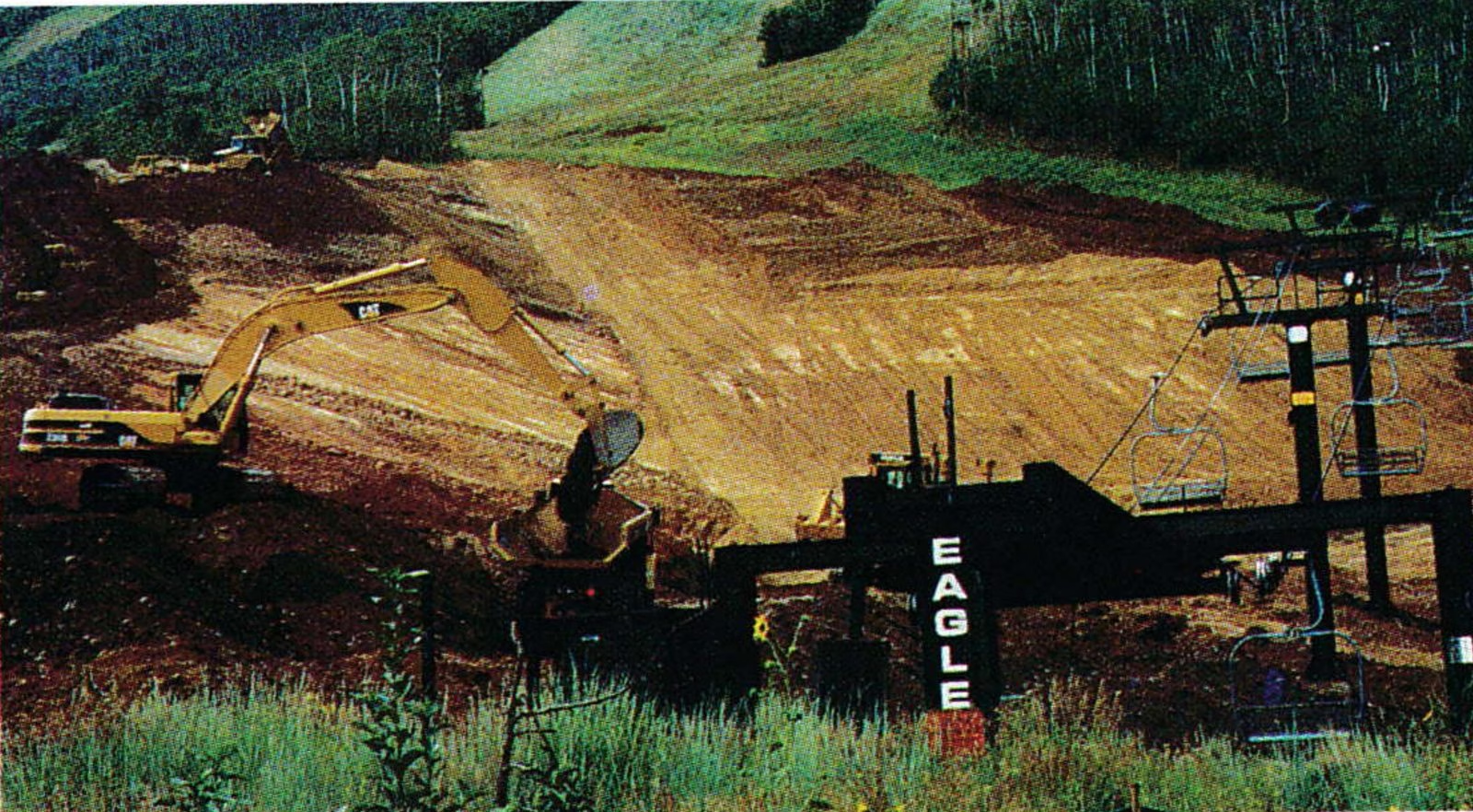
To prepare for the 2002 Winter Olympics, the staff at Park City Mountain Resort, Utah, was charged with the tasks of constructing the world’s preeminent halfpipe and a combined giant slalom and snowboard parallel GS finish area. This past summer, some 10 acres were regraded to make the giant slalom finish area wider and steeper, and create the space necessary for the halfpipe. The foundation of the 500-foot-long Olympic Superpipe was carved out of the earth at the base of the Eagle Race Arena at the convergence of lower CB’s Run and lower Pick N’ Shovel. The floor of the halfpipe sits at about 12 feet below grade to provide spectators with a good view of riders and has a constant 17-degree pitch to satisfy new International Ski Federation specifications. About 54,000 cubic yards of earth was moved over the course of both projects.
The halfpipe was sited as far down the slope as crews could manage in order to get it as close as possible to a planned stadium. The stadium, to be built next summer, will contain 10,000 seats (organizers expect as many as 20,000 spectators at a time, with the balance standing around the finish area and alongside the halfpipe). In order to make room for the multi-event stadium, the bottom terminal of the Eagle triple chair will be moved 100 yards up the hill before a concrete foundation for the seating is constructed. Additional finish-area work this past summer consisted of laying cable, constructing video scoreboards and preparing timing and telecommunications facilities to be used during the games.

In order to make enough snow to cover the Superpipe’s base, form its walls and build its decks—an estimated 500,000 square feet of snow—as well as cover the remainder of the giant slalom courses to a depth of at least three feet, management added 15 sets of HTM Hydro-Tech hydrants and 5,000 feet of pipe to the snowmaking system.
During the Olympics, the mountain operations crew will have two days from the conclusion of the Superpipe events to knock down the decks of the halfpipe and plow in its walls to fill in, smooth and prepare the slope for the snowboard giant slalom races. Then, five days after that, the alpine GS events begin. This coming March, the crew will have the opportunity to test that two-day window during the snowboard World Cup events taking place at Park City.
In addition to the projects completed in anticipation of the Olympics, construction workers finished work on the Legacy Lodge in early summer. The new 54,000-square-foot base lodge houses a food court-style restaurant as well as a “Main Street” retail area that sells a variety of ski- and snowboard-related merchandise, apparel, Olympic-related items, gourmet coffee, photography and concierge services. The lodge restaurant has expanded operations for the winter to include a greater variety of offerings. The lower level houses Park City Mountain Rentals, the resort’s ski and snowboard repair facility, day and seasonal lockers and restrooms. Non-Olympic-related improvements on the mountain included additional tree thinning in McConkey’s Bowl for advanced skiers and snowboarders, a NASTAR-format boardercross course and two new terrain parks. One terrain park is designed for younger and less-experienced park riders while the other is designed for advanced snowboarders and skiers.

Ski Cooper
The Tenth Mountain Chair at Ski Cooper, Colo., a 1973 Hall double, was retrofitted over the summer with new Garaventa CTEC terminals, motor room, gearbox, brake system and haul rope. A new 250-hp drive was installed to run previously refurbished and existing line equipment including towers, crossarms and rebuilt chairs. New grips and sheave assemblies were installed about four years ago. Lift attendant buildings were also replaced this past summer and the approach to the chair was altered so loading would be more in line with the chair’s direction rather than the former right-angle alignment. The chair climbs 1,200 vertical feet over a line length of 5,200 feet and is being run at the same capacity as it was in the past, using the 180 chairs that were refurbished. As a result, uphill capacity stands at 960 pph for a VTFH of 1,152. The Garaventa crew doubled the uphill capacity in Cooper’s beginner area by installing a new O’Connor Ski-Lifts handletow alongside an existing disk-type lift. The handletow climbs about 80 vertical feet over a slope length of 450 feet and has an estimated capacity of 700 pph. The new beginner lift was made possible by a private donation and will be named the Riva Ridge lift in honor of Tenth Mountain Division men who fought in the battle of Riva Ridge during WWII.
Camelback
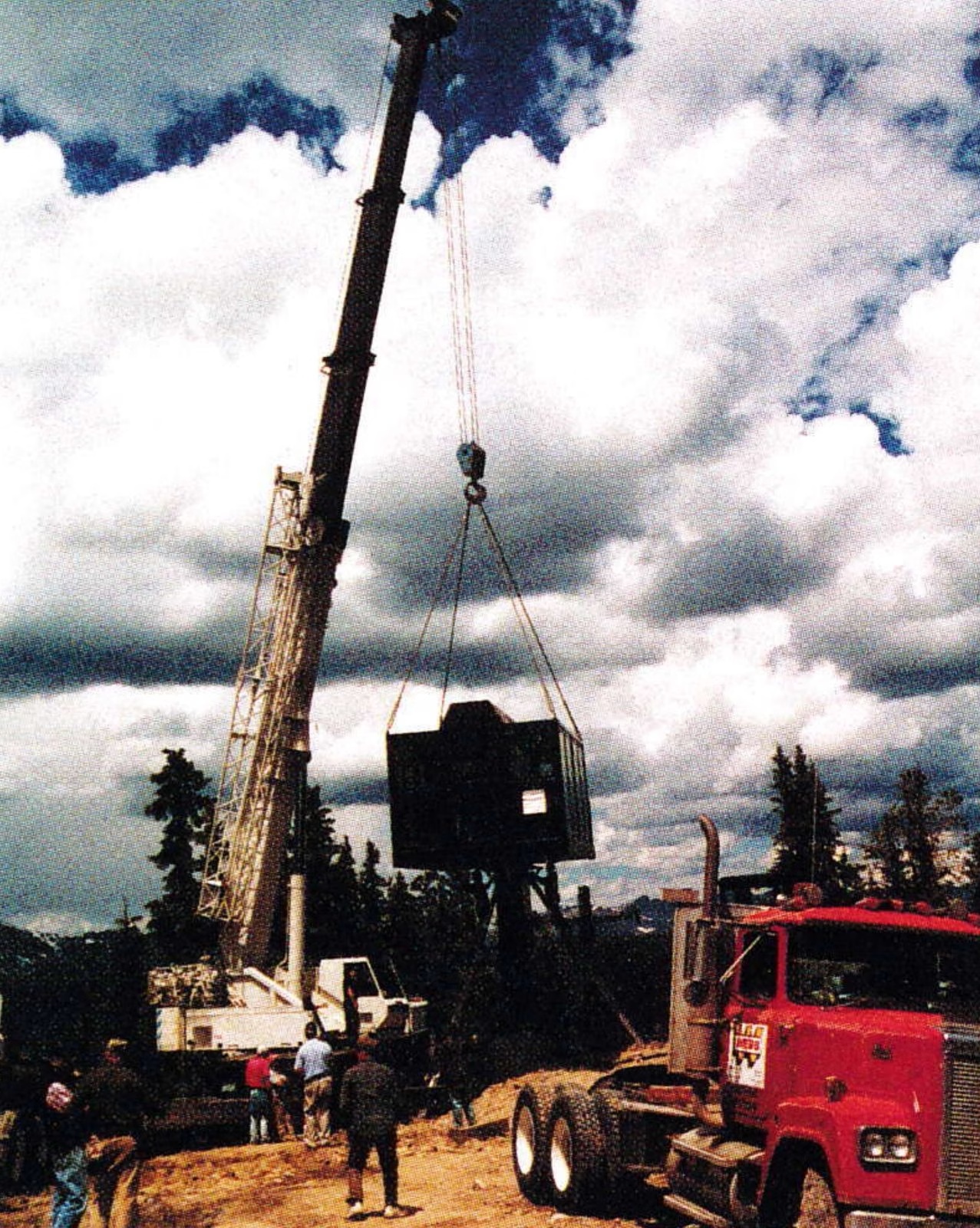
Camelback Ski Resort, Pa., management spent a total of $2.5 million on base-area improvements over the summer. A new 6,000-square-foot welcome center was constructed to create a definitive front door to the resort. Management had long struggled with the base area’s lack of a clear entrance for guests and created a clear first stop that consolidates the purchase of tickets, lessons and rentals on the ground floor. The second floor contains administrative offices and the entire building is wired with fiber-optic cable to create a sales and inventory network. The project freed up enough space in the existing base lodge to create a separate snowboard rental shop as well as an expanded ski rental area in adjoining spaces. Inventories of both shops were expanded, adding 500 pairs of Dynastar skis for a total 3,800 pair of Elans and Dynastars, and increasing the snowboard fleet from 400 to 525 Rossignol, Avalanche and Joyride boards. A new children’s learning center was built onto the existing lodge, doubling the size of kid’s ski school to 3,000 square feet and moving it near ticket sales and rentals. The mountain’s snowmaking arsenal was beefed up with five more Areco airless guns and lights were added to nine trails.
Loon Mountain
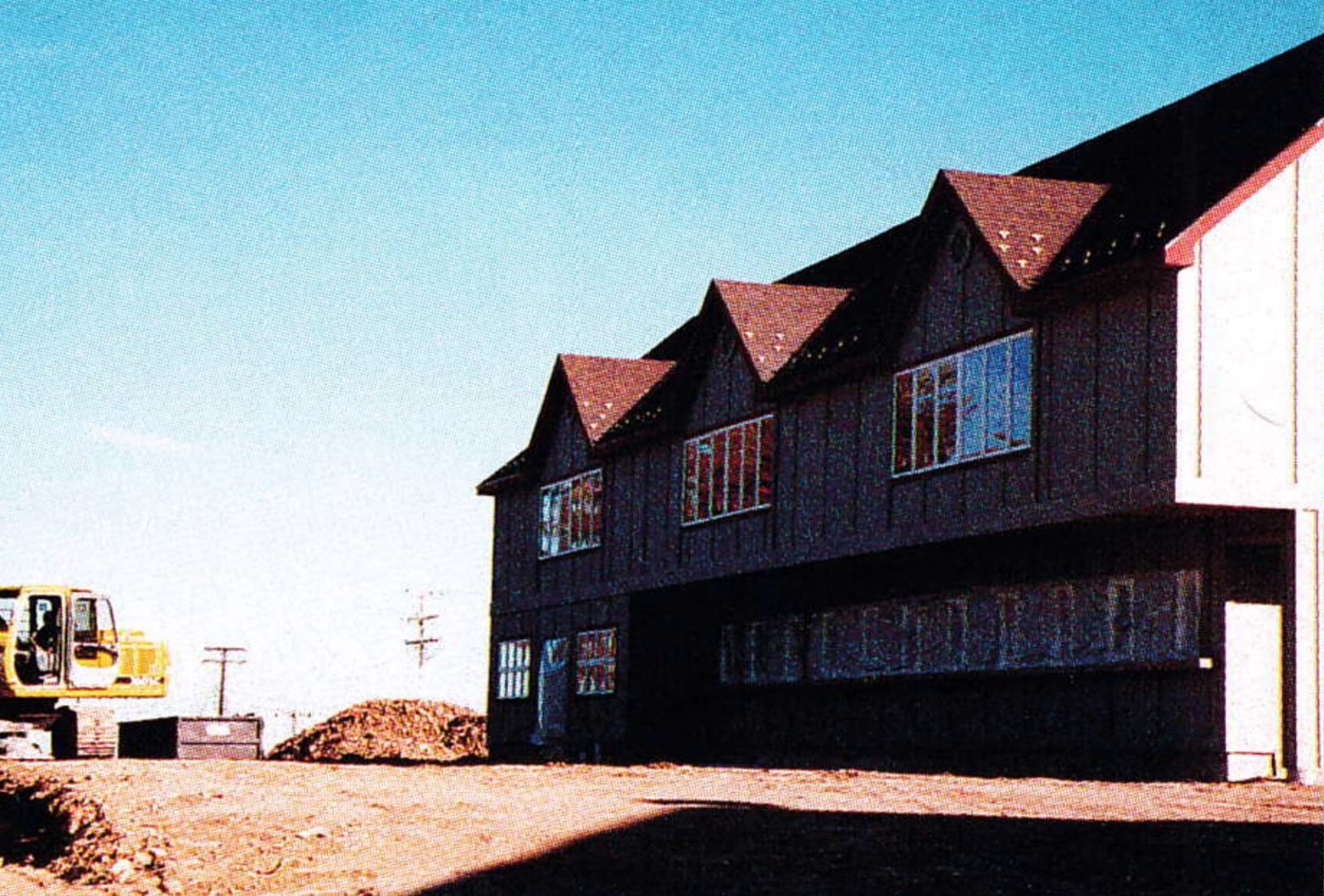
At Loon Mountain Resort, N.H., carpenters were busy this past summer completely refurbishing an old barn that was converted into the resort’s Adventure Center. The building has been redesigned to be the après-ski meeting place for families where arts and crafts, magic shows and storytelling sessions are planned for weekends and holidays. Part of the renovation of the barn includes a new indoor climbing wall with multiple pitches aimed at appealing to adults as well as kids. Guests will use safety harnesses and be belayed by staff. The building will continue to be the resort’s center for cross-country skiing, snowshoeing and ice skating. The adjacent ice rink was expanded and a pint-sized tubing hill for guests too small to manage a chairlift was prepared this past summer. Loon staff also thinned out some seven acres of trees to appeal to intermediate skiers and snowboarders.
Lake Louise
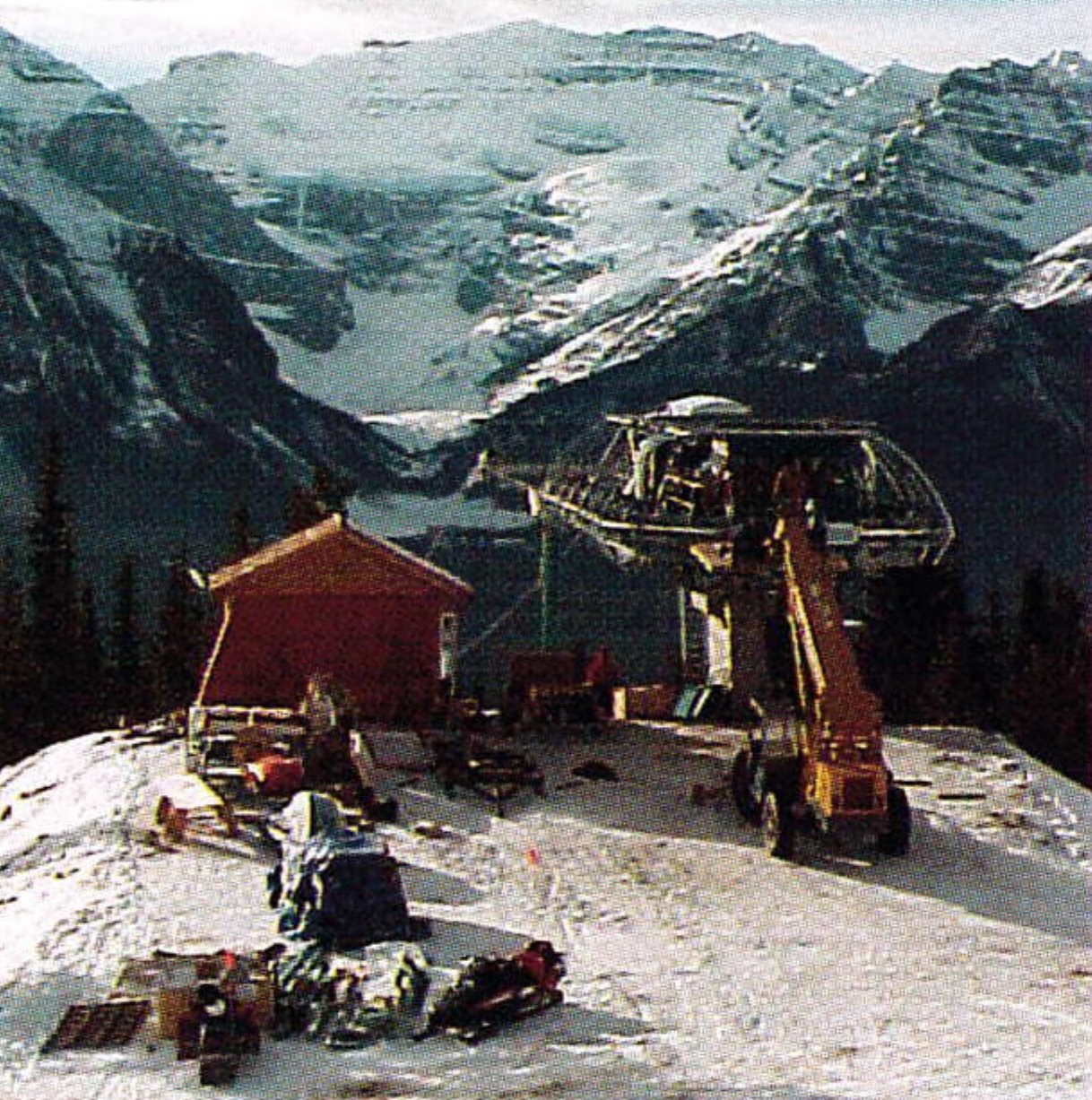
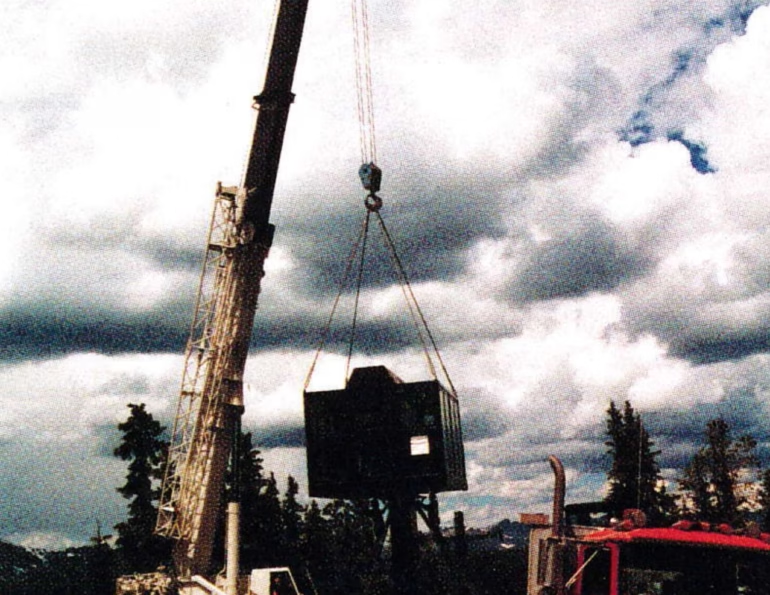
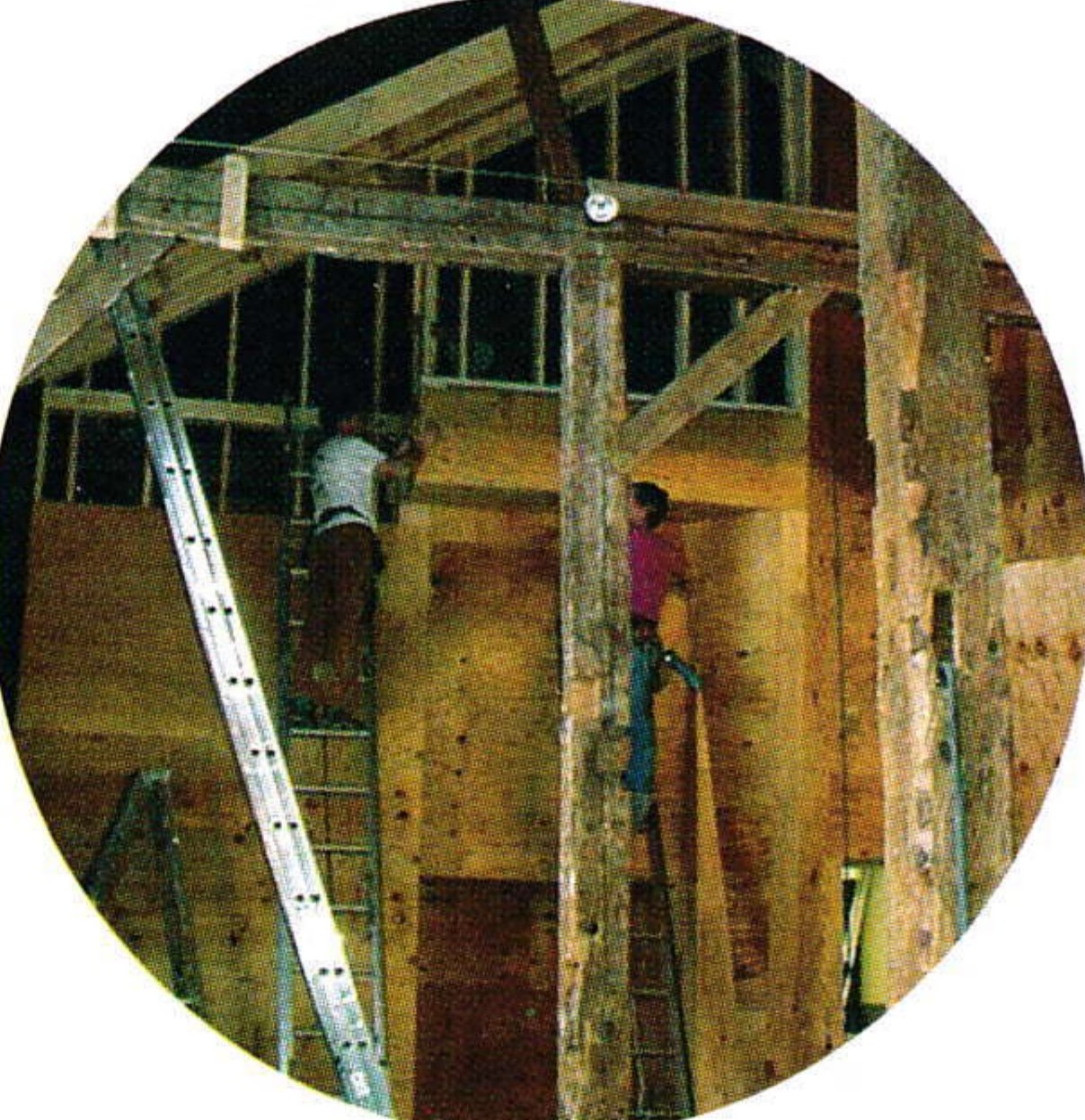
At Lake Louise Ski Resort, Alberta, construction workers had a busy summer installing a new Leitner detachable quad to replace an old triple. The triple was one of three main lifts used to move guests away from the Lake Louise base area and onto the mountain. The new quad, dubbed the Glacier Express, speeds the distribution of skiers and snowboarders and eases congestion at the base. The new lift climbs 1,483 vertical feet over a line length of 6,158 feet and opened with its design capacity of 2,400 pph using 117 chairs for a VTFH of 3,559. Travel time is 5.5 minutes. Managers at Resorts of the Canadian Rockies, parent of Lake Louise, also purchased 11 SMI Wizzards to lend an early-season hand to Mother Nature. The resort also took title to six new Bombardier BR400 Plus MP groomers, one with a winch-cat setup, to move snow around. In addition to the groomers, Lake Louise purchased a Bombardier HPG R17 to keep its new Superpipe in top condition.