


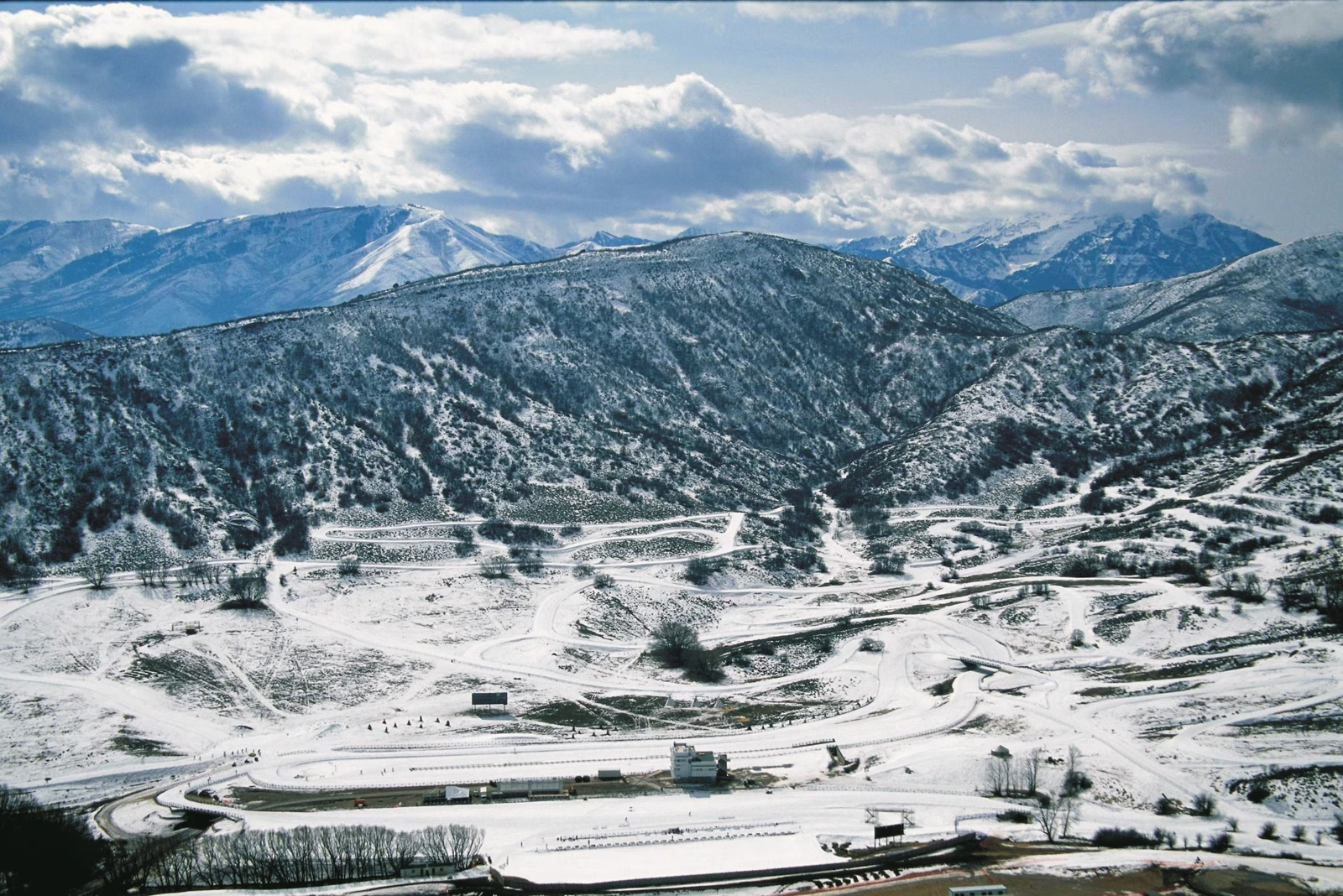
Soldier Hollow, near Midway, Utah, will be the single busiest venue during the 2002 Winter Olympics. Twenty miles from Park City, the site will host at least one nordic event every day after the opening ceremonies, 23 events in all: 12 in cross-country, eight in biathlon and three for the skiing portion of the nordic combined. On-site viewing will be spectacular by most standards (almost every trail is visible from the base area), Europeans may go mad with joy about the television coverage and the Salt Lake Organizing Committee (SLOC) anticipates at least 12,000 visitors daily, though the only American chance for a medal is probably in nordic combined.
But what really distinguishes Soldier Hollow from past Olympic nordic venues is careful planning for post-Games use by both elite athletes and recreational skiers so that it’s financially self-sustaining and meets community needs. In order to accomplish all that, however, another unique feature—an obvious lack of natural snow—had to be overcome. Despite the fact its 50-year annual average for snowfall is 80 inches, the site’s natural layout, support from the community and the low environmental impact of nordic events helped it beat out 12 other sites in the region in the running to host these events.
Snowmaking Mandatory
Like Canmore (Canada’s 1988 cross-country/biathlon Olympic site), Soldier Hollow has a history of weather-related trouble in February. In addition, Soldier Hollow has started out with well below its average snow depth each of the past three winters.
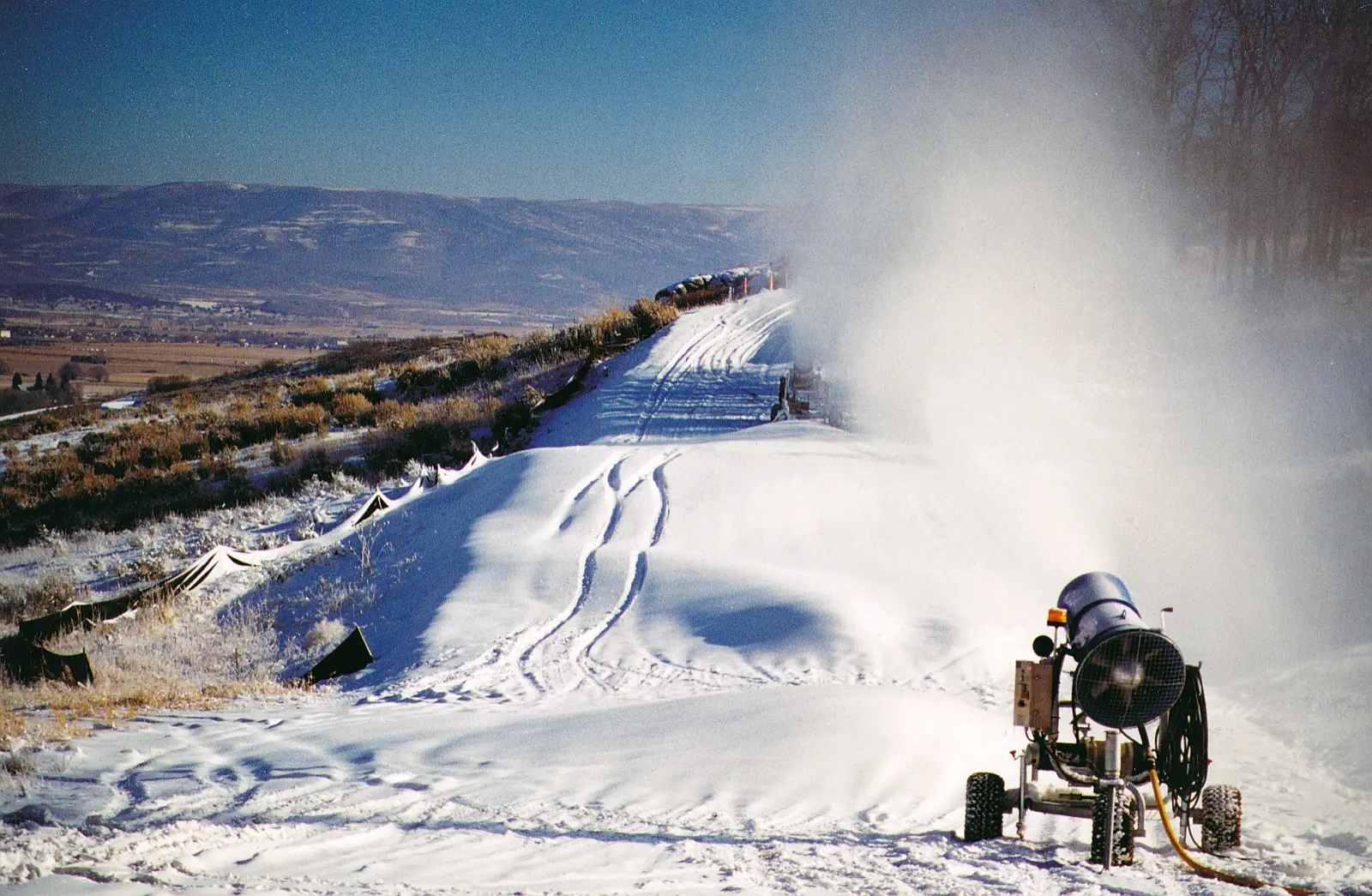
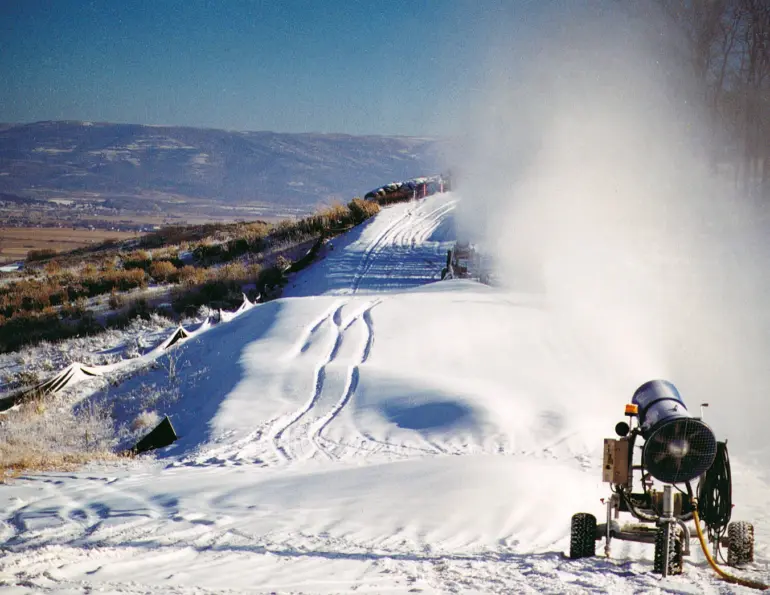
“Chances of rain and warmth (in February) are good,” says John Aalberg, director of sports operations at Soldier Hollow, and the site’s primary trail designer. Because of the prevailing conditions, SLOC has invested $1.2 million in what’s been called the world’s biggest cross-country snowmaking system: 20 fan guns, 140 hydrants (most with permanent power, which may eventually be used for up to 12 km of lighted trails as well) and five sub-systems, consisting of more than 41,000 feet of pipe. All of that hardware will cover 24 km to a depth of at least 2 feet-3 1/2 inches, including the track and infields of adjacent cross-country and biathlon stadiums, each of which is 10,800 square feet in size. Snow will also be blown on the biathlon range, which encompasses 8,600 square feet.
The system’s design is a result of a collaboration between Aalberg and York Snow’s Wayne Ragland. Joe VanderKelen and Barry Drake of SMI teamed up on the engineering aspect. The turnkey system was actually contracted with SLOC and the state of Utah to provide efficient snowmaking for the Games as well as pre-Games training, future World Cup competitions and use by recreational skiers well into the future. The key factors included portability, low noise and concentrated coverage on the trails. The minimum width of trails is 19 1/2 feet, but some sections will expand to almost 50 feet wide.
The system was designed to avoid the site’s expansive natural wetlands and incorporates several drains because of the location’s hilly nature. As a result, the most significant 10 km of trail, which will be used for a majority of the events, uses a buried system of pipes and 18 Kid Wizzard carriages, the design of which came about because of the venue’s specifications for narrow throws. Two Super Wizzards are used for the stadium and skating lanes and more than 490 feet of hose provides flexibility and coverage of the remaining 14 km. A Flowtronex pump station draws from a three-million-gallon pond and can deliver more than 1,000 gpm to the trails, using two 150hp vertical-turbine Flowserve pumps, each pushing 500 gpm.
Snowmaking for the Olympic Games will start on December 15 and must be ready for training by February 1. A staff of nine snowmakers (three shifts of three) will work around the clock on site. Total coverage will amount to approximately 195,000 cubic yards of snow and take between 405 and 675 hours to lay down. The grooming fleet includes six Bombardier 400-Plus machines, one BR 180 and one BR 150.
Creating the Site
But before the snowmaking design work was begun and installation started, a site had to be found, trails had to be created and facilities needed to be put in place to form a proper competition venue. All that was the result of a concerted effort in terms of dollars, planning and cooperation. Principal players were SLOC, Wasatch County and Utah State Parks (Soldier Hollow is entirely on Wasatch Mountain State Park land).
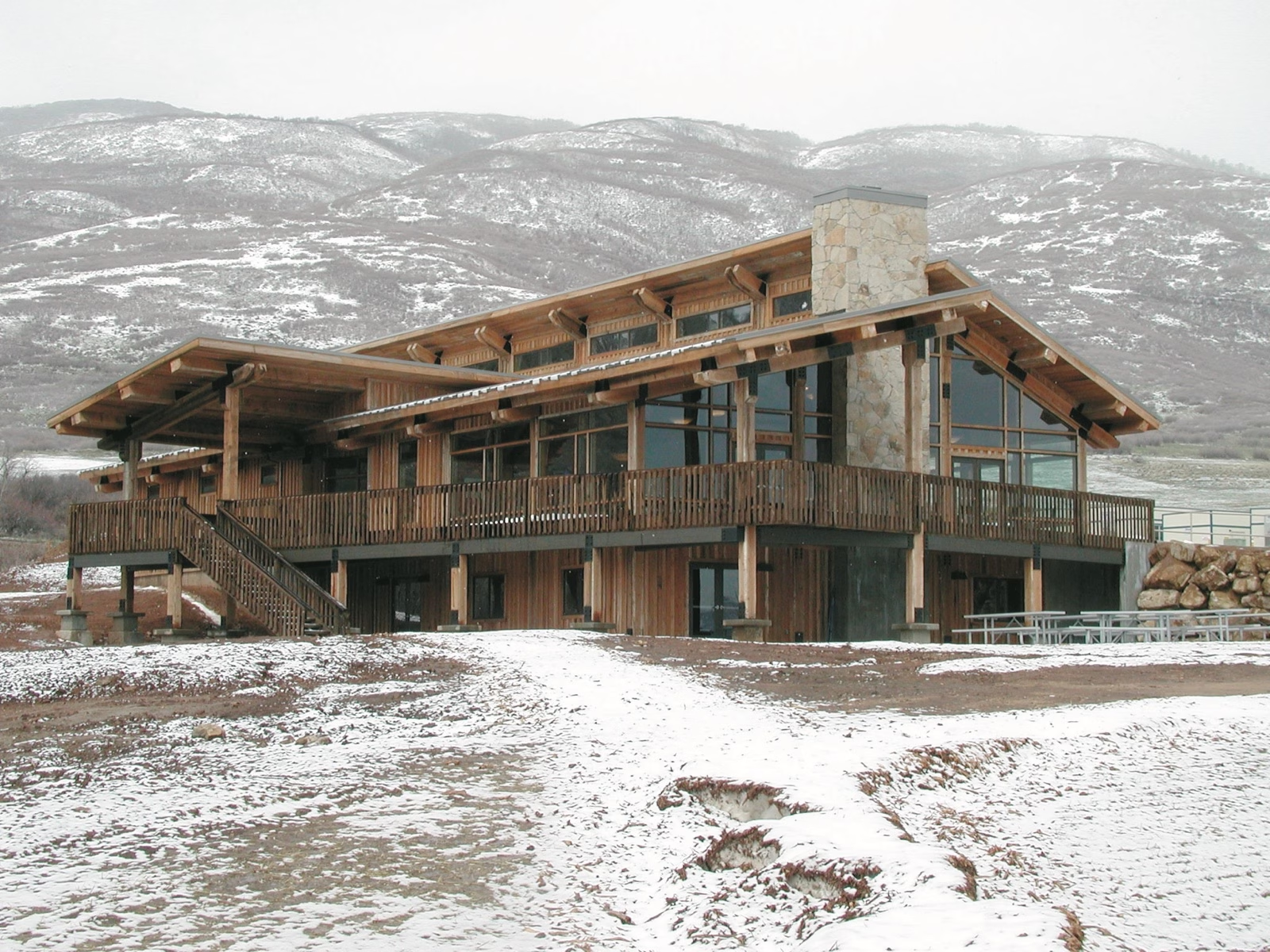
According to Bob Mathis, Wasatch County’s Olympic coordinator and county planner for 26 years, there are two distinct master plans: the Soldier Hollow venue plan and a more sweeping on-going resource-management plan for Wasatch Mountain State Park. The former was completed at a cost of $15 million paid for by SLOC as well as state and federal sources. The project involved moving 500,000 cubic meters of material—primarily for the stadium, but also for the trail network and an 11,000-square-foot day lodge—and paving three kilometers of trails for summer training. The latter plan includes at least one golf course that would possibly be covered by snowmaking in the winter to provide cross-country trails designed for beginning skiers.
Because Soldier Hollow was created with the 2002 Olympic Games in mind, most trails were designed for elite competitors. It’s also just about as high as FIS rules allow at 5,881 feet, just 23 feet short of the maximum—a fact that doesn’t sit well with some foreign teams accustomed to competing nearer sea level. Still, both World Cup classic and skate skiers have praised the trails, including their generous widths (good for passing). Former U.S. biathlon team coach Peter Hale says, “The trails are built to international standards, so they’re quite demanding for the average skier; but they’ve received accolades from Scandinavian racers, in part because the hills aren’t like climbing stairs and then going into free fall.” Steep climbs followed by precipitous drops have been common at past Olympic cross-country sites.
After the Games
And though its low natural snowfall helps Soldier Hollow stand out among nordic skiing venues, it is also unique for careful planning for post-Games use by elite athletes and recreational skiers alike. In fact, with involvement from the local community, it has been designed to support itself through income (putting on a World Cup race costs a minimum of $350,000) as well as satisfy local recreation needs with a special emphasis on youth.
Early on in the selection process, the community of Midway supported the idea of creating a nordic site. The location had already been designated for some type of active recreational use by the state and when SLOC got involved, cross-country skiing won out over an alternative plan to hold the luge and bobsledding venues there, which were seen as too environmentally intensive a use. Besides, some community members saw in Soldier Hollow a center of international caliber for training young competitive skiers.

In addition, within a month of the conclusion of Olympic competition, the site will become a major venue for the Paralympic Winter Games. Because it was designed for two sports (cross-country and biathlon), the area can host a major race while still remaining open to recreational skiers.
To help its cause, Soldier Hollow, in cooperation with the cross-country areas at Sundance and Solitude, would like to build a destination reputation. Because the three areas are so different and a destination region is more promotable, it has been suggested that a “Salt Lake Area Cross-Country Skiing” campaign might get the best response.
Leaving a Legacy
While plans for its post-Games use are in place, funding remains the biggest question. The Soldier Hollow Legacy Foundation, which will manage the area after the Games, is hoping to put in a surface lift to accommodate a tubing hill as well as a snowboarding terrain park to help sustain its efforts. The foundation, which hopes to receive $200,000 annually from an SLOC endowment, will also keep the paved trail open in summer for roller skiing and skating, operate the biathlon range and plans on hosting golf and camping. In winter, snowshoers will probably share ski trails, though there will be a separate trail for customers who bring their dogs.
But, as Mathis says, the $200,000 a year endowment is only a lock if the Olympics nets more than $40 million.
The foundation, headed by Howard Peterson, former executive director of USSA, intends to supplement the endowment with income from rental of the showpiece day lodge built of train trestle timbers salvaged from the depths of Great Salt Lake. The post-and-beam lodge, largely funded by the Utah legislature at a cost of about $1.1 million, houses ticket sales, equipment rentals, programs, events and food service. There’s also the possibility of $100,000 to $125,000 in earnings from World Cup television rights, though races of this magnitude may not be staged every winter, and the earnings amount to just about a third of such an event’s cost.
The Legacy Foundation is trying to plan for all contingencies. Utah’s government has committed to maintaining the site’s snowmaking infrastructure and the foundation has been authorized to conduct activities with profit potential. But they’re also committed to serving the community at minimal cost. It’s going to be interesting to balance, but the mystique of skiing Olympic trails in this setting may be just the ticket.
Bear Hollow
Locally known as Bear Hollow, the Utah Olympic Park is home to the 120-meter and 90-meter ski jumps, and skeleton, luge and bobsled tracks. According to Joe VanderKelen of SMI, which got the snowmaking contract for the ski jumps, the system “is more custom than any we’ve ever done.”
The unique configuration uses 6,000 feet of main pipe, 45 hydrants, two 400 gpm Ingersoll-Dresser vertical turbine pumps and an Ingersoll-Rand compressor pushing 1,500 cfm of air. There is also an additional port for attaching more rental compressors. The company mounted three York “Half” B3 air-water guns to tripods and sleds to make them light enough to carry up the steps alongside the steep inruns of the jumps. There are also 22 York Borax 3s guns on custom SMI mounts for the landing area. The mounts top nine-foot posts that can be folded down and removed. Four Wizzard fan guns blow snow on the outruns at the base. All of it is fed by city water.
