


Ski resorts managers have long puzzled and struggled with the problem of developing promotable summer attractions. They have offered golf courses, tennis courts, swimming pools, horseback trail riding and, more recently inline skating and mountain biking. All the time in the background, there was hiking, but it never seemed possible to make a profit center of it. Hiking was something that, well, you just did.
One ski resort, Killington, Vt., may have come up with a way to make hiking both appealing and profitable: an educational, outdoor program to introduce people to the wonders of nature and charge for access. The program also is designed to tap into the Forest Service’s environmental partnership program.
The creation and growth of such a hiking program took root at Killington in May of 1994. John Clifford, marketing manager for the resort, decided to open a fully equipped hiking center that would offer lift access to a variety of mapped, closed-loop trails with stunning views and interpretive signs explaining the natural surroundings. Logistics for the project led Clifford to seek a partner. A natural choice was the Vermont-based Merrell Footwear Company, almost a cult name in hiking boots. Then vice president of Merrell, Bob Reif, also saw the potential of the program and recognized the synergies with his company’s goals—to get people out into nature, preferably wearing Merrell boots. Thus the Merrell Hiking Center at Killington was born, the first of a chain that is spreading across the continent with centers currently at Vail and Beaver Creek, Colo., Jackson Hole, Wyo., Mount Snow, Vt., Whistler, B.C. and Mont Tremblant, Que.
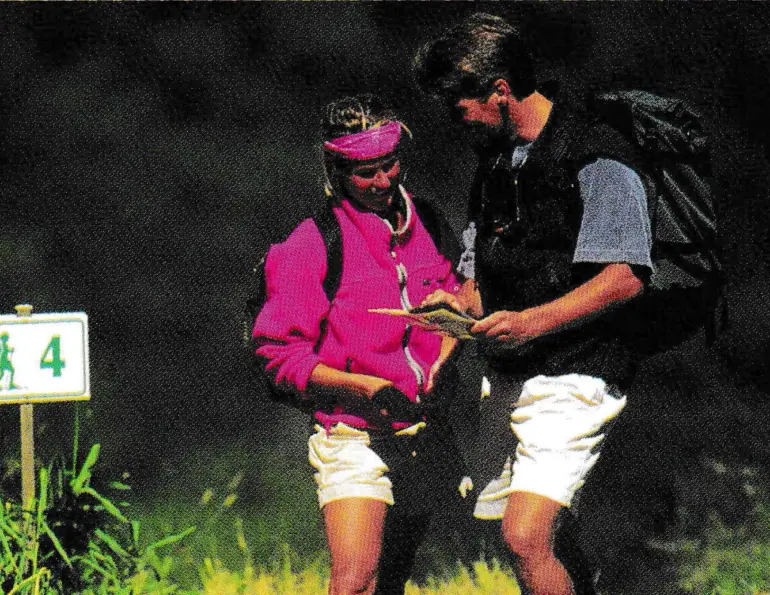
While Merrell worked out a plan to supply rental hiking boots, Killington put its resident environmentalist, David Laing, to work creating an interpretive trail system. Laing laid out more than 21 trails with 15 varying hikes from which to choose. The trail system of interconnecting loops plays right into the layout of the mountain, using ski trails and established foot trails, so that only minor modifications were needed to draw hikers near points of interest such as mountain streams and vistas.
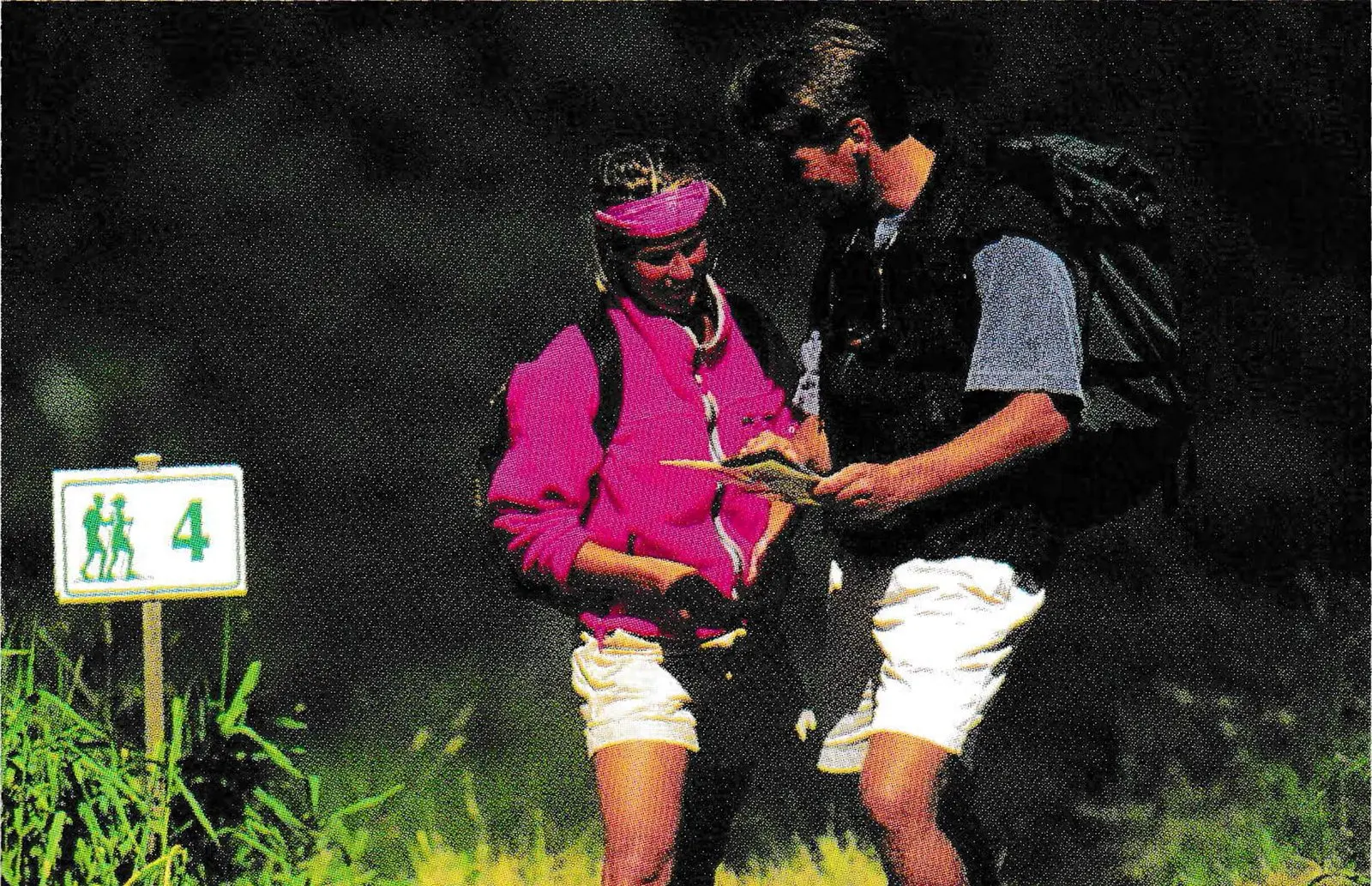
Photo by Robert Bossi
With the trail system in place, Killington set up the Merrell Hiking Center in a cleared-out ski shop in one of the base lodges near the summer lift. Personnel at the center provide guidance, lift access and supplies to hikers for a moderate price. Merrell supplies the rental boots to the centers at deeply discounted prices, even free of charge in certain circumstances, as well as signage and promotional support. Several models of hiking boots are available for rent as well as backpacks, waterproof ponchos, binoculars, magnifiers and bug nets. All equipment is available for purchase as well.

For $10, visitors can get a map, interpretive guide booklet and a one-way ride to the summit. Hikers may also be accompanied by a naturalist guide for a half-day trip ($14 including map, booklet and lift ride) or for a full day tour ($22 including all the above and a packed lunch). Weekend hiking packages, including lodging, start at $56 per person. The hiking maps, available separately for $5, enable hikers to properly gauge the difficulty of trails as well as the times and distances involved in a hike. The 50-page booklet contains maps, illustrations and numbered descriptions corresponding to trailside markers, and a vast amount of information on all geological features, natural vegetation and descriptions of the animal wildlife.
Response to Killington’s hiking center has been great. Clifford estimates that 7,500 to 10,000 hikers have made use of the trail system at Killington since the program’s inception two years ago. It is a hard number to derive, because once hikers have purchased a map, they can return to hike up anytime they wish and, of course, anyone with the desire to climb and a good set of lungs can simply hike up the mountain and walk the trails free of charge. Killington only asks that hikers sign in at the hiking center before departing, but this is hard to control.
Aside from retail sales, an important part of Killington’s success with the hiking program is that lift utilization has increased dramatically, adding value to operating lifts in the summer. For a small investment, the hiking center has provided good return to Killington, both as an attraction and a profit center.
The joint marketing effort has fueled the success of the program to where it can stand alone as a profit center and also be rolled out to other mountain resorts. Interest among ski areas that operate summer lifts has been good according to Casey Sheahan, vice president of marketing at the Merrell Outdoor Division. What they are all finding is that a structured hiking center is adding not only profits, but a new dimension for the visitor. Hikers come down off the trail with more than a roll of pictures, they have a new awareness of alpine environment.
