


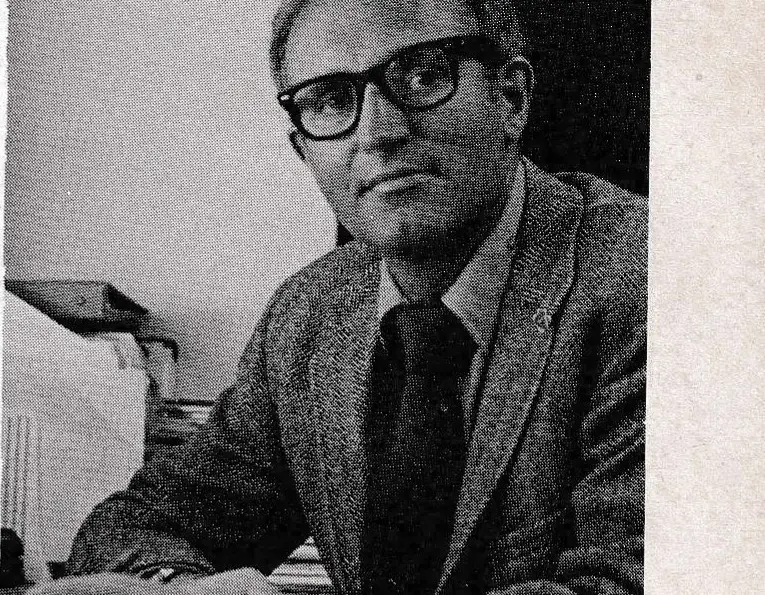
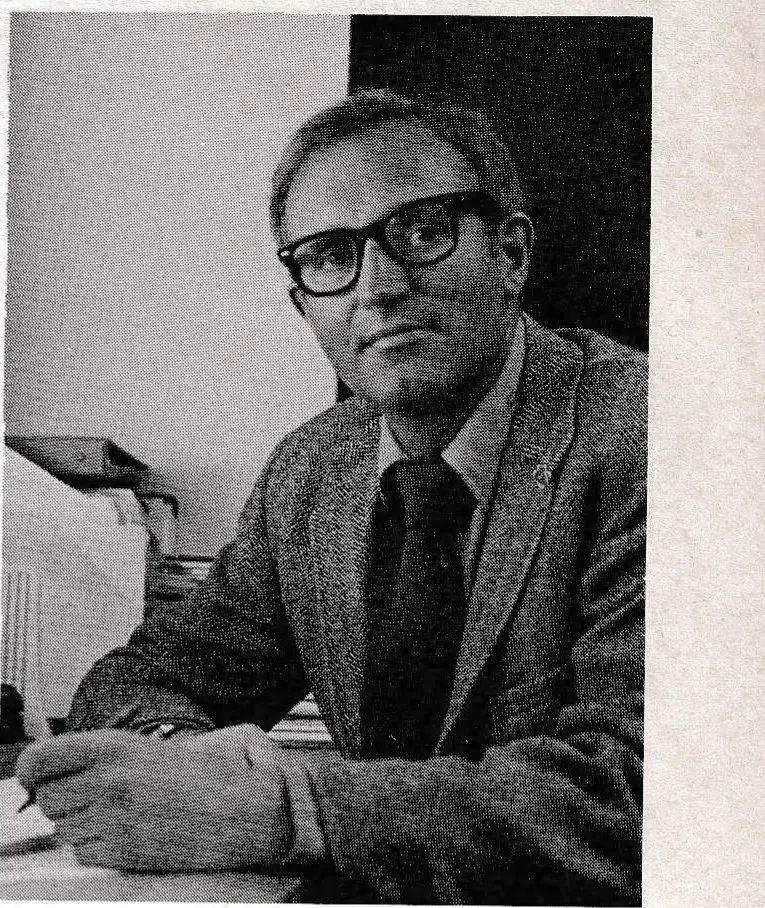
Chuck Lewis is bullish on the ski industry. The executive vice president and chief operating officer of Copper Mountain, Colorado, Lewis is finishing a one-year term as chairman of Colorado Ski Country USA as he assumes the office of president of the National Ski Areas Association. Long active in ski industry organizations, he has completed two three-year terms on the NSAA board of directors. During that time he has chaired the economic study and insurance committees, served on the public lands committee and is currently on the executive committee. He has also headed up various short-term projects and studies for NSAA. SAM recently interviewed Lewis to learn his views on the challenges and opportunities ahead for NSAA and the ski industry.
SAM: Why have you taken the time and trouble to be active in industry organizations?
Lewis: I plan to be in this business for a number of years to come. The only way to insure the future of the industry is to be involved in determining and defining that future.
SAM: What storm clouds are on the horizon?
Lewis: The lack of new facilities coming on line. Tourism is expanding greatly in this country today. Affluence, an increase in available leisure time, the necessity for people to recreate is contributing to this, as are the pressures of society. Furthermore, U.S. skiing is now a multi-national business. The Pacific Northwest, the Northeast, the Rockies and the Sierras are all international destinations. This produces greater and greater pressures on us. How do we handle the pressures and continue to provide good skiing? Currently, the inability to find and develop new areas is creating the challenge to existing areas to continue to provide a quality ski experience. Crowding will turn people off, so we are going to have to limit lift ticket sales at times.
We’re currently seeing the development of new summer resorts, as well as the growth of Sun Belt resort destinations. I’m not sure the same thing is happening in skiing. The last ten years have been a period of very slow growth for us.
The other big storm cloud is the involvement of government in our business, although that may be alleviated by the new administration. Other activities, such as the creation of the Congressional Tourism Caucus have helped build awareness of the importance of our business. When I went to Washington recently, I had the most positive visit ever to that city. I had good, substantive conversations with both Democratic and Republican legislators.
In the last ten years it has been risky to start new resorts. People aren’t willing to make the necessary financial commitments. The process—its layers and layers—is so bloody complicated. Not only the permit process, but the whole raft of things at the state and local levels. We need to simplify the way we can all do business and to improve the climate for further development.
This industry has got to be sensitive to the possibility of losing customers if our product quality declines. There’s plenty of competition for the recreational customer. Furthermore, if we remain static, the government may become further involved in our business.
SAM: Some segments of the ski industry, for example, equipment manufacturers and distributors, are concerned about the drop in sales, especially of beginner packages? Are ski areas experiencing a similar drop in beginner skiers?
Lewis: Our ski school (Copper Mountain) has never done better and I think that’s true for many other areas. Beginner lessons at Copper Mountain have been up substantially since the beginning of the season. We’re not seeing a decline in numbers, but think we may be seeing a different type of skier than in the past. More people seem to be skiing 4 to 8 days a year, taking mini-vacations and skiing for casual, social reasons. I do think that the manufacturers have a challenge ahead of them if they’re going to keep their market healthy, because I think this new skier is asking himself or herself, “Why should I buy expensive equipment that I’ll only use 4 to 8 days of the year? I’ll rent it instead.”
SAM: Where should NSAA focus its efforts over the next few years?
Lewis: I can identify a couple of areas: First, I don’t think the ski area industry fully understands our responsibility (and our ability) to help create and implement a national tourism policy. As I said earlier, this is the first time the national importance of tourism as an industry is being recognized. This is evidenced by the formation of the Congressional Travel and Tourism Caucus and the legislation to create an idependent tourism agency. It’s very important that we follow up on those developments.

Second along these lines, NSAA can cooperate in initiating and continuing a public awareness program so that the world understands our business better. The sport is perceived as elitist, adventurous and glamorous. That image has stretched our advertising dollars, but has caused us some problems as well.
Third, is mass marketing and creating new markets. Even with inflation we can work to build new markets and increase penetration in others. An example is the SIA high school assembly program which was developed to create new skiers in some parts of the country.
Fourth, is an emerging sophistication in the operations of many areas. By sharing information, NSAA can provide tools to its members that were developed by its members. An example was our insurance problem. As areas did a better job of accident prevention, we became more aware of potential problems and worked to solve them. This kind of information can be developed and must be shared for the overall betterment of the industry. Currently NSAA is working on improvements in workers’ compensation insurance and on the up-dating of the B-77 codes. The funding and support of such programs is necessary if we want to design and be involved in our own destiny.
SAM: What is NSAA’s role vis-a-vis regional associations and individual members? Can NSAA dictate policy?
Lewis: This business will always involve very strong individuals. NSAA can’t dictate to individuals with diverse viewpoints or insist on solutions to problems that are uniquely regional, nor can it solve everyone’s problems. In most instances NSAA’s members can complement each other, working toward compromises. What NSAA can do is to provide the forum for the communication of information that leads to problem solutions. It’s a vehicle that can provide the catalyst for the implemention of policy and programs. Every few years an assessment of NSAA’s activities is necessary in order to keep it dynamic and responsive to the needs of its membership. I think the organization has the ability to temporarily “retire” some activities and to change direction and emphasis. For instance, a lot of emphasis has recently been place on developing an international marketing effort and a committee has been formed to organize that activity. Concomitantly, the standing marketing committee has not been active. The NSAA international marketing effort can provide the catalyst for the implemention of jointly funded programs. It opens the door and aids in overcoming individual competitiveness. Individual members can reinforce and take advantage of NSAA’s jointly-conceived efforts by following up on programs with their own.
SAM: What is NSAA’s role in the American Ski Federation?
Lewis: Our involvement in ASF is an important part of protecting our future as a viable industry. And, I feel that, for the first time in our history, we are initiating action, rather than reacting to circumstances, issues, etc. The industry, through the ASF, has taken a small but increasingly effective step to develop our credibility in Washington D.C. Our directive to the ASF has been to become a credible and efficient lobbying effort, concentrating on projects and issues where we can have an impact. I think Joe Prendergast done that. Now we need to help ASF to expand and to fund that expansion. NSAA could, for example, help by adding an ASF corporate membership to the billing for individual member dues. We need to help generage more business membership in ASF.
SAM: Does NSAA owe special consideration to its smaller members?
Lewis: It’s often the assumption that, because the large areas pay more dues, they realize the most benefits from NSAA. However, the bigger areas often have to deal with issues and operations problems first, ergo, they’re the first to gain experience. NSAA is the vehicle that communicates what they learned to the rest of the membership. Furthermore, big isn’t necessarily great. Some smaller ski areas are leaders when it comes to maintaining the quality of operations and the development of ideas. Due to necessity, they’ve really been innovative. They have ideas to share with us that benefit us all.
Tourism is going to be one of the major industries in this country in the twenty-first century. We’ve got to be prepared to be a part of that growth, so that we can reap the rewards. It’s going to take all of us, working together, to achieve that goal.

