


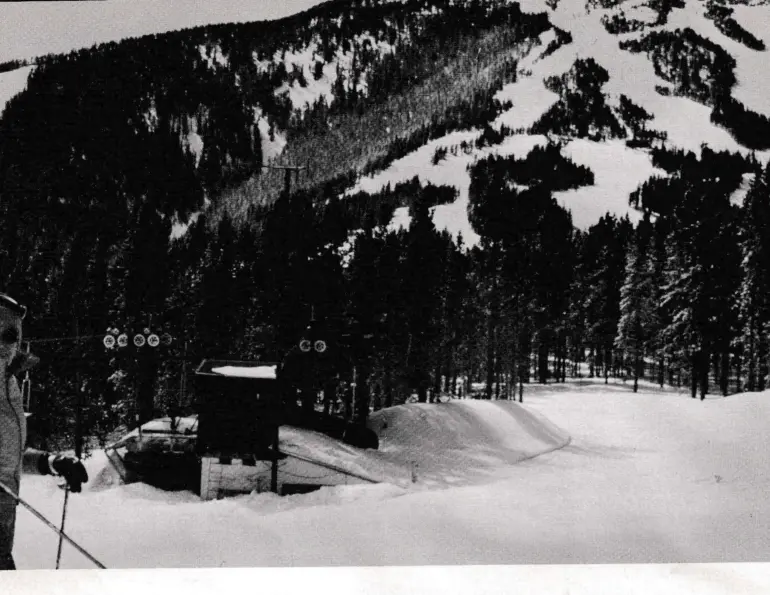
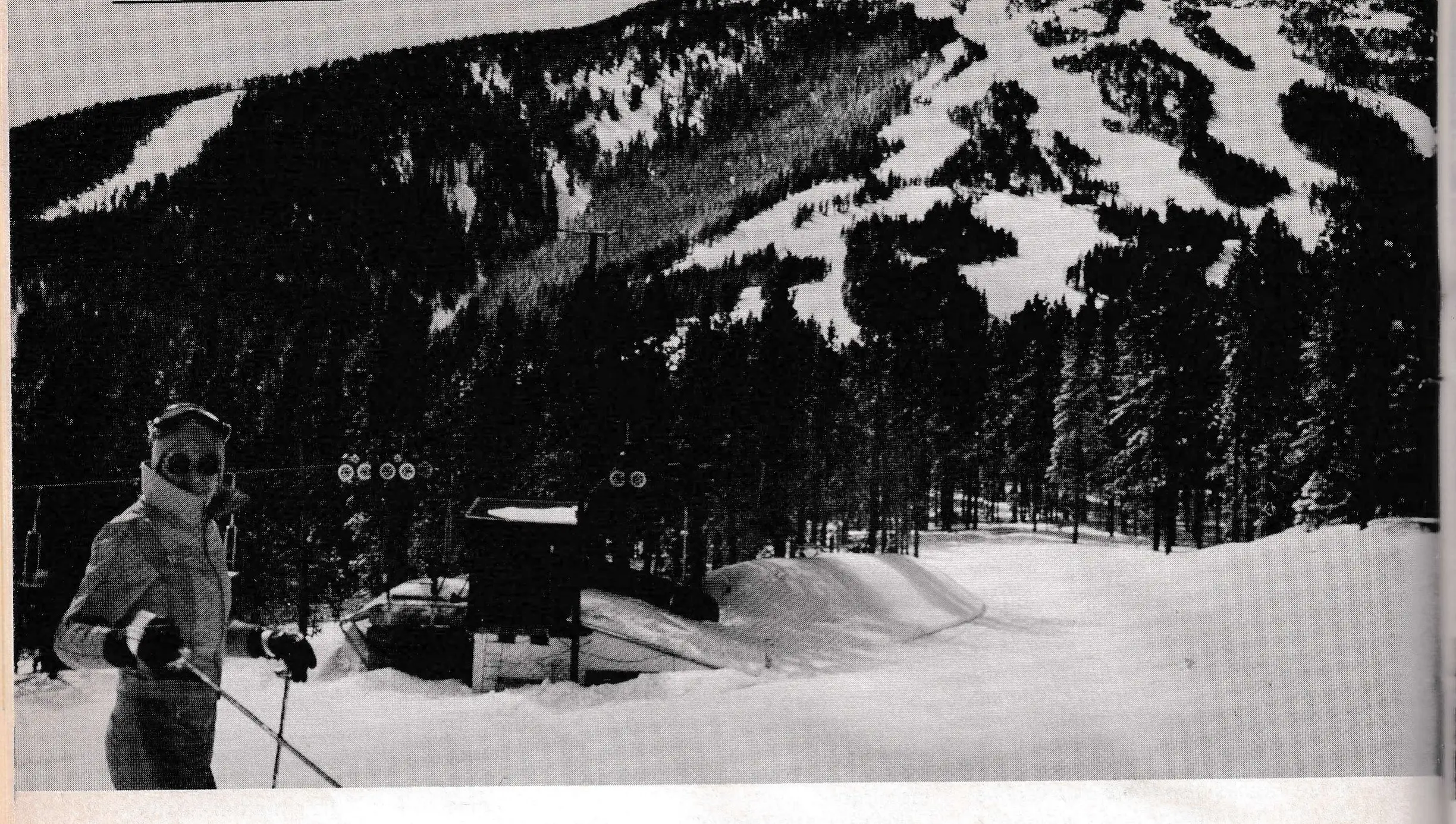
When snowmaking was installed at Red Lodge, Montana, two years ago, it was merely intended to be used for base area cosmetics and to assist in opening lower slopes early in the season. As it turned out, in the first season of full operation (1979-80) with one chair running and 40 acres covered, Red Lodge was the only show in town. Montana didn’t get a real dump of snow until mid-January.
“It cost us $20,000 to lay snow before Christmas,” said Area Manager Bill Barnett. “The system cost a quarter of a million dollars, but in effect it paid for itself in the first month.”
Barnett was particularly pleased with his fortuitous timing because local business people had put up seven year certificates of deposit as collateral against two bank loans on the snowmaking installation. The system has 8,000 feet of pipe capable of pumping 400 gallons of water a minute to two Hedco Snowmakers. Two 150,000 gallon tanks constantly circulate and recover stream water. Even with this relatively small system, in a light snow year, the area made money. “Snowmaking is the key,” exclaimed Barnett.
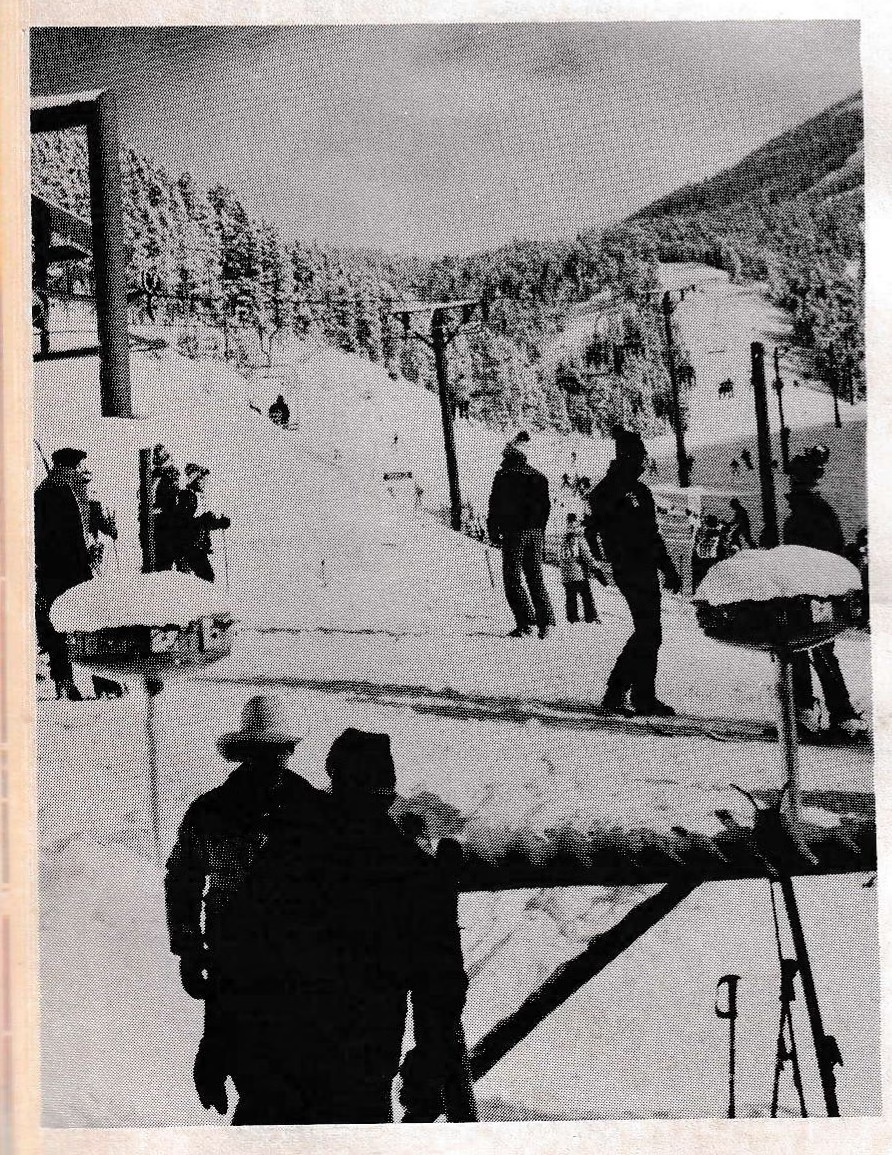
The Red Lodge saga sounds like just another snowmaking success story—until 1980-81 rolled around. Not only did the draught continue, but warm temperatures all but prevented any snowmaking until January. Even then, Red Lodge, which is on the first East-facing mountain in the Rockies did not receive the natural snowfalls that blessed its competitors: Bridger Bowl and Big Sky.
Still, Barnett and his crews persevered and made snow whenever temperatures permitted. Red Lodge opened on Thanksgiving with marginal cover, but kept running through the season with intermittant natural snow finally permitting trails on the upper mountain to open late in the season.
“If we hadn’t had snowmaking, we wouldn’t have opened until February,” says Kevin Taylor, the area’s business manager. “We had enough to keep our season pass holders coming back and that’s 25 to 30 percent of our gross. Without snowmaking we would have had to make refunds on demand.”
Even with attendance way off—200 a day in mid-week vs. a normal 400 a day, and 900 daily on weekends vs. 1,500 average the previous year—Taylor says the area will be able to pay on loans and can cover the cost of normal summer upgrading projects. To date, no dividends have been paid to the 500 to 600 stockholders mostly from Montana and Minnesota, but as an investment, the area has flouished. Last year, Red Lodge’s gross was about $700,000. This year, because of smaller crowds and half price rates on the already-low day ticket, the gross is expected to be only about $400,000.
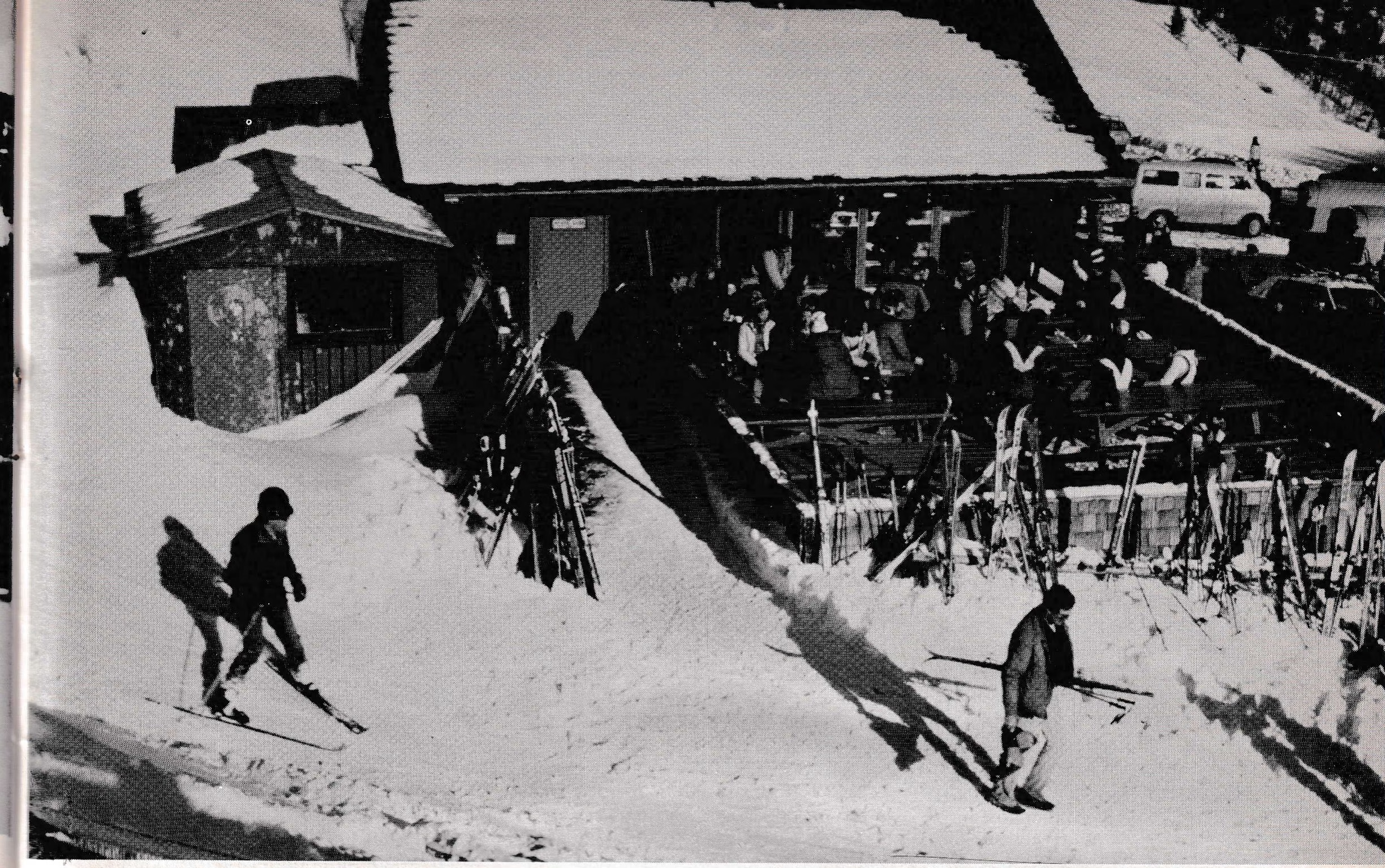
“We make money any day we operate—even with only 50 tickets sold—so we keep the revenue coming in,” says Taylor. “We trim personnel to the minimum and offer very few extra services. Only two chairs run, but skiers get the full vertical from the top. And, the Midway Restaurant is closed, so only the lower kitchen operates with a crew of four. Salaried personnel work and we hire as few hourly people as possible.”

Such austerity programs aren’t new to Red Lodge; Barnett instituted them when he took over as manager. Over the years, he improved trails, brought grooming to the mountain, created some attractive midweek package plans in conjunction with nearby MAY 1981 motels, put together an advertising campaign and even got local cowboys on skis.
“At our peak, we have 100 people on the payroll,” says Barnett. “That’s the largest payroll in the county except for the government and the school district.”
The area’s maximum capacity is 1,750 skiers a day, limited by parking space for only 550 cars. The town of Red Lodge has 700 pillows, and many people come for the day from Billings, Laurel and Cody, Wyoming.
Currently, Red Lodge looks and acts like a weekend area, but the master plan, with three more lifts, projects a capacity of 3,500 skiers per day. Phase one of this plan was to begin this summer with a half million dollar chair opening a section called Cole Creek and creating a secondary access up the mountain. A new large parking area was also to be part of this phase.
Obviously this plan is shelved for the year.
Normal snowfall for Red Lodge is 250 inches, and even a local man celebrating his 100th birthday can’t recall anything like this season. But in Montana, the old-timers are not bothered too much… a few good snow years and everything will be normal again.
| Item | Detail |
|---|---|
| Vertical rise | 2,016’ |
| Top elevation | 1,800’ |
| Number of lifts of each type | Double chairlift: 4; Other: Mitey Mite |
| Area capacity (vertical transport feet per hour) | 4,800 |
| Snowmaking capacity | Two Hedco Snowmakers – 8,000 ft. of pipe |
| Grooming fleet | 1 Thiokol 3700; 3 Thiokol 2100; 1 Pisten Bully 73 Hydrostat |
| Amount of terrain | 1,288 acres |
| Lift ticket prices | Weekend adult $12, junior $7; Weekday adult $11, junior $7 |
| Season pass price (standard individual) | Full price $229; discount $209 |
| Number of employees | Full time 6; seasonal 54 |
| Number of instructors | Full time 24; part time 24 |
| Cross country trails | None |
| Facility management | Area owned: Restaurant; Bar (Midway restaurant) |
| Concessions | Ski School; Ski Shop; Rental Shop; Bierstube |

