


This past fall, after more than two years of working on the necessary approvals, the management of Marmot Basin Ski Area, Alberta, was ready to begin work on a new chairlift and associated trails. The lift, a fixed grip quad with its base well below treeline, would have about 1,600 feet of vertical rise and end at a terminal well above treeline. A liftline and four trails were to be cleared through the timbered part of the area to be developed.
Because Marmot Basin is one of five ski areas in western Canada located in a National Park, it has to meet very stringent environmental restrictions set by Parks Canada. For example, Parks restrictions regarding vehicle disturbances are strict. Tracked and wheeled vehicles are banned from this terrain unless the snowpack is deep enough to prevent erosion damage to the ground, thus normal summer log removal methods would not be possible. On the other hand, we weren’t going to log during winter when the ski area was operating because the lower section of the proposed lift and the route for log removal would go through the busiest part of the ski area. Parks was also against over-snow logging in the spring after the area closed because it would disturb the normal spring routines of a healthy grizzly bear population. Besides, area management wanted to get the trail clearing done before lift construction was scheduled to begin in late winter.
Then we considered dropping the trees in late fall and cutting them up small enough to be moved and piled by hand so that when enough snow had accumulated, we could dig them out, load them in boxes on snow cats or trailers and move them to a place where the logs could be loaded onto trucks. With this schedule, the felling would not take place while there were skiers in the area and, with some luck, we’d be able to transport a good portion of the trees and slash off the hill before skiing started for the year. The limbs and brush could be burned on previously disturbed ground at the truck loading site. However, as we started felling the trees on the liftline and looked at routes to get snow cats to some of the steeper terrain, we realized it was going to be very difficult to build the snow roads needed without large amounts of snow. Though Marmot usually has adequate snow for good skiing throughout the winter, great depths are not typical and in the fall of 2000, the snow was very late in coming. We also saw another problem in dealing with the forest near treeline. At this elevation, there were a great number of very small bushy trees that would make for a lot of hand work and very bulky loads.
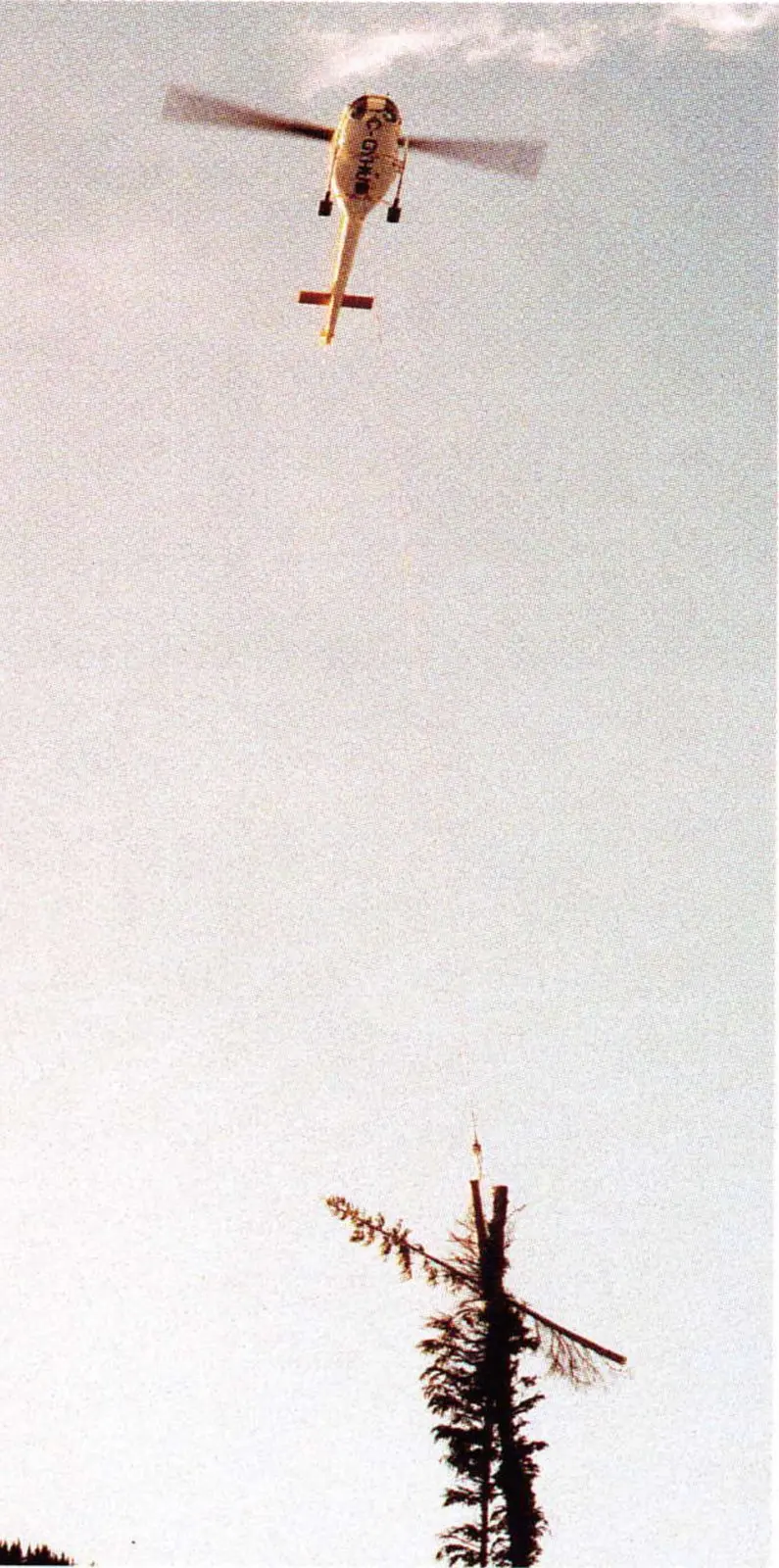
About this time, however, a helicopter was scheduled to come to the area to move a new lift-operator hut to the top of one of the chairlifts. Someone had the idea that we should try moving some of the trees off the steep terrain with the chopper. Although we thought it might be very expensive and we didn’t have anyone available with heli-logging experience, we decided that if the pilot was willing, we’d give it a go.
We started with a couple of premises to keep costs down: first, make turn time—the time it takes to make a complete circuit from pick-up through drop-off and back to the next pick-up—as short as possible, and second, make sure each load was as close to the maximum weight the chopper could lift. We knew how to handle the first: by good planning and preparation But we had no idea how to estimate the weight of a load of trees and bush.
We also knew we couldn’t fell and choke trees fast enough to keep up with the chopper, so we would have to pre-choke the loads. Cable slings are expensive and we would need a lot of them. We knew that some other heli logging projects had used rope chokers, so we bought a couple thousand feet of three-quarter-inch polypropylene rope. We made loops in the ends simply by tying figure-eights backed up with overhand knots. It turned out to be very handy to make the chokers on site as we could customize them for each pile rather than try to adjust the pile to fit the choker.
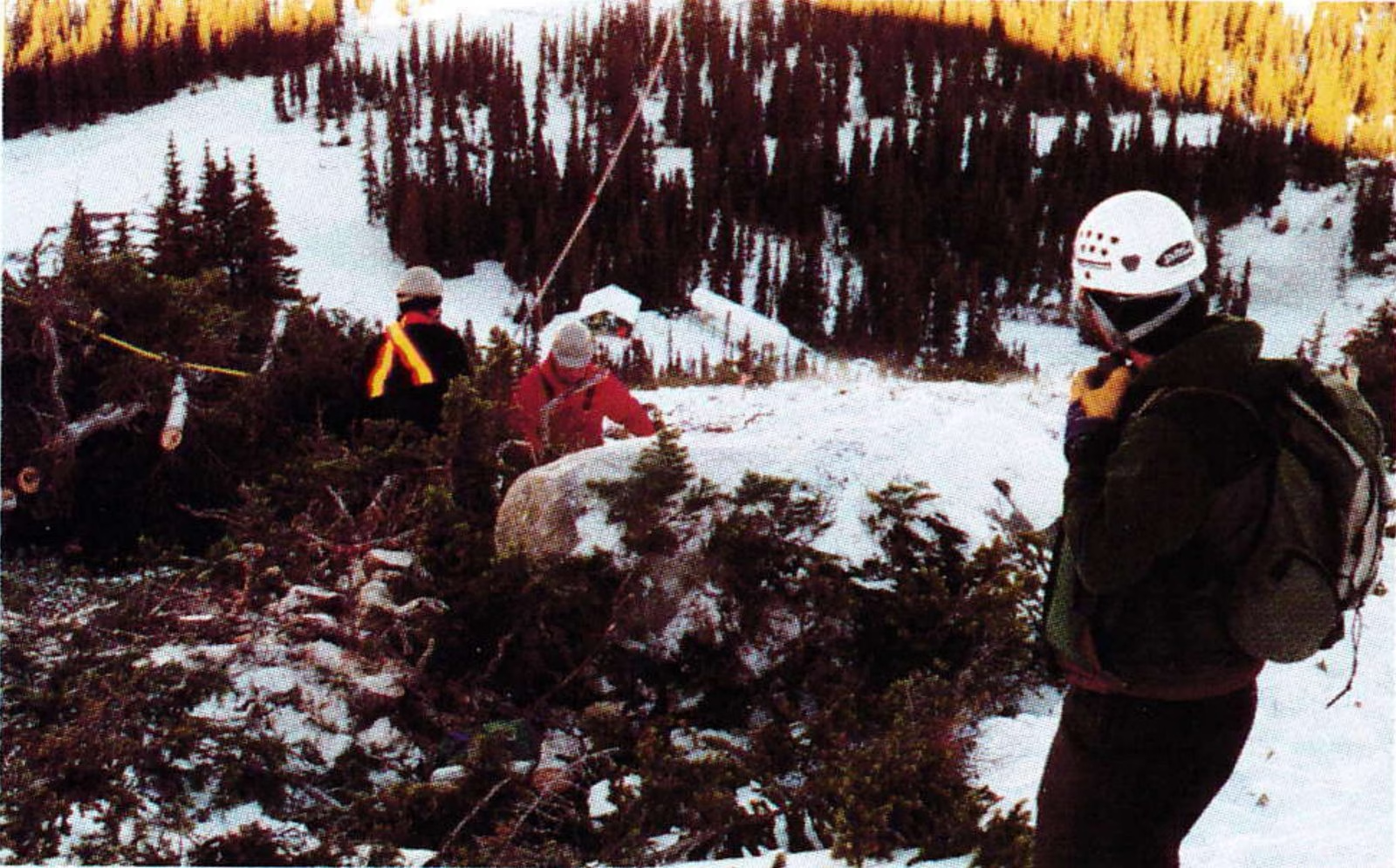
When we started preparing for the chopper we already had a lot of trees down. We went into the piles of trees and threaded chokers around what we thought would be reasonably-sized loads. After we knew we were going to lift the trees and bush with the chopper, the fallers tried to cut clumps of trees into distinct piles of chopper-sized loads. Sometimes the chokermen first lay rope out on the ground for the fallers to drop an appropriate number of trees onto the rope. The chokermen could then easily close the chokers rather than try to push a rope under a pile of trees and bush.
Judging the correct weight of trees and bush for each load was not the problem we thought it would be. For the most part, it wasn’t possible to make a pile that was too heavy to lift. The trees were just too widely spaced. What did happen was that sometimes the loads were so light the pilot would lift a bundle, find it very light, drag it a short distance to the next bundle and have the ground crew add a second bundle to his load. This was as close as we got to adjusting load sizes to get maximum weight.
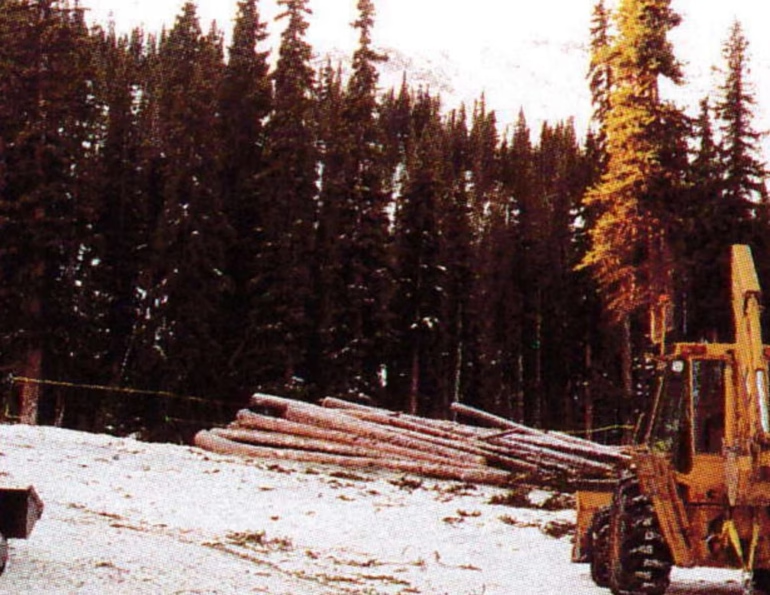
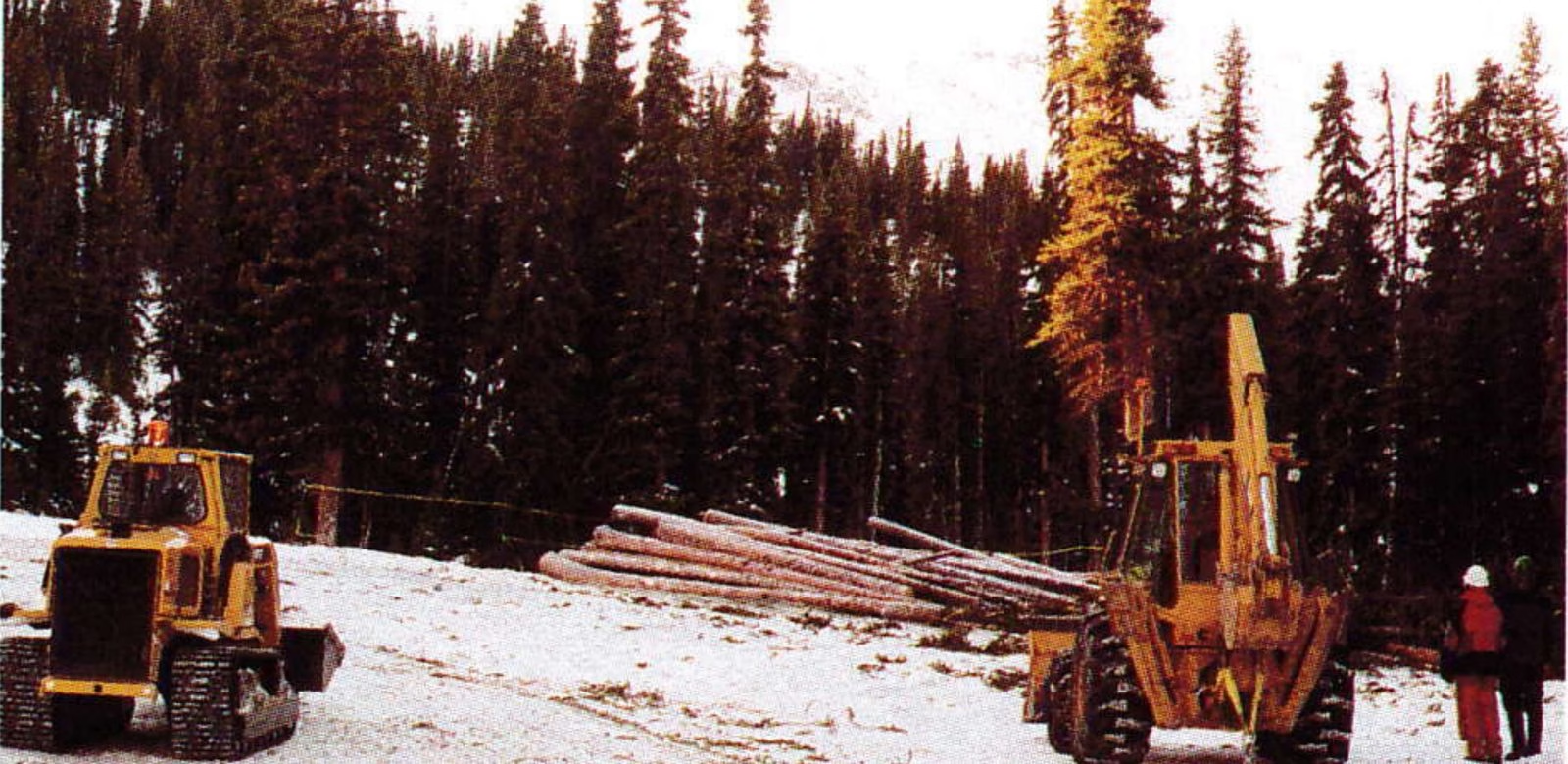
For our trial day we wanted to be as prepared as we could be for all eventualities. We set up two teams of hookers, those responsible for attaching the rope chokers to the electronic hook at the end of chopper’s cable. One team was low on the liftline and one high. We used two teams because when one team had a problem the chopper would move to the other team and keep on working. We also had fallers available with their chain saws in case we needed something cut in a hurry. At the landing site for the bundles, we had men and equipment ready to move the logs so the chopper would always have a clear site. We did this using a loader/backhoe rig and a Bobcat owned by Marmot Basin. With these two machines working together there was never any delay for the chopper.

The first day went very well. We moved 44 bundles in two hours of helicopter time, averaging 2 minutes and 44 seconds for turn time. One rope choker broke and the load fell into the woods. We rechoked it and got it out. One load of light bush came apart as the chopper lifted it and it had to be re-choked.
Area management was pleased with the efficiency and cost of the operation compared to the option of moving logs and bush with snow cats. They decided to do all the rest of the hauling with the chopper and, on the next session, in spite of the haul distances being a bit farther, we got the turn times down to average 2 minutes and 20 seconds. We did this by improving the way we gathered the bundles, making it easier for the pilot to pick them up cleanly. We also found that the single broken choker failed because we had rigged the sling so that enough rope passed through the eye to abrade it nearly right through. We retied the chokers so it didn’t happen again.
Post-op
While helicopter logging is certainly not the answer to all ski-area tree removal problems, it worked for us because we had to move the trees in winter without enough snow for over-ground removal and we had to move large amounts of brush in a short amount of time. Some other things about our situation were also very conducive to heli-logging:
- A helicopter big enough to move good-sized loads was based close enough so that the cost of ferrying it to and from Marmot were affordable.
- All loads were to be moved downhill.
- We had an excellent landing area for the loads of logs right at the base of the slopes we were logging.
- We had good fallers who worked quickly and dropped trees in piles.
- We had good men to do the choking and hooking. They were confident in their ability to tie and handle ropes and were fit enough to walk up and down snow- and bush-covered slopes all day.
- We had men and equipment to quickly move logs and bush in the landing area so it never slowed the chopper.
Working with a helicopter can be dangerous and we made sure that all our staff got a safety talk from the pilot. If they were working under the machine, they wore hard hats and high-visibility vests for the pilot’s benefit. We went over procedures carefully so everyone knew what was expected of him and which directions to go to get to a safe place.
All choker ropes were carefully inspected before they were used a second time. If there was any significant abrasion, it was always on the end loops. We cut worn loops off and made shorter chokers. Everyone knew to stay clear of the chopper when it was carrying a load. And we made sure no one was working too hard or too long, so no one got tired and sloppy. Maintaining crew freshness was the big reason for having two crews doing the hooking under the chopper.
There are many factors that work against heli-logging. High cost is the most obvious. However, anyone considering heli-logging must look beyond the high cost-per-hour of the helicopter itself and fairly compare the total costs of using the chopper to that of whatever alternative methods are available. In some cases heli-logging is not only the quickest way to remove trees from a slope, but it might work out to also be the least expensive. When environmental or other considerations are strict, heli-logging can be the best way to handle a tree-removal project.
