

Music and the mountains. It seems like such a natural combination — and it is. Ski resorts have the facilities, the parking, the staff and the expertise to handle big and small crowds in the summertime. They also usually have vacant spaces, natural slopeside amphitheaters and beautiful outdoor settings that no concert hall can top. There’s something about listening to the Vancouver Symphony, the Grateful Dead or Willie Nelson 6,000 feet up that surpasses even Carnegie Hall.
The summer music business is as varied as the ski resorts that host concerts. At some areas, the staff does the work. Some hire outside promoters to do the work. Some do one-day concerts. Some do non-stop, summer-long series of music festivals. Some do rock. Some do country. Some do ethnic. Some do opera. But whatever the style or the arrangement, the bottom line is that music — like skiing — is a risky, but rewarding business. And the payoff cannot always be measured on the bottom line alone.
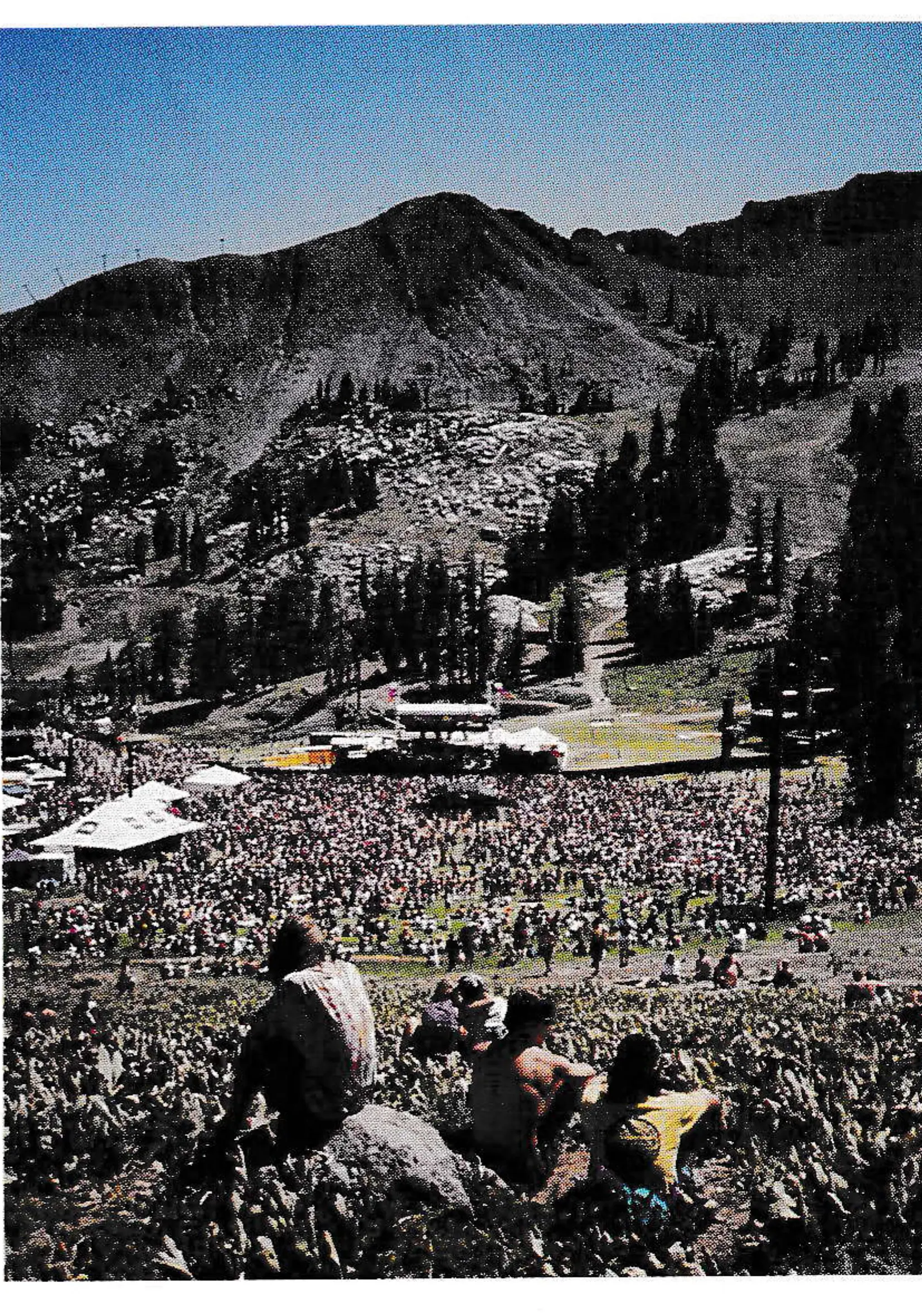
Last August, Squaw Valley, Calif., made the plunge into the summer concert business with both success and failure. About 15,000 fans rode the gondola or hiked three and a half miles to 8,200 feet to see and hear Jerry Garcia with a group of performers. After spending the day at the concert, Squaw Valley founder and chairman Alex Cushing came down from the mountain and pronounced the event, “The most exciting thing I’ve seen at Squaw Valley since the Olympics in 1960.”
The concert was a smash in every way but financial. “We never entered into it with the idea of making a lot of money,” admitted Peter Hansen, director of communications and special events. “It was an opportunity to showcase the beauty of the mountain and our summer activities. A lot of people this winter said they came here for the first time last summer. So the money return on the concert was not as important as the PR return.”
Actually Squaw Valley ended up making a little money on the concert in addition to reaping the enormous publicity and goodwill the event generated. But not all ski areas in the summer music business have been so lucky.
At Woodbury Ski Area in Connecticut, Rod Taylor has been holding reggae and “World Beat” concerts featuring artists from Africa and South America at the tiny 300 vertical foot-ski hill for the last 20 years. “I was way ahead of my time,” he said. “I was one of the first ski areas to get into the concert business.”
In the early years business was good. The last few years, however, as more and more resorts, including nearby Lake Compounce Amusement Park, got into the concert business, Taylor has been hit hard. He said he lost between $100,000 and $200,000 each of the last two summers and the only reason he’s still around is because of his experience and small overhead. “I do everything myself,” he said. But Taylor calls this summer a do or die year.
“I wouldn’t advise anybody to get into this business,” he said.” There’s just too many people doing concerts. Nobody should get into it unless they really love it.”
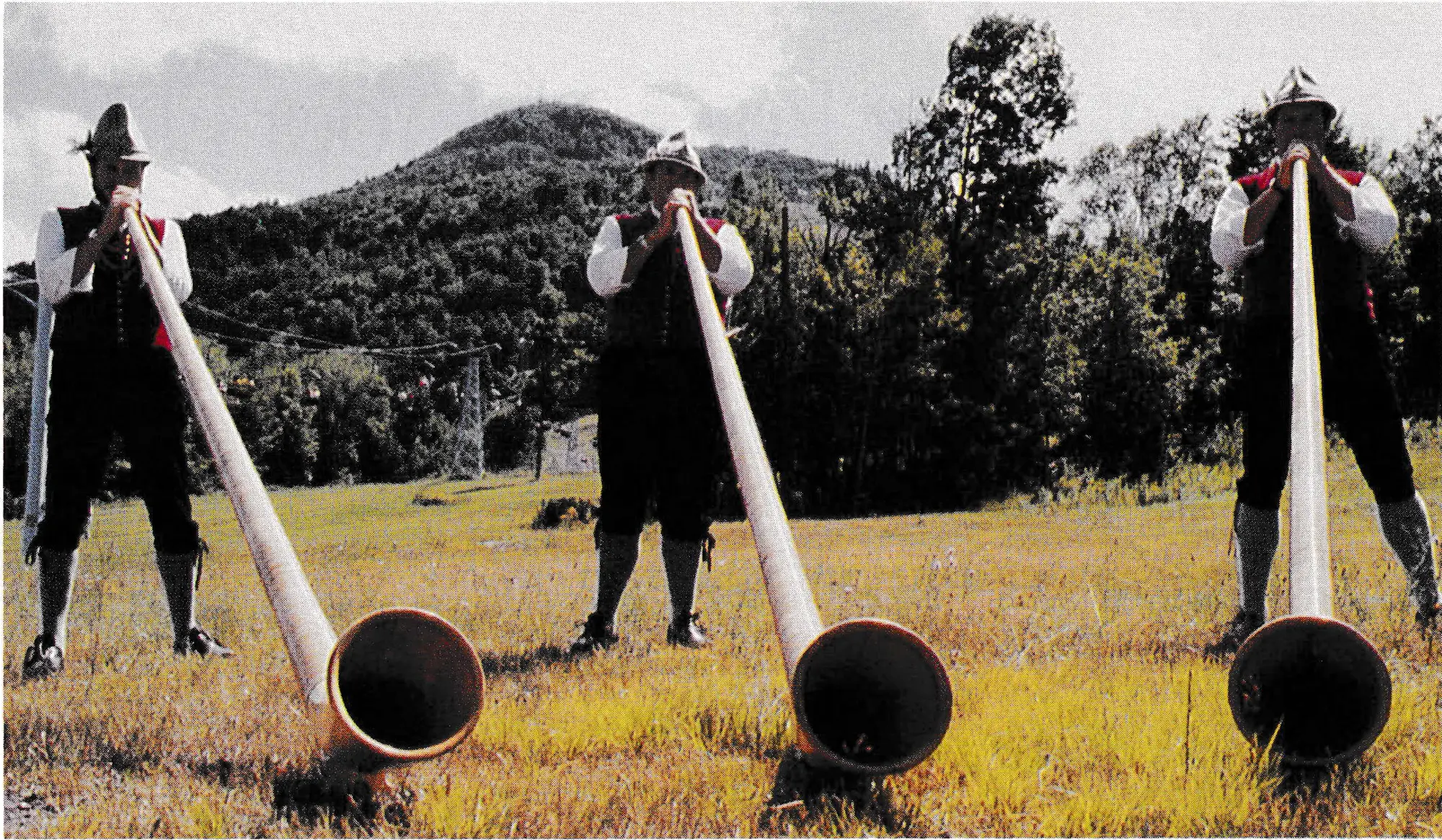
Love it or not, Hunter Mountain, N.Y., has been the site of a German Music Festival every summer since 1975. Orville Slutsky, Hunter’s owner/manager admits he loses money on the event, which has expanded into a series of summer-long ethnic festivals. But something more than money is at stake, Slutsky says.
“The festivals bring 175,000 people here every summer when normally there wouldn’t be a stranger around here,” he said. “In the winter we average 350,000 to 400,000 skiers over a 160-day season. We do half that in the summer and only operate 37 days in summer.
“Our goal this summer is to break even on the festivals, but even losing money there’s spinoff potential. Those 175,000 people pick a lot of brochures and literature on Hunter and skiing. In this business, you’ve got to take advantage of every facet you can.”
Despite the potentially high publicity value, summer music events remain risky financial ventures for ski areas for several reasons. First, there’s the weather. Most concerts are held outdoors. A weekend of rain can wash out an entire event and spell financial disaster for ski areas that have to book and plan events several months in advance. The soaring cost of musical talent has also made concerts risky as has increased competition.
Competition and skyrocketing entertainment costs have already claimed the once-thriving Alpine Valley Music Theater. In 1976, Alpine Valley, Wisc. built a 30,000-seat outdoor theater and ran it successfully for more than a decade, pulling in stars like Frank Sinatra and the Rolling Stones. “Back then music theaters were an up an coming investment,” said Connie Schulte, general manager of Alpine Valley.
But timing is everything in the music business. In 1988, the city of Milwaukee opened a new 20,000-seat outdoor music theater 40 minutes from Alpine Valley. Seeing the handwriting on the wall, the ski area sold its music theater a year earlier to a group of private investors. The new owners ran the theater successfully for the first few years and even increased the seating capacity. But last summer, the rising competition and costs for entertainers finally caught up with the AVMT. At the end of the summer season the owners filed for bankruptcy.
“Concerts are a tough business,” Schulte said. “You have to know the music business; you have to know the stars; you have to keep up on records and when albums are coming out. Even if you have a booking agency working for you, the bottom line is that you are the one paying the bills, not the agency. You have to be up on what the booking agency is telling you if you want to make it.”
A 100 percent loss is not out of the realm of possibility. “You could guarantee a band a certain amount, sell only 2,000 tickets and not cover your own costs of security, sound, lights, maintenance, advertising and promotion,” Schulte said. Such risks are not, however, a deterrent to ski resorts entering the summer music business. Loon Mountain, N.H., is starting a new music four-event series this July and August to attract the heavy summer tourist business in the region. “We’re doing it to make money for us,” said Earle Davis, Loon’s marketing director. “But it’s not for cross-selling skiing — if that happens, it’s a by-product. The summer season here is ten times bigger than winter.”

Loon is promoting the concerts in Boston and Connecticut through newspaper and radio advertising, posters and flyers with tickets selling for $15 in advance and $20 at the gate. To guard against a weather disaster, the resort has invested in an awning to cover the stage and event insurance too in case of a rain-out and a no-show audience.
Besides weather, many areas are finding the rising cost of entertainment is greatly increasing the risks. Hunter spends close to $1 million each summer on the musical acts alone — 50 percent of which has to be paid up front. “Some country-western singers get over $100,000 for a single performance,” Slutsky said.
Timing is also crucial in signing talent. So is luck. Slutsky boasts about signing a country-western singer just weeks before he won a major music award. “We got him for only $25,000,” Slutsky said. “Next year we won’t be able to touch him for $50,000.”
Even a promoter may not be able to make a profit. Squaw Valley hired well-known promoter Bill Graham to stage the hugely successful two-day August concert. But Graham events at other sites did not fare so well, either because of event timing or the musical lineup was off. One plus to using a promoter like Graham, however, is the “soup-to-nuts” service he can provide. At Squaw, the promoter did everything from setting up and running concession stands to providing portable toilets and stringing lights down the mountain for those fans who wanted to walk down after the concert. “It was really well thought out,” Hansen said. Squaw provided uphill transportation and support people from the ranks of its regular staff. Ticket revenue was split between the resort and the promoter, with the promoter taking the lion’s share.
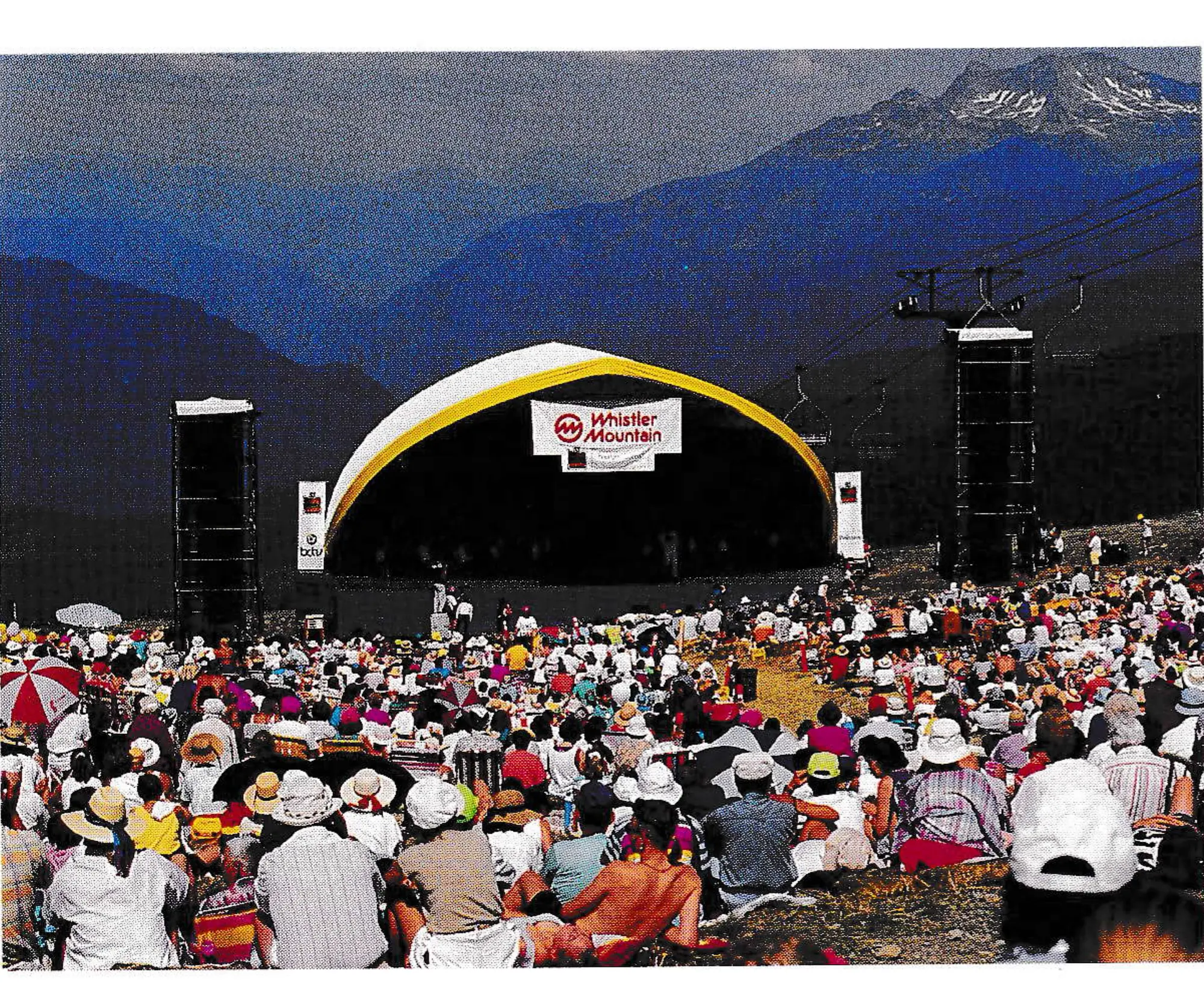
Joint venture arrangements seem to work well. Each August, Whistler Mountain, B.C., teams up with the Vancouver Symphony Orchestra to host a one-day concert on the mountain. The symphony takes care of the staging for the concert and marketing in the Vancouver area. Whistler provides facilities, gondola, staffing for security and maintenance and handles local marketing. The area takes a cut of each ticket to cover expenses, but although it’s not a money maker, the concert is a wonderful showcase for the mountain for the 5,000 to 6,000 concert-goers.
“Symphony music is a fitting combination with the natural beauty of the mountain,” said Bea Searle, a marketing assistant at Whistler. “The two go hand in hand and enhance each other. It’s the kind of image we want to promote and it’s a very successful event for us.”
Telluride, Colo., has opted for a different model. The ski area contributes to the community’s summer-long series of art and music festivals, but does not get directly involved with hosting or planning them. The community now hosts a chamber music festival, a jazz festival and a bluegrass festival. The festivals are so successful, summer business in Telluride has been growing at a 25 percent annual clip. Last summer, 17,000 people jammed the town, which has a population of 1,300, for the bluegrass festival. The festivals have been so successful in attracting summer business, in fact, townspeople are now talking about limits.
“We feel the environment is at stake by bringing that many people in,” said Barbara Loken, media coordinator of the Telluride Chamber Resort Association. “We want to limit it to 10,000 people.”
Other than a hefty financial contribution to the summer festivals, the ski area stays on the sidelines — operating a chair lift to the summit and its mountain village at the base. But it has a role to play. “There’s no doubt the ski crowd is somewhat responsible for the large number of people we get here in the summer,” Loken said.
And vice versa.
“A lot of people who come here in the summer have never skied before. They see the mountain and say, ‘Let’s come back this winter and try it.’ And many do,” she added.
And that seems to be the real bottom line. The summer music business is a risky business and a varied business. But it’s never a dull business. Sound familiar?