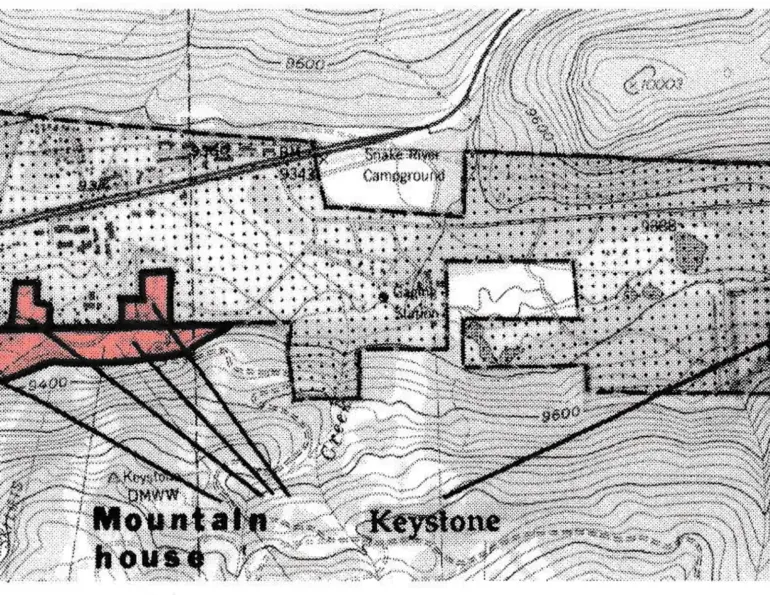
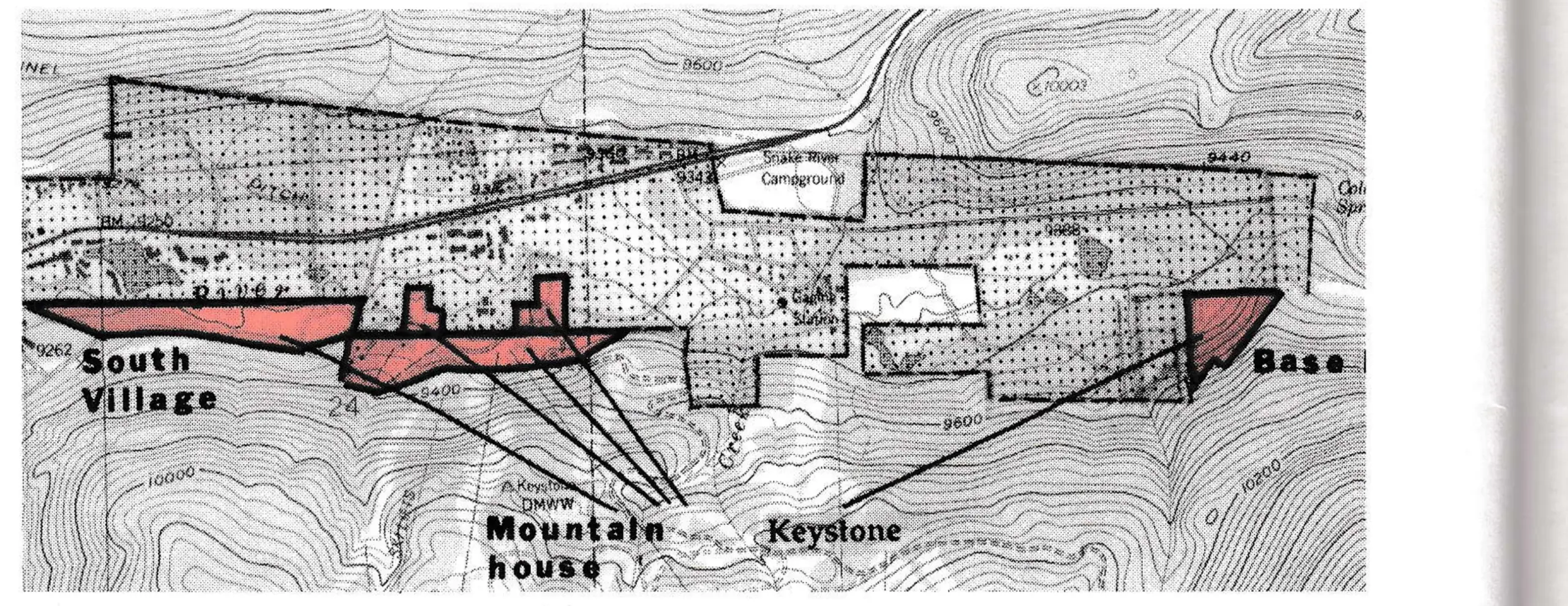
Last November, Copper Mountain and Keystone Resort acquired property adjacent to their ski areas through a complex trade involving land located in South Dakota, and in July, Purgatory-Durango completed a deal trading isolated parcels for developable land close to the resort. In both trades, the Forest Service acquired land for public use while disposing of land that was not in wilderness regions.
In many parts of the country, especially the West, property owners can look out at a privately-owned 400-acre tract of untouched countryside. That tract, however, might be in the heart of a huge, federally-owned pristine wilderness area, because the largest landowner in the United States is the federal government which owns millions of acres.
Since this land is your land, this land is my land, the last thing we want the federal government to allow is another get-well-quick health farm on 400 acres in the middle of its wilderness on our public land, or for five million faithful followers of Brother Mariachi Yomamma to move Teepee Town in there in an effort to find spiritual fulfillment amid the glories of outdoor plumbing.
On the other hand, the United States Forest Service ranger can drive by many of the nation’s ski resorts and see golf courses and paved parking lots, all on federal land. He wonders to himself why his job description — “To protect and preserve the wilderness for all time…” — now includes babysitting fairways, greens and tailgate parties in motor home parks.
Many observers say something needs to be done about this paradoxical situation.
In 1988, Western Land Group, an Evergreen, Colo., organization that arranges land trades between private individuals or companies and the federal government, began putting together one of the largest land exchanges since the Louisiana Purchase. South Dakota’s Homestake Mining Company would trade 12,000 acres in Spearfish Canyon — where “Dances with Wolves” was filmed — that was appraised at $10.5 million. In exchange, the Forest Service could dispose of 868 unwanted acres in Summit County, Colo., mostly parking lots and golf courses on Forest Service land in and around ski areas.
“It’s one of those rare win-win situations,” said Tom Glass, chairman of Western Land Group. “The Forest Service disposes of parcels it has no use for, such as those parking lots, while picking up huge tracts of river and recreational land.”
Land trades involve swapping two or more parcels of equal value, but because deals that include parcels in different states require an act of Congress, they tend to be difficult to put together. In the case of the Spearfish Canyon exchange, Western Land Group was contacted by Homestake Mining Company’s Rich Harr for help. Over a period of three years, WLG examined a wide variety of technical, environmental and political information to determine the trade’s feasibility, and developed an acquisition strategy. WLG negotiated permit applications, project mitigation packages and other agreements with public agencies, then obtained final agreements and approval from local and federal governments.
While Glass was negotiating with buyers in Summit County, his Washington, D.C., lobbyist Andy Wiessner of Kogovsek and Associates was pulling together Congressional support from both the Colorado and South Dakota delegations. A bill was introduced by the entire South Dakota delegation and received support from both Senator Tim Wirth and Representative Ben Nighthorse Campbell.
Ideally, said Glass, the South Dakota Congressional delegation would go to the Land and Water Conservation Fund, get the $10.5 million and buy the land. But since federal budget cuts left the fund nearly dry, they took another route.
“It became evident that the Forest Service did not have the $10 million necessary to purchase the land, nor were they likely to get it in the foreseeable future,” Harr said. “The only workable solution was some sort of trade.”
The trade became a reality in November 1990 when the President signed a bill authorizing it.
In early 1992, Homestake will convey the Spearfish Canyon land to the Forest Service, and acquire the 868 acres in Summit County worth about $8.5 million, plus $2 million in timber credits from the Forest Service. In turn, Keystone Resort, Copper Mountain Resort, the Town of Frisco and Summit County government will immediately buy the Summit County tracts, which they have been leasing from the Forest Service. Copper Mountain will get parking lots and a golf course, Keystone acquires additional development property, the county takes sole ownership of its maintenance facilities along with a landfill site and Frisco secures land for a proposed golf course.
The two ski resorts also benefitted by gaining control over adjacent land that can be used for future development.
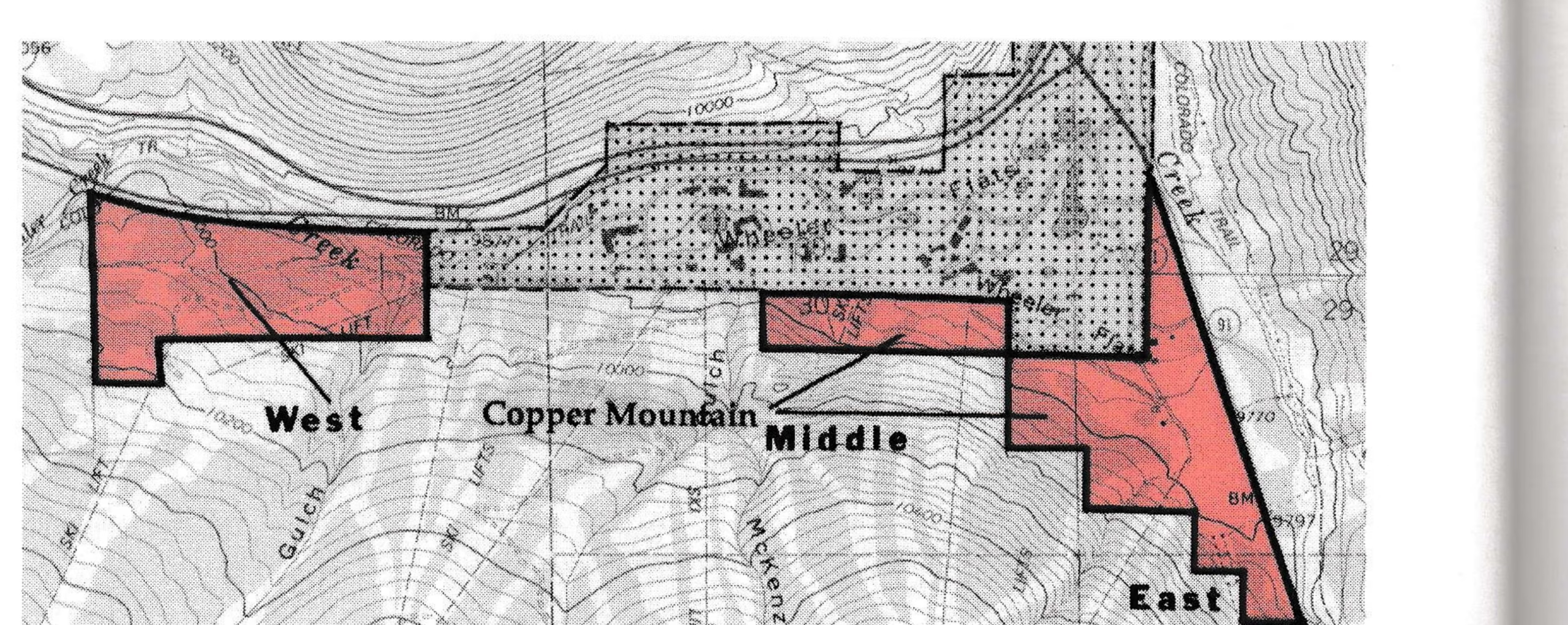
“Basically, we’re land-locked with Forest Service land all around the resort,” said Harry Mosgrove, president and CEO of Copper Mountain. “This additional land for use as single-family housing. At the same time, prestine wild land was returned to the government.”
This was the third land trade that Keystone has done in a continuing process of consolidating land holdings. “If we didn’t get involved in these land trades, we wouldn’t be able to build more beds,” said John Rutter, executive vice president of mountain operations for Keystone. “We’re convinced that the destination market is the growth of the future.”
The trade is particularly significant because almost 80 percent of all lands in Summit County are National Forest, leaving only 20 percent for private ownership.

In addition, Homestake Mining Company and Keystone are donating 17.5 acres each for the Keystone Science School. Homestake is donating 20 acres to Frisco for wetlands preservation, an aquatic museum and a proposed observatory, as well as financing the purchase of Frisco’s golf course parcel.
“This is one of the most complicated trades we’ve ever done,” said Glass. “It was a very creative way for Homestake to convert unproductive assets to public relations benefits and cash.”
With the federal government currently cash-short for wilderness land acquisition, land trades seem an excellent way for federal officials to get something they want for nothing. While everything came up roses in the Spearfish Canyon deal, don’t think for a second that every trade is surrounded by warm and cuddly feelings of humans in harmony. There are strong “not in my backyard” sentiments in many mountain neighborhoods, especially when the neighborhood is in an exclusive part of Vail.
Six years ago The Lodge at Vail wanted to pick up an acre behind its hotel at the base of Vail Mountain in exchange for 500 acres of wilderness land. While officials of Vail Associates remained neutral, town-of-Vail officials howled like they’d been skewered through the pocketbook.
The deal itself took less than one year to finish, the litigation has lasted more than five years and cost hundreds of thousands of dollars. As soon as the Forest Service and The Lodge at Vail owners, Sea Containers, Ltd. of London, England, announced they had negotiated a trade, the town of Vail filed a series of lawsuits to block the deal.
“Unlike Spearfish Canyon, this is one that won’t be finished without considerable blood on the floor,” Glass said.
Vail lost its original suit, but appealed the decision all the way to the U.S. District Court of Appeals, where it was denied. The litigation is currently in its final stage with Vail’s appeal of the decision to deny its appeal.
In a similar deal, Los Angeles investment banker Michael Tennenbaum wanted to trade 2,000 acres of prime wilderness for one acre near Vail’s Forest Road area, the town’s most exclusive and high-priced neighborhoods where homes sell for more than $5 million. Vail, led by former President Jerry Ford, pressured Colorado’s congressional delegation into killing the deal, claiming it opened the door for unwanted development. up the side of the ski mountain. The one-acre tract is 15 yards from a crowded beginner ski trail with a road and utilities running through it, but Vail officials claimed it provides wildlife habitat and a wilderness experience for Vail’s visitors. After more than a year, Tennenbaum finally threw up his hands and walked away.
“There has never been such a large ratio of wilderness land to be traded for such a small tract,” said Weissner, who lobbied the deal. “The town of Vail basically said it didn’t care what was good for anyone in the rest of the state, it was going to do everything it could to stop land trades in and around Vail.”
For several years one of the worst-ever trade proposals from a ski area’s perspective has been evolving in Jackson Hole, Wy. The Forest Service wanted to trade 90 acres in the heart of the ski area that holds Jackson Hole’s administrative offices, snowmaking and avalanche control facilities, maintenance garages and future employee housing. In exchange, the Forest Service would pick up a 160-acre tract in Buffalo Valley on the approach to Jackson Hole with breathtaking views of the Tetons.
Forest Service officials and Wyoming’s Congressional delegation have fought for years to protect Buffalo Valley from development, something the ski area says can be done without tearing the heart out of its operating facilities. Elements of the trade would have left the ski resort in an extremely vulnerable position, with ownership of the 90 acres transferred to a third entity, Snake River Associates and Stanley Resor.
This past December, the Jackson Hole Corporation and Snake River and Resor reached an agreement in which the threat to the resort appeared to be mitigated. The Forest Service supports the agreement and, while details of the land exchanges were not available at press time, it is anticipated that favorable trades will take place early in 1992.
Although Jackson Hole came perilously close to a land exchange that could have seriously damaged the ski resort and set an unfavorable policy for future trades affecting other ski areas, apparently the story will end happily. In assessing the Jackson Hole trade, Joe Prendergast, president of the American Ski Federation, said, “Jackson Hole got what it wanted and that’s the way we think the system should work.”